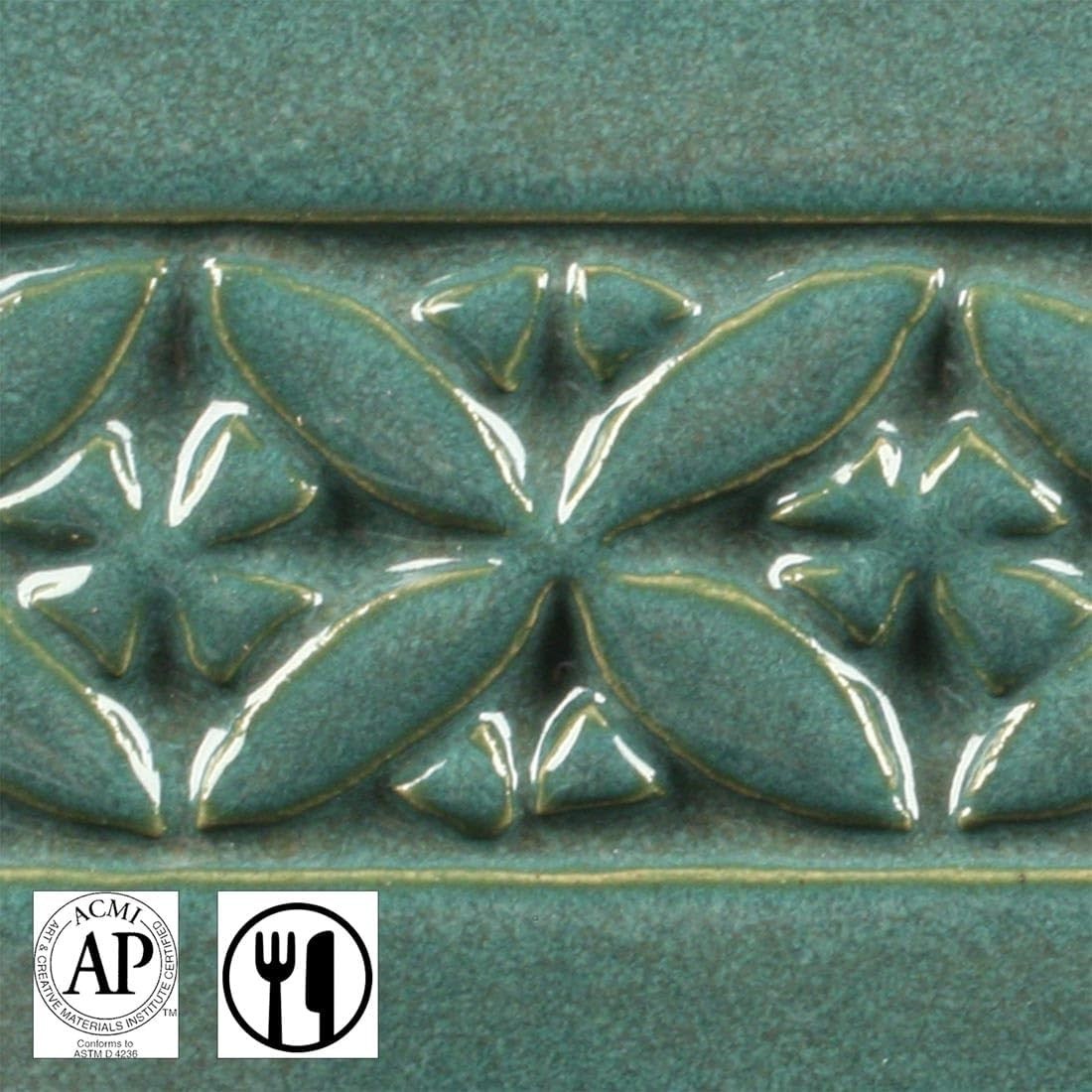

Photos from current listings. Actual item, color, and included accessories may vary.
Amaco Pottery Glaze Buying Guide
Amaco pottery glazes are a family of brush-on and dipping ceramic finishes spanning low-fire (05-04), mid-fire (5-6), and high-fire (9-10) firing ranges, with the Pottery Craft (PC) and Celadon (C) lines being the most widely used brush-on formulas. The critical buyer trade-off is not color variety but cone compatibility: Amaco's PC and Celadon glazes are rated for cone 5-6 (mid-fire) and will craze, blister, or run off the pot if fired beyond their rated cone, while the high-fire (cone 9-10) lines are a separate formulation entirely. The decision rule is simple: match the glaze line to your kiln's target cone first, then choose brush-on (pint, 4 oz) for small or detailed work versus dry/powder or gallon formats for dipping production batches.
Key takeaways
- Amaco's three firing tiers are distinct chemistries: low-fire (cone 05-04), mid-fire (cone 5-6, including most Pottery Craft/PC and Celadon/C glazes), and high-fire (cone 9-10, such as PC-27 Tourmaline) — a mid-fire glaze fired to cone 10 will typically run, craze, or burn out its color.
- Brush-on formats ship as ready-to-use liquid in 4 oz (sample) and pint (16 oz) jars; dry powder and gallon liquid formats are intended for dipping or pouring rather than brush application and require proper slurry mixing and specific gravity control.
- Most Amaco PC and Celadon glazes are lead-free and dinnerware-safe when fired to their rated cone on a vitrified clay body; gloss, satin, and matte surface finishes behave differently over texture, with gloss glazes pooling and matte glazes breaking over edges.
At a glance
- Category
- Ceramic Glazes & Colors
- Last updated
- Nov 23, 2026
Current offers
Highlights
- Amaco's three firing tiers are distinct chemistries: low-fire (cone 05-04), mid-fire (cone 5-6, including most Pottery Craft/PC and Celadon/C glazes), and high-fire (cone 9-10, such as PC-27 Tourmaline) — a mid-fire glaze fired to cone 10 will typically run, craze, or burn out its color.
- Brush-on formats ship as ready-to-use liquid in 4 oz (sample) and pint (16 oz) jars; dry powder and gallon liquid formats are intended for dipping or pouring rather than brush application and require proper slurry mixing and specific gravity control.
- Most Amaco PC and Celadon glazes are lead-free and dinnerware-safe when fired to their rated cone on a vitrified clay body; gloss, satin, and matte surface finishes behave differently over texture, with gloss glazes pooling and matte glazes breaking over edges.
- Layering behavior is formulation-specific: Amaco designs many PC glazes to be layered over each other and over Celadon base glazes, but the order of application and number of coats (typically 2-3 for brush-on) controls the final color and whether the result runs — thick application at mid-fire increases running risk.
Best use cases
- Best fit: a hobbyist or studio potter firing electric kiln at cone 5-6 who wants brush-on color control on sculpted or hand-built pieces — pick 4 oz or pint jars of Pottery Craft (PC) or Celadon (C) glazes to test and layer.
- Best fit: a production potter dipping identical forms in quantity — choose dry powder or gallon liquid formats of a single mid-fire glaze and control specific gravity, rather than brushing pint jars across dozens of pieces.
- Wrong fit: a cone 9-10 reduction or wood-fire potter buying mid-fire PC/Celadon glazes — these will not mature correctly at high fire; select Amaco's high-fire (cone 9-10) line instead.
- Wrong fit: a low-fire cone 05-04 earthenware potter buying cone 5-6 brush-on glazes — the glaze will not fully melt at low fire; choose Amaco's low-fire glaze series matched to your clay body's maturity.
Buying tips
- Match the glaze's rated cone to your kiln's target cone before considering color: mid-fire brush-on PC/Celadon glazes are rated cone 5-6 and are not interchangeable with high-fire cone 9-10 or low-fire cone 05-04 formulas.
- Buy 4 oz jars for color testing and small detailed work; step up to pint jars only after confirming the fired result on your clay body, since fired color varies with clay composition, coat count, and kiln atmosphere.
- Brush-on glazes need 2-3 coats at the manufacturer's recommended thickness — thin application gives washed-out color and poor coverage, while overly thick application at mid-fire causes running and drips onto kiln shelves.
- When layering Amaco glazes, apply the base glaze first and the accent over it, and test on tiles before committing to a full piece — layering two running glazes can produce excessive melt flow and shelf damage.
Specs
| Firing Range | Low-fire 05-04 / Mid-fire 5-6 / High-fire 9-10 |
|---|---|
| Format | Brush-on liquid (4 oz, pint) / Dry powder / Gallon |
| Surface Finish | Gloss / Satin / Matte (line-dependent) |
| Lead Content | Lead-free (most PC & Celadon lines) |
Related searches
What to check before buying
- Confirm your kiln's achievable target cone and firing type (electric oxidation vs reduction) matches the glaze's rated range — cone 5-6 electric is the standard use case for Amaco PC and Celadon brush-on glazes.
- Verify your clay body matures at the same cone as the glaze; a cone 5-6 glaze on a low-fire earthenware body will not produce a durable, dinnerware-safe surface.
- Check whether you need brush-on (pint/4 oz liquid) versus dipping (dry powder or gallon) format based on the number and shape of pieces you glaze per batch.
- Plan for kiln shelf protection: mid-fire glazes that run require stilts, cookies, or adequate foot clearance, and you should confirm the glaze's running tendency on test tiles before production firing.
FAQ
Data sources: eBay / Amazon listings and product attribute feeds. Updated Nov 23, 2026.
Some links on this page are affiliate links. If you buy after clicking one, we may earn a commission at no extra cost to you. This does not change which products appear here or their order. Affiliate disclosure.