
Photos from current listings. Actual item, color, and included accessories may vary.
Outdoor Fairy Light Buying Guide
Outdoor fairy lights are low-voltage decorative strings that must survive rain, UV, and freeze-thaw cycles while delivering steady, safe illumination. The primary trade-off is power architecture: solar units eliminate wiring but depend on winter sun, while plug-in units guarantee brightness and timers but need an outdoor-rated receptacle. Choose IP65 sealed connections and pure-copper or tinned-copper wire for multi-season durability; skip unrated IP44 strings with brittle aluminum conductors if you expect year-round exposure.
Median $46.99
Key takeaways
- Solar strings typically use 3.7V Li-ion or NiMH cells with amorphous panels; 330-LED sets need 4-6 hours of direct sun for 6-8 hours of run time, and output drops sharply in overcast winter conditions.
- Plug-in strings run on 12V or 24V AC/DC adapters with inline timers; 580-LED 197FT sets draw roughly 30-50W, so a single outdoor GFCI receptacle can safely power multiple strings via daisy-chain connectors rated for the total load.
- Ingress protection separates tiers: IP44 resists splashes only, while IP65/IP67 sealed connectors and heat-shrink glanded joints survive direct rain, sprinklers, and snow burial.
At a glance
- Category
- Christmas Decorations
- Last updated
- Nov 27, 2026
Current offers
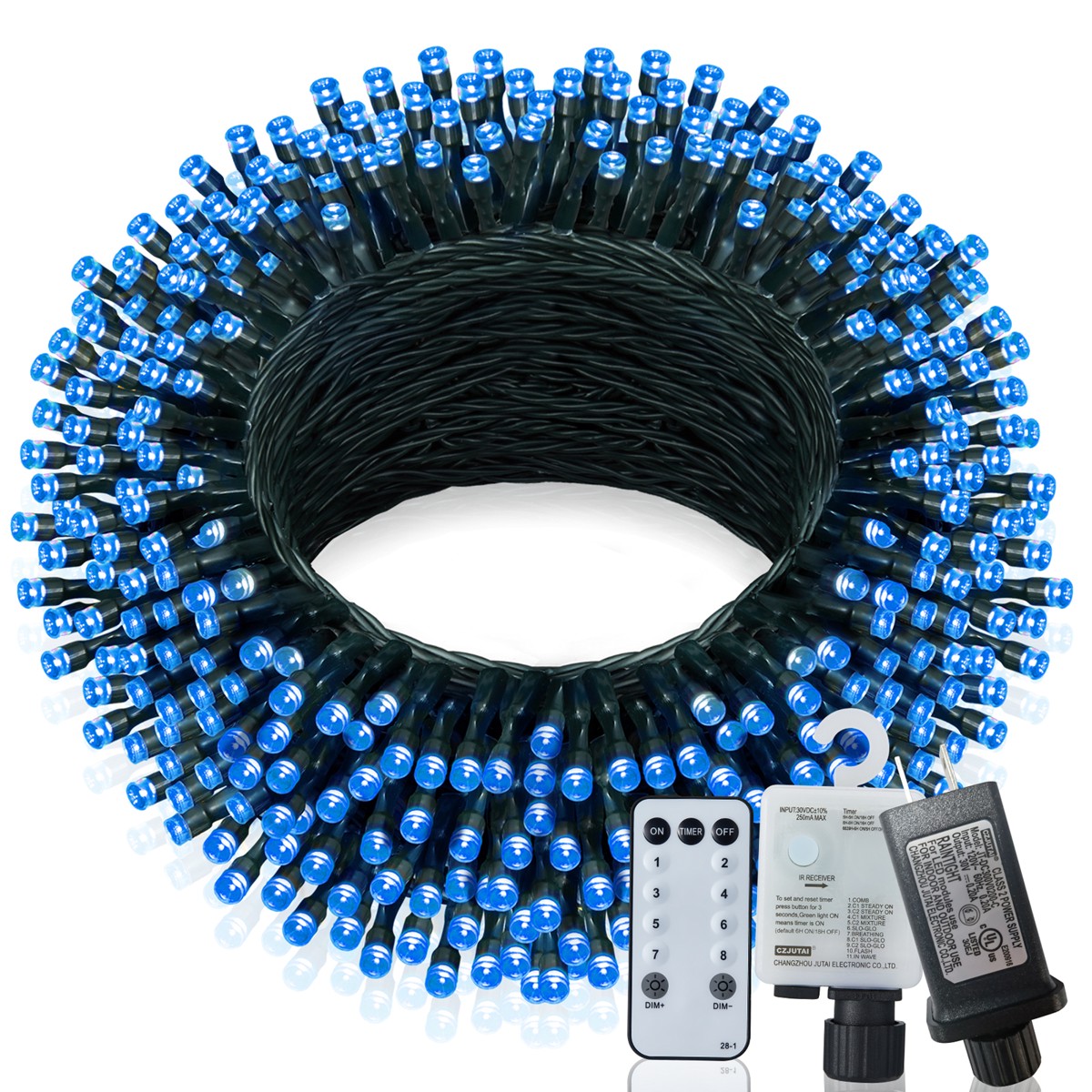 Christmas Lights Outdoor, 197 FT 580 LED Decorations Lights/Waterproof String Fairy Plug in with 8 Modes and Timer for Door/Yard/Party/Christmas Decor$43.99View on Mallflare
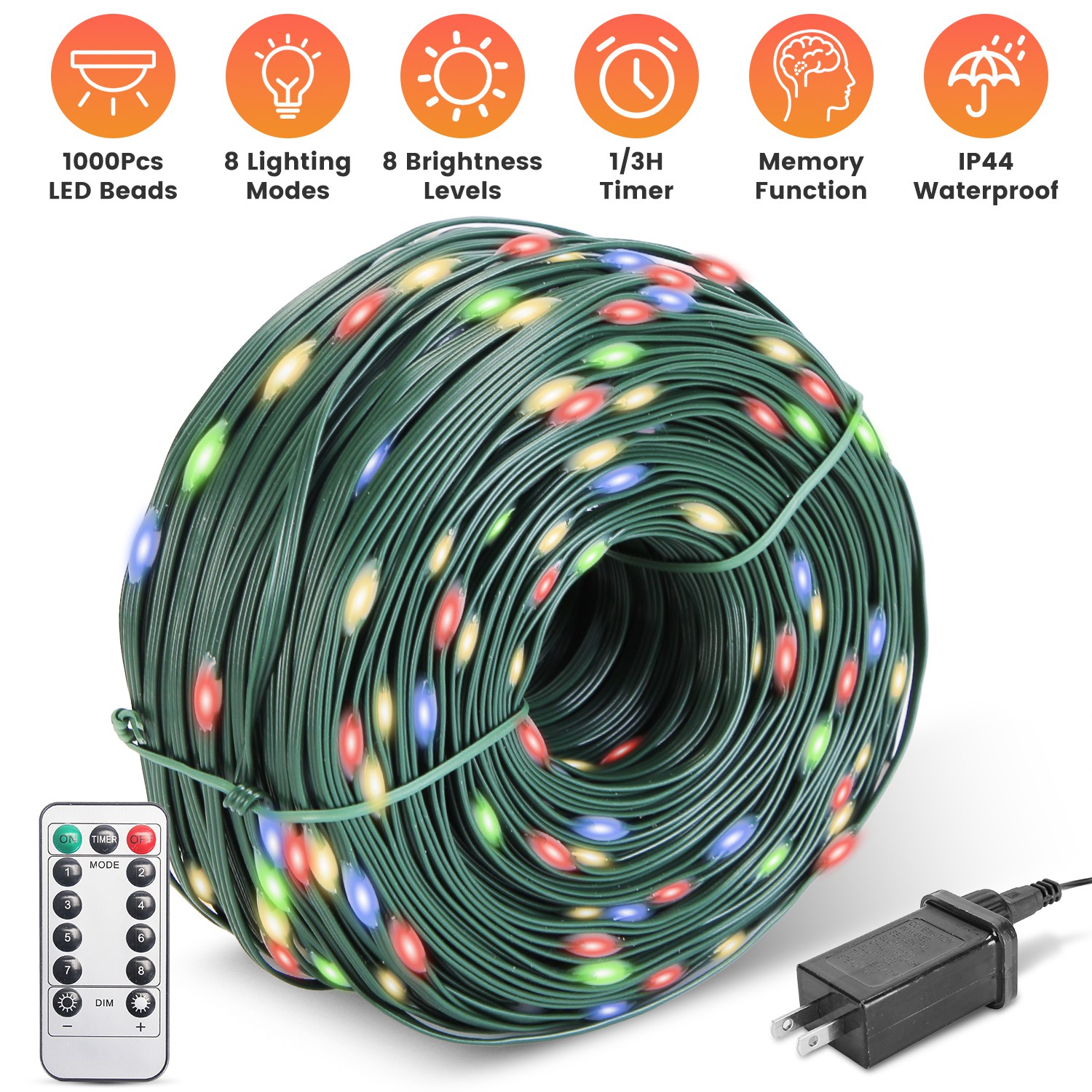 330FT String Lights Outdoor Christmas Decoration With Remote IP44 Waterproof 8 Lighting Modes 8 Brightness Timer Plug In Fairy Light Xmas House Holiday Decor$46.99View on Mallflare
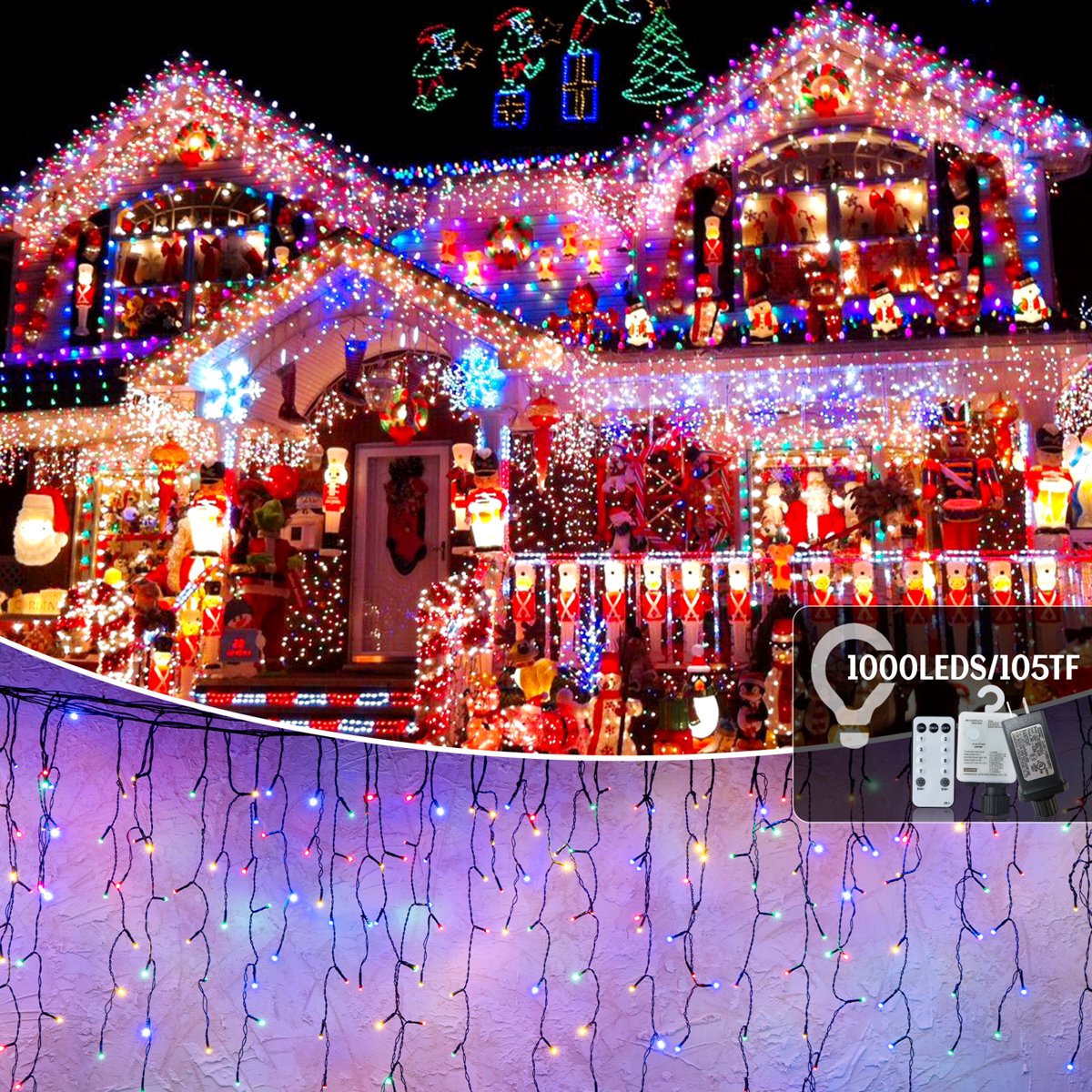 105ft Outdoor Christmas Decoration Lights,1000 LED 8 Modes Curtain Fairy Lights with 50 Drops,Plug in,Waterproof,Timer,Memory Function for Holiday Wedding Party Decorations$63.99View on Mallflare
Highlights
- Solar strings typically use 3.7V Li-ion or NiMH cells with amorphous panels; 330-LED sets need 4-6 hours of direct sun for 6-8 hours of run time, and output drops sharply in overcast winter conditions.
- Plug-in strings run on 12V or 24V AC/DC adapters with inline timers; 580-LED 197FT sets draw roughly 30-50W, so a single outdoor GFCI receptacle can safely power multiple strings via daisy-chain connectors rated for the total load.
- Ingress protection separates tiers: IP44 resists splashes only, while IP65/IP67 sealed connectors and heat-shrink glanded joints survive direct rain, sprinklers, and snow burial.
- LED count per foot determines visual density: 330 LEDs over 100FT is sparse (3.3/ft), while 580 LEDs over 197FT (2.9/ft) is comparable; for dense tree wrapping target 5-8 LEDs per foot or use net lights (200-360 LEDs per 6.5x9.8FT panel).
Best use cases
- Best fit for rooflines, fences, and distant trees beyond outlet reach: pick solar 330-LED multi-piece sets with separate panels so each string gets maximum sun; skip plug-in models that require extension cords across walkways.
- Best fit for wrapping trunks, bushes, and hedges: use mesh/net lights (6.6x9.8FT, 200-360 LEDs) or dense 8-mode strings; skip sparse 100FT/330-LED strings for dense shrubs because gaps show and coverage is uneven.
- Best fit for permanent year-round installation: specify IP65+ plug-in strings with tinned-copper wire and UV-stabilized PVC; skip IP44 seasonal sets that yellow and crack after one summer.
Buying tips
- Calculate run time: a 330-LED solar string with a 1200mAh 3.7V cell delivers about 6 hours at 50% brightness; if you need 8+ hours, choose larger panels (≥5W) or plug-in models.
- Match adapter voltage and connector type: 12V systems with 5.5x2.1mm barrel jacks are common, but daisy-chaining more than 3 strings (≈150W) risks overheating; stay under 80% of adapter rating.
- Check wire gauge: 22AWG is standard for 100FT strings, but runs over 150FT should use 20AWG or 18AWG to limit voltage drop and flicker at the far end.
- For cold climates, verify battery chemistry: Li-ion cells lose 30-40% capacity at -10°C, while NiMH handles cold better but self-discharges faster; remote-controlled plug-in units avoid batteries entirely.
Specs
| Power Source | Solar panel vs 12V plug-in adapter |
|---|---|
| IP Rating | IP44 splash vs IP65/IP67 jet-proof |
| LED Density | 3-8 LEDs per ft / net 200-360 LEDs |
| Control | 8 modes, remote, timer, memory |
Related searches
What to check before buying
- Measure the run: add 10% slack for tree wrapping and roof contours; confirm the distance from the nearest GFCI outlet or the solar panel's daily sun exposure (minimum 4 hours direct).
- Verify IP rating and connector sealing: IP65 or higher for exposed connections; IP44 only under eaves; ensure mating connectors have rubber gaskets and screw collars.
- Confirm plug standard and voltage: North American 120V NEMA 1-15P or 5-15P adapters; 12V/24V low-voltage outputs require the included adapter, not direct mains wiring.
- Check timer and memory function: plug-in sets with remote should retain mode and schedule after power loss; solar sets need an auto-on dusk sensor and off timer to avoid daily resetting.
FAQ
Data sources: eBay / Amazon listings and product attribute feeds. Updated Nov 27, 2026.
Some links on this page are affiliate links. If you buy after clicking one, we may earn a commission at no extra cost to you. This does not change which products appear here or their order. Affiliate disclosure.