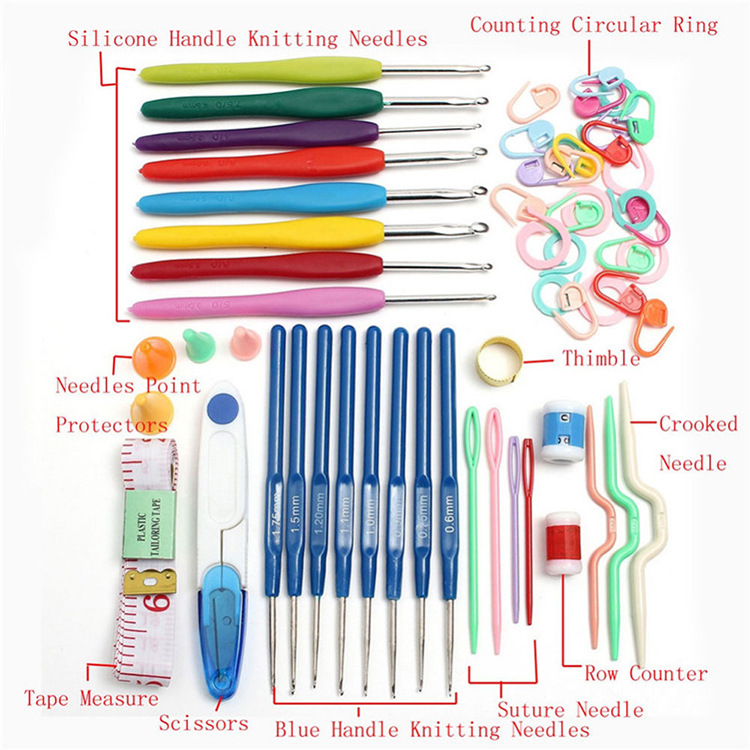

Photos from current listings. Actual item, color, and included accessories may vary.
Yarn Needle Buying Guide
Yarn needles (tapestry needles) are blunt-tipped, large-eye needles used to weave in ends, join pieces, and duplicate-stitch on crochet fabric—not to pierce yarn fibers. The core trade-off is tip bluntness and eye size versus shaft strength: metal needles resist bending in dense stitches, while plastic is lighter and gentler on loose or bulky yarns but can snap at the eye under tension. Buy metal for durability and tight-gauge work, plastic for bulky single-ply or beginner kits where flex and cost matter more than longevity.
Key takeaways
- Blunt tip is the defining feature: a rounded ball-point tip separates plies instead of splitting them, which is why sharp sewing needles cause yarn fraying and splitting on crochet seams.
- Eye size and shaft diameter set the yarn weight ceiling: a needle must pass through the stitch without stretching it, so bulky yarn needs a large-eye needle with a shaft roughly matching the yarn's ply diameter.
- Metal (aluminum/steel) needles hold shape under tension and suit worsted-and-finer weaving-in; plastic needles flex and can crack at the eye when forced through tight single crochet.
At a glance
- Category
- Crochet Hooks & Accessories
- Last updated
- Nov 25, 2026
Current offers
Highlights
- Blunt tip is the defining feature: a rounded ball-point tip separates plies instead of splitting them, which is why sharp sewing needles cause yarn fraying and splitting on crochet seams.
- Eye size and shaft diameter set the yarn weight ceiling: a needle must pass through the stitch without stretching it, so bulky yarn needs a large-eye needle with a shaft roughly matching the yarn's ply diameter.
- Metal (aluminum/steel) needles hold shape under tension and suit worsted-and-finer weaving-in; plastic needles flex and can crack at the eye when forced through tight single crochet.
- Straight vs bent vs curved formats differ by task: straight for weaving in and seaming flat pieces, bent for duplicate stitch and surface work, curved for seaming tubes and amigurumi closures.
Best use cases
- Best fit: weaving in ends on worsted-weight (Category 4) crochet—pick a straight metal tapestry needle with a blunt tip and an eye wide enough for the yarn's full thickness; skip plastic if you pull firmly.
- Best fit: seaming granny squares and joining motifs—choose a straight metal needle in a size that slides through both edge stitches without distorting them; avoid sharp sewing needles that split plies.
- Best fit: bulky or single-ply yarn (Category 5–6)—use a large-eye plastic or jumbo metal needle sized to the yarn; skip standard metal tapestry needles whose eye is too narrow to thread bulky yarn.
- Wrong fit: using a yarn needle as a crochet hook substitute or for tight amigurumi shaping—skip it and use the correct hook size; yarn needles are finishing tools, not stitch-forming tools.
Buying tips
- Match needle eye to yarn weight: the threaded eye plus yarn should pass through a stitch with slight resistance—if you must force it, size up the needle or the stitch will stretch.
- Choose metal (aluminum or steel) for worsted-and-finer yarns and any project where you pull hard to bury ends; plastic is acceptable only for bulky, loose, or single-ply yarns.
- Select blunt ball-point tips for all crochet finishing; sharp-tipped chenille or sewing needles split plies and create fuzz and weak joins on crochet fabric.
- Prefer needles with a smooth, burr-free eye—rough eye edges abrade yarn and cause pilling; metal needles generally hold a smoother eye finish than molded plastic.
Specs
| Tip Type | Blunt ball-point vs sharp chenille |
|---|---|
| Needle Material | Aluminum/steel vs molded plastic |
| Eye Size | Standard vs large-eye/jumbo |
| Needle Format | Straight / bent / curved |
Related searches
What to check before buying
- Confirm your yarn weight category (1–7) and measure its actual thickness: the needle eye must clear the full yarn diameter, so bulky yarns need large-eye or jumbo needles.
- Check the stitch density of your fabric: tight single-crochet gauge demands a metal needle that won't bend; loose or openwork fabric tolerates plastic.
- Decide the task format before buying: straight for weaving in and flat seaming, bent for duplicate stitch, curved for tube seaming and amigurumi closure.
- Verify the needle's tip is explicitly blunt/ball-point—many multipacks mix sharp chenille needles that damage crochet fabric.
FAQ
Data sources: eBay / Amazon listings and product attribute feeds. Updated Nov 25, 2026.
Some links on this page are affiliate links. If you buy after clicking one, we may earn a commission at no extra cost to you. This does not change which products appear here or their order. Affiliate disclosure.