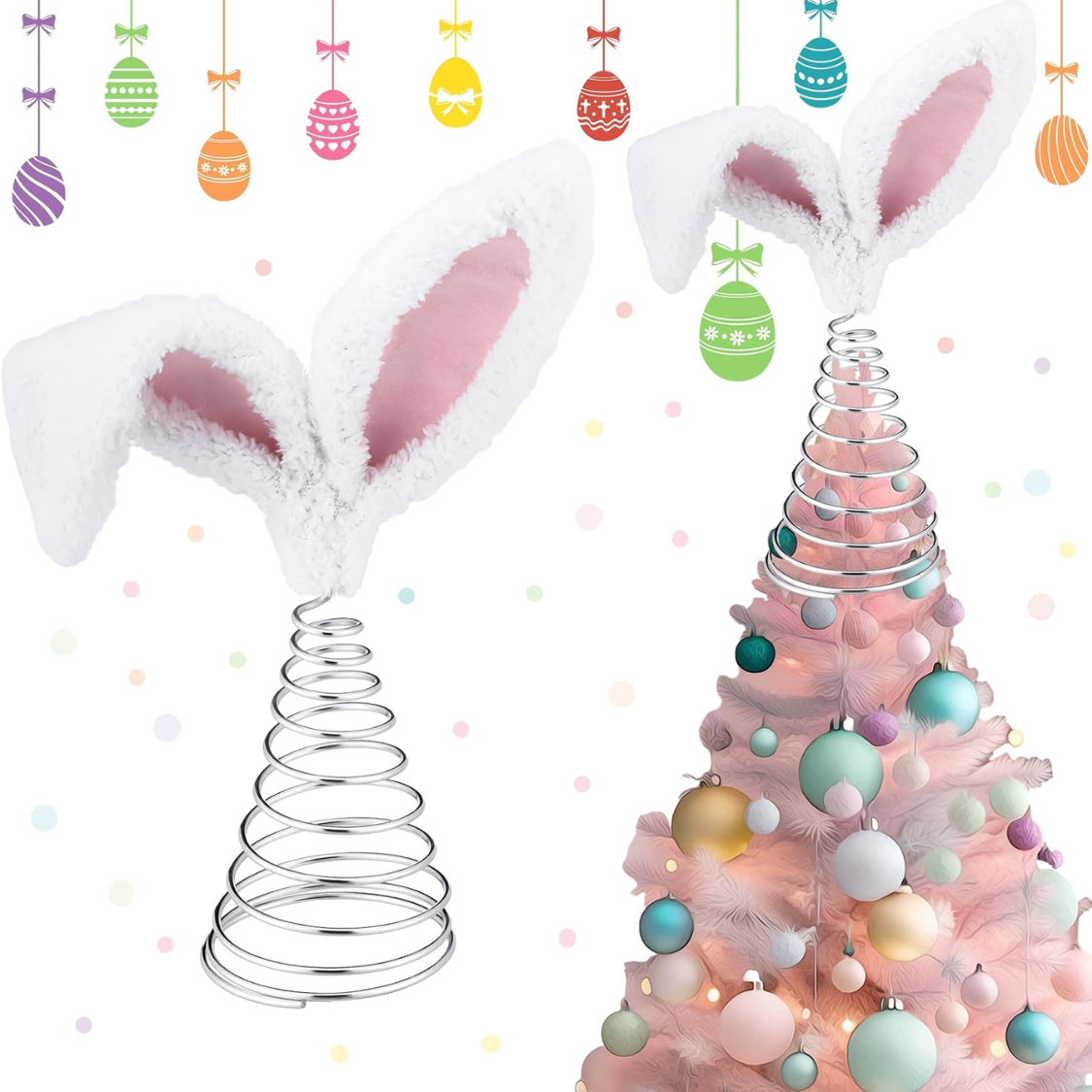

Photos from current listings. Actual item, color, and included accessories may vary.
Tree Buying Guide
An Easter tree is a reusable decorative tree—real branches, metal wire, or artificial evergreen—used to display spring ornaments. The core trade-off is between flimsy single-season wire forms and sturdy frames with stable bases that survive storage and repeated assembly. Buy a tree with a weighted or wide base and at least 3mm wire or solid wood construction; skip thin spiral wire trees that tip over or bend permanently.
Key takeaways
- Tree height tiers: tabletop 18–24 in, mid-size 36–48 in, and floor-standing 60–72 in; height determines ornament count and base footprint.
- Wire gauge matters: 2–3mm coated steel wire holds ornament weight without sagging; sub-1.5mm craft wire bends permanently under glass or ceramic ornaments.
- Base stability: a 6–8 in diameter weighted base or cross-stand prevents tipping; spiral trees without a base need a heavy planter or sandbag anchor.
At a glance
- Category
- Easter & Spring Decorations
- Last updated
- Nov 24, 2026
Current offers
Highlights
- Tree height tiers: tabletop 18–24 in, mid-size 36–48 in, and floor-standing 60–72 in; height determines ornament count and base footprint.
- Wire gauge matters: 2–3mm coated steel wire holds ornament weight without sagging; sub-1.5mm craft wire bends permanently under glass or ceramic ornaments.
- Base stability: a 6–8 in diameter weighted base or cross-stand prevents tipping; spiral trees without a base need a heavy planter or sandbag anchor.
- Branch count and spacing: 20–40 tip branches at 3–4 in spacing display standard 2–3 in ornaments without crowding or overlap.
Best use cases
- Best fit: tabletop 18–24 in wire or wood tree for apartments, mantels, and desks—pair with 12–24 lightweight ornaments and a stable 5 in base.
- Best fit: 48–60 in floor tree with weighted cross-stand for entryways and living rooms; choose 30+ branches and verify base diameter exceeds 8 in for carpet stability.
- Wrong fit: outdoor porch or windy sunroom—skip lightweight wire and unweighted spiral trees; choose a heavy resin or metal trunk with ground stakes or a sand-filled base.
- Wrong fit: displaying heavy glass or ceramic ornaments—skip 1.5mm craft-wire trees; pick 3mm steel or solid wood branches rated for 8–12 oz per tip.
Buying tips
- Match tree height to ceiling and table: tabletop trees should clear 12 in above the surface; floor trees need 12–18 in clearance for a topper and ceiling fan.
- Wire gauge rule: choose 2.5–3mm coated steel for ornaments over 3 oz; 1.5–2mm wire only for lightweight plastic or paper ornaments.
- Base math: base diameter should be at least one-third of tree height (e.g., 20 in base for a 60 in tree) to resist tipping when bumped.
- Ornament capacity: plan 1.5–2 ornaments per branch tip; a 30-tip tree comfortably holds 45–60 standard 2–3 in ornaments without sagging.
Specs
| Tree Height Tiers | Tabletop 18–24 in / Floor 48–72 in |
|---|---|
| Branch Material | Coated steel wire / Solid wood / Resin |
| Wire Gauge | 1.5–2mm light / 2.5–3mm heavy |
| Base Type | Weighted round / Cross-stand / Planter anchor |
Related searches
What to check before buying
- Measure tabletop or floor space: tabletop trees need a 12×12 in footprint; floor trees need 24×24 in including the base spread.
- Check ceiling height: add tree height plus 6–8 in for the topper; a 60 in tree needs 68+ in clearance.
- Confirm ornament weight: weigh your heaviest ornament; tips must support it without bending—3mm wire for 8+ oz, wood for 12+ oz.
- Verify assembly and storage: collapsible two-piece trunks and flat-fold branches store in under 4 sq ft; fixed spiral forms need long closet space.
FAQ
Data sources: eBay / Amazon listings and product attribute feeds. Updated Nov 24, 2026.
Some links on this page are affiliate links. If you buy after clicking one, we may earn a commission at no extra cost to you. This does not change which products appear here or their order. Affiliate disclosure.