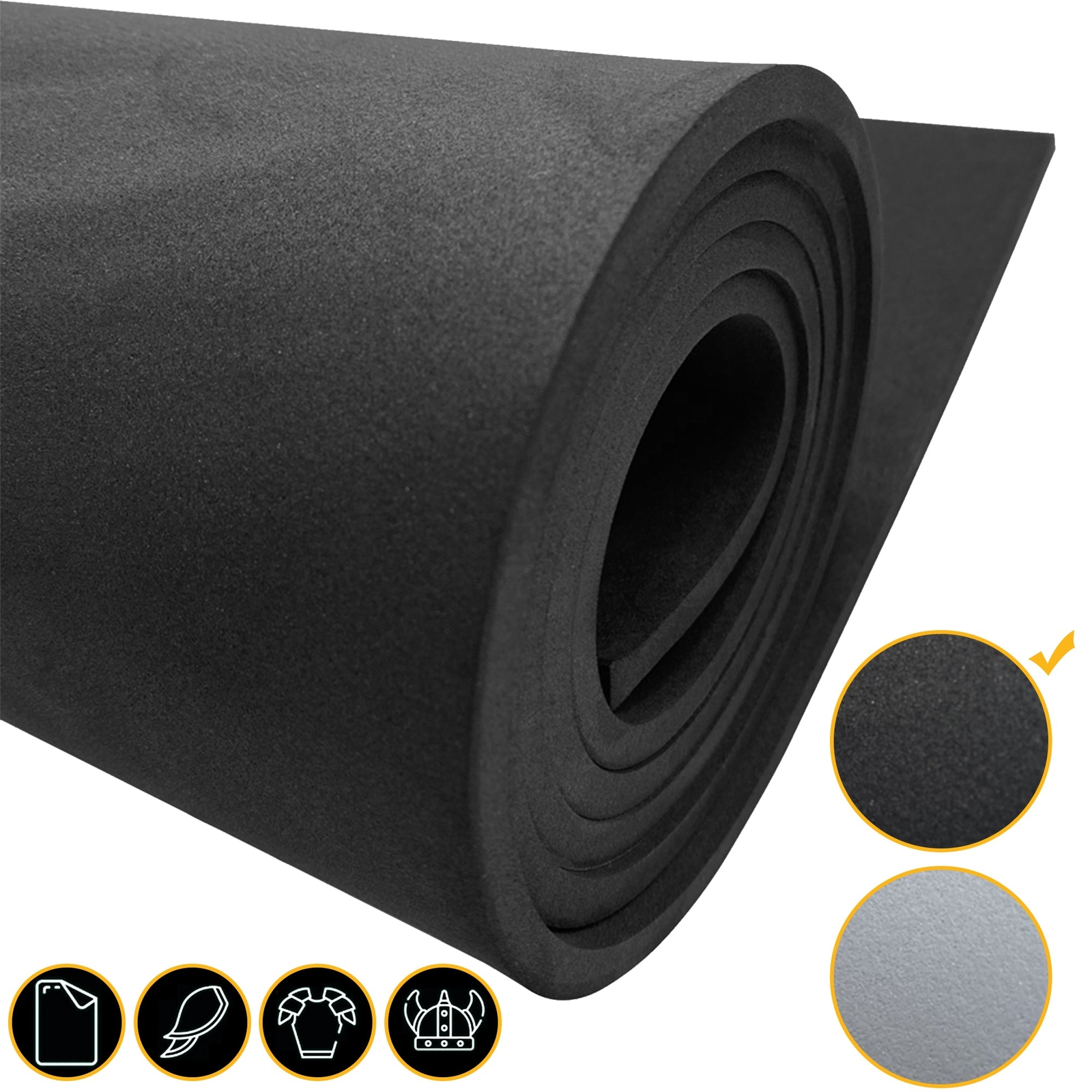

Photos from current listings. Actual item, color, and included accessories may vary.
High Density Eva Foam Sheet Buying Guide
High-density EVA foam sheet is a closed-cell copolymer sheet graded by density (kg/m³) and hardness (Shore C), used for cosplay armor, tool lining, and impact padding. The core trade-off is density versus workability: 60–80 kg/m³ sheets flex and heat-form easily but compress under load, while 100–130 kg/m³ sheets hold structural shape and resist compression but require sharper tools and more heat. Choose by application: structural shells and load-bearing padding need 90 kg/m³ or higher, while shallow relief and lightweight props work best at 60–80 kg/m³.
Key takeaways
- Density grading: 38 kg/m³ is soft craft foam, 60–80 kg/m³ is standard cosplay grade, 100–130 kg/m³ is high-density structural foam, and 150+ kg/m³ approaches semi-rigid sheet.
- Hardness follows density: Shore C 25–35 at 60–80 kg/m³, Shore C 40–50 at 100–130 kg/m³, and Shore C 55+ above 150 kg/m³ for crush-resistant parts.
- Cell structure is closed-cell, so high-density EVA resists water absorption and solvents; lower-density sheets absorb more moisture and degrade faster under repeated flex.
At a glance
- Category
- EVA Foam, Thermoplastics & Tools
- Last updated
- Nov 28, 2026
Current offers
Highlights
- Density grading: 38 kg/m³ is soft craft foam, 60–80 kg/m³ is standard cosplay grade, 100–130 kg/m³ is high-density structural foam, and 150+ kg/m³ approaches semi-rigid sheet.
- Hardness follows density: Shore C 25–35 at 60–80 kg/m³, Shore C 40–50 at 100–130 kg/m³, and Shore C 55+ above 150 kg/m³ for crush-resistant parts.
- Cell structure is closed-cell, so high-density EVA resists water absorption and solvents; lower-density sheets absorb more moisture and degrade faster under repeated flex.
- Thickness tolerance matters: 2–10mm sheets are typically skived with ±0.5–1mm variation, so thick builds should laminate two thinner sheets for flatter seams.
Best use cases
- Pick 100–130 kg/m³ for armor shells, weapon cores, and structural cosplay parts that must hold shape under heat and load; skip 38–60 kg/m³ for anything load-bearing.
- Pick 60–80 kg/m³ for helmets, gauntlets, and shallow relief that need heat-forming with a heat gun; skip it for floor mats or tool drawers where compression set ruins the part.
- Pick 2–5mm high-density sheet for drawer liners and tool shadowing; skip 10mm+ for tight drawers because thickness eats clearance and reduces usable depth.
- Pick 10–20mm high-density sheet for gym flooring and impact padding; skip thin 2–3mm sheet under heavy equipment because it bottoms out and transfers shock.
Buying tips
- Match density to load: 90 kg/m³ or higher for structural and load-bearing parts, 60–80 kg/m³ for heat-formed costume pieces, and 38–50 kg/m³ only for craft and packaging.
- Size by the largest pattern piece plus 10–15% margin; sheets are sold in A4, A3, and 20x59-inch formats, and seams weaken high-density builds more than low-density ones.
- For heat forming, use 100–130 kg/m³ sheet at 120–160°C with a heat gun; lower-density foam softens at lower temperatures but collapses and loses shape memory.
- Laminate with contact cement or hot glue rated for EVA; high-density sheet resists solvent-based adhesives less than low-density foam, so scuff both faces before bonding.
Specs
| Density Grade | 38 / 60–80 / 100–130 kg/m³ |
|---|---|
| Hardness | Shore C 25–55 by density |
| Sheet Thickness | 2–20mm, ±0.5–1mm skived |
| Cell Structure | Closed-cell EVA copolymer |
Related searches
What to check before buying
- Measure the largest pattern piece and add 10–15% margin; confirm the sheet length (20-inch or 59-inch) covers the full pattern without a seam.
- Check your heat source: a heat gun reaches 120–160°C for high-density forming, while a hair dryer only suits 38–60 kg/m³ craft foam.
- Verify your adhesive and finish: high-density EVA needs scuffing and contact cement, while Plastidip and acrylics adhere better after a primer coat.
- Confirm thickness clearance for drawers, cases, and floor mats: 2–5mm for liners, 10–20mm for impact padding, and laminate thinner sheets for custom thickness.
FAQ
Data sources: eBay / Amazon listings and product attribute feeds. Updated Nov 28, 2026.
Some links on this page are affiliate links. If you buy after clicking one, we may earn a commission at no extra cost to you. This does not change which products appear here or their order. Affiliate disclosure.