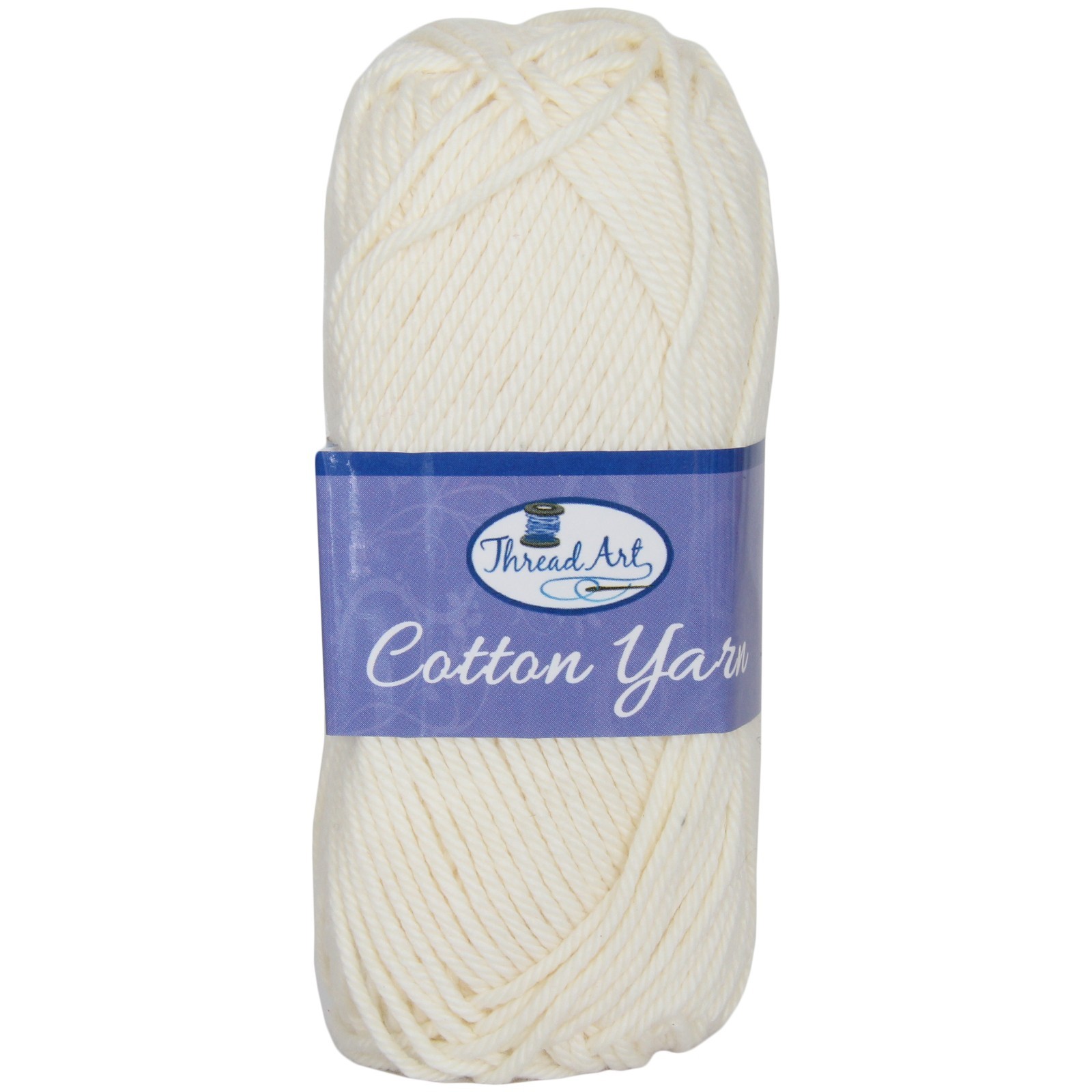

Photos from current listings. Actual item, color, and included accessories may vary.
100 Cotton Yarn Buying Guide
100% cotton yarn is a non-elastic, breathable plant-fiber yarn used for crochet and knitting where stitch definition, drape, and washability matter. The primary trade-off is spin type and fiber length: long-staple combed cotton resists pilling and splitting, while short-staple carded cotton is loftier but weaker and fuzzier. Choose combed or mercerized cotton for durable garments and amigurumi that hold shape; accept carded cotton only for dishcloths, market bags, and low-wear accessories.
Key takeaways
- Cotton has near-zero memory, so 100% cotton garments grow under their own weight; mercerized cotton shrinks less and holds stitch definition better than unmercerized carded cotton.
- Worsted-weight (#4) cotton typically knits at 16–20 stitches per 4 inches on US 7–9 needles, while sport (#2) and DK (#3) cottons suit amigurumi and fine garments at tighter gauges.
- Combed and long-staple Egyptian or Pima cotton reduce pilling and splitting because fibers are aligned before spinning; carded short-staple cotton is weaker and fuzzier.
At a glance
- Category
- Yarn
- Last updated
- Nov 28, 2026
Current offers
Highlights
- Cotton has near-zero memory, so 100% cotton garments grow under their own weight; mercerized cotton shrinks less and holds stitch definition better than unmercerized carded cotton.
- Worsted-weight (#4) cotton typically knits at 16–20 stitches per 4 inches on US 7–9 needles, while sport (#2) and DK (#3) cottons suit amigurumi and fine garments at tighter gauges.
- Combed and long-staple Egyptian or Pima cotton reduce pilling and splitting because fibers are aligned before spinning; carded short-staple cotton is weaker and fuzzier.
- Mercerization (sodium hydroxide treatment) increases luster, tensile strength, and dye uptake while reducing shrinkage; unmercerized cotton is softer but more prone to shrinking and fading.
Best use cases
- Best fit: crochet amigurumi and structured bags — pick mercerized worsted or DK cotton with tight twist for firm, gap-free stitches; skip soft unmercerized carded cotton that sags and fuzzes.
- Best fit: summer garments and baby items — choose combed or Pima cotton in sport or DK weight for breathability and drape; skip bulky single-ply cotton that stretches out of shape.
- Best fit: dishcloths and market bags — use durable worsted carded cotton in solid or variegated colorways; skip luxury long-staple cotton where abrasive use shortens its life.
- Wrong fit: winter sweaters and elastic ribbing — 100% cotton lacks elasticity and warmth; blend with wool or use elastic nylon-blend cotton instead.
Buying tips
- Match yarn weight to pattern gauge: #4 worsted for 16–20 sts/4 in, #3 DK for 20–24 sts, #2 sport for 24–28 sts; buying the wrong weight forces gauge math and fit failures.
- For amigurumi, choose mercerized cotton with tight twist and a 2.5–3.5 mm hook so stitches stay dense; loose-spun carded cotton shows stuffing gaps.
- Buy all skeins for a project in one dye lot; cotton dye lots vary visibly, and 50 g skeins of worsted cotton typically yield 100–130 yards.
- Pre-wash and block a gauge swatch in the same water temperature you will use; unmercerized cotton can shrink 5–10%, so plan yardage with shrinkage allowance.
Specs
| Fiber Content | 100% cotton (combed, carded, mercerized) |
|---|---|
| Yarn Weight | #2 sport / #3 DK / #4 worsted |
| Spin Type | Combed long-staple vs carded short-staple |
| Skein Yield | 50 g = 100–130 yd worsted; more for DK/sport |
Related searches
What to check before buying
- Confirm your pattern's yarn weight category (#2 sport, #3 DK, #4 worsted) and required hook or needle size before selecting cotton.
- Measure finished-garment dimensions against ease requirements; cotton's lack of stretch means zero or negative ease patterns fit differently than wool.
- Check care requirements: mercerized cotton is machine-washable cold and dry-flat; unmercerized cotton may need hand-washing to limit shrinkage.
- Verify skein yardage and fiber content on the label — some 'cotton' yarns are blends with acrylic or polyester that change drape and elasticity.
FAQ
Data sources: eBay / Amazon listings and product attribute feeds. Updated Nov 28, 2026.
Some links on this page are affiliate links. If you buy after clicking one, we may earn a commission at no extra cost to you. This does not change which products appear here or their order. Affiliate disclosure.