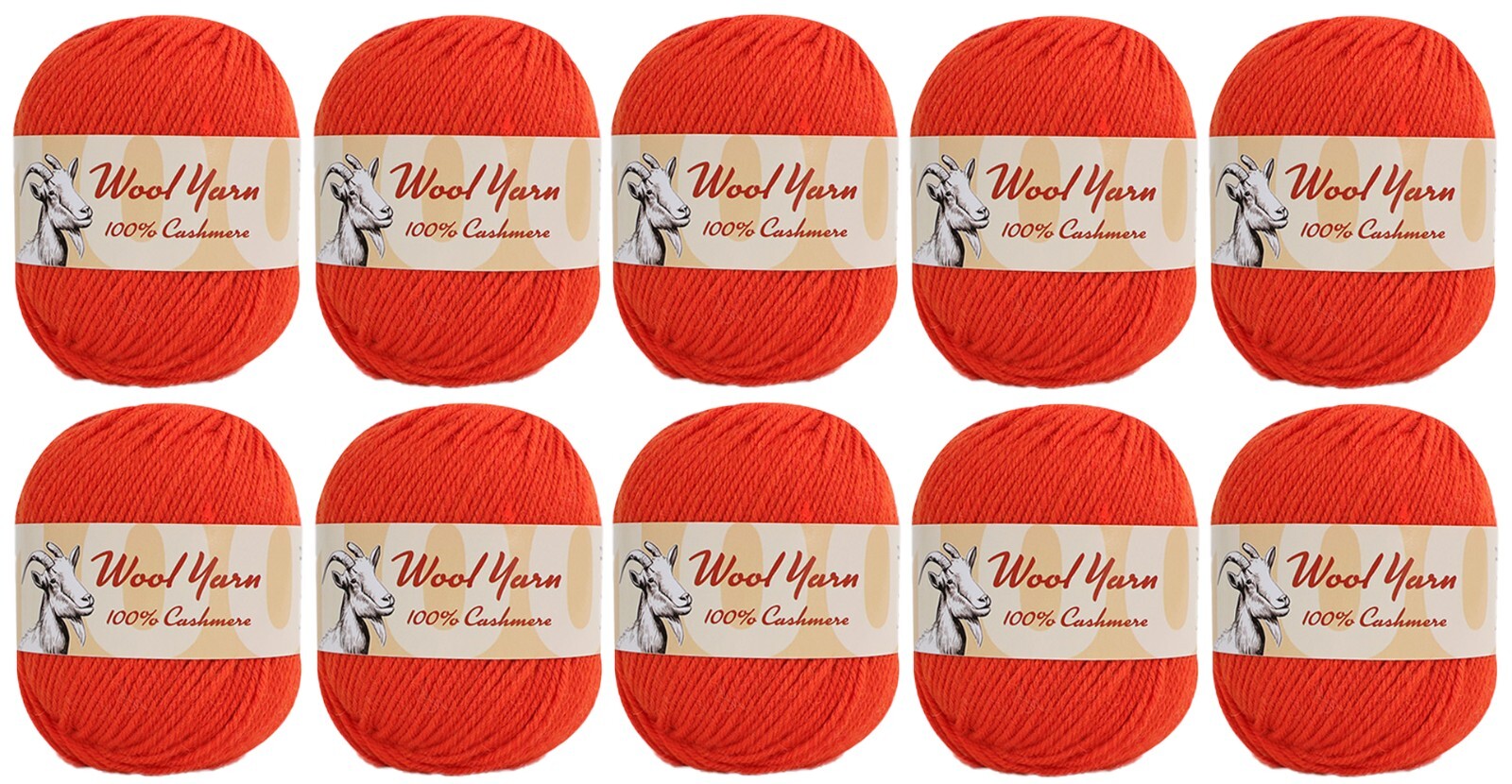

Photos from current listings. Actual item, color, and included accessories may vary.
Cashmere Yarn Buying Guide
Cashmere yarn is a luxury fiber graded by fiber diameter, staple length, and ply structure, where softness and warmth trade against durability and pilling resistance. The decisive split is between 100% long-staple grade-A cashmere and blends or short-staple fiber that halo quickly and wear through in high-friction garments. Buy 100% two-ply or three-ply long-staple cashmere for heirloom accessories, and choose a cashmere-merino or cashmere-silk blend for socks, mittens, and everyday sweaters that see abrasion.
Key takeaways
- Fiber fineness runs 14–16.5 microns for grade-A cashmere; anything above 19 microns feels prickly and is typically labeled as lower-grade or generic 'cashmere wool'.
- Staple length of 36mm or longer resists pilling; short 25–30mm fibers shed and felt faster regardless of the cashmere percentage on the label.
- Two-ply and three-ply constructions add abrasion resistance and stitch definition; single-ply cashmere is soft but pills and stretches in cuffs, heels, and elbows.
At a glance
- Category
- Yarn
- Last updated
- Nov 28, 2026
Current offers
Highlights
- Fiber fineness runs 14–16.5 microns for grade-A cashmere; anything above 19 microns feels prickly and is typically labeled as lower-grade or generic 'cashmere wool'.
- Staple length of 36mm or longer resists pilling; short 25–30mm fibers shed and felt faster regardless of the cashmere percentage on the label.
- Two-ply and three-ply constructions add abrasion resistance and stitch definition; single-ply cashmere is soft but pills and stretches in cuffs, heels, and elbows.
- Cashmere blends with 10–30% silk or 30–50% merino improve tensile strength and memory while retaining most of the fiber's warmth-to-weight ratio.
Best use cases
- Best fit: 100% grade-A two-ply cashmere in 2/28 to 2/30 NM for scarves, cowls, and crewneck sweaters where softness matters more than abrasion resistance.
- Best fit: cashmere-merino or cashmere-silk blend in 4-ply or DK weight for socks, mittens, and children's wear that need machine-wash durability and shape retention.
- Wrong fit: single-ply low-micron cashmere for high-friction items like sock heels, bag straps, or upholstery; it will pill and wear through within a season.
- Wrong fit: 'cashmere wool' packs without a stated micron or staple length for gift knitting or resale; the fiber content is unverifiable and halo will vary skein to skein.
Buying tips
- Demand a labeled micron count (14–16.5 for grade-A) and staple length (36mm+); if the label only says '100% cashmere' with no grade, assume short-staple generic fiber.
- Calculate yardage, not skein count: a 50g skein of 2/28 NM cashmere yields roughly 175–200 yards, so a 1,200-yard sweater needs 6–7 skeins, not 3–4.
- Choose 2-ply or 3-ply for garments and 1-ply only for lace shawls or holding double; ply directly determines abrasion resistance and pilling behavior.
- For washability, select a blend with 20–50% merino or a superwash-treated cashmere; untreated 100% cashmere requires hand-wash cold and flat drying to avoid felting.
Specs
| Fiber Grade | Grade-A 14–16.5 micron |
|---|---|
| Ply Structure | 1-ply / 2-ply / 3-ply |
| Staple Length | 36mm+ long-staple |
| Blend Options | 100% cashmere / merino / silk |
Related searches
What to check before buying
- Confirm the yarn weight and gauge against your pattern: 2/28 NM lace weight versus DK or worsted changes needle size and yardage requirements by 2–3x.
- Match skein yardage to total project yardage plus 10–15% buffer for swatching and dye-lot variance, especially with hand-dyed or small-batch cashmere.
- Check for a stated dye lot on multi-skein orders; cashmere takes dye inconsistently across lots, so request the same lot number for garments.
- Verify fiber certification (e.g., SFA or GOTS) and micron disclosure before buying premium-priced skeins; undocumented 'cashmere' is often blended or recycled fiber.
FAQ
Data sources: eBay / Amazon listings and product attribute feeds. Updated Nov 28, 2026.
Some links on this page are affiliate links. If you buy after clicking one, we may earn a commission at no extra cost to you. This does not change which products appear here or their order. Affiliate disclosure.