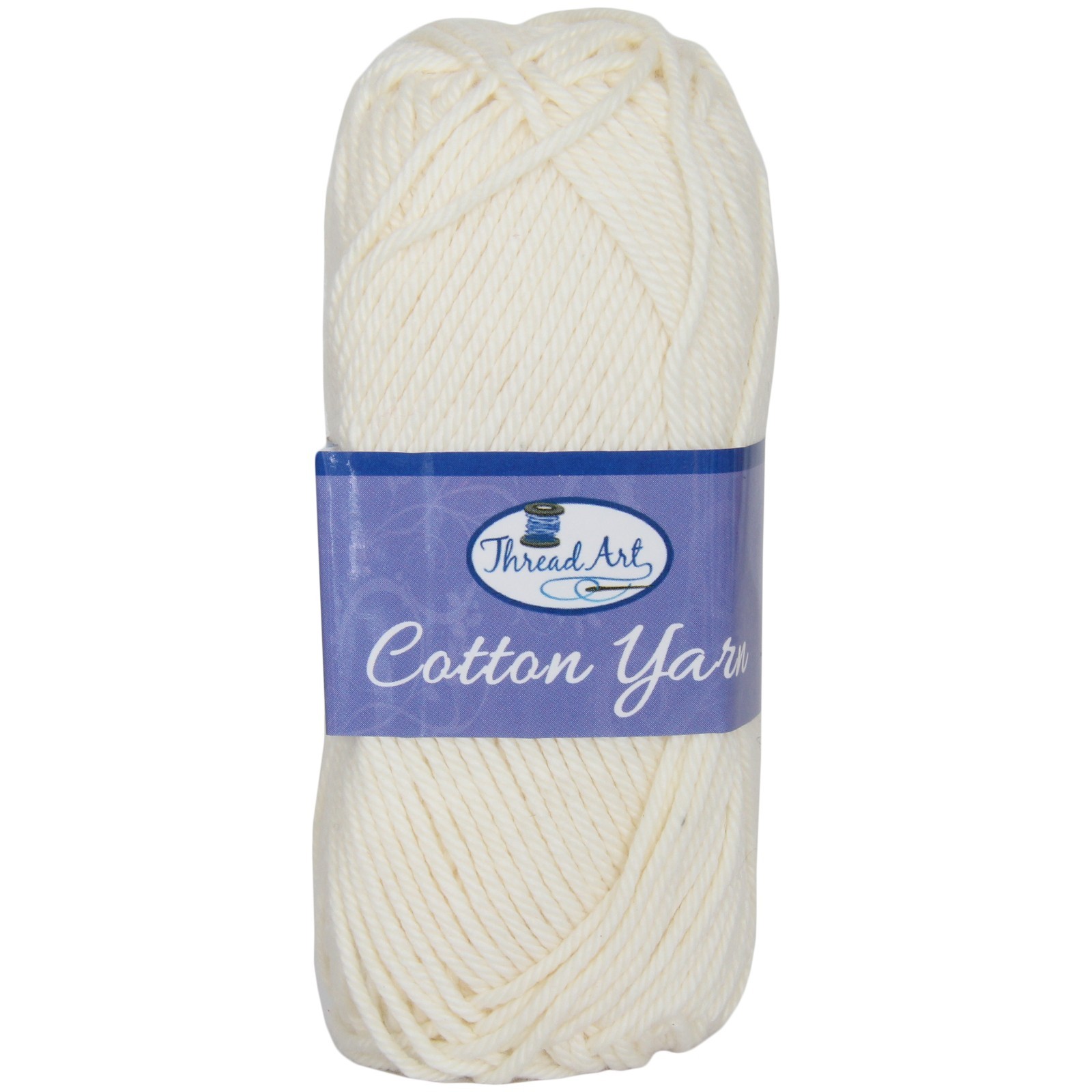

Photos from current listings. Actual item, color, and included accessories may vary.
Crochet Yarn Buying Guide
Crochet yarn is not one product: the fiber, weight, and twist determine whether your bag holds its shape or your blanket drapes softly. Cotton is the default for structured accessories like bags because it has low stretch and crisp stitch definition, while animal fibers suit drape and warmth but pill and felt with friction. Buy by fiber first, then by weight number, then by yardage per skein—most beginner frustration traces back to a soft, splitty yarn that fights the hook.
Key takeaways
- Cotton yarn (100% or high-cotton blends) is inelastic and machine-washable, making it the standard choice for crochet bags, market totes, placemats, and amigurumi that must resist sagging.
- Worsted (#4) medium weight is the most common crochet yarn: it works with 5.0-5.5 mm hooks and balances stitch speed with dense, durable fabric for bags and home goods.
- Fiber grade drives durability: long-staple combed cotton resists pilling far better than short-staple carded cotton, while cashmere and wool feel luxurious but abrade and felt under the friction of bag straps.
At a glance
- Category
- Yarn
- Last updated
- Nov 28, 2026
Current offers
Highlights
- Cotton yarn (100% or high-cotton blends) is inelastic and machine-washable, making it the standard choice for crochet bags, market totes, placemats, and amigurumi that must resist sagging.
- Worsted (#4) medium weight is the most common crochet yarn: it works with 5.0-5.5 mm hooks and balances stitch speed with dense, durable fabric for bags and home goods.
- Fiber grade drives durability: long-staple combed cotton resists pilling far better than short-staple carded cotton, while cashmere and wool feel luxurious but abrade and felt under the friction of bag straps.
- Skein format matters for project math: 50 g cotton skeins typically yield roughly 100-125 yards, so a medium bag often needs 4-8 skeins—buy the same dye lot to avoid visible color shifts.
Best use cases
- Crochet bags and totes: choose 100% worsted cotton in a tight twist; skip soft single-ply or alpaca, which stretch and fuzz under load.
- Amigurumi and plushies: pick mercerized or tight-spun cotton for crisp, gap-free stitches that hold stuffing shape; avoid hairy fibers that blur the face.
- Wearable garments and shawls: choose fingering or sport-weight wool or cotton-blend for drape; avoid heavy worsted cotton, which adds bulk and weight at the seams.
- Home decor like coasters and baskets: use bulky cotton or cotton-jute blend for stiffness; skip acrylic, which melts under hot pans and loses body.
Buying tips
- Prioritize fiber content over color: 100% cotton or a cotton-acrylic blend holds bag structure, while 100% acrylic stretches and pills with use.
- Choose the weight number that fits the pattern: #4 worsted for bags and blankets, #3 DK for garments, #1-2 fingering for lace and socks—hook size follows the yarn, not the other way around.
- Check yardage, not just skein count: two 50 g skeins can differ by 30+ yards, so compare total yards before buying for a project.
- Inspect twist and ply: a tight 4-ply or cabled cotton resists splitting on the hook; loose single-ply yarns snag and shed, especially in bags.
Specs
| Fiber Content | 100% cotton / wool / acrylic / blends |
|---|---|
| Yarn Weight | #4 worsted / #3 DK / #1-2 fingering |
| Skein Format | 50 g / 100 g skeins; 100-250 yd |
| Recommended Hook | 5.0-5.5 mm (worsted cotton) |
Related searches
What to check before buying
- Confirm the pattern's gauge swatch: crochet a 10 cm square in your chosen yarn and hook; if it measures larger than the pattern, drop a hook size rather than changing yarn.
- Measure project dimensions and estimate yardage: a 35 cm tote in worsted cotton typically requires 400-600 yards; buy one extra skein for safety.
- Check care requirements against your use: bags and baby items need machine-washable cotton; hand-wash-only cashmere suits shawls, not daily totes.
- Match hook to yarn label: worsted cotton generally calls for 5.0-5.5 mm; using a too-small hook creates stiff fabric and hand fatigue.
FAQ
Data sources: eBay / Amazon listings and product attribute feeds. Updated Nov 28, 2026.
Some links on this page are affiliate links. If you buy after clicking one, we may earn a commission at no extra cost to you. This does not change which products appear here or their order. Affiliate disclosure.