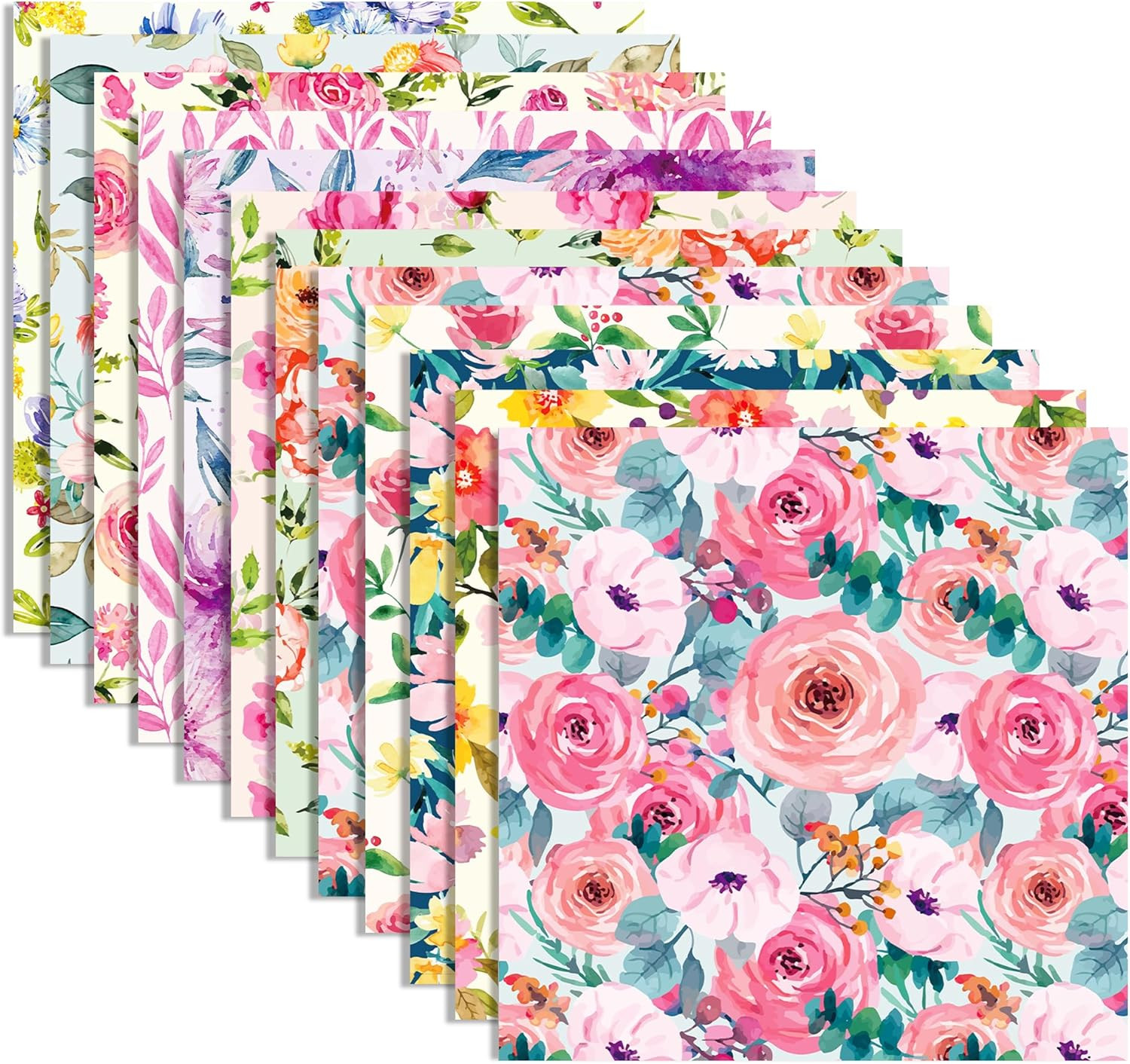

Photos from current listings. Actual item, color, and included accessories may vary.
12 X 12 Scrapbook Paper Buying Guide
12 x 12 scrapbook paper is the standard full-sheet format for traditional layouts, cardmaking, and papercrafting, sold as single sheets, themed pads, or bulk mixed lots. The core trade-off is paper weight (GSM) and lignin content versus cost: 65-80 lb (176-216 GSM) acid-free cardstock resists bleed and yellowing, while thin 50-60 lb sheets cockle under wet media and fade over time. Buy 80 lb+ acid-free cardstock for archival photos, and choose lighter text-weight or bulk mixed lots only for die-cutting, punching, and disposable craft projects.
Key takeaways
- Paper weight in GSM/lb determines wet-media performance: 216 GSM (80 lb) cardstock handles light watercolor and glue without warping; 176 GSM (65 lb) suits layering and die-cutting; under 120 GSM is text-weight and buckles.
- Acid-free and lignin-free pulps prevent photo yellowing and embrittlement; buffered papers with calcium carbonate resist environmental acids over decades, while recycled or unbuffered sheets yellow in 5-10 years.
- Double-sided prints align patterns front/back for flip-fold layouts and mini albums; single-sided prints are cheaper but show white cores on torn or sanded edges.
At a glance
- Category
- Paper Crafts & Scrapbooking
- Last updated
- Nov 29, 2026
Current offers
Highlights
- Paper weight in GSM/lb determines wet-media performance: 216 GSM (80 lb) cardstock handles light watercolor and glue without warping; 176 GSM (65 lb) suits layering and die-cutting; under 120 GSM is text-weight and buckles.
- Acid-free and lignin-free pulps prevent photo yellowing and embrittlement; buffered papers with calcium carbonate resist environmental acids over decades, while recycled or unbuffered sheets yellow in 5-10 years.
- Double-sided prints align patterns front/back for flip-fold layouts and mini albums; single-sided prints are cheaper but show white cores on torn or sanded edges.
- Pad formats differ by binding: glue-bound pads tear at the spine and leave a rough edge, while stitch-bound or loose-sheet packs keep full 12 x 12 usable area without trimming.
Best use cases
- Archival family albums and photo layouts: choose 80 lb (216 GSM) acid-free, lignin-free cardstock in solid or subtle patterns; skip thin 50-60 lb decorative pads that yellow and cockle under adhesive.
- Die-cutting, punch art, and kids' crafts: choose bulk mixed lots of 65 lb (176 GSM) or lighter sheets for clean cuts and low cost per sheet; skip heavyweight textured cardstock that dulls dies and jams punches.
- Themed holiday or floral pads (Christmas, hydrangea, chinoiserie): choose 24-sheet double-sided pads at 65-80 lb for coordinated patterns; skip single-sided novelty pads if you need matching backs for flip folds.
- Card bases and 3D papercrafts: choose 80-110 lb (216-300 GSM) solid-core cardstock for structural rigidity; skip patterned text-weight sheets that crease and collapse under scoring.
Buying tips
- Match GSM to technique: 176-216 GSM for general layering and die-cutting, 216-300 GSM for card bases and wet media, and 90-120 GSM only for inserts, envelopes, and disposable crafts.
- Buy acid-free and lignin-free for anything touching photos; unbuffered or recycled sheets are acceptable only for ephemeral crafts and practice cuts.
- Count sheets against usable area: a 24-sheet pad yields 24 full 12 x 12 sheets, but glue-bound pads lose 1/4 inch at the spine, so trim or plan margins around the binding edge.
- Double-sided pads cost more per sheet but eliminate backing waste on flip folds, shaker cards, and mini albums; single-sided lots are fine for flat layouts and die-cut shapes.
Specs
| Paper Weight | 65-80 lb / 176-216 GSM cardstock |
|---|---|
| Archival Grade | Acid-free & lignin-free (buffered) |
| Sheet Size | 12 x 12 in (30.5 x 30.5 cm) |
| Print Sides | Single-sided vs double-sided |
Related searches
What to check before buying
- Measure your album, page protector, and trimmer: standard 12 x 12 paper fits 12 x 12 post-bound and strap-hinge albums, but 8.5 x 11 and 6 x 6 albums need cutting down.
- Confirm your die-cut machine's max width (most are 6 inches) and plan to cut 12 x 12 sheets into smaller panels before feeding.
- Check storage space: 12 x 12 pads and sheet lots need flat, dust-free storage at least 13 x 13 inches per stack to prevent corner curl.
- Match adhesive and media to paper weight: wet glues and watercolor require 216 GSM+ sized stock; dry adhesives and tape runners work on all weights.
FAQ
Data sources: eBay / Amazon listings and product attribute feeds. Updated Nov 29, 2026.
Some links on this page are affiliate links. If you buy after clicking one, we may earn a commission at no extra cost to you. This does not change which products appear here or their order. Affiliate disclosure.