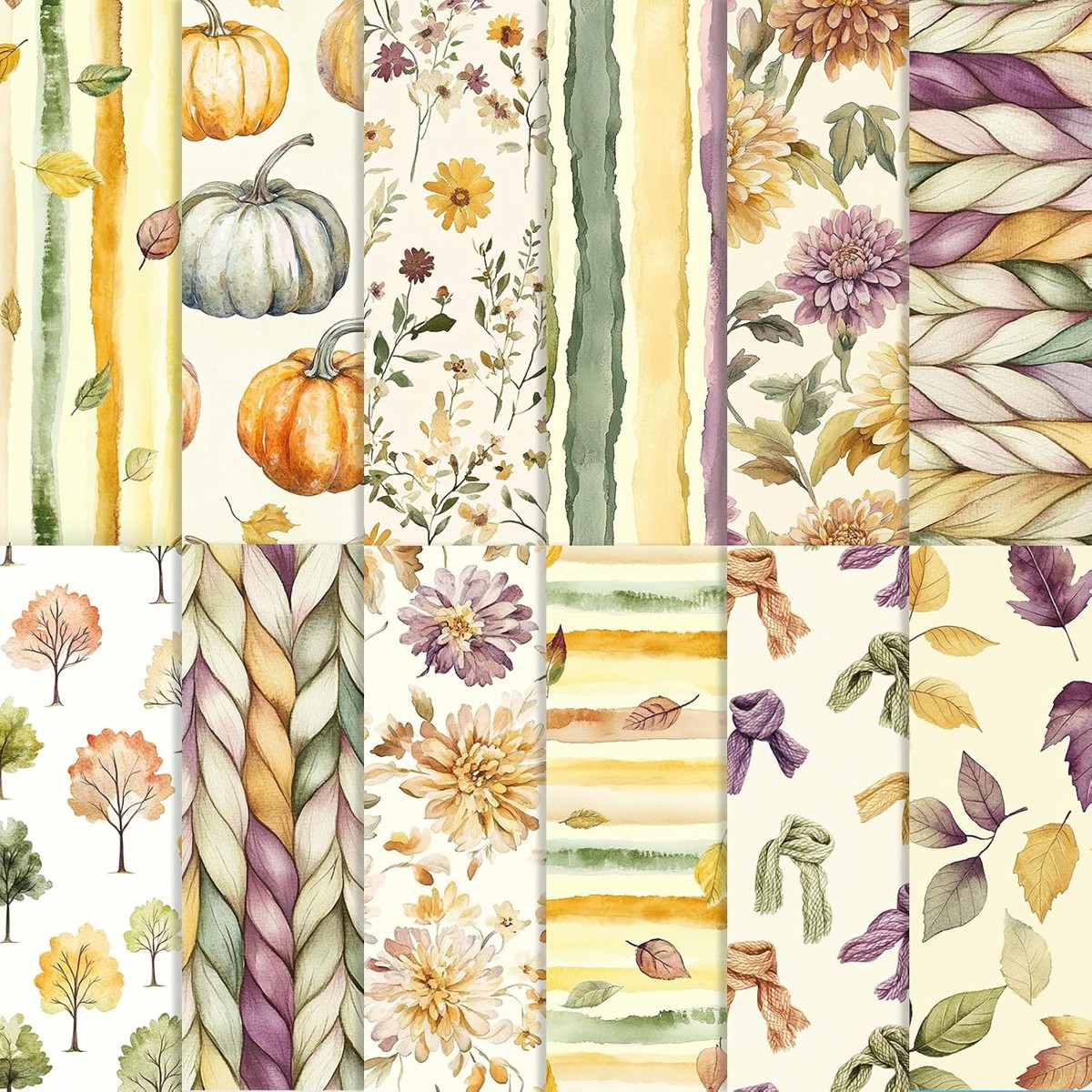

Photos from current listings. Actual item, color, and included accessories may vary.
Fall Scrapbook Paper Buying Guide
Fall scrapbook paper is a seasonal papercrafting substrate sold as loose sheets or bound pads, distinguished by autumn palettes and motifs that must survive cutting, adhesion, and archival storage. The primary trade-off is paper weight and lignin content versus sheet count and format: lightweight bond or vellum folds easily but buckles under wet glue, while 65–80 lb cardstock holds dimensional embellishments without warping. The decisive rule is simple: buy acid-free, lignin-free stock at 65 lb or heavier for any layout intended to last, and reserve thin decorative sheets for layering accents only.
Key takeaways
- Paper weight drives performance: 65–80 lb cardstock resists curling and adhesive bleed, while 20–32 lb bond or text-weight sheets wrinkle under wet mediums and dimensional tape.
- Acid-free and lignin-free pulps prevent yellowing and embrittlement; lignin-rich newsprint-style sheets degrade within years and stain adjacent photos.
- Pad format differences matter: 12x12 inch pads suit full-page layouts and die-cutting, while 6x6 inch pads are scaled for card fronts, pocket pages, and matting.
At a glance
- Category
- Paper Crafts & Scrapbooking
- Last updated
- Nov 29, 2026
Current offers
Highlights
- Paper weight drives performance: 65–80 lb cardstock resists curling and adhesive bleed, while 20–32 lb bond or text-weight sheets wrinkle under wet mediums and dimensional tape.
- Acid-free and lignin-free pulps prevent yellowing and embrittlement; lignin-rich newsprint-style sheets degrade within years and stain adjacent photos.
- Pad format differences matter: 12x12 inch pads suit full-page layouts and die-cutting, while 6x6 inch pads are scaled for card fronts, pocket pages, and matting.
- Single-sided versus double-sided printing dictates layering: double-sided sheets allow folded flaps and peek-through accents, while single-sided sheets waste the reverse for hidden-journaling cards.
Best use cases
- Choose a 12x12 inch acid-free cardstock pad for full-page autumn layouts and die-cut titles; skip thin 6x6 pads if you need continuous backgrounds or large leaf silhouettes.
- Choose a 6x6 inch pad or loose 4x6 inch sheets for greeting cards, tag sets, and pocket-page inserts; skip 12x12 pads unless you plan to trim every sheet down.
- Choose 65 lb or heavier cardstock for albums handled frequently or embellished with brads and chipboard; skip 20–32 lb decorative paper for structural page bases.
- Choose double-sided fall paper for interactive flip elements and mini albums; skip single-sided sheets when both faces remain visible in the finished project.
Buying tips
- Match sheet count to project volume: a 24-sheet pad yields roughly 24 full 12x12 backgrounds or 96 6x6 card fronts after quartering, so buy two pads for multi-page albums.
- Verify acid-free and lignin-free labeling on the pad cover or sheet header; unlabeled decorative paper is typically mechanical pulp and unsafe for photo-adjacent use.
- Check the paper's caliper or pound rating: 65 lb cover stock equals about 0.007–0.010 inch thickness, which feeds cleanly through most die-cut machines without tearing.
- Confirm sheet dimensions match your trimmer and page protectors: 12x12 inch sheets fit standard post-bound and strap-hinge albums, while 8.5x11 inch sheets suit letter-size binders only.
Specs
| Paper Weight | 20–32 lb text vs 65–80 lb cardstock |
|---|---|
| Sheet Size | 12x12 in / 8.5x11 in / 6x6 in |
| Archival Quality | Acid-free & lignin-free required |
| Print Sides | Single-sided vs double-sided |
Related searches
What to check before buying
- Measure your album page or card base before buying: 12x12 inch pads suit full layouts, 6x6 inch pads suit card fronts and pocket pages, and 8.5x11 inch sheets fit letter binders.
- Check your die-cut machine's maximum width and plate system; 12x12 inch paper requires a wide-format machine or a 6-inch-wide trimmer for downsizing.
- Confirm storage environment: humid rooms warp unsealed cardstock, so keep pads flat in a closed bin with silica gel if ambient humidity exceeds 60 percent.
- Verify adhesive compatibility: heavier 80 lb cardstock needs double-sided tape or liquid glue with weight applied, while 20 lb sheets bond with glue sticks but cockle.
FAQ
Data sources: eBay / Amazon listings and product attribute feeds. Updated Nov 29, 2026.
Some links on this page are affiliate links. If you buy after clicking one, we may earn a commission at no extra cost to you. This does not change which products appear here or their order. Affiliate disclosure.