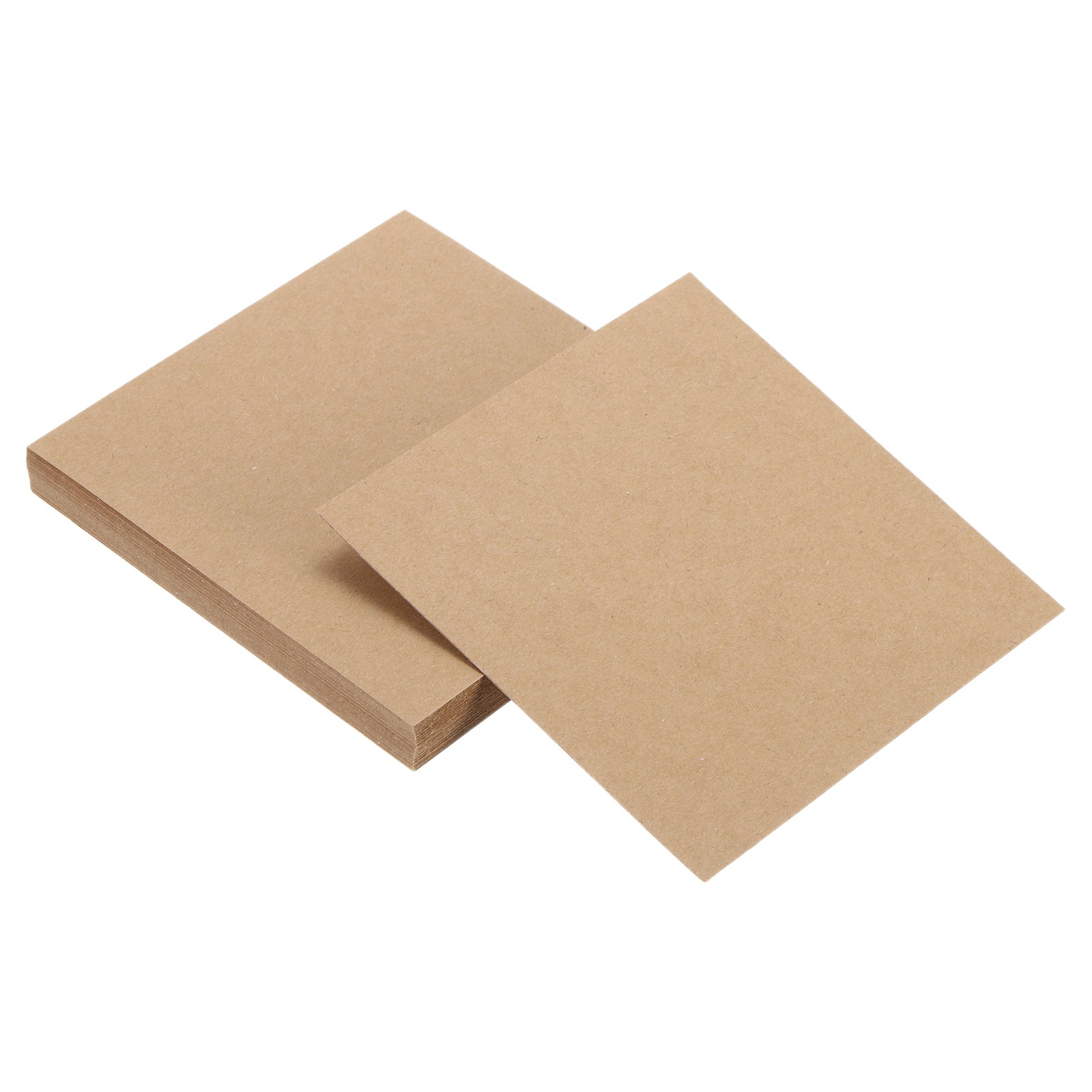

Photos from current listings. Actual item, color, and included accessories may vary.
Kraft Paper Cardstock Buying Guide
Kraft paper cardstock is unbleached, lignin-rich cellulose stock sold in sheets and pads, prized for its natural brown tone, tear resistance, and compatibility with wet and dry media. The primary trade-off is between lighter, recycled-content weights that buckle under washes and heavier, virgin-fiber or dual-sided boards that hold ink without warping. Buy by caliper and fiber source—not by sheet count—to separate true cardstock from thin kraft paper.
Key takeaways
- Basis weight defines stiffness: 65–80 lb cover (176–216 gsm) handles die-cutting and scoring; 100 lb (270 gsm) resists warp under wet media.
- Virgin kraft fiber delivers higher tear strength and cleaner scoring than high-recycled blends, which can vary in thickness batch to batch.
- Acid-free, buffered kraft (pH 7–8.5) prevents yellowing and is mandatory for archival scrapbook layouts and photo-adjacent pages.
At a glance
- Category
- Paper Crafts & Scrapbooking
- Last updated
- Nov 29, 2026
Current offers
Highlights
- Basis weight defines stiffness: 65–80 lb cover (176–216 gsm) handles die-cutting and scoring; 100 lb (270 gsm) resists warp under wet media.
- Virgin kraft fiber delivers higher tear strength and cleaner scoring than high-recycled blends, which can vary in thickness batch to batch.
- Acid-free, buffered kraft (pH 7–8.5) prevents yellowing and is mandatory for archival scrapbook layouts and photo-adjacent pages.
- Dual-sided sheets with matching brown faces allow fold-over cards and tags without white core show-through at scored edges.
Best use cases
- Pick 80–110 lb acid-free kraft sheets for scrapbook foundations, photo mats, and die-cut embellishments that must resist fading.
- Choose lighter 65 lb kraft cardstock for layered card fronts, journaling cards, and stamping where bulk would over-thicken envelopes.
- Skip thin 4x4 craft sheets for structural projects like box bases or mini-album covers—they lack the caliper to hold a crease.
- For mixed-media wet washes, use 100 lb or heavier sized kraft; lighter recycled stock cockles and delaminates under watercolor.
Buying tips
- Match gsm to technique: 176–216 gsm for cards and tags, 270 gsm+ for covers and boxes—below 160 gsm it behaves as paper, not cardstock.
- Demand acid-free and lignin-free labeling for any layout touching photos; unbuffered industrial kraft browns will migrate and stain over time.
- When buying by sheet count, calculate cost per square foot—4x4 pads often cost more per area than 12x12 sheets or 8.5x11 packs.
- Check grain direction on 12x12 sheets: fold parallel to grain for clean spines; cross-grain scoring cracks the fiber surface.
Specs
| Basis Weight | 65–110 lb cover (176–300 gsm) |
|---|---|
| Fiber Source | Virgin kraft vs recycled blend |
| Archival Grade | Acid-free / lignin-free buffered |
| Sheet Format | 4x4, 8.5x11, 12x12 in pads/sheets |
Related searches
What to check before buying
- Measure your die-cut machine's maximum sheet width—most manual cutters cap at 6 inches, so 12x12 stock needs a wide-format plate.
- Confirm your printer's feed path handles 80 lb+ cover stock; inkjet models with straight-through feeds avoid jams on heavy kraft.
- Verify sheet dimensions against your album or card base—A2 cards need 4.25x5.5 inch panels, not 4x4 squares.
- Store kraft in a dry, dark flat file; humidity above 60% warps unsealed sheets and accelerates acid migration in non-archival stock.
FAQ
Data sources: eBay / Amazon listings and product attribute feeds. Updated Nov 29, 2026.
Some links on this page are affiliate links. If you buy after clicking one, we may earn a commission at no extra cost to you. This does not change which products appear here or their order. Affiliate disclosure.