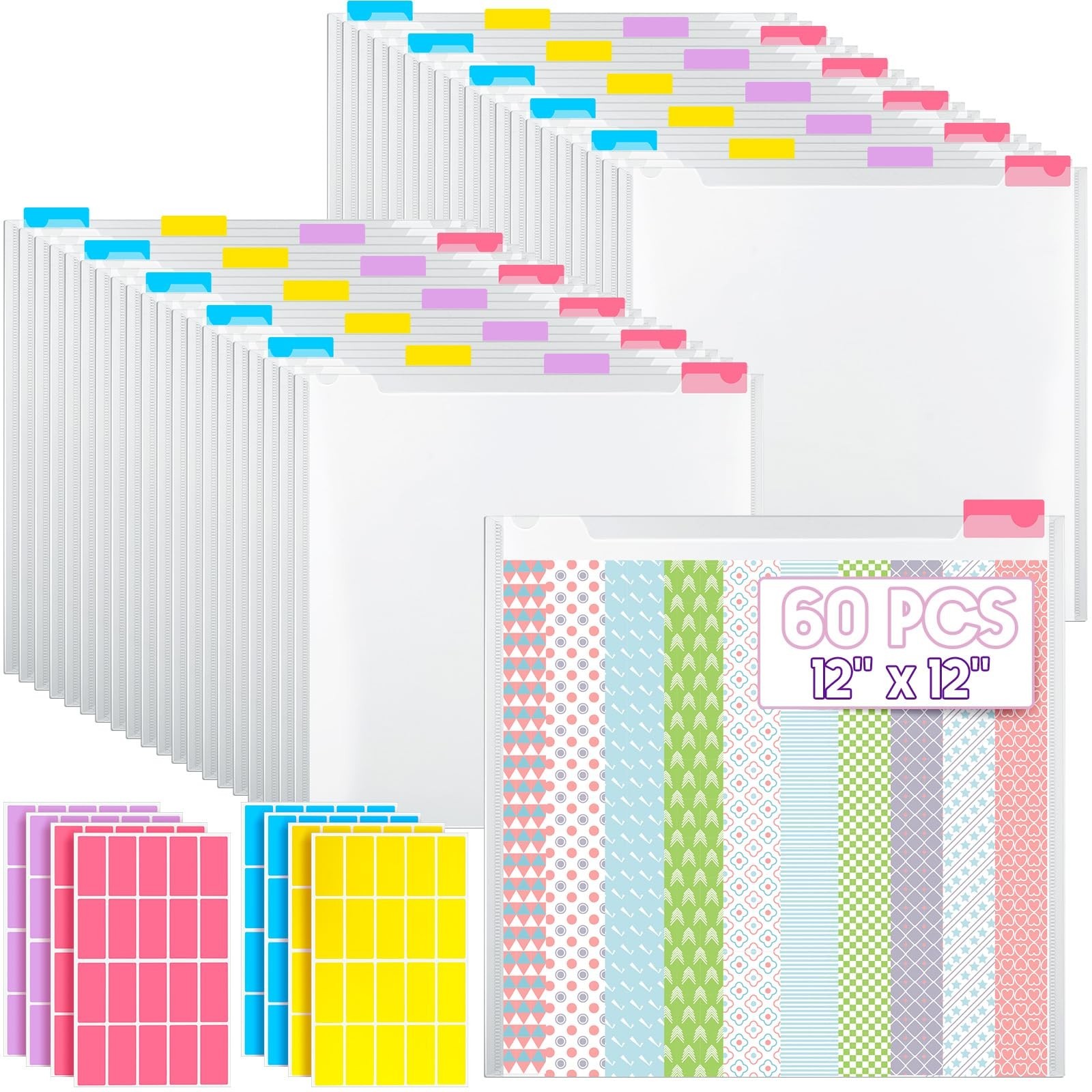

Photos from current listings. Actual item, color, and included accessories may vary.
Scrapbook Paper Storage Buying Guide
Scrapbook paper storage covers the binders, expanding files, and rigid cases that protect 12x12 and 8.5x11 sheets from bending, dust, and UV fade. The core trade-off is archival sheet capacity versus footprint: rigid closed cases protect paper fully but cost shelf depth, while open bins and expanding files maximize accessible capacity with less structural protection. The decision rule is simple: if your sheets are photo-safe, acid-free cardstock you intend to keep for years, buy closed, rigid, lignin-free storage; if you are organizing loose scraps and work-in-progress sheets, an open or expanding system is sufficient.
Key takeaways
- 12x12 is the dominant scrapbook sheet size; cases and binders must state a true 12.5x12.5 in interior to fit sheets plus page protectors without corner curling.
- Acid-free and lignin-free construction matters more than case thickness: PVC and untreated cardboard leach acids that yellow paper, so buy polypropylene or archival cardstock dividers.
- Rigid closed cases (poly or fabric-wrapped board) protect against dust and UV; expanding files and open bins expose sheets to light and moisture but allow faster sorting.
At a glance
- Category
- Paper Crafts & Scrapbooking
- Last updated
- Nov 29, 2026
Current offers
Highlights
- 12x12 is the dominant scrapbook sheet size; cases and binders must state a true 12.5x12.5 in interior to fit sheets plus page protectors without corner curling.
- Acid-free and lignin-free construction matters more than case thickness: PVC and untreated cardboard leach acids that yellow paper, so buy polypropylene or archival cardstock dividers.
- Rigid closed cases (poly or fabric-wrapped board) protect against dust and UV; expanding files and open bins expose sheets to light and moisture but allow faster sorting.
- Handle and latch quality is the real durability metric: stitched or riveted handles and snap latches outlast glued-on handles and friction-fit lids over years of use.
Best use cases
- Best fit: a closed 12x12 case with acid-free dividers for anyone storing finished, photo-safe layouts or cardstock they plan to keep for years — skip cheap open bins here.
- Best fit: an expanding file or open vertical bin for active scrappers who pull sheets weekly and want visible, fast access — skip heavy rigid cases if you re-sort constantly.
- Wrong fit: thin cardboard or PVC shoe boxes for archival paper — pick polypropylene or archival-board cases instead; wrong fit: oversized bins for 8.5x11 paper, which let sheets slide and bend.
Buying tips
- Measure your true sheet size first: 12x12 sheets need at least a 12.5x12.5 in interior; 8.5x11 sheets need 9x11.5 in or they slide and dog-ear.
- Choose polypropylene or acid-free/lignin-free board over PVC and recycled cardboard; PVC off-gasses and cardboard acids yellow paper over time.
- Match the format to access frequency: closed latch cases for long-term archival storage, expanding files or open vertical bins for weekly sorting.
- Check handle attachment and latch type: riveted or stitched handles and snap latches survive years of lifting; glued handles and friction lids fail first.
Specs
| Sheet Size | 12x12 in / 8.5x11 in |
|---|---|
| Material Grade | Acid-free poly / lignin-free board |
| Closure Type | Latch case / expanding file / open bin |
| Archival Rating | Acid-free, lignin-free, PVC-free |
Related searches
What to check before buying
- Measure your shelf or closet depth and height: rigid 12x12 cases typically need 13+ in of depth and 13 in of vertical clearance for the lid.
- Confirm your dominant sheet size and count: 12x12 vs 8.5x11 determines case interior; count sheets to size the binder or file capacity.
- Check room environment: keep storage out of direct sun and damp basements; closed poly cases slow but do not stop humidity damage.
- Confirm companion parts needed: page protectors, divider tabs, and label refills are often sold separately from the case or binder.
FAQ
Data sources: eBay / Amazon listings and product attribute feeds. Updated Nov 29, 2026.
Some links on this page are affiliate links. If you buy after clicking one, we may earn a commission at no extra cost to you. This does not change which products appear here or their order. Affiliate disclosure.