
Photos from current listings. Actual item, color, and included accessories may vary.
Knitting Pattern Dog Coat Buying Guide
A knitting pattern for a dog coat is a set of written instructions (chart or row-by-row) that translates your dog's back length and chest girth into a fitted, leg-friendly garment. The core trade-off is between generic sizing that assumes a barrel-chested or deep-chested breed and graded, breed-aware shaping that prevents rubbing at the armpit and slippage at the rear. The clear decision rule: buy patterns that publish finished measurements plus a chest-girth-to-back-length ratio, and skip any pattern that lists only 'small/medium/large' with no gauge or schematic.
Median $5.90
Key takeaways
- Gauge swatch dominance: a 4-inch (10 cm) stockinette swatch that is off by 0.5 stitch changes a 22-inch chest by roughly 2.75 inches, so every reputable pattern states yarn weight, needle size, and blocked gauge.
- Chest girth is the governing dimension, not back length: coats sized by chest circumference with 2-4 inches of positive ease fit correctly, while length-only sizing produces tight armholes on deep-chested breeds.
- Leg openings and underbelly shaping separate functional coats from capes: patterns with separated leg holes and a belly panel stay in place during walks; open-sided cape styles lift in wind.
At a glance
- Category
- Knitting & Crochet Patterns
- Last updated
- Nov 28, 2026
Current offers
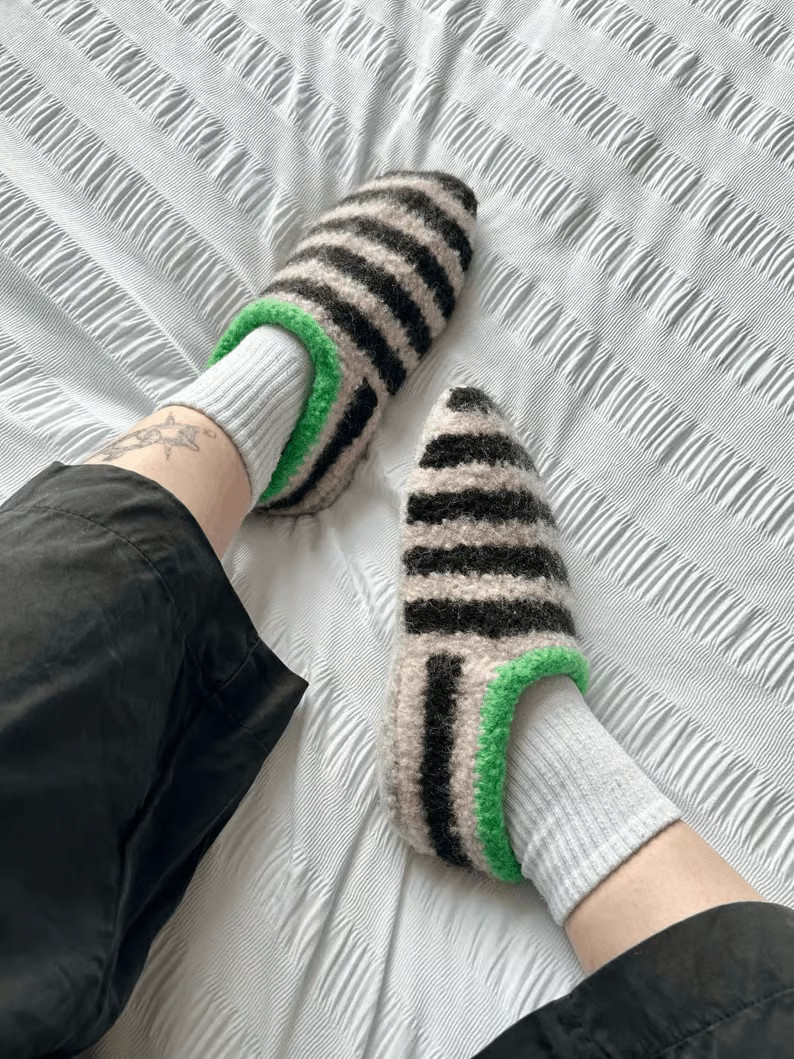 Sailor Slippers Knitting Pattern$3.99View on eBay
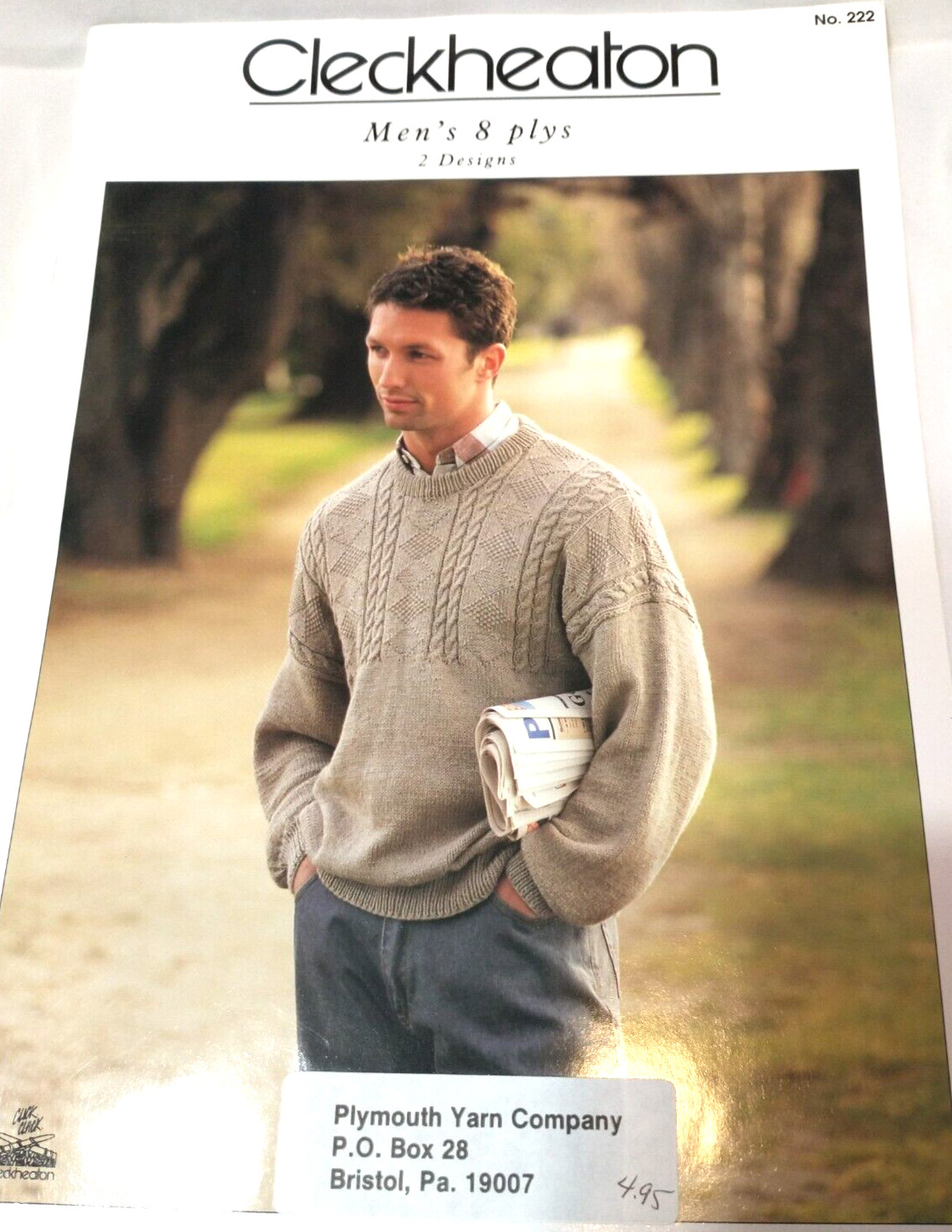 Men's Sweater Knitting Pattern Knit Cleckheaton Men's 8 plys 2 Designs #222 A84$5.80View on eBay
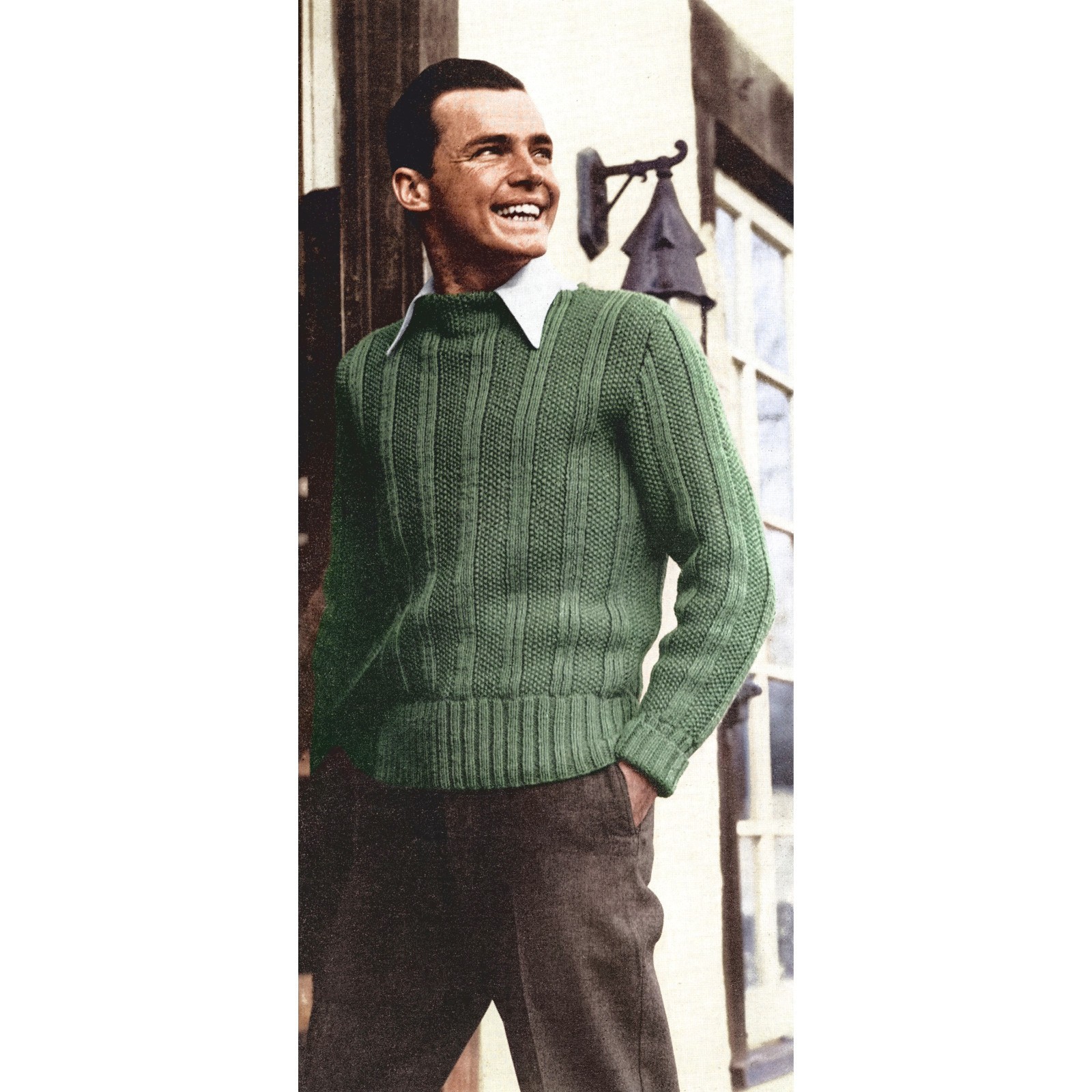 Vtg 1940s Men’s & Boy’s Textured Seed Stitch Sweater Knitting Pattern$6.00View on eBay
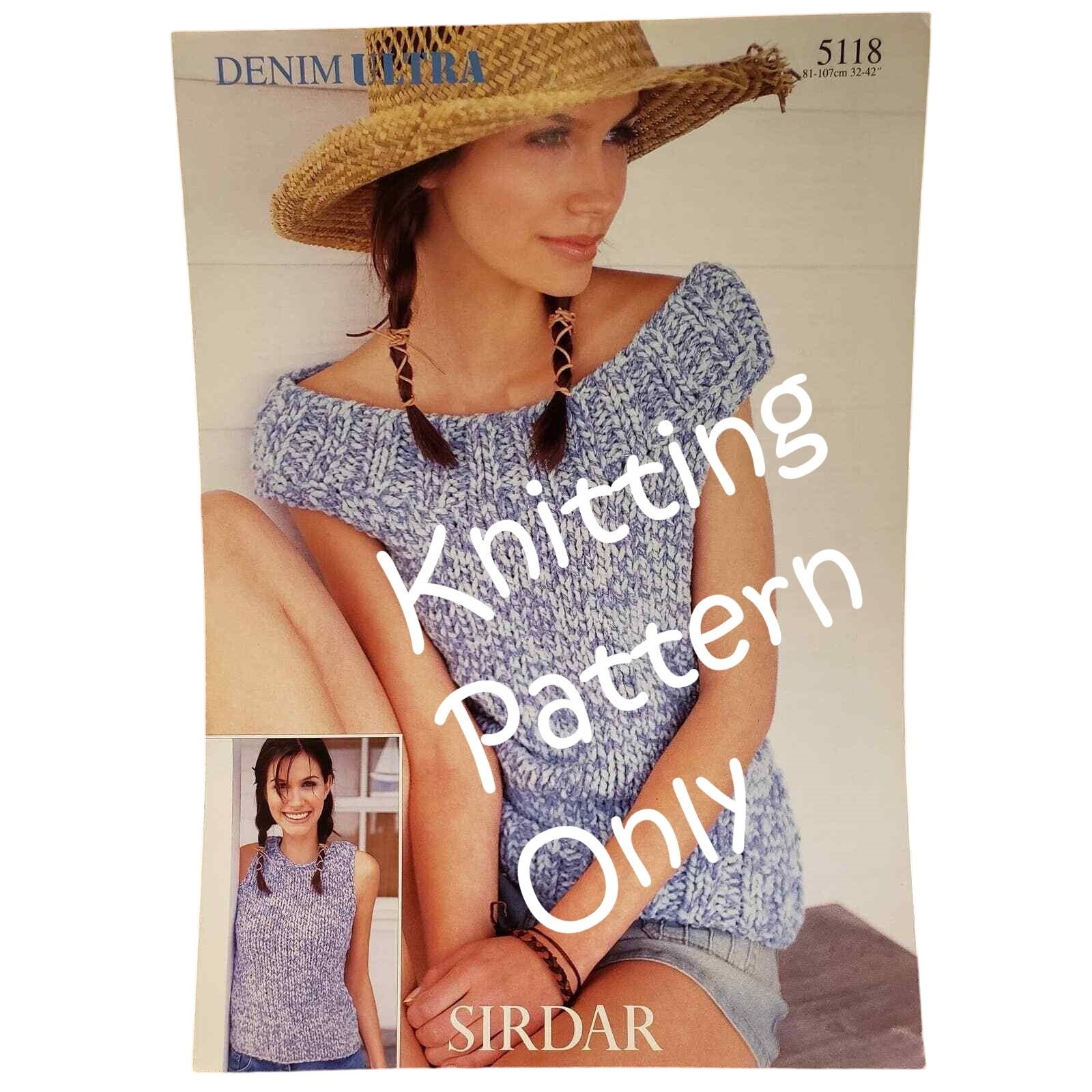 New Sirdar 5118 Denim Ultra Off Shoulder Tank Top Sweater Knitting Pattern$8.00View on eBay
Highlights
- Gauge swatch dominance: a 4-inch (10 cm) stockinette swatch that is off by 0.5 stitch changes a 22-inch chest by roughly 2.75 inches, so every reputable pattern states yarn weight, needle size, and blocked gauge.
- Chest girth is the governing dimension, not back length: coats sized by chest circumference with 2-4 inches of positive ease fit correctly, while length-only sizing produces tight armholes on deep-chested breeds.
- Leg openings and underbelly shaping separate functional coats from capes: patterns with separated leg holes and a belly panel stay in place during walks; open-sided cape styles lift in wind.
- Construction tier drives fit: top-down raglan knitting allows try-on during growth and easy length adjustment, while flat seamed panels suit stable adult measurements but are harder to alter.
Best use cases
- Best fit: choose a top-down raglan pattern with leg openings for growing puppies or deep-chested breeds (Dachshund, Corgi, French Bulldog) because you can try on mid-knit and add length at the hem.
- Best fit: choose a graded chest-girth pattern with a belly panel for short-haired, cold-sensitive adults (Chihuahua, Greyhound, Whippet) that need full torso coverage without restricting stride.
- Wrong fit: skip cape-style or open-sided patterns for active outdoor dogs in wet or windy climates; they shift laterally and expose the belly.
- Wrong fit: skip one-size 'small/medium/large' patterns with no schematic for broad-chested or narrow-waisted breeds; the armhole depth will bind or the rear will sag.
Buying tips
- Measure chest girth at the widest point behind the front legs and back length from collar to tail base; select the pattern size whose finished chest is 2-4 inches larger than the measured girth for worsted-weight coats.
- Match yarn weight to the pattern's gauge: worsted (CYC 4) at 18-20 stitches per 4 inches suits most medium coats; bulky (CYC 5) at 12-14 stitches knits faster but adds bulk at leg openings.
- Prefer patterns that list yarn yardage by size rather than by 'skeins'; a 20-inch chest coat typically consumes 150-250 yards of worsted, and yardage lets you substitute stash yarn accurately.
- Check for schematic diagrams with armhole depth and neck opening circumference; a neck opening more than 1.5 times the dog's neck measurement will slide off during walks.
Specs
| Sizing Basis | Chest girth + back length (graded) |
|---|---|
| Gauge Standard | Blocked stockinette per 4 in / 10 cm |
| Construction | Top-down raglan vs flat seamed |
| Leg Openings | Separated leg holes vs cape style |
Related searches
What to check before buying
- Measure chest girth, back length, neck circumference, and leg length before choosing a size; write them down and compare to the pattern's finished measurements, not the dog's body measurements.
- Confirm your gauge swatch matches the pattern's blocked gauge on the stated needle size; adjust needle size up or down before casting on, not mid-project.
- Verify yarn fiber suits the climate: acrylic and superwash wool for wet/cold outdoor use, cotton or cotton-blend for indoor-only or warm-climate dogs.
- Check the pattern includes leg opening placement relative to chest depth and a belly panel length; patterns missing these details require improvisation that often binds at the armpit.
FAQ
Data sources: eBay / Amazon listings and product attribute feeds. Updated Nov 28, 2026.
Some links on this page are affiliate links. If you buy after clicking one, we may earn a commission at no extra cost to you. This does not change which products appear here or their order. Affiliate disclosure.