
Photos from current listings. Actual item, color, and included accessories may vary.
Machine Quilting Template Buying Guide
Machine quilting templates are rigid acrylic guides that constrain the hopping foot or ruler-work path on a domestic or longarm machine, converting free-motion quilting into repeatable geometric designs. The core trade-off is template thickness and edge profile versus machine clearance: 1/4-inch acrylic with a beveled edge clears most high-shank hopping feet, while thinner 1/8-inch stock flexes under the foot and produces wobbly stitches. Buy templates whose thickness matches your machine's foot clearance and whose edge is polished—not laser-frosted—if you want smooth, snag-free stitch paths.
Median $29.13
Key takeaways
- Template thickness is the primary fit metric: 1/4 in (6.4 mm) acrylic is the longarm and midarm standard; 1/8 in (3.2 mm) flexes and is only suitable for low-shank domestic machines with shallow hopping feet.
- Edge profile decides stitch quality: beveled or rounded polished edges let the hopping foot glide; raw laser-cut edges catch thread and require hand-sanding before first use.
- High-shank vs low-shank compatibility is set by the hopping foot height—measure the gap between the needle plate and the foot's lowest position before choosing template thickness.
At a glance
- Category
- Quilt Patterns, Pressing & Storage
- Last updated
- Nov 28, 2026
Current offers
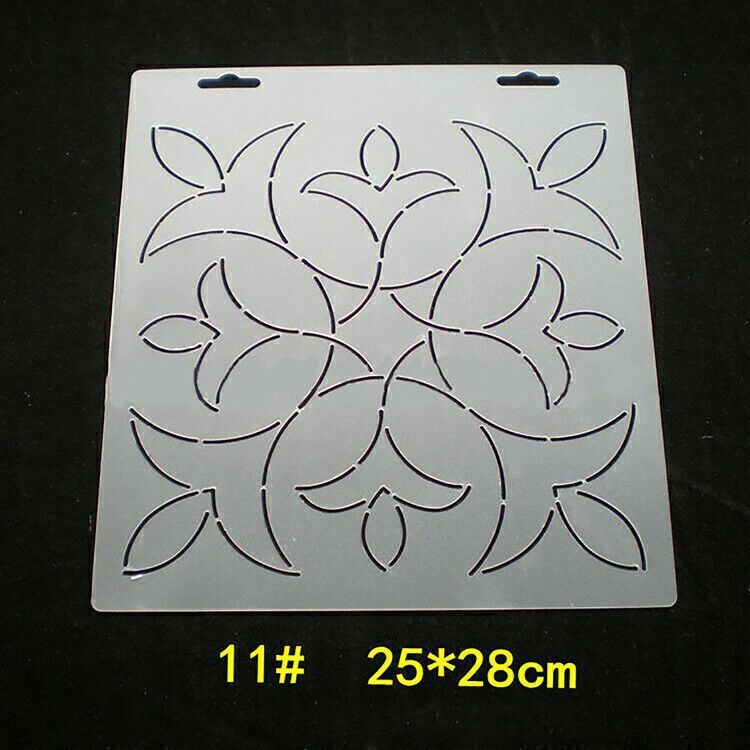 Quilting Template Stencils DIY Tools for Drawing Tracing Picture Sewing Craft$21.59View on eBay
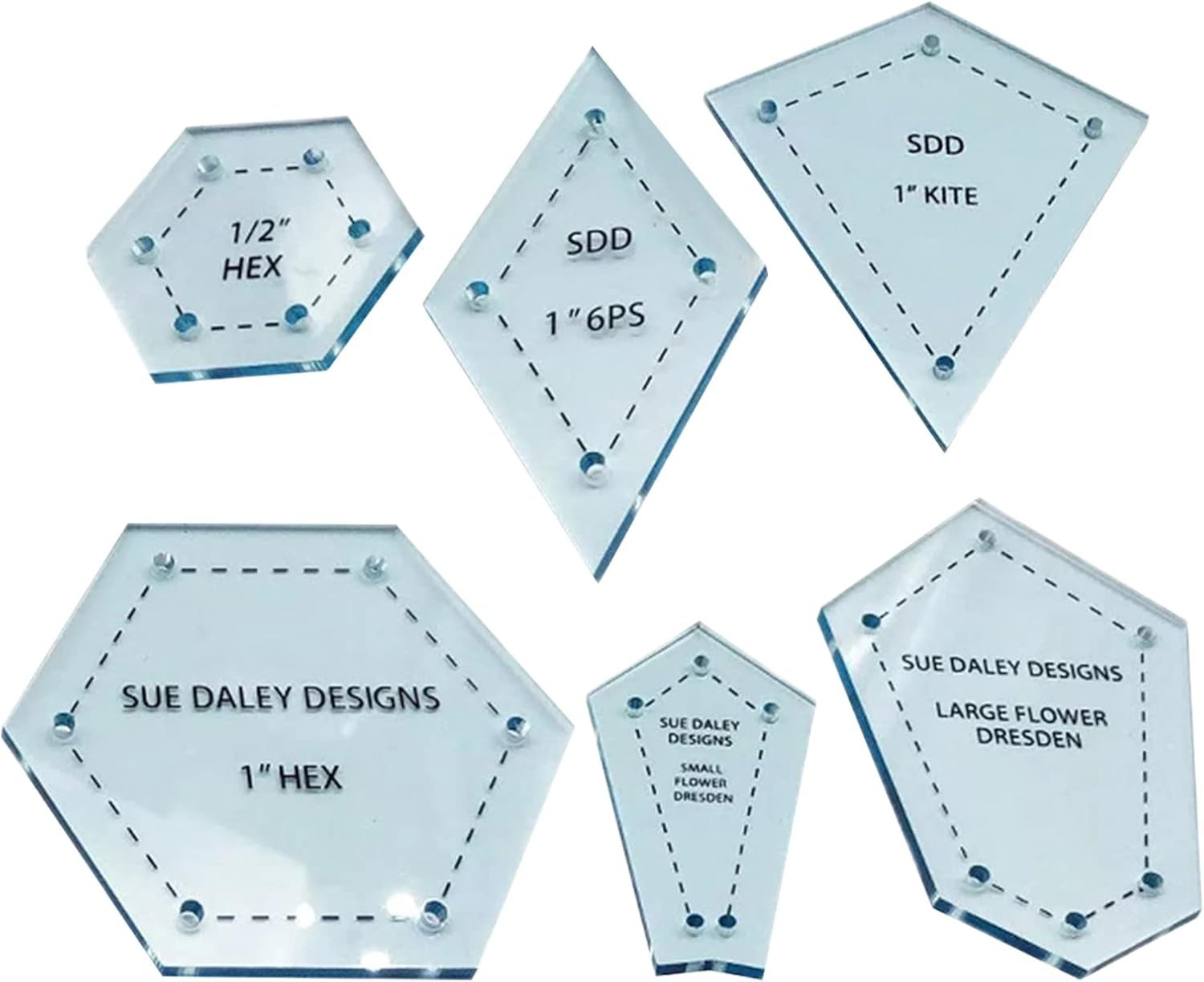 300Pc ASSROTED Acrylic TEMPLATES Quilting Patchwork Piecing Craft for Sewing$28.63View on eBay
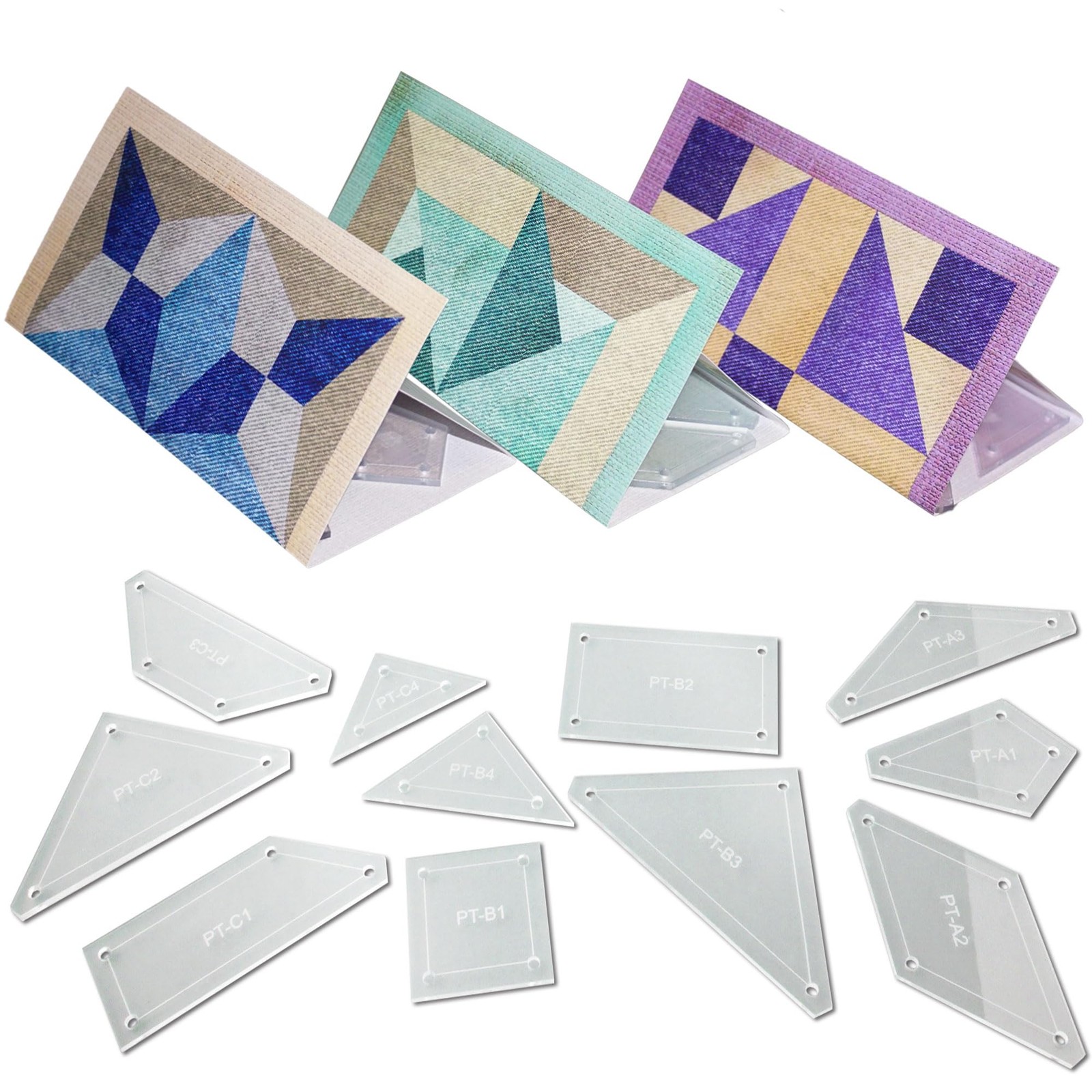 11 PCS 3 Pattern Acrylic Template Paper Piece Set Sewing Quilting Craft Tool$29.07View on eBay
- Acrylic Template Paper Pieces 3 Patterns Set 11 PCS Quilting Sewing Tool$29.20View on eBay
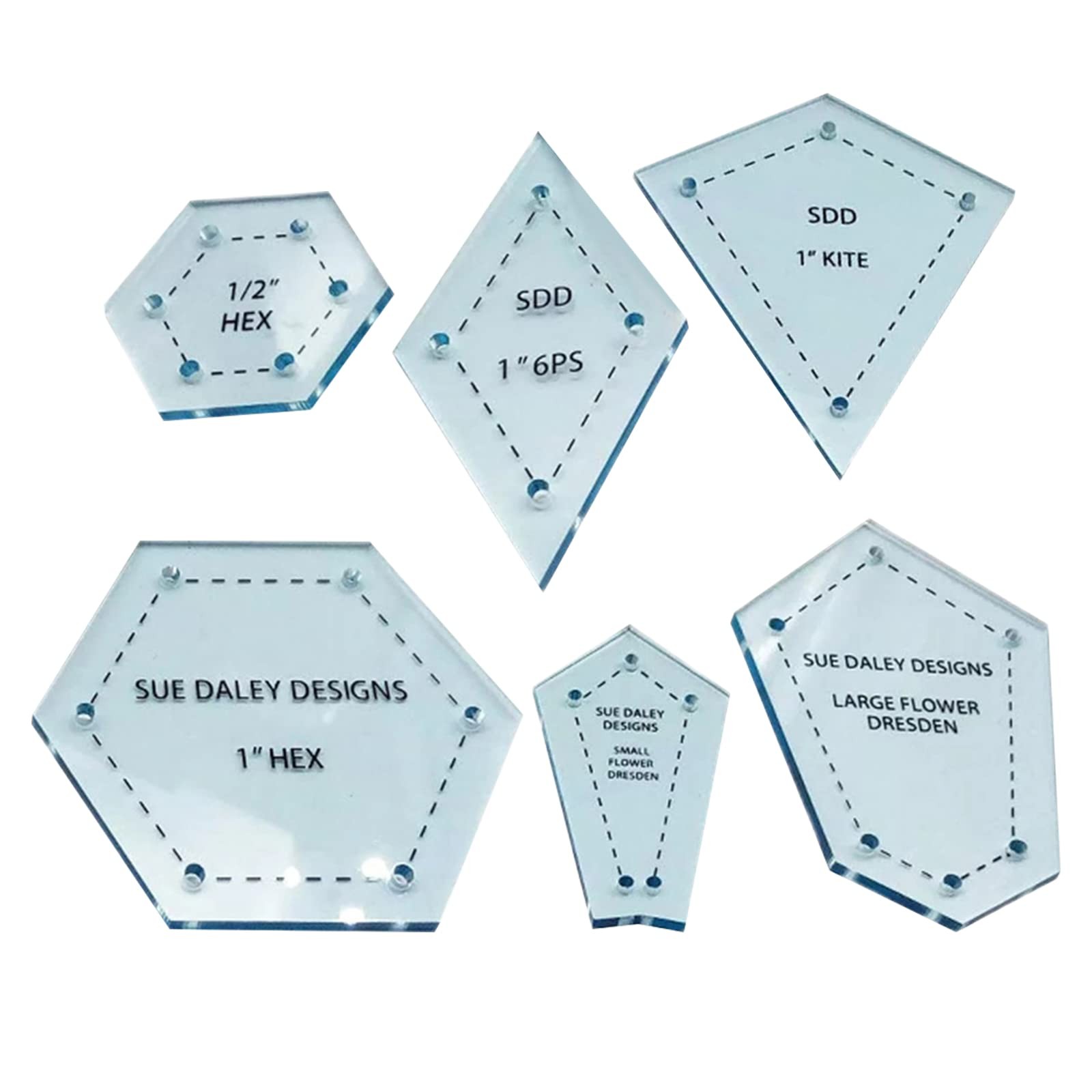 300 PCS Assorted Acrylic Templates Quilting Patchwork Piecing Craft Sewing$29.21View on eBay
- 11 PCS 3 Patterns Acrylic Template Paper Pieces Set Sewing Quilting Craft$29.26View on eBay
Highlights
- Template thickness is the primary fit metric: 1/4 in (6.4 mm) acrylic is the longarm and midarm standard; 1/8 in (3.2 mm) flexes and is only suitable for low-shank domestic machines with shallow hopping feet.
- Edge profile decides stitch quality: beveled or rounded polished edges let the hopping foot glide; raw laser-cut edges catch thread and require hand-sanding before first use.
- High-shank vs low-shank compatibility is set by the hopping foot height—measure the gap between the needle plate and the foot's lowest position before choosing template thickness.
- Ruler-work templates require a ruler foot (a closed, 1/4-inch-thick hopping foot) and stitch-regulation or glide mode; using a standard open-toe free-motion foot with a template is unsafe and voids the template's guide function.
Best use cases
- Best fit: Longarm or midarm quilter with a ruler foot—choose 1/4-inch beveled acrylic templates in continuous-line or nested shapes for allover and border designs.
- Best fit: Domestic high-shank machine with a hopping foot—pick 1/4-inch templates sized 2–4 inches so the foot clears the template edge at full stitch depth.
- Wrong fit: Low-shank domestic machine with the stock free-motion foot—skip 1/4-inch templates; either upgrade to a ruler foot or use 1/8-inch templates only for shallow, slow-speed work.
- Wrong fit: Quilter wanting edge-to-edge computerized patterns—templates are manual guides, not programmable; choose a pantograph or computerized system instead.
Buying tips
- Match template thickness to foot clearance: measure the vertical gap under the hopping foot at its lowest point; 1/4-inch templates need at least 3/8 inch of clearance to pass without binding.
- Choose beveled or polished edges over raw laser-cut edges—beveled acrylic glides under the foot, while unpolished edges grab thread and cause skipped stitches.
- Size templates to your throat space: a template wider than one-third of your harp space forces awkward wrist angles; for a 9-inch throat, keep templates under 3 inches wide.
- Prefer cast acrylic over extruded acrylic—cast stock is harder, stays flat under machine vibration, and resists crazing at drilled holes and cutouts.
Specs
| Template Thickness | 1/4 in (longarm) vs 1/8 in (domestic) |
|---|---|
| Edge Profile | Beveled/polished vs raw laser-cut |
| Machine Compatibility | High-shank ruler foot vs low-shank |
| Acrylic Type | Cast (rigid) vs extruded (flexes) |
Related searches
What to check before buying
- Measure your machine's shank height and the clearance under the hopping foot at its lowest position before selecting 1/4-inch vs 1/8-inch template stock.
- Confirm you own or will buy a ruler foot (closed, 1/4-inch hopping foot) plus a stitch regulator or glide mode—templates are unsafe with open-toe free-motion feet.
- Check your throat/harp space in inches: template width plus 4 inches of working room must fit inside the throat for comfortable rotation.
- Verify the template's outer edge is beveled or polished and that cutouts have smooth interior radii—raw laser edges need sanding before use.
FAQ
Data sources: eBay / Amazon listings and product attribute feeds. Updated Nov 28, 2026.
Some links on this page are affiliate links. If you buy after clicking one, we may earn a commission at no extra cost to you. This does not change which products appear here or their order. Affiliate disclosure.