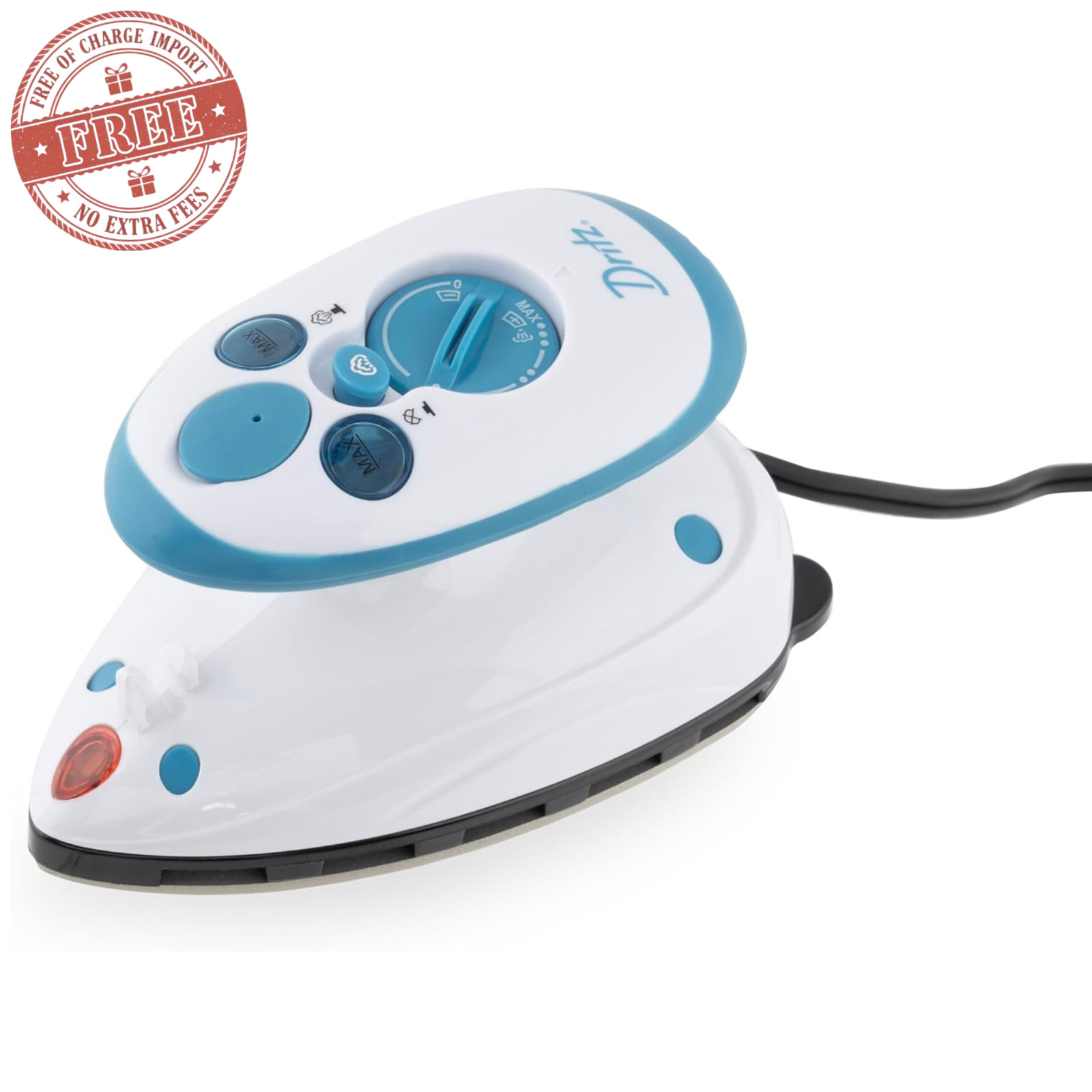

Photos from current listings. Actual item, color, and included accessories may vary.
Mini Steam Iron Buying Guide
A mini steam iron is a compact, low-wattage pressing tool for quilting, sewing, and travel, where the core trade-off is between burst steam power and true portability. Durable options use a metal soleplate, a thermostatic dial, and a sealed water tank, while compromises rely on thin plastic bodies, weak continuous steam, and imprecise bimetallic thermostats. Choose a mini iron only when a full-size iron cannot reach the work or fit the bag; otherwise a standard iron delivers better heat recovery and steam volume.
Key takeaways
- Soleplate material separates tiers: anodized aluminum or stainless steel holds heat evenly, while bare plastic or coated mild steel scratches and sheds finish onto fabric.
- Wattage drives steam recovery: mini irons in the 300–600 W class produce burst steam for quilt seams, but below 250 W they only press dry and cannot sustain steam during piecing.
- Tank and steam design matters: a sealed 60–120 ml tank with a pump or gravity feed gives controlled burst steam, while open-reservoir 'spray' designs drip and sputter on cotton.
At a glance
- Category
- Quilt Patterns, Pressing & Storage
- Last updated
- Nov 28, 2026
Current offers
Highlights
- Soleplate material separates tiers: anodized aluminum or stainless steel holds heat evenly, while bare plastic or coated mild steel scratches and sheds finish onto fabric.
- Wattage drives steam recovery: mini irons in the 300–600 W class produce burst steam for quilt seams, but below 250 W they only press dry and cannot sustain steam during piecing.
- Tank and steam design matters: a sealed 60–120 ml tank with a pump or gravity feed gives controlled burst steam, while open-reservoir 'spray' designs drip and sputter on cotton.
- Thermostat accuracy is the hidden spec: a numbered dial with detents covering low synthetics to high cotton beats a single on/off switch that overheats polyester and scorches batiks.
Best use cases
- Best fit: pressing quilt blocks and seams at the machine — pick a corded 300–600 W mini iron with a pointed soleplate and burst steam, not a battery travel iron.
- Best fit: travel and retreats where weight and voltage matter — choose a dual-voltage (100–240 V) model with a folding handle and a sealed tank under 1 lb.
- Wrong fit: fusing large interfacing or yardage — a mini iron's narrow soleplate and small tank run dry; use a full-size iron with continuous steam instead.
- Wrong fit: production sewing for hours — mini irons lack heat recovery; a full-size iron with a larger soleplate maintains temperature through repeated presses.
Buying tips
- Match voltage to destination: a 120 V-only mini iron needs a step-down converter abroad; dual-voltage 100–240 V models switch internally and avoid converter weight.
- Check soleplate size against seam work: a 1.5–2 inch pointed tip reaches into quilt blocks, while a 3 inch plate covers more area but blocks tight corners.
- Prefer a thermostatic dial over a binary switch: detents at synthetic, silk, wool, and cotton settings prevent scorching and let you press batiks at high heat.
- Confirm the tank is sealed and removable or refillable through a capped port; open reservoirs spill in a bag and drip onto fabric during steam bursts.
Specs
| Soleplate Material | Anodized aluminum vs stainless steel |
|---|---|
| Wattage Class | 300-600 W steam vs under 250 W dry |
| Voltage | Dual 100-240 V vs fixed 120 V |
| Tank & Steam | Sealed 60-120 ml burst vs open spray |
Related searches
What to check before buying
- Measure your pressing station: a mini iron needs a stable 6–8 inch footprint and a heat-safe rest, not a flimsy ironing board edge.
- Confirm outlet voltage and plug type: US 120 V NEMA 1-15 vs EU 230 V Schuko vs UK 230 V Type G — dual-voltage models still need the right plug adapter.
- Check soleplate clearance for quilt rulers and mats: a pointed tip under 2 inches fits between seams; wider plates need open table space.
- Verify cord length and management: 6–8 ft cords reach standard outlets; shorter cords force extension leads that defeat portability.
FAQ
Data sources: eBay / Amazon listings and product attribute feeds. Updated Nov 28, 2026.
Some links on this page are affiliate links. If you buy after clicking one, we may earn a commission at no extra cost to you. This does not change which products appear here or their order. Affiliate disclosure.