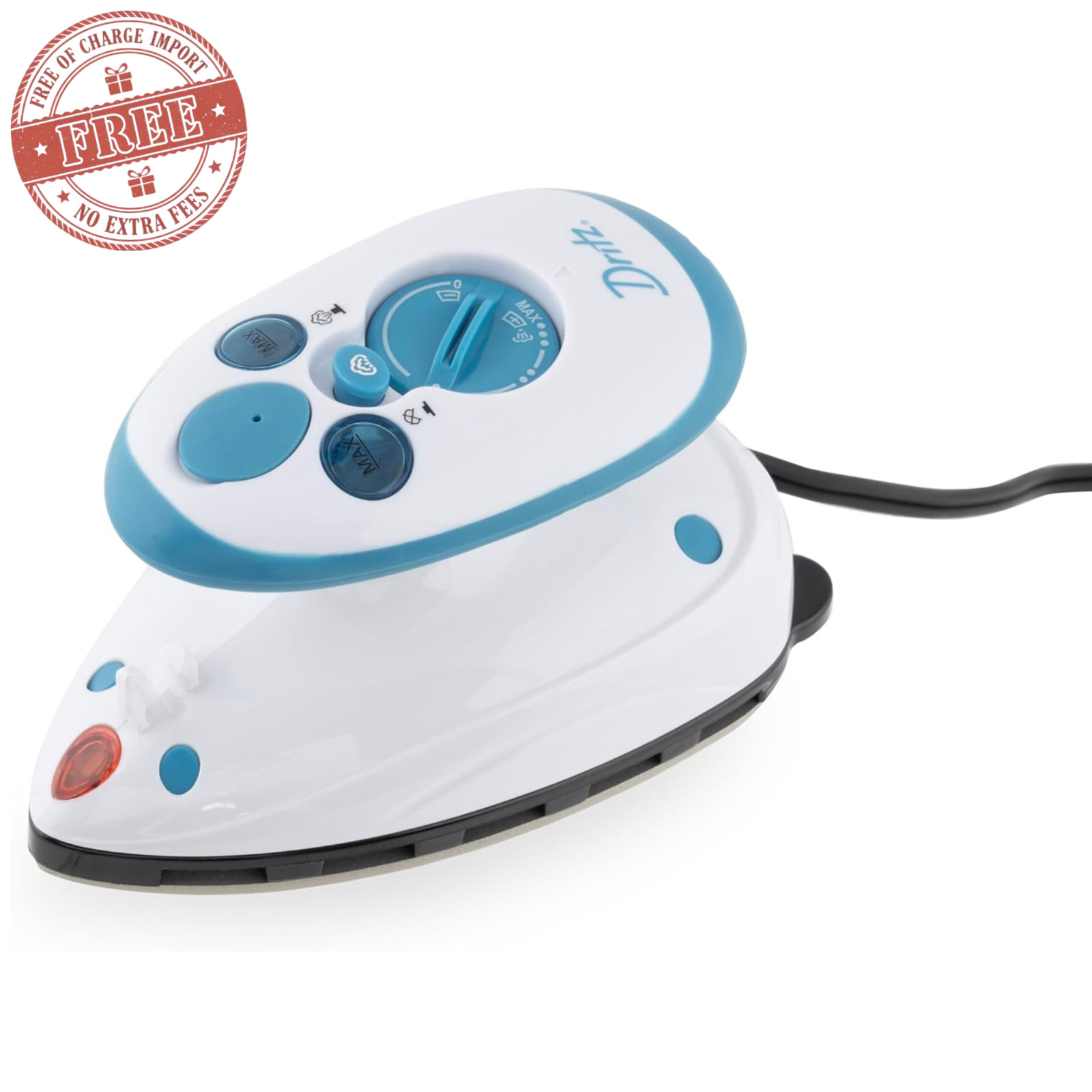

Photos from current listings. Actual item, color, and included accessories may vary.
Steam Iron Buying Guide
A steam iron for quilting, pressing, and garment care is defined by its soleplate material, steam output, and heat-up consistency—not by wattage alone. The core trade-off is between full-size irons with high continuous steam and travel/mini irons that trade steam volume for portability and precision at the seam. Buy a full-size iron with a ceramic or titanium soleplate and adjustable steam for daily yardage pressing; choose a mini travel iron only for retreats, appliqué, and tight seam work where a standard soleplate cannot reach.
Key takeaways
- Soleplate material dictates glide and durability: ceramic and titanium-coated plates resist scratching and distribute heat evenly; bare stainless steel is durable but prone to starch buildup.
- Continuous steam output (not burst) separates full-size from travel irons: full-size models sustain 20–40 g/min for yardage; mini irons typically deliver under 10 g/min and rely on spray or damp pressing cloths.
- Wattage correlates with recovery time, not top temperature: 1200–1800 W full-size irons recover heat in 10–20 seconds after a press; 400–800 W travel irons need 30–60 seconds between seams.
At a glance
- Category
- Quilt Patterns, Pressing & Storage
- Last updated
- Nov 28, 2026
Current offers
Highlights
- Soleplate material dictates glide and durability: ceramic and titanium-coated plates resist scratching and distribute heat evenly; bare stainless steel is durable but prone to starch buildup.
- Continuous steam output (not burst) separates full-size from travel irons: full-size models sustain 20–40 g/min for yardage; mini irons typically deliver under 10 g/min and rely on spray or damp pressing cloths.
- Wattage correlates with recovery time, not top temperature: 1200–1800 W full-size irons recover heat in 10–20 seconds after a press; 400–800 W travel irons need 30–60 seconds between seams.
- Auto-off safety timers differ by class: full-size irons typically shut off in 8–15 minutes flat and 30–60 seconds face-down; mini travel irons often omit auto-off entirely, requiring manual unplugging.
Best use cases
- Choose a full-size 1500–1800 W iron with ceramic soleplate and 30+ g/min continuous steam for daily quilt yardage, backing, and binding pressing—skip mini irons for this because they cannot sustain steam across a 40-inch width.
- Choose a mini travel iron (under 1 lb, 400–800 W) for quilt retreats, appliqué pressing, and paper-piecing seams where a full soleplate would distort adjacent pieces—do not expect it to press a full quilt sandwich.
- Choose a mid-size iron (1000–1200 W, 8–10 oz tank) for mixed garment and craft use when storage space is tight—skip both extremes: full-size is overkill for occasional seams, and mini irons frustrate on shirts and linens.
Buying tips
- Match soleplate size to task: a full-size 8–10 inch soleplate covers yardage in fewer passes; a 3–5 inch mini soleplate reaches inside quilt blocks and around zippers without scorching adjacent fabric.
- Check water tank capacity against your pressing session: 8–12 oz suits a full quilt top; 2–4 oz mini tanks require refilling every few seams and should use distilled water to prevent mineral scale.
- Verify steam control type: mechanical dial offers repeatable low-steam settings for fusible interfacing; digital/auto-steam models may over-steam delicate batting and require a pressing cloth.
- For travel irons, confirm dual voltage (100–240 V) and a folding handle only if you press outside the home—single-voltage 120 V mini irons will not work on 220 V outlets without a converter.
Specs
| Iron Class | Full-size / Mid-size / Mini travel |
|---|---|
| Soleplate Material | Ceramic / Titanium / Stainless / Nonstick |
| Steam Output | Full-size 20–40 g/min; mini <10 g/min |
| Voltage / Plug | 120 V fixed vs 100–240 V dual |
Related searches
What to check before buying
- Measure your pressing surface: a full-size iron needs a 12×18 inch pad minimum; a mini iron works on a 6×8 inch mat but still requires a heat-safe surface underneath.
- Confirm your outlet voltage and plug standard for the room or country where the iron will be used—travel irons must state 100–240 V dual voltage to avoid a step-up converter.
- Check soleplate edge shape: pointed tip and tapered edges matter for quilt seam pressing and between buttons; a blunt or rounded nose limits precision work.
- Plan for water: distilled water extends soleplate and tank life; if your iron lacks a self-clean or anti-calc system, budget for periodic descaling or use distilled water exclusively.
FAQ
Data sources: eBay / Amazon listings and product attribute feeds. Updated Nov 28, 2026.
Some links on this page are affiliate links. If you buy after clicking one, we may earn a commission at no extra cost to you. This does not change which products appear here or their order. Affiliate disclosure.