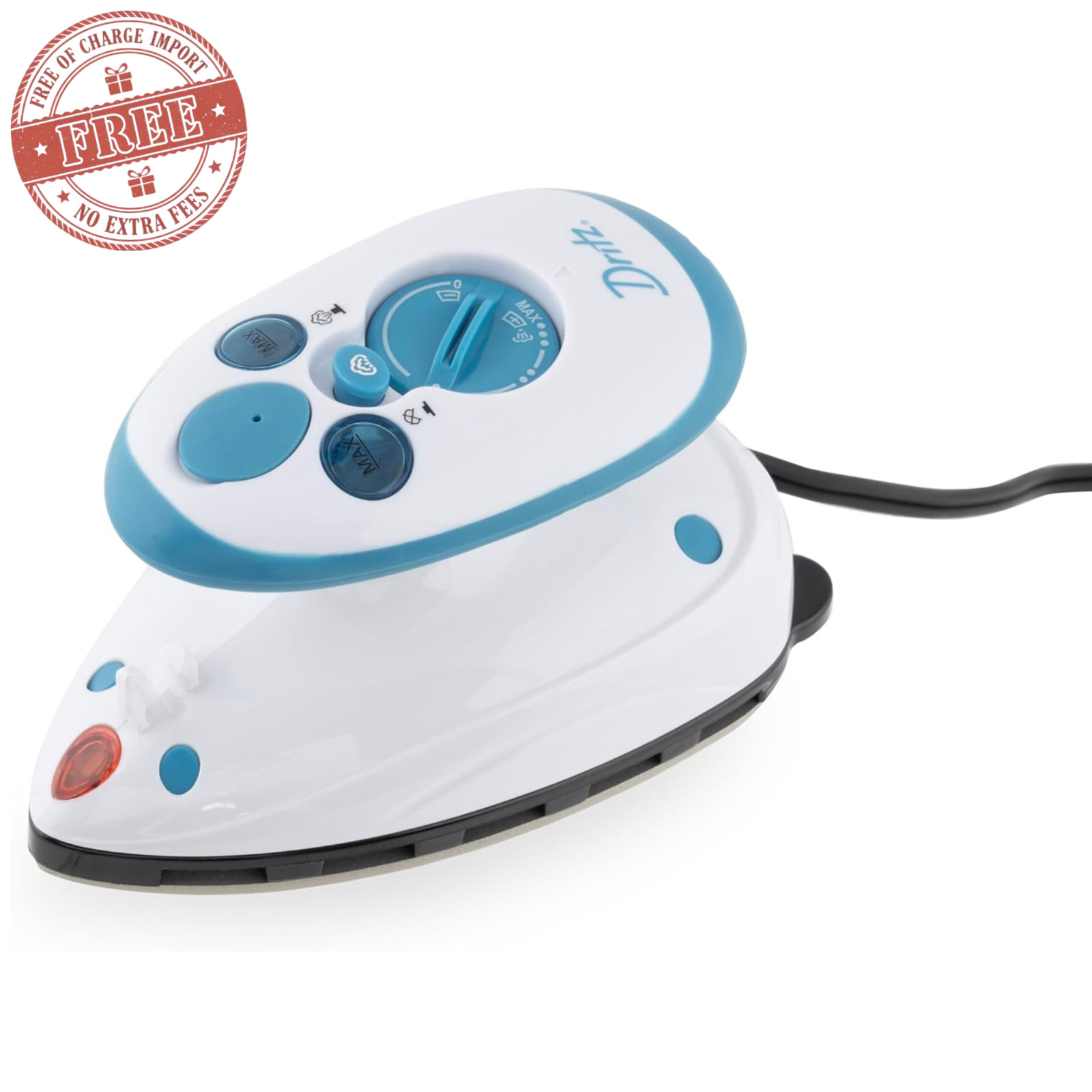

Photos from current listings. Actual item, color, and included accessories may vary.
Travel Iron Mini Buying Guide
A travel iron mini is a compact heat tool sized for quilting, crafts, and on-the-go pressing, where the core trade-off is between portability and sustained heat recovery. The decisive rule: choose a model with a metal soleplate and a thermostat rated for continuous duty, and skip any mini iron whose soleplate is bare plastic or whose heat setting is a single on/off switch.
Key takeaways
- Soleplate material separates tiers: anodized aluminum or stainless steel holds heat and glides over fabric, while bare plastic or painted plates scorch and drag.
- Wattage drives recovery: mini irons in the 40-80W range suit detail work; 80-150W units hold temperature through continuous piecing and fusible applique.
- Thermostat type matters: adjustable dial or digital setpoint beats a single on/off switch for consistent temperature across cotton, batik, and synthetic blends.
At a glance
- Category
- Quilt Patterns, Pressing & Storage
- Last updated
- Nov 28, 2026
Current offers
Highlights
- Soleplate material separates tiers: anodized aluminum or stainless steel holds heat and glides over fabric, while bare plastic or painted plates scorch and drag.
- Wattage drives recovery: mini irons in the 40-80W range suit detail work; 80-150W units hold temperature through continuous piecing and fusible applique.
- Thermostat type matters: adjustable dial or digital setpoint beats a single on/off switch for consistent temperature across cotton, batik, and synthetic blends.
- Steam capability is optional at this size: steam bursts help set seams but require a water tank that adds bulk; dry-only minis are lighter and simpler for travel.
Best use cases
- Best fit: quilting and piecing at a retreat — pick a 60-100W adjustable mini with a metal soleplate and a pointed tip for pressing seams open.
- Best fit: craft-room detail work like fusible applique and bias tape — choose a dry iron with a small soleplate and precise dial control.
- Wrong fit: pressing large yardage or quilting a full bed quilt — a mini iron lacks soleplate area and heat reserve; use a full-size iron instead.
- Skip: any mini iron with a plastic soleplate or a single heat setting if you press cotton regularly — it cannot hold temperature and risks scorching.
Buying tips
- Match wattage to duty cycle: under 60W for travel touch-ups, 80W and above for continuous piecing and applique sessions.
- Insist on a metal soleplate (anodized aluminum or stainless steel) — plastic or painted plates are the clearest durability downgrade.
- Check the temperature range: a dial spanning low synthetic heat to high cotton heat (roughly 120-200°C) covers quilting fabrics; a single-setting iron does not.
- Prefer a cord long enough for your station (6-8 ft) or a cordless model with a charging base if you press at a retreat table away from outlets.
Specs
| Soleplate | Anodized aluminum / stainless steel |
|---|---|
| Wattage | 40-150W (80W+ for continuous) |
| Heat Control | Adjustable dial vs single on/off |
| Steam | Dry-only vs steam burst tank |
Related searches
What to check before buying
- Measure your pressing station: mini irons run roughly 4-8 inches long, so confirm the soleplate fits your travel mat and seam-pressing area.
- Confirm voltage and plug standard for your destination — a 120V US mini iron needs a step-down converter abroad, not just a plug adapter.
- Check your fabric stash: if you press batiks or heavy cotton, choose a higher-wattage unit; for synthetics, confirm the low end of the dial.
- Verify companion parts: a pressing mat or wool mat, a seam roller, and a heat-resistant rest are needed since most minis include no stand.
FAQ
Data sources: eBay / Amazon listings and product attribute feeds. Updated Nov 28, 2026.
Some links on this page are affiliate links. If you buy after clicking one, we may earn a commission at no extra cost to you. This does not change which products appear here or their order. Affiliate disclosure.