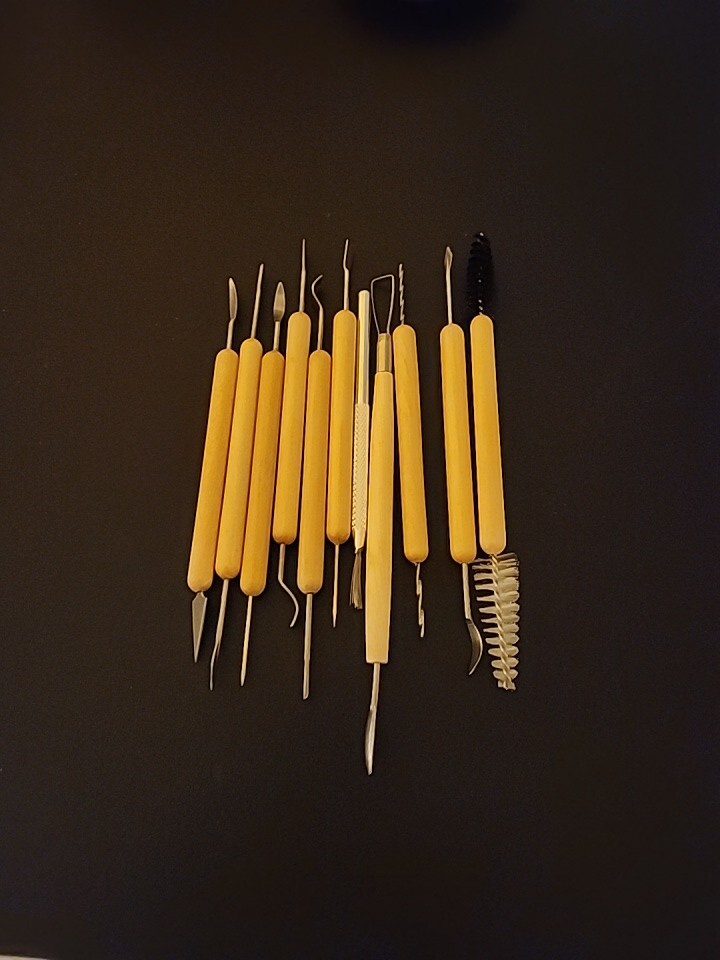

Photos from current listings. Actual item, color, and included accessories may vary.
Modeling Clay Kit Buying Guide
A modeling clay kit is a curated set of shaping, cutting, and detailing tools plus optional clay or molds, where the main trade-off is between low-cost stamped-steel or plastic tools that bend and rust versus hardened stainless-steel or hardwood tools that hold an edge. The decision rule: buy a kit whose tool steel grade and handle construction are explicitly stated, and skip any set that lists only piece count without material specs.
Median $14.40
Key takeaways
- Tool steel grade is the durability anchor: hardened stainless steel (e.g., 420 or 440-grade) resists rust and holds a sharp edge, while unmarked 'metal' tools are usually mild steel that bends under firm clay pressure.
- Handle material determines grip fatigue: hardwood or rubberized handles absorb pressure during long sculpting sessions; bare metal or thin plastic handles cause hand strain on dense clay.
- Piece count is not a quality metric: 11-, 23-, and 36-piece sets differ mainly in redundant duplicates (extra ball styluses, spare loops), not in core tool quality.
At a glance
- Category
- Pottery Tools & Molds
- Last updated
- Nov 24, 2026
Current offers
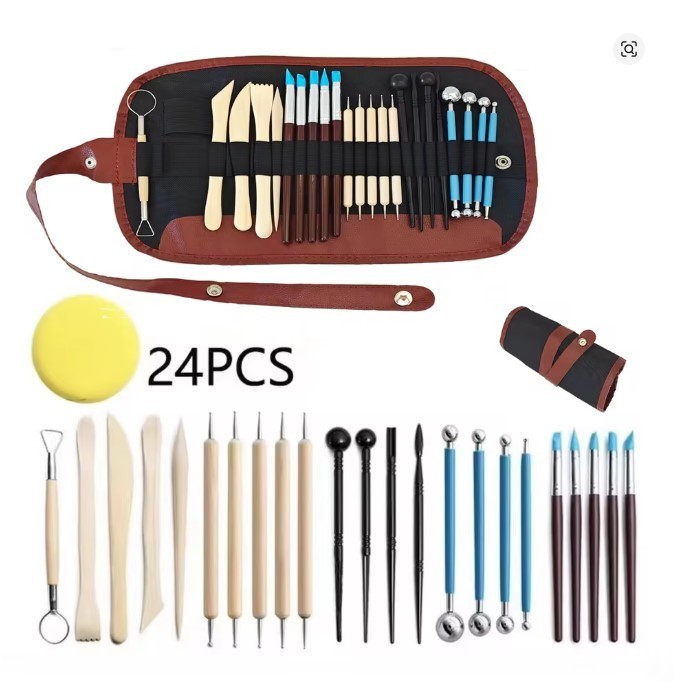
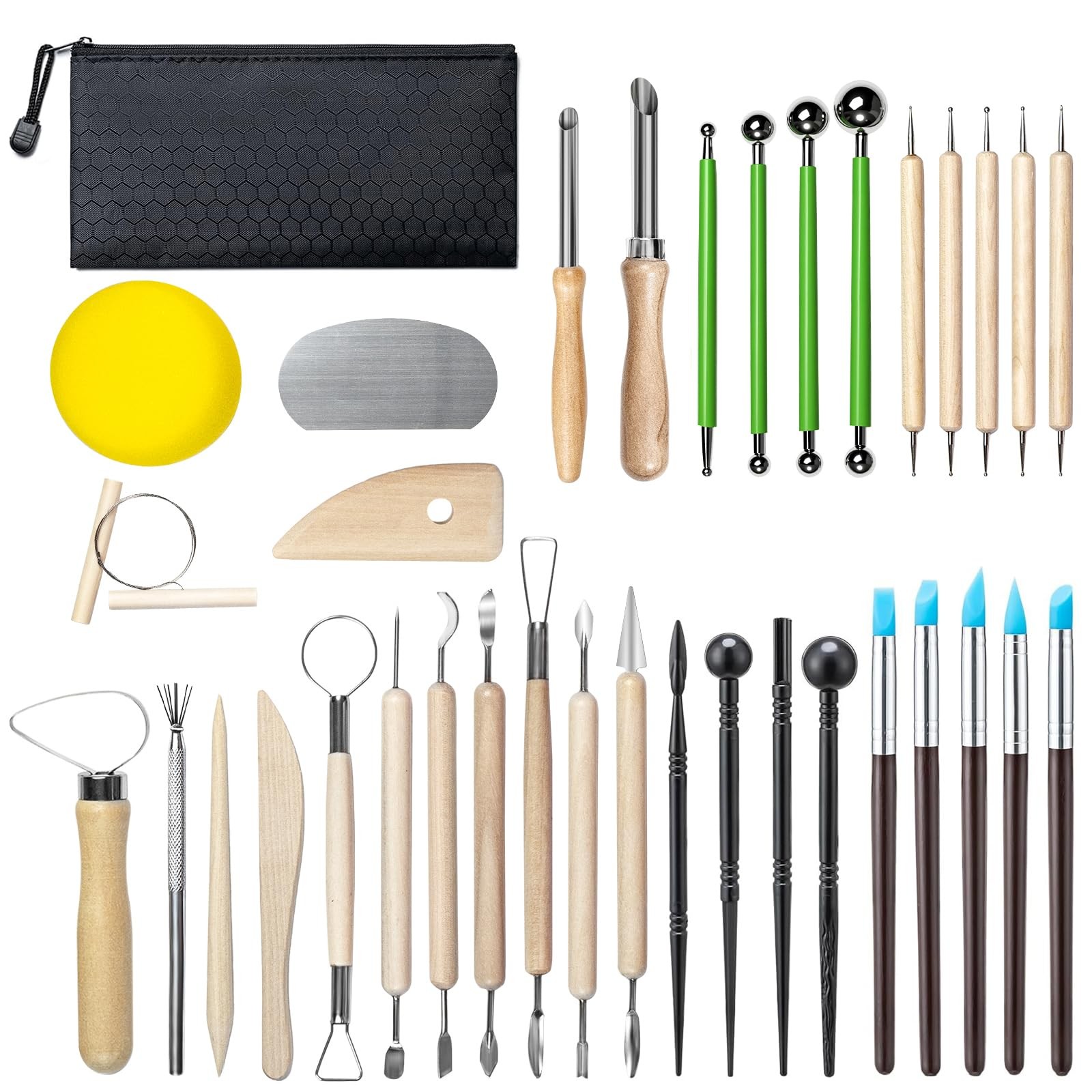
Highlights
- Tool steel grade is the durability anchor: hardened stainless steel (e.g., 420 or 440-grade) resists rust and holds a sharp edge, while unmarked 'metal' tools are usually mild steel that bends under firm clay pressure.
- Handle material determines grip fatigue: hardwood or rubberized handles absorb pressure during long sculpting sessions; bare metal or thin plastic handles cause hand strain on dense clay.
- Piece count is not a quality metric: 11-, 23-, and 36-piece sets differ mainly in redundant duplicates (extra ball styluses, spare loops), not in core tool quality.
- Wire-loop and ribbon tools do the heavy shaping; silicone-tipped shapers and needle tools handle fine detail—a complete kit covers both categories rather than stacking one type.
Best use cases
- Best fit: adults sculpting polymer or air-dry clay figures—pick a 23–36 piece set with stainless-steel wire-loop and ribbon tools plus silicone shapers for detail work; skip 11-piece entry sets that lack fine-detail tips.
- Best fit: beginners testing the hobby—choose a mid-size kit with a storage case and a mix of cutting, shaping, and smoothing tools; skip bulk 36-piece sets loaded with duplicate loops you will not use.
- Wrong fit: heavy stoneware or dense ceramic work—modeling clay kits use light-duty tools; switch to dedicated pottery tool sets with thicker hardwood ribs and forged steel needling tools.
- Wrong fit: children's school projects—adult modeling kits contain sharp needle and blade tools; choose age-rated plastic clay tool sets instead.
Buying tips
- Match tool count to detail needs, not to price: a 11-piece set covers basic shaping, 23 pieces adds wire-loop and ribbon tools, and 36 pieces adds redundant duplicates plus carving blades.
- Demand explicit steel grade: listings stating 'stainless steel' with a grade number (420/440) outperform vague 'metal' or 'alloy' descriptions for rust resistance and edge retention.
- Check handle ergonomics: rubberized or contoured hardwood handles reduce hand fatigue; thin bare-metal handles slip on dense polymer clay.
- Confirm the kit includes both wire-loop shapers (for removal and hollowing) and silicone-tip shapers (for smoothing)—kits missing either category force separate purchases.
Specs
| Tool Steel Grade | Stainless 420/440 vs mild steel |
|---|---|
| Piece Count Tier | 11 / 23 / 36 pcs (core vs duplicates) |
| Handle Material | Hardwood / rubberized vs bare metal |
| Tool Categories | Wire-loop, ribbon, silicone, needle |
Related searches
What to check before buying
- Measure your workspace and storage: most kits ship in cases roughly 8–12 inches long; confirm a drawer or shelf fits the case before choosing a 36-piece set.
- Verify clay compatibility: polymer clay needs non-stick silicone or nylon tools; water-based air-dry clay works with stainless steel and hardwood but rusts mild steel.
- Check for a storage case or roll: loose tools are easily lost and bent; a zippered case or roll protects tips and keeps needle tools contained.
- Confirm included accessories: some kits add a clay roller, cutting mat, or molds—verify these are listed if you need a complete starter setup rather than tools alone.
FAQ
Data sources: eBay / Amazon listings and product attribute feeds. Updated Nov 24, 2026.
Some links on this page are affiliate links. If you buy after clicking one, we may earn a commission at no extra cost to you. This does not change which products appear here or their order. Affiliate disclosure.