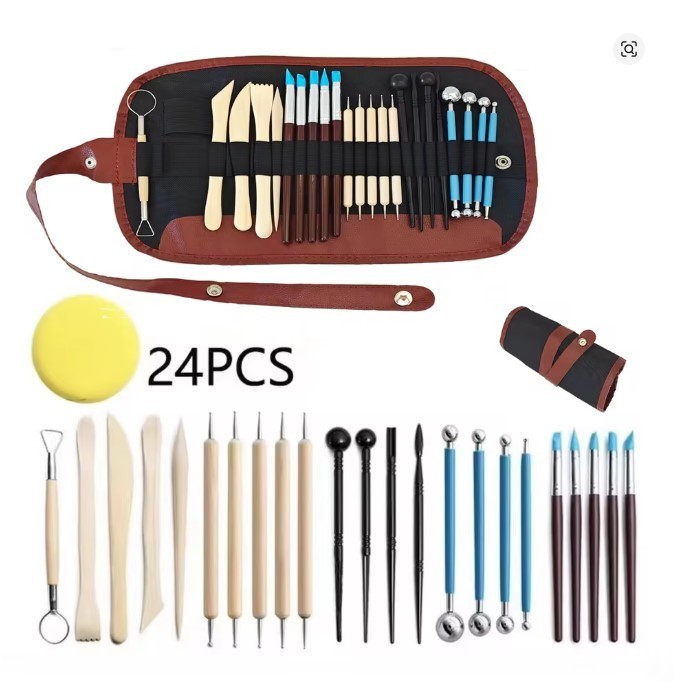

Photos from current listings. Actual item, color, and included accessories may vary.
Polymer Clay Sculpting Tool Buying Guide
Polymer clay sculpting tools are small hand tools for shaping, smoothing, texturing, and detailing oven-cure modeling clay. The core trade-off is stainless-steel or hardened-aluminum tips with comfortable grips versus soft plastic or pot-metal sets that bend or corrode. Buy a metal-tipped set with silicone shapers and a rigid blade if you sculpt regularly; skip bargain all-plastic kits for anything beyond children's play.
Key takeaways
- Tip material: stainless steel and hardened aluminum hold edges and resist rust; chrome-plated pot metal flakes and soft plastic tips deform under pressure.
- Silicone shaper heads: dual-ended rubber-tip tools in firm, medium, and soft durometers smooth seams and blend without dragging clay.
- Ball stylus sizing: graduated 1–6 mm ball tips model eye sockets, petal cups, and fine indentations; needle tools pierce and lift detail.
At a glance
- Category
- Pottery Tools & Molds
- Last updated
- Nov 28, 2026
Current offers
Highlights
- Tip material: stainless steel and hardened aluminum hold edges and resist rust; chrome-plated pot metal flakes and soft plastic tips deform under pressure.
- Silicone shaper heads: dual-ended rubber-tip tools in firm, medium, and soft durometers smooth seams and blend without dragging clay.
- Ball stylus sizing: graduated 1–6 mm ball tips model eye sockets, petal cups, and fine indentations; needle tools pierce and lift detail.
- Blade and scraper steel: hardened stainless blades take and hold a sharp edge; flexible palettes spread clay and slice canes cleanly.
Best use cases
- Figurine and character sculpting: pick a set with ball stylus, needle point, silicone shapers, and a fine blade; skip sets lacking a metal needle tool.
- Jewelry, canes, and veneers: choose a rigid stainless blade and acrylic roller or pasta machine; avoid thick plastic blades that drag and distort slices.
- Texturing and stamping: use silicone-tipped shapers and texture sheets; avoid bare metal spoon tools that leave burnished shiny marks on cured surfaces.
- Children's or occasional use: a 10–12 piece plastic-handled starter set is adequate; serious sculptors should skip it because tips flex and rust.
Buying tips
- Match tool count to workflow: 6–10 pieces covers blocking, smoothing, and detailing; 20+ piece kits add duplicates and rarely used accessories.
- Choose stainless steel or aluminum tips over chrome-plated pot metal; plating chips and exposes rust-prone base metal.
- Verify silicone shaper durometer: firm heads for smoothing seams, soft heads for blending; all-hard plastic shapers scratch and drag.
- Check handle diameter and length: 12–15 cm handles with 8–10 mm grips reduce hand fatigue during long sculpting sessions.
Specs
| Tip Material | Stainless steel / aluminum / plastic |
|---|---|
| Tool Count | 6–10 focused; 20+ kits add duplicates |
| Silicone Shapers | Firm/medium/soft durometer, dual-ended |
| Handle Grip | 8–10 mm diameter, 12–15 cm length |
Related searches
What to check before buying
- Confirm your clay type: polymer clay cures at 120–130 °C, so tools must withstand oven temperatures without melting or warping.
- Measure storage: a 23-piece set typically needs a roll or case roughly 25 × 15 cm; check drawer or tote space before buying.
- Check hand fit: handle length 12–15 cm and grip diameter 8–10 mm suit most adults; smaller hands need shorter, thinner handles.
- Verify companion gear: a non-porous work surface, acrylic roller, and craft knife are required; tool sets alone do not include these.
FAQ
Data sources: eBay / Amazon listings and product attribute feeds. Updated Nov 28, 2026.
Some links on this page are affiliate links. If you buy after clicking one, we may earn a commission at no extra cost to you. This does not change which products appear here or their order. Affiliate disclosure.