
Photos from current listings. Actual item, color, and included accessories may vary.
Ceramic Pottery Wheel Buying Guide
A ceramic pottery wheel is a motorized turntable that spins clay so you can center, open, and throw vessels; the key trade-off is motor power and wheel-head construction versus price and portability. Durable wheels use brushless DC motors with metal or sealed-bearing shafts and 300W+ for full-size 25 lb clay work, while budget units rely on brushed motors and plastic hubs rated for small batches. The decision rule: buy 350W+ with a 14-inch metal head and foot pedal for daily throwing of large forms; choose a 30–60W mini or 250–300W mid unit only for hand-building, trimming, or small 1–5 lb pieces.
Median $136.20
Key takeaways
- Motor power directly caps clay weight: 30–60W mini wheels handle 1–3 lb; 250–300W units center 5–10 lb; 350–450W brushless wheels throw 15–25 lb without stalling.
- Wheel-head diameter and material set stability: 10–11 in ABS or aluminum heads suit small forms; 14 in cast-aluminum or steel heads with sealed bearings resist wobble under off-center clay.
- Speed control architecture matters: mechanical foot pedals with 60–300 RPM range are standard; true variable-speed DC drives hold torque at low RPM, while cheap AC dimmers lose torque below 100 RPM.
At a glance
- Category
- Pottery Wheels & Kilns
- Last updated
- Nov 27, 2026
Current offers
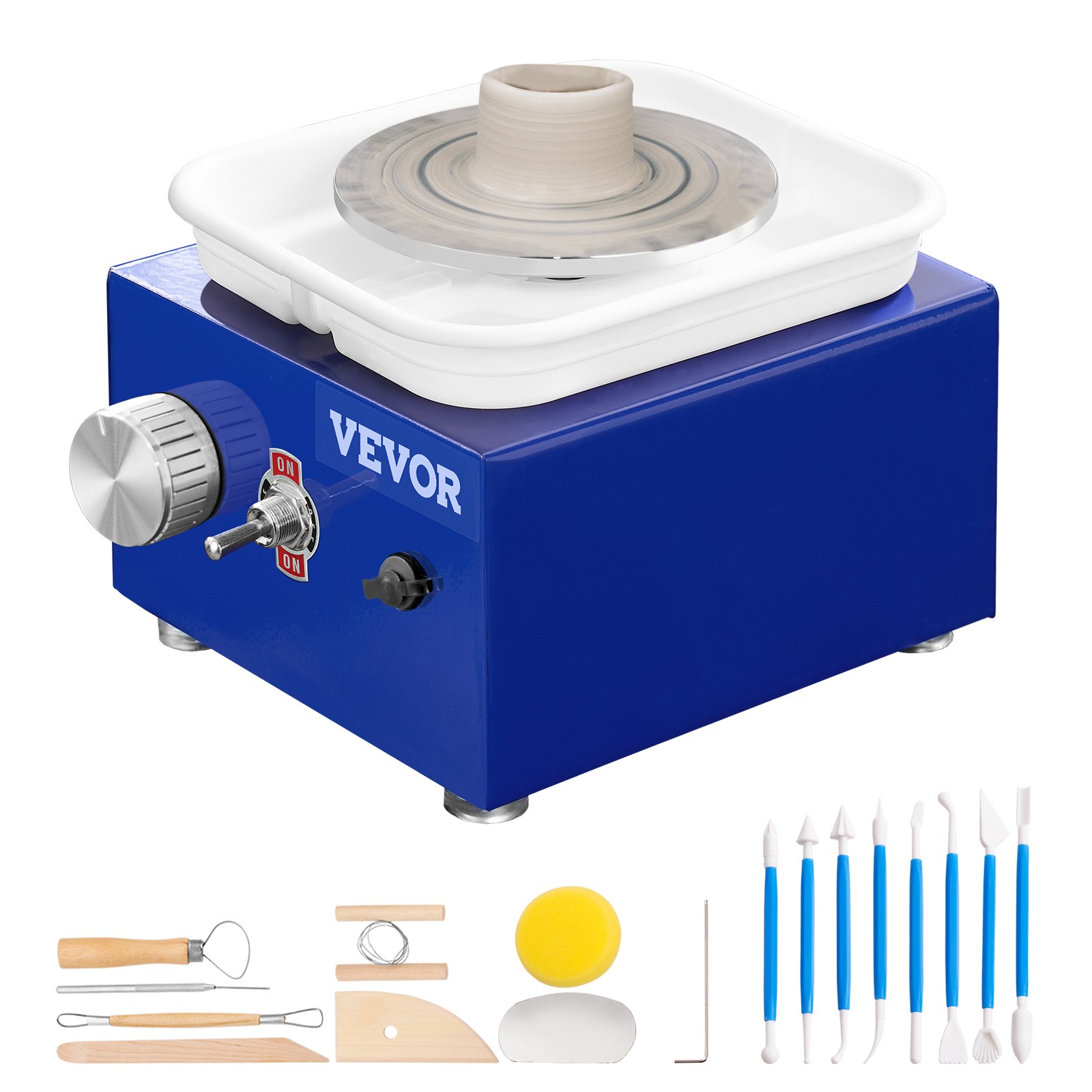 VEVOR Pottery Wheel Mini Ceramic Wheel Sculpting Tools Apron Two Turntables 30W$36.99View on eBay
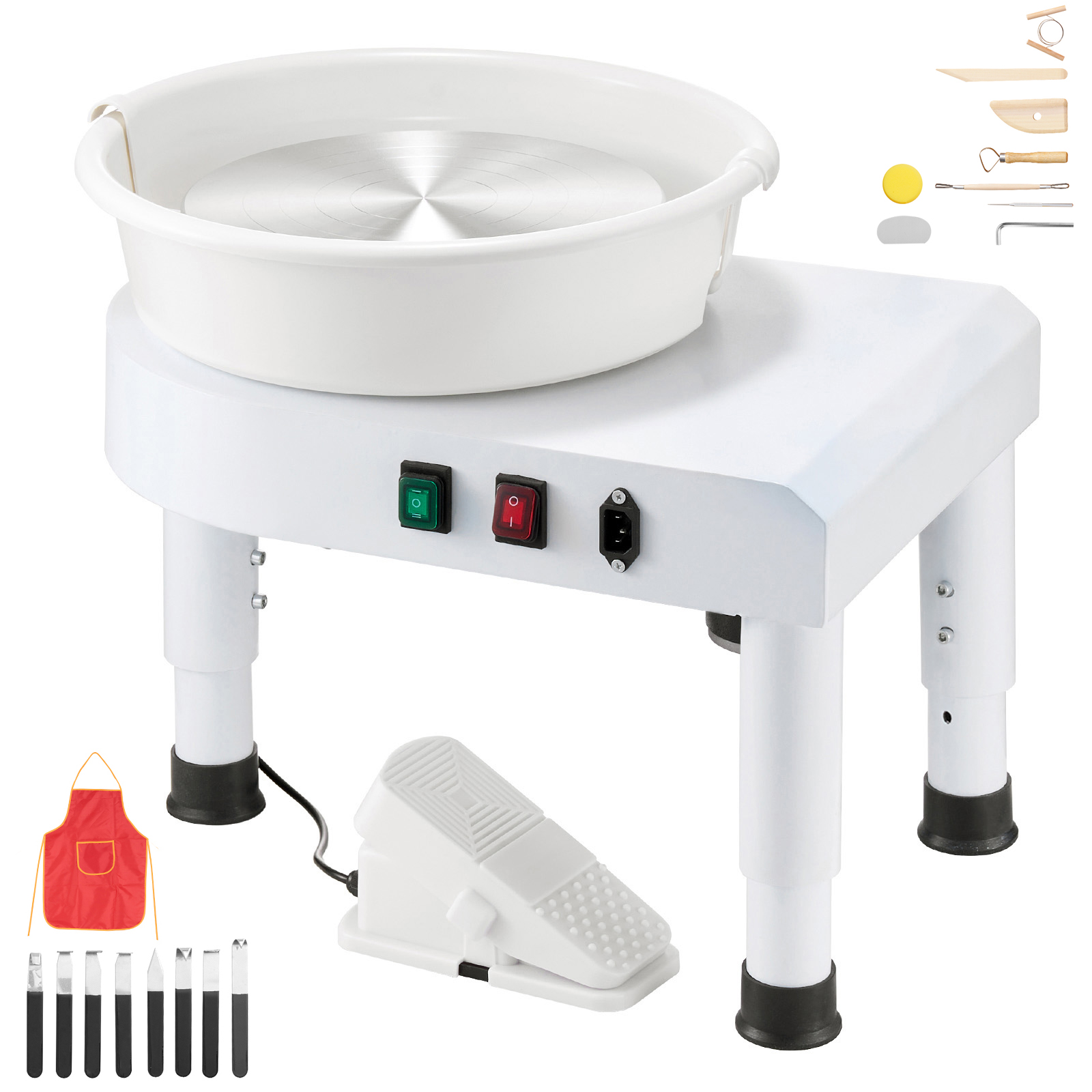 Pottery Wheel, 11 In Ceramic Forming Machine, 60-300 RPM Adjustable Speed With Foot Pedal Control, Detachable Basin, Lift Leg, Complete Accessories For Home DIY, White$124.99View on Mallflare
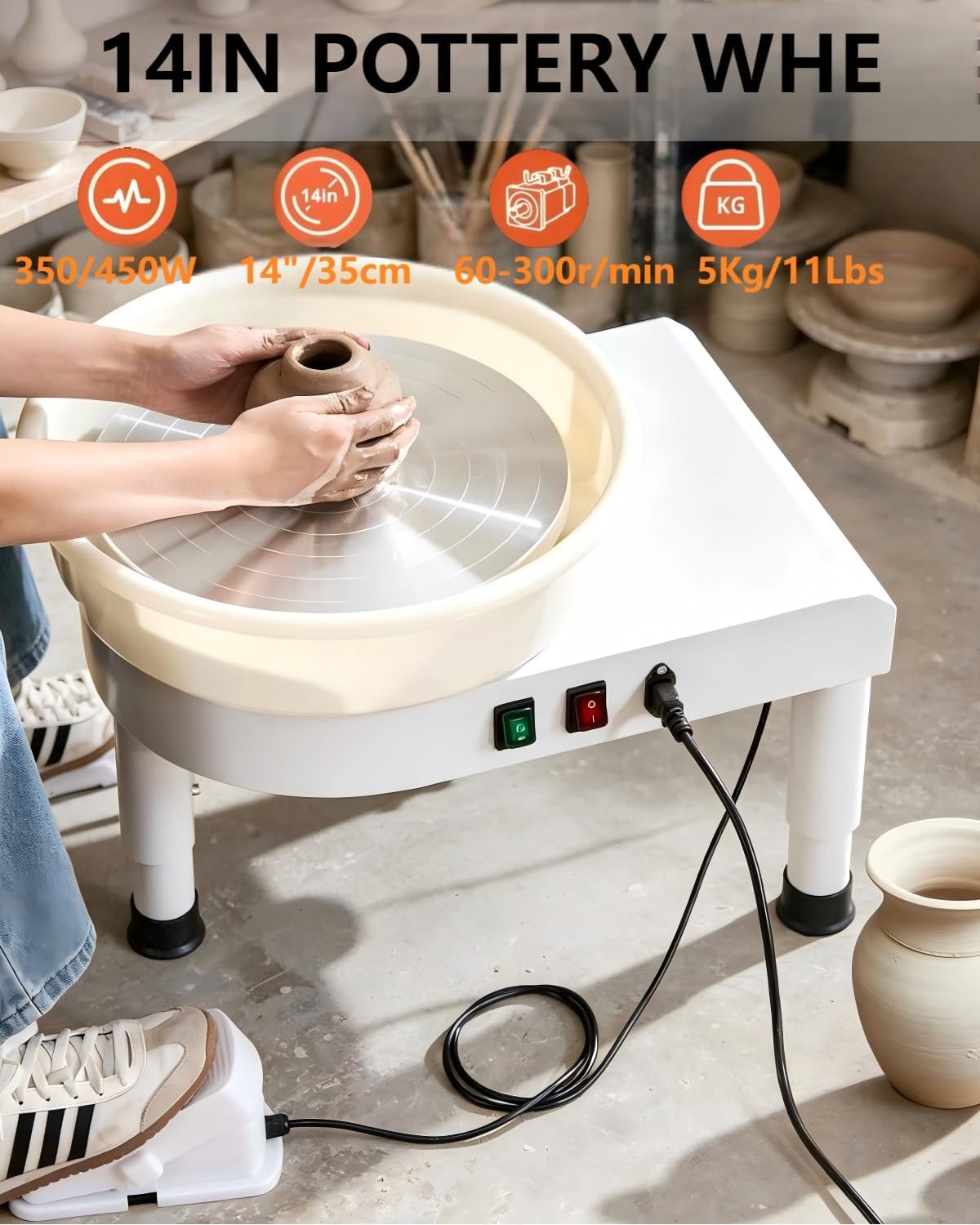 Pottery Wheel 14" Ceramic Wheel Machine 60-300 RPM Speed Adjustable DIY Clay Art$136.20View on eBay
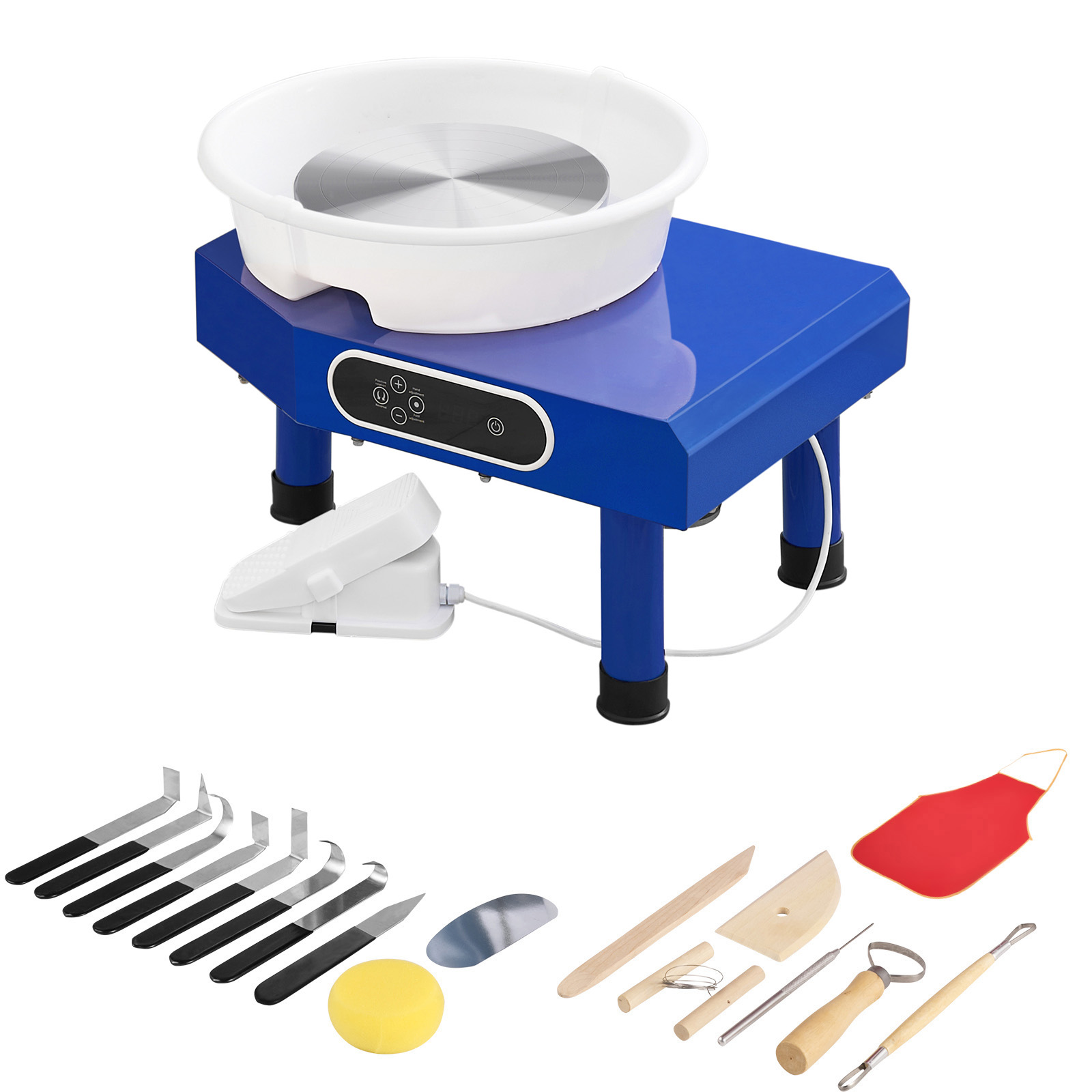 Pottery Wheel, 10 In Ceramic Forming Machine, 60-300 RPM Adjustable Speed With Foot Pedal, ABS Detachable Basin, Manual LCD Panel, Sculpting Tool And Apron, For Home Craft DIY$128.99View on Mallflare
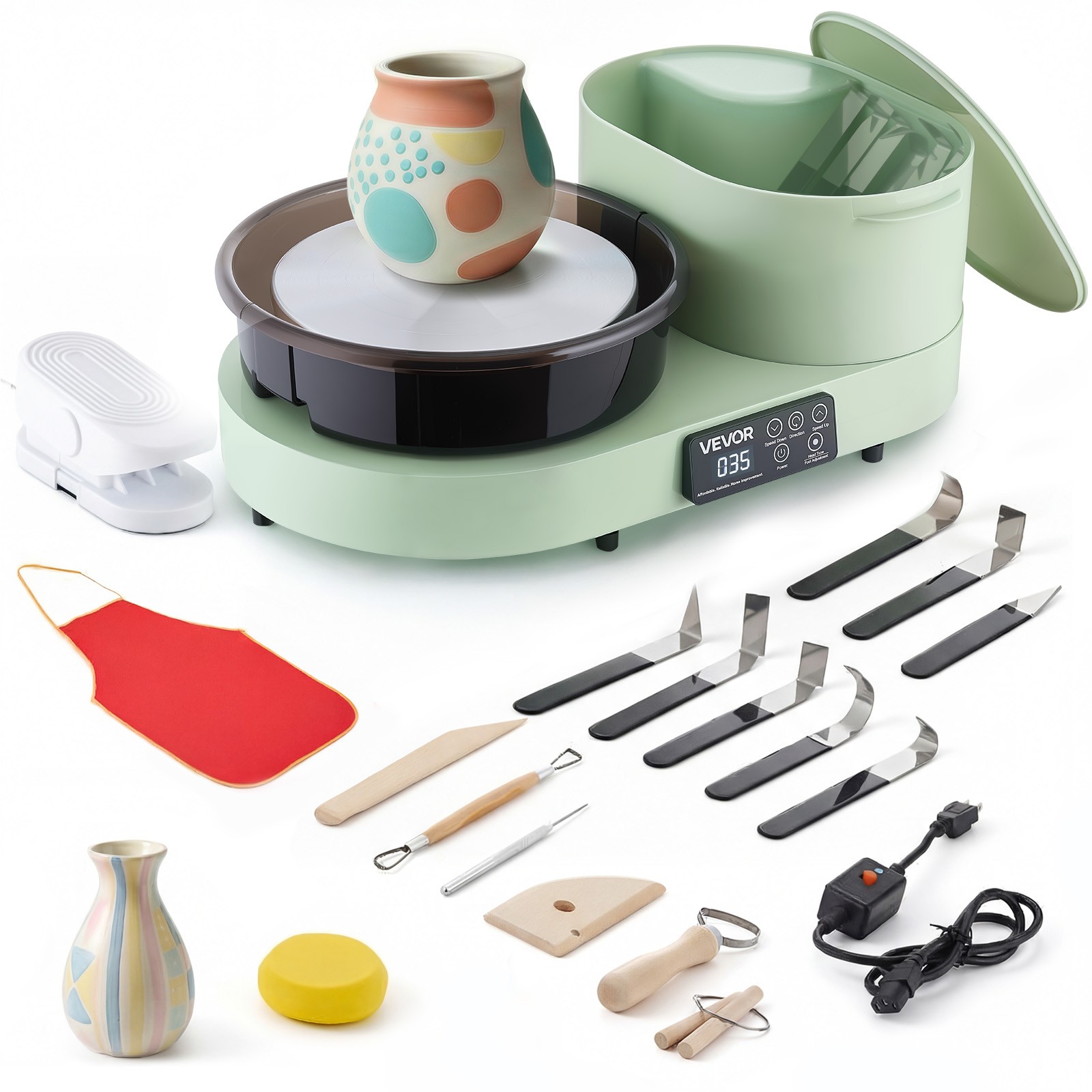 VEVOR Pottery Wheel for Adults Ceramic Wheel 11" Aluminum Turntable 450W Green$143.90View on eBay
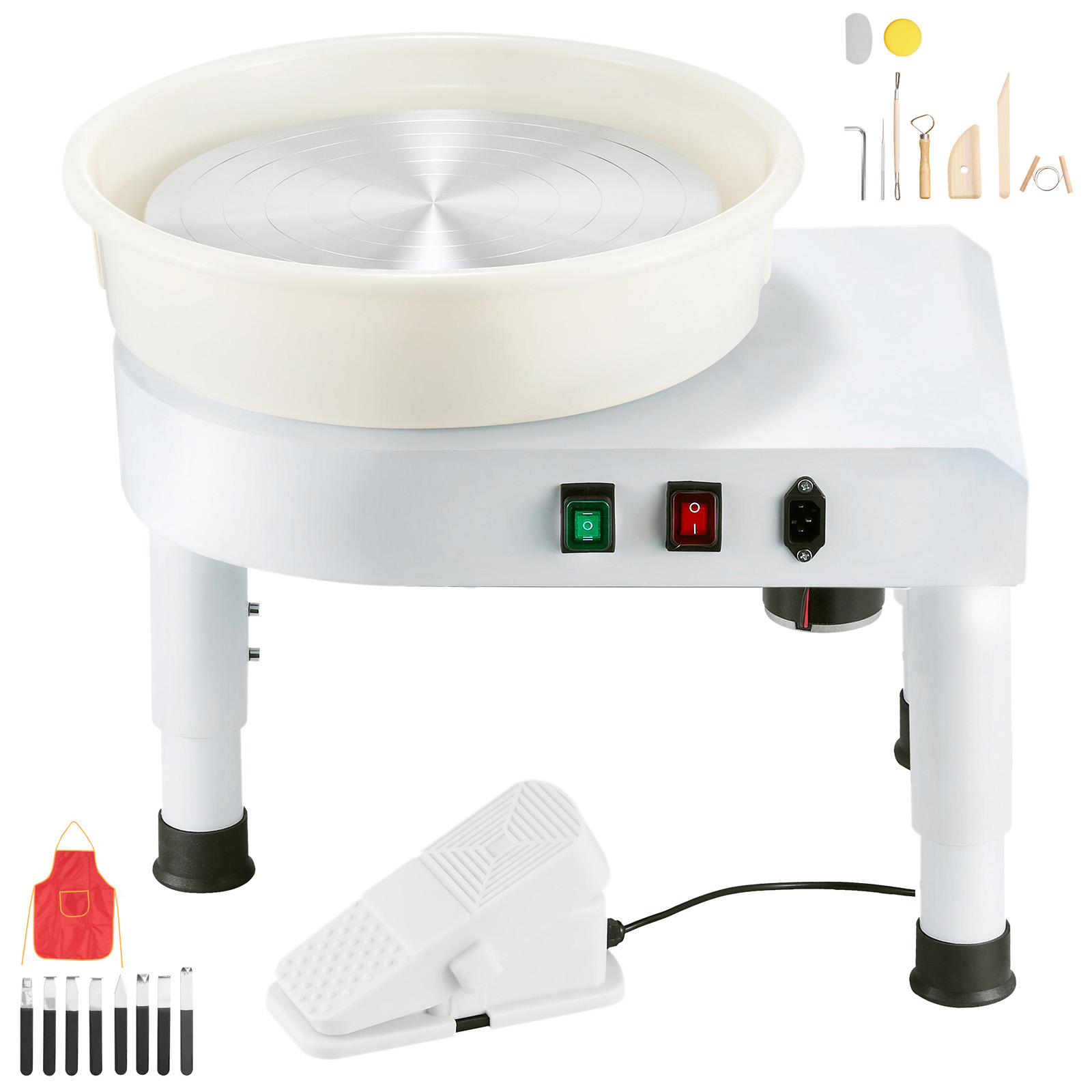 Pottery Wheel, 14 In Ceramic Forming Machine, 60-300 RPM Adjustable Speed With Foot Pedal Control, Detachable Basin, Lift Leg, Complete Accessories For Home DIY, White$160.99View on Mallflare
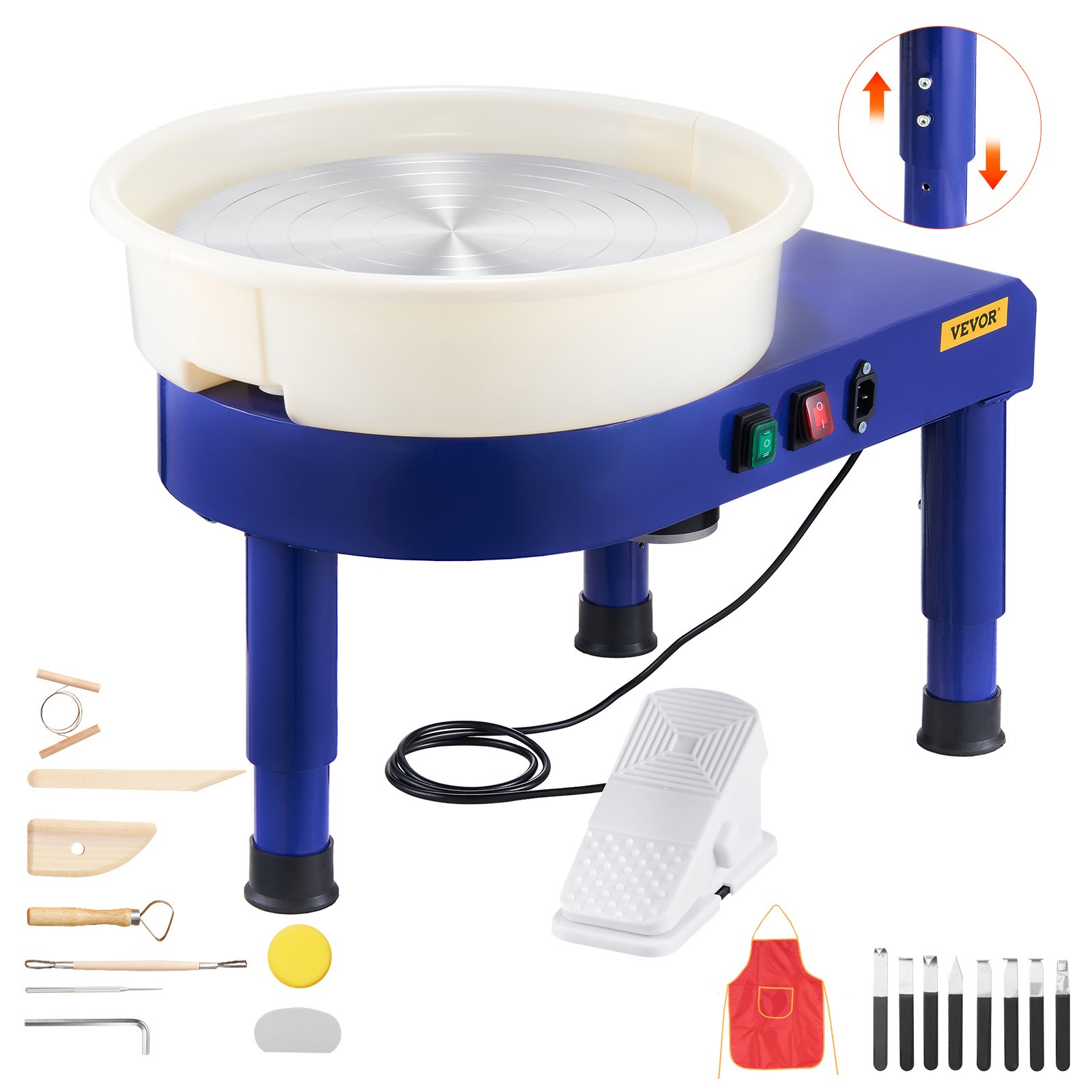 VEVOR Pottery Wheel 14 in Ceramic Wheel Forming Machine 60-300 RPM for DIY Blue$159.90View on eBay
Highlights
- Motor power directly caps clay weight: 30–60W mini wheels handle 1–3 lb; 250–300W units center 5–10 lb; 350–450W brushless wheels throw 15–25 lb without stalling.
- Wheel-head diameter and material set stability: 10–11 in ABS or aluminum heads suit small forms; 14 in cast-aluminum or steel heads with sealed bearings resist wobble under off-center clay.
- Speed control architecture matters: mechanical foot pedals with 60–300 RPM range are standard; true variable-speed DC drives hold torque at low RPM, while cheap AC dimmers lose torque below 100 RPM.
- Splash containment differs by basin design: detachable ABS basins catch slurry for easy cleaning; fixed or shallow trays on mini wheels require a separate splash pan or outdoor use.
Best use cases
- Best fit: a 14-inch, 350–450W brushless wheel with foot pedal and detachable basin for a home studio throwing mugs, bowls, and 10–20 lb planters several times a week.
- Best fit: a 250–300W, 11-inch wheel with LCD and pedal for beginners centering 3–8 lb balls and learning to throw cylinders; skip mini 30W units if you plan to center more than 2 lb.
- Best fit: a 30–60W mini wheel with two turntables for hand-building, trimming leather-hard pieces, and children’s crafts; wrong fit for throwing tall vessels or repeated centering of 5 lb clay.
- Wrong fit: any wheel under 250W for production or large-form throwing — motor stall and shaft wobble appear quickly; step up to 350W+ brushless with a metal head instead.
Buying tips
- Match wattage to clay weight: 30–60W for 1–3 lb, 250–300W for 5–10 lb, 350–450W for 15–25 lb; below these ratios the motor stalls during centering and the shaft flexes.
- Choose a 14-inch (35 cm) cast-aluminum or steel wheel head with a sealed bearing for full-size throwing; 10–11 in ABS heads are fine for small forms but wear at the hub under continuous use.
- Insist on a 60–300 RPM variable-speed range with a foot pedal and a forward/reverse switch; fixed-speed or 0–1800 RPM single-direction units limit trimming and throwing control.
- Confirm the basin is detachable and the wheel has non-slip feet or a bolt-down base; slurry cleanup and vibration isolation determine whether the unit survives daily use without walking or rusting.
Specs
| Motor Power | 30–60W mini / 250–450W full-size |
|---|---|
| Wheel Head | 10–11 in ABS vs 14 in aluminum |
| Speed Range | 60–300 RPM variable, foot pedal |
| Clay Capacity | 1–3 lb mini / 5–25 lb full-size |
Related searches
What to check before buying
- Measure your throwing space: a 14-inch wheel needs roughly 24 x 24 in of floor or bench footprint plus clearance for a stool and clay bucket; mini wheels fit on a 16 x 16 in bench.
- Check the electrical supply: most 350–450W wheels run on standard 110–120V 60Hz US outlets; confirm the plug type and that the circuit is not shared with high-draw appliances.
- Verify clay weight and form size against motor wattage and wheel-head diameter before buying; a 10-inch head cannot stably center a 15 lb ball regardless of motor power.
- Plan companion parts: a splash pan or basin, bat pins and bats for repeated throwing, a stool at the correct height (wheel head at roughly elbow height when seated), and a GFCI outlet for wet areas.
FAQ
Data sources: eBay / Amazon listings and product attribute feeds. Updated Nov 27, 2026.
Some links on this page are affiliate links. If you buy after clicking one, we may earn a commission at no extra cost to you. This does not change which products appear here or their order. Affiliate disclosure.