

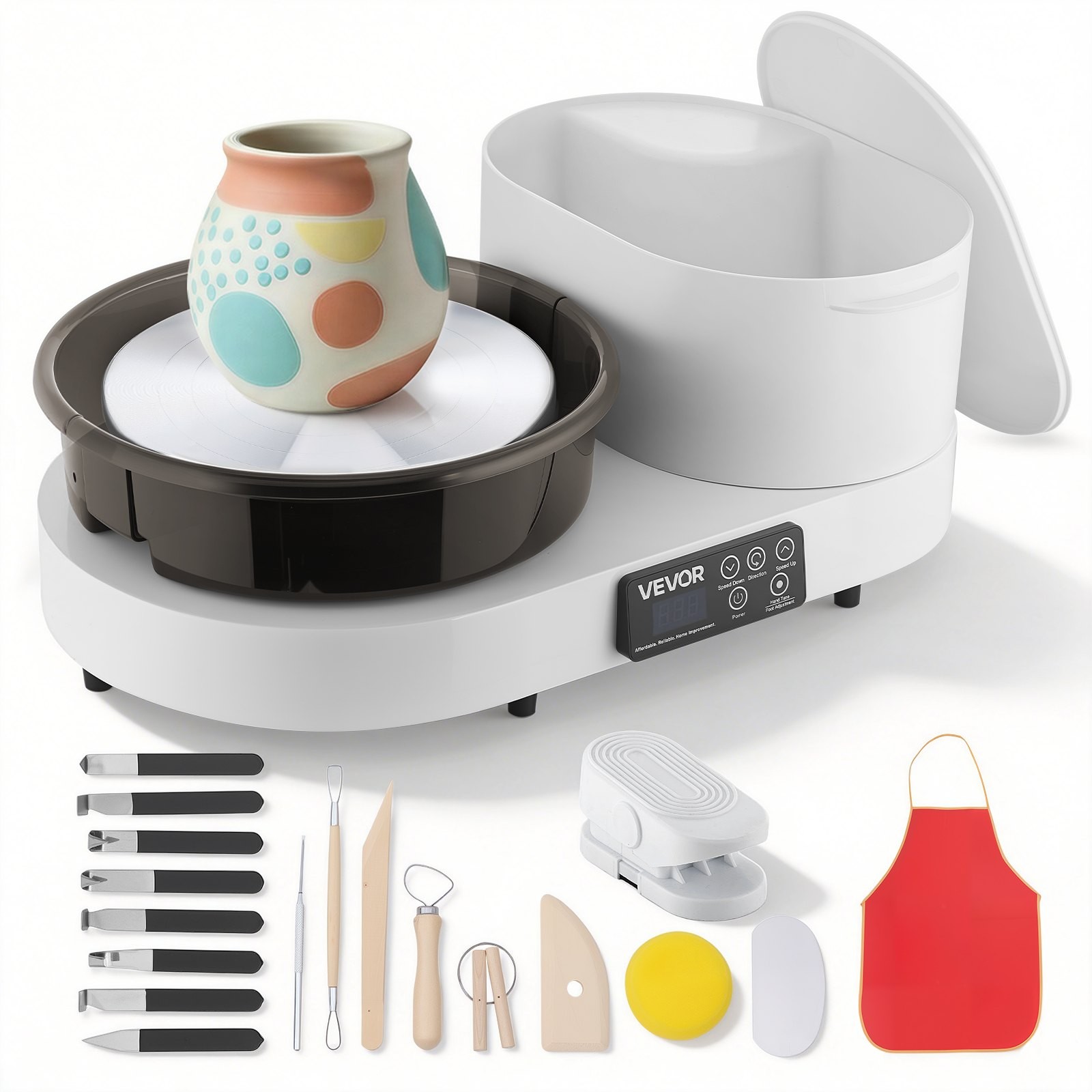
Photos from current listings. Actual item, color, and included accessories may vary.
Electric Pottery Wheel Buying Guide
Electric pottery wheels are motorized turntables that spin clay for throwing, and the core trade-off is motor type and wheelhead mass: brushed DC motors with thin aluminum heads are budget compromises, while brushless DC or AC motors with cast-aluminum or alloy heads hold torque at low RPM and stay concentric under load. The decision rule is simple: buy a wheel rated for the clay weight you throw, with a brushless or AC motor, a wheelhead of at least 11 inches, and a speed range that reaches below 60 RPM for centering.
Median $169.49
Key takeaways
- Motor type decides torque and lifespan: brushless DC and AC motors maintain torque at 30-60 RPM for centering; brushed DC motors lose torque and wear out brushes faster.
- Wheelhead diameter and material set capacity: 11-inch aluminum heads suit 10-15 lb of clay; 14-inch cast-alloy heads support 25 lb or more and stay flatter over years of use.
- Speed range must include low RPM: a 0-300 RPM range with usable control below 60 RPM is essential for centering and opening; wheels that only start at 100 RPM force bad technique.
At a glance
- Category
- Pottery Wheels & Kilns
- Last updated
- Nov 28, 2026
Current offers
Highlights
- Motor type decides torque and lifespan: brushless DC and AC motors maintain torque at 30-60 RPM for centering; brushed DC motors lose torque and wear out brushes faster.
- Wheelhead diameter and material set capacity: 11-inch aluminum heads suit 10-15 lb of clay; 14-inch cast-alloy heads support 25 lb or more and stay flatter over years of use.
- Speed range must include low RPM: a 0-300 RPM range with usable control below 60 RPM is essential for centering and opening; wheels that only start at 100 RPM force bad technique.
- Foot pedal and splash pan construction determine workflow: a proportional pedal with a sealed potentiometer and a removable two-part splash pan make cleanup and long sessions practical.
Best use cases
- Best fit for beginners and small studios: an 11-inch wheelhead, 450W brushless or DC motor, 0-300 RPM with foot pedal, and removable splash pan handles 10-15 lb projects and fits on a tabletop.
- Best fit for production or large-format work: a 14-inch cast-alloy wheelhead, 1/2 HP or greater AC or brushless motor, and a reinforced frame support 25 lb or more and reduce vibration at high speed.
- Wrong fit: a toy-grade or craft wheel with a plastic wheelhead and a motor under 350W will stall on 5 lb of clay and cannot hold concentricity; skip it for any real throwing.
- Wrong fit: a wheel without a removable splash pan or with a non-proportional pedal turns cleanup and speed control into constant friction; choose a sealed pedal and two-part pan.
Buying tips
- Match wheelhead size to clay weight: 11-inch heads handle 10-15 lb, 12-14 inch heads handle 25 lb or more; never exceed the rated capacity or the head will wobble.
- Choose brushless DC or AC over brushed DC: brushless motors deliver full torque at low RPM and last thousands of hours without brush replacement.
- Verify the speed range reaches 0-60 RPM for centering; a 30-300 RPM range with fine low-end control is the minimum for learning to throw.
- Check the frame and pan: a steel or cast-aluminum frame with a removable two-part splash pan and a sealed foot pedal prevents rust and clay buildup in the electronics.
Specs
| Motor Type | Brushless DC vs Brushed DC / AC |
|---|---|
| Wheelhead Size | 11 in (10-15 lb) / 14 in (25 lb+) |
| Speed Range | 0-300 RPM with low-end control |
| Splash Pan | Removable two-part vs fixed |
Related searches
What to check before buying
- Measure your table or stand: a tabletop wheel needs at least 24 x 24 inches of stable surface and a seat height that puts the wheelhead at mid-forearm level.
- Confirm the electrical supply: most 450W wheels run on standard 120V household current; check the plug type and whether the pedal cable reaches your seated position.
- Plan for clay and water containment: a removable splash pan and a nearby sink or bucket are required; without them, clay slurry reaches the motor and floor.
- Verify the wheelhead accepts standard bat pins and bat systems if you plan to use interchangeable bats for production throwing.
FAQ
Data sources: eBay / Amazon listings and product attribute feeds. Updated Nov 28, 2026.
Some links on this page are affiliate links. If you buy after clicking one, we may earn a commission at no extra cost to you. This does not change which products appear here or their order. Affiliate disclosure.