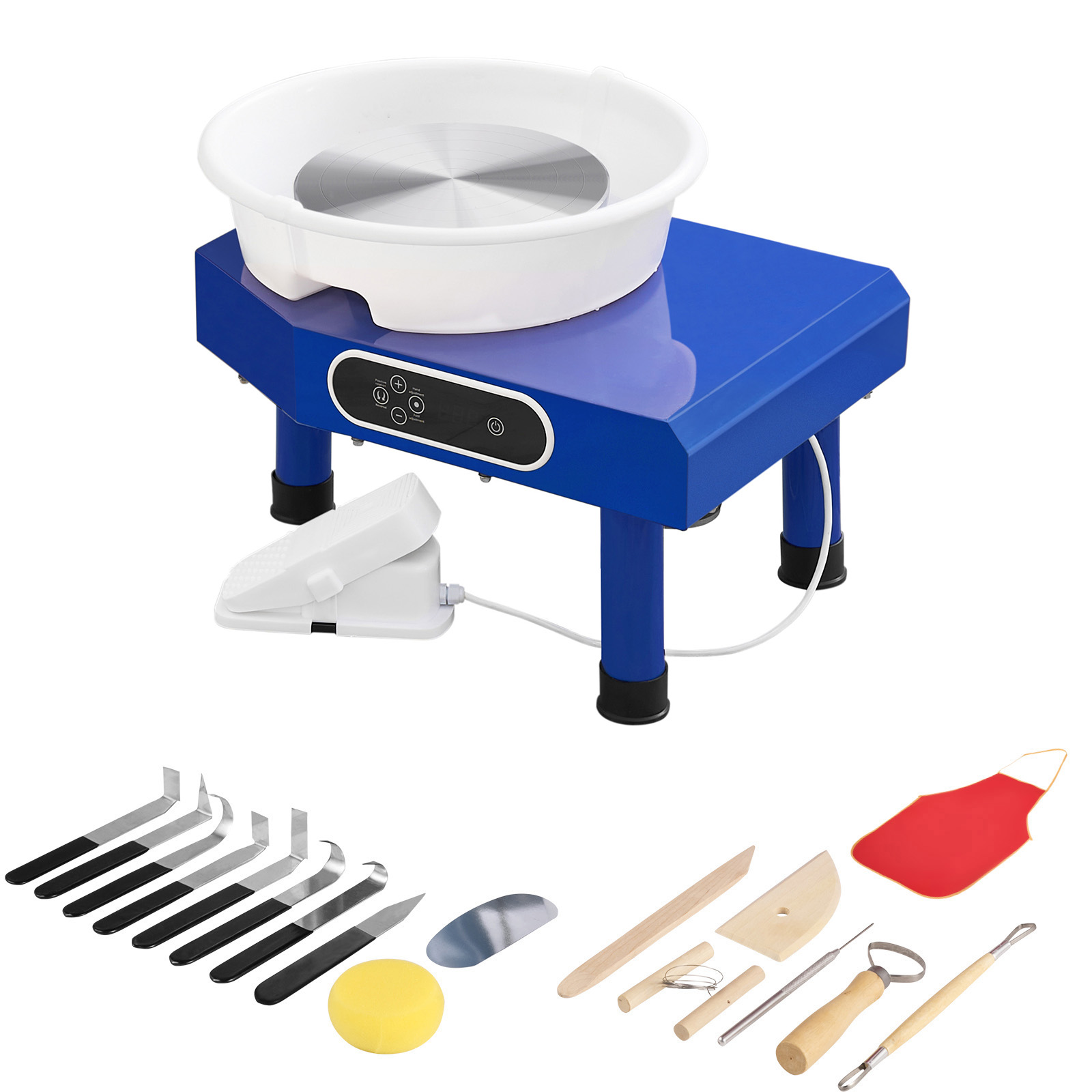

Photos from current listings. Actual item, color, and included accessories may vary.
Manual Pottery Wheel Buying Guide
Manual pottery wheels are kick-wheel or treadle-driven throwing machines that give the potter direct, variable torque control without electrical dependence. The core trade-off is flywheel mass and bearing quality versus portability: heavy cast-iron or concrete flywheels deliver smooth, sustained momentum for centering large clay, while light stamped-steel or plastic wheels are only suitable for small hand-building and trim work. The decision rule: buy a manual wheel only if you have a stable floor, a seated working height that matches the wheel head, and a clay load under roughly 10 lb per piece; otherwise step up to a variable-speed electric wheel.
Key takeaways
- Kick wheels rely on a 30–60 lb flywheel; heavier cast-iron or concrete flywheels sustain momentum through centering, while sub-20 lb stamped wheels stall under 5 lb of clay.
- Wheel-head diameter drives capacity: 10–12 in heads suit 5–10 lb pieces, 14 in heads handle 15–25 lb, and splash pans must clear the head by at least 2 in.
- Sealed ball-bearing shafts and stainless or anodized wheel heads resist clay dust and water; bushing or exposed-bearing designs seize within months in damp studios.
At a glance
- Category
- Pottery Wheels & Kilns
- Last updated
- Nov 28, 2026
Current offers
Highlights
- Kick wheels rely on a 30–60 lb flywheel; heavier cast-iron or concrete flywheels sustain momentum through centering, while sub-20 lb stamped wheels stall under 5 lb of clay.
- Wheel-head diameter drives capacity: 10–12 in heads suit 5–10 lb pieces, 14 in heads handle 15–25 lb, and splash pans must clear the head by at least 2 in.
- Sealed ball-bearing shafts and stainless or anodized wheel heads resist clay dust and water; bushing or exposed-bearing designs seize within months in damp studios.
- Speed control on manual wheels is mechanical (treadle linkage or kick-bar ratio); adjustable seat-to-head height and a locking pin are the only repeatability features to look for.
Best use cases
- Best fit: a home studio with a concrete or tile floor and a dedicated stool — pick a 30–50 lb flywheel kick wheel with a 12–14 in head for throwing 5–15 lb stoneware.
- Wrong fit: an apartment or carpeted room — skip manual wheels entirely; vibration, clay dust, and floor flex make treadle wheels impractical without a rigid, washable base.
- Best fit: classrooms and community studios wanting quiet, power-free operation — choose a treadle wheel with a wide 14 in splash pan and sealed bearings for shared use.
- Skip: lightweight portable “manual” wheels under 20 lb for anything beyond small sculpture or trimming; they lack flywheel mass for centering and are effectively hand-building turntables.
Buying tips
- Match flywheel weight to clay load: 5–10 lb pieces need a 30–40 lb flywheel; 10–20 lb pieces need 50–60 lb cast iron or concrete.
- Measure seated elbow height and confirm the wheel head sits 2–4 in above it; adjustable seat height or a wheel stand is mandatory for ergonomic throwing.
- Choose sealed cartridge or tapered roller bearings over bushings; clay and water destroy open bearings, and replacement is difficult on welded frames.
- Check wheel-head material: stainless steel or hard-anodized aluminum resists rust and clay adhesion; painted mild steel chips and rusts within a season.
Specs
| Drive Type | Kick-bar vs treadle linkage |
|---|---|
| Flywheel Mass | 20–60 lb cast iron / concrete |
| Wheel Head Size | 10–14 in diameter |
| Bearing Type | Sealed ball vs bushing |
Related searches
What to check before buying
- Floor check: manual wheels need a rigid, level, non-flexing floor — concrete, tile, or a bolted plywood platform; carpet and wood joists amplify wobble.
- Space check: allow a 36–48 in diameter working circle around the wheel plus a stool footprint and a clay/water station within arm’s reach.
- Height fit: confirm wheel-head height (typically 24–30 in) suits your seated throwing posture, or that the stand is adjustable.
- Drainage and cleanup: a detachable splash pan or basin with a drain plug and a nearby water source are required for daily throwing.
FAQ
Data sources: eBay / Amazon listings and product attribute feeds. Updated Nov 28, 2026.
Some links on this page are affiliate links. If you buy after clicking one, we may earn a commission at no extra cost to you. This does not change which products appear here or their order. Affiliate disclosure.