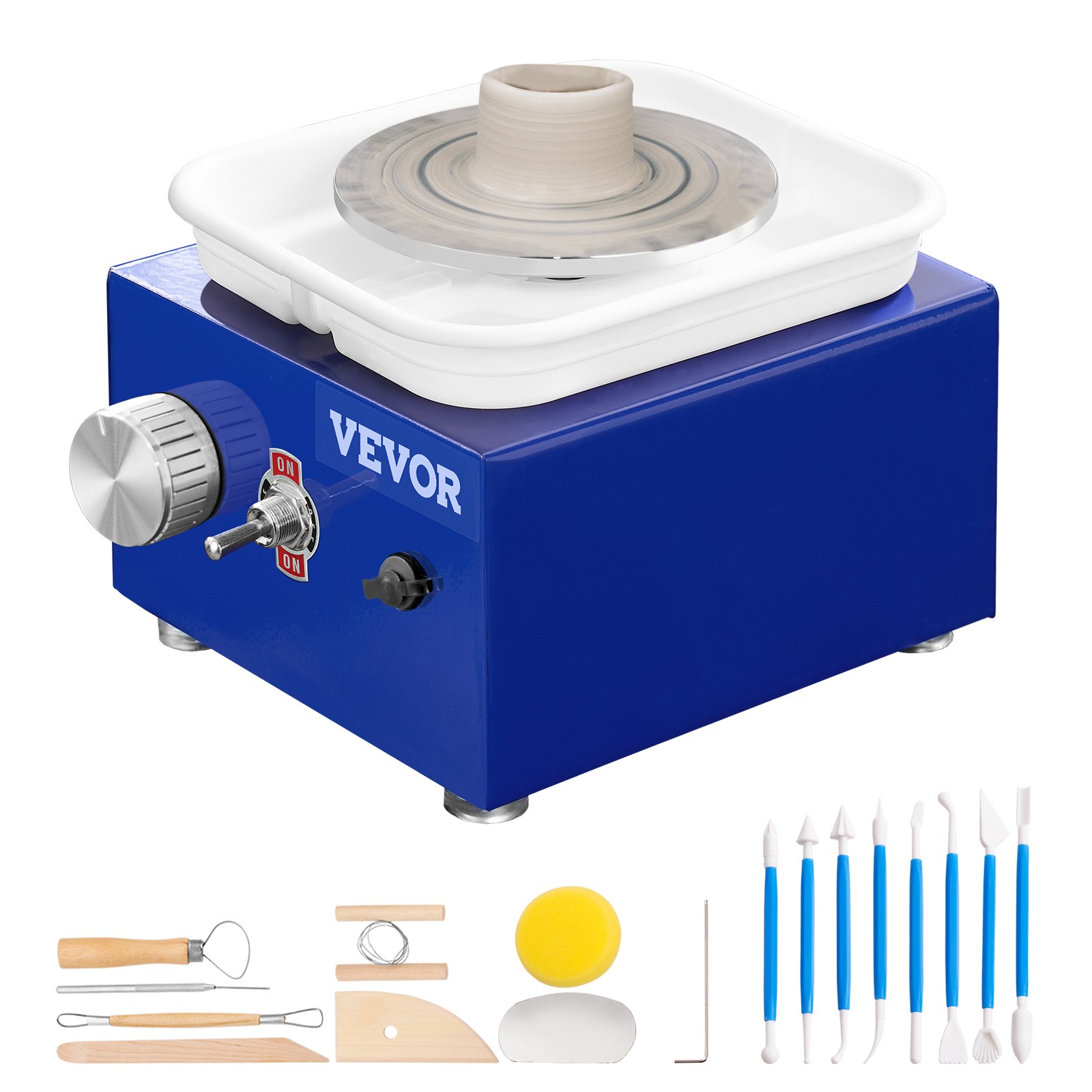

Photos from current listings. Actual item, color, and included accessories may vary.
Mini Pottery Wheel Buying Guide
Mini pottery wheels are compact, low-wattage throwing machines (typically 18–40W) designed for small-scale centering of 1–3 lb clay forms, unlike full-size wheels that handle 25+ lb. The core trade-off is torque versus portability: gear-reduced DC motors hold speed under load, while direct-drive toy-grade units stall on anything beyond pinch pots. Buy a gear-reduced model with a removable splash pan and a 3–4 lb clay rating if you want real throwing; skip sub-10W USB units for anything but air-dry clay crafts.
Key takeaways
- Motor architecture separates real throwing from crafts: gear-reduced brushed DC (30W class) delivers usable low-speed torque, while direct-drive 5–10W motors stall under hand pressure.
- Wheelhead diameter of 3.5–6 inches (90–150mm) defines the practical clay limit; smaller heads cannot support bats or 2+ lb centered mounds.
- Two-turntable designs (separate throwing head and batt) speed workflow and are standard on 30W mini units like the VEVOR-class format.
At a glance
- Category
- Pottery Wheels & Kilns
- Last updated
- Nov 28, 2026
Current offers
Highlights
- Motor architecture separates real throwing from crafts: gear-reduced brushed DC (30W class) delivers usable low-speed torque, while direct-drive 5–10W motors stall under hand pressure.
- Wheelhead diameter of 3.5–6 inches (90–150mm) defines the practical clay limit; smaller heads cannot support bats or 2+ lb centered mounds.
- Two-turntable designs (separate throwing head and batt) speed workflow and are standard on 30W mini units like the VEVOR-class format.
- Speed control must be continuous variable via foot pedal or dial; stepped on/off switches prevent centering and are a toy-grade marker.
Best use cases
- Best fit: apartment potters throwing 1–2 lb cups and small bowls — pick a 30W gear-reduced unit with a 5–6 inch head and removable splash pan.
- Best fit: classrooms and kids' air-dry clay sessions — a 12–18W variable-speed mini with a 3.5–4 inch head is sufficient and safer at low RPM.
- Wrong fit: anyone centering 3+ lb stoneware regularly — skip minis entirely; a 1/3 HP full-size wheel is the correct tool.
- Wrong fit: buyers wanting a USB-powered unit for real clay — those 5–10W motors stall; reserve them for polymer/air-dry crafts only.
Buying tips
- Match wattage to clay weight: 12–18W handles up to ~1 lb, 25–30W handles ~2–3 lb, and anything rated below 10W is craft-only.
- Require a gear-reduced DC motor and variable speed control; direct-drive and single-speed switches stall during centering.
- Confirm wheelhead size of at least 4.5 inches if you plan to use standard bats or throw vessels taller than 3 inches.
- Choose a removable two-piece splash pan; fixed trays make cleanup slow and trap clay water against the motor housing.
Specs
| Motor Type | Gear-reduced DC vs direct-drive |
|---|---|
| Wattage Class | 12–18W craft / 25–30W throwing |
| Clay Capacity | 1–3 lb max centered |
| Wheelhead Size | 3.5–6 in (90–150mm) |
Related searches
What to check before buying
- Measure your workspace: mini wheels need roughly 12–18 inches of bench depth plus clearance for a foot pedal and splash pan.
- Check clay type and weight: air-dry and polymer clays suit sub-15W units, while stoneware up to 3 lb needs a 30W gear-reduced model.
- Confirm power standard: most minis are 110–120V AC for North America; verify plug type and whether an adapter is included for 220–240V regions.
- Plan companion parts: a wire cutter, sponge, and at least one spare batt (if the head accepts them) are needed from day one.
FAQ
Data sources: eBay / Amazon listings and product attribute feeds. Updated Nov 28, 2026.
Some links on this page are affiliate links. If you buy after clicking one, we may earn a commission at no extra cost to you. This does not change which products appear here or their order. Affiliate disclosure.