
Photos from current listings. Actual item, color, and included accessories may vary.
Portable Pottery Wheel Buying Guide
A portable pottery wheel is a compact, often sub-25 lb throwing machine designed for tabletop use, small studios, or classrooms, trading motor torque and wheel-head stability for transportability. The primary trade-off is between lightweight brushed-motor designs with plastic basins and heavier brushless or direct-drive units that hold centering force under load. The clear decision rule: if you routinely throw more than 3–5 lb of clay or need multi-year durability, skip sub-10 lb plastic-body wheels and choose a metal-frame unit with a brushless motor and at least a 12-inch wheel head.
Median $139.10
Key takeaways
- Motor architecture splits the segment: brushed DC motors dominate sub-15 lb wheels and lose torque under firm centering; brushless DC (BLDC) motors in 20–30 lb units sustain torque and last 3–5x longer.
- Wheel-head diameter and runout determine throwing capacity: 9–10 in heads suit 1–3 lb pieces; 12 in heads with under 0.5 mm runout handle 5–10 lb centered forms without wobble.
- Basin and splash-pan materials separate classroom-grade from hobby-grade: ABS plastic basins crack under repeated clay scraping; stainless steel or high-density polyethylene pans survive daily studio use.
At a glance
- Category
- Pottery Wheels & Kilns
- Last updated
- Nov 27, 2026
Current offers
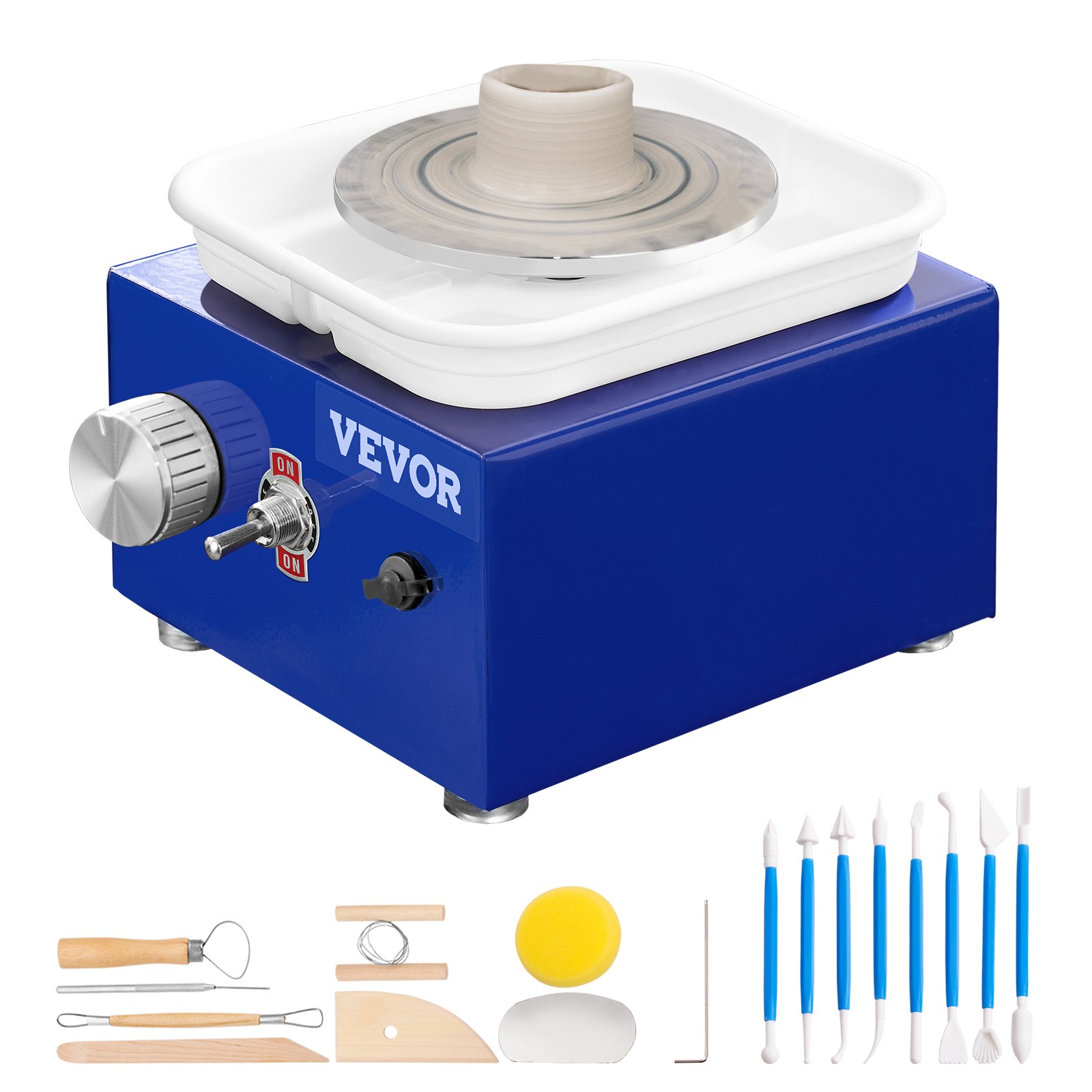 VEVOR Pottery Wheel Mini Ceramic Wheel Sculpting Tools Apron Two Turntables 30W$36.99View on eBay
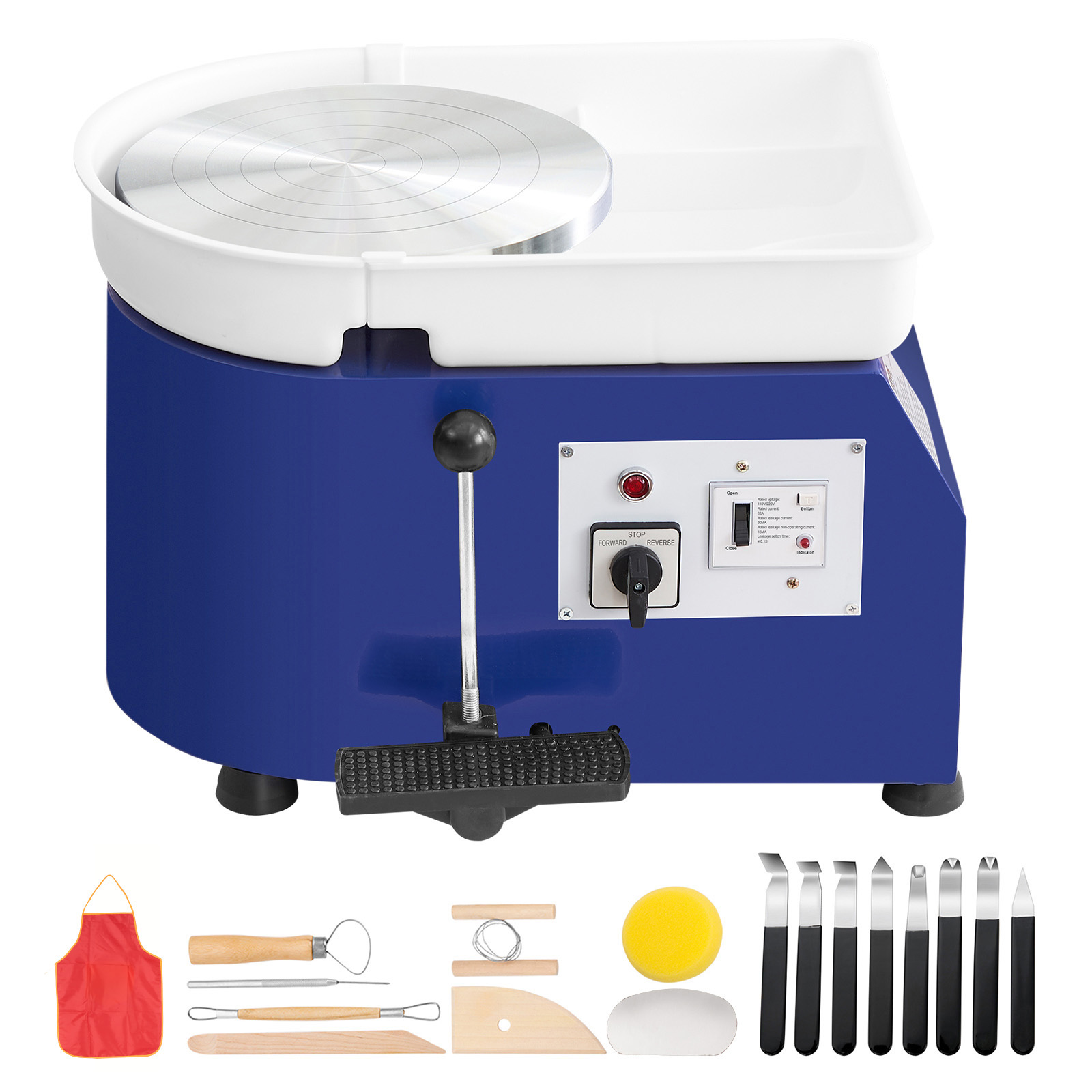 Pottery Wheel, 350W, 11 In Clay Forming Machine, 60-300 RPM Adjustable Speed With Handle And Pedal Control, ABS Detachable Basin, Accessory Kit For Adults And Beginners Craft DIY, Blue$117.99View on Mallflare
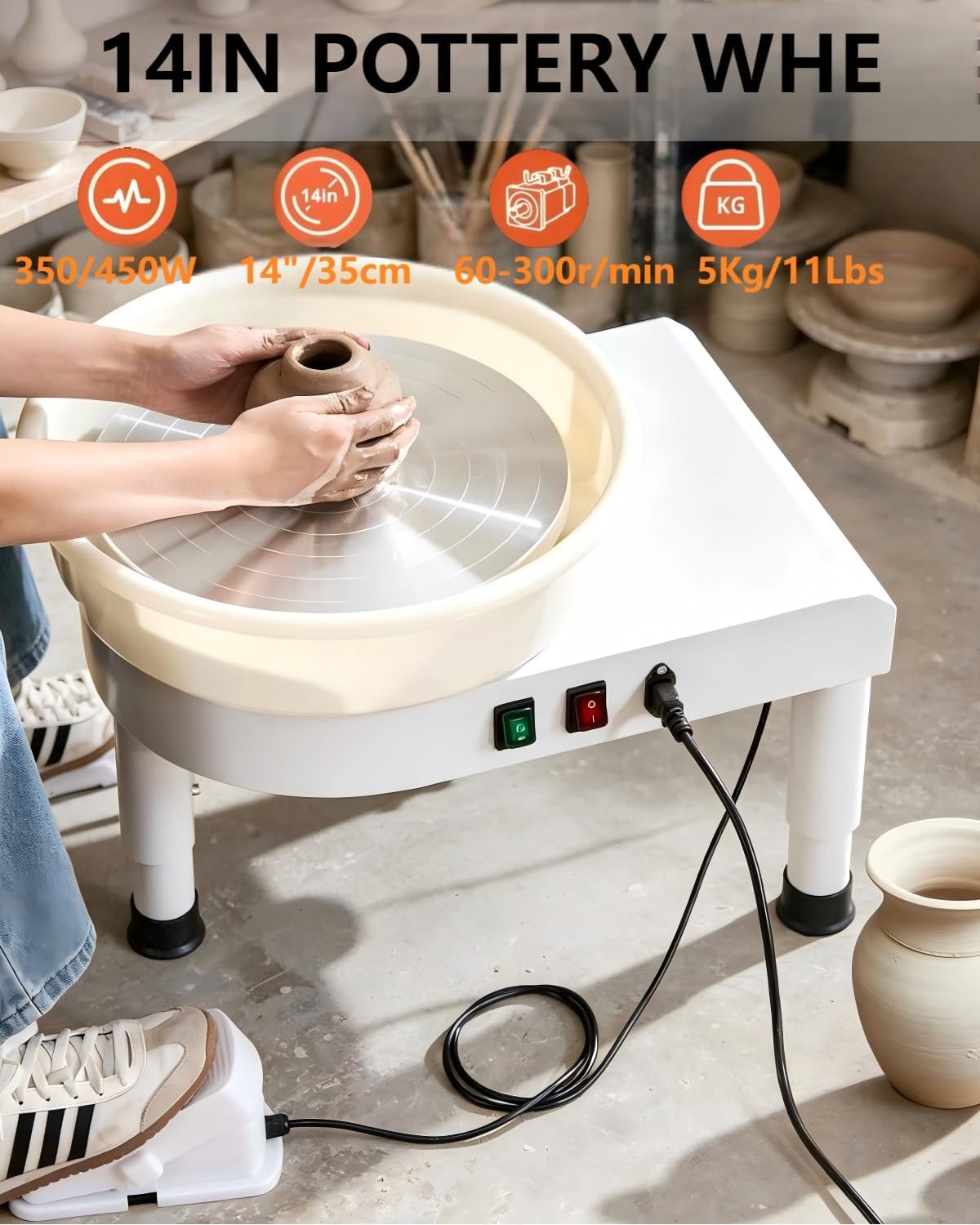 Pottery Wheel 14" Ceramic Wheel Machine 60-300 RPM Speed Adjustable DIY Clay Art$136.20View on eBay
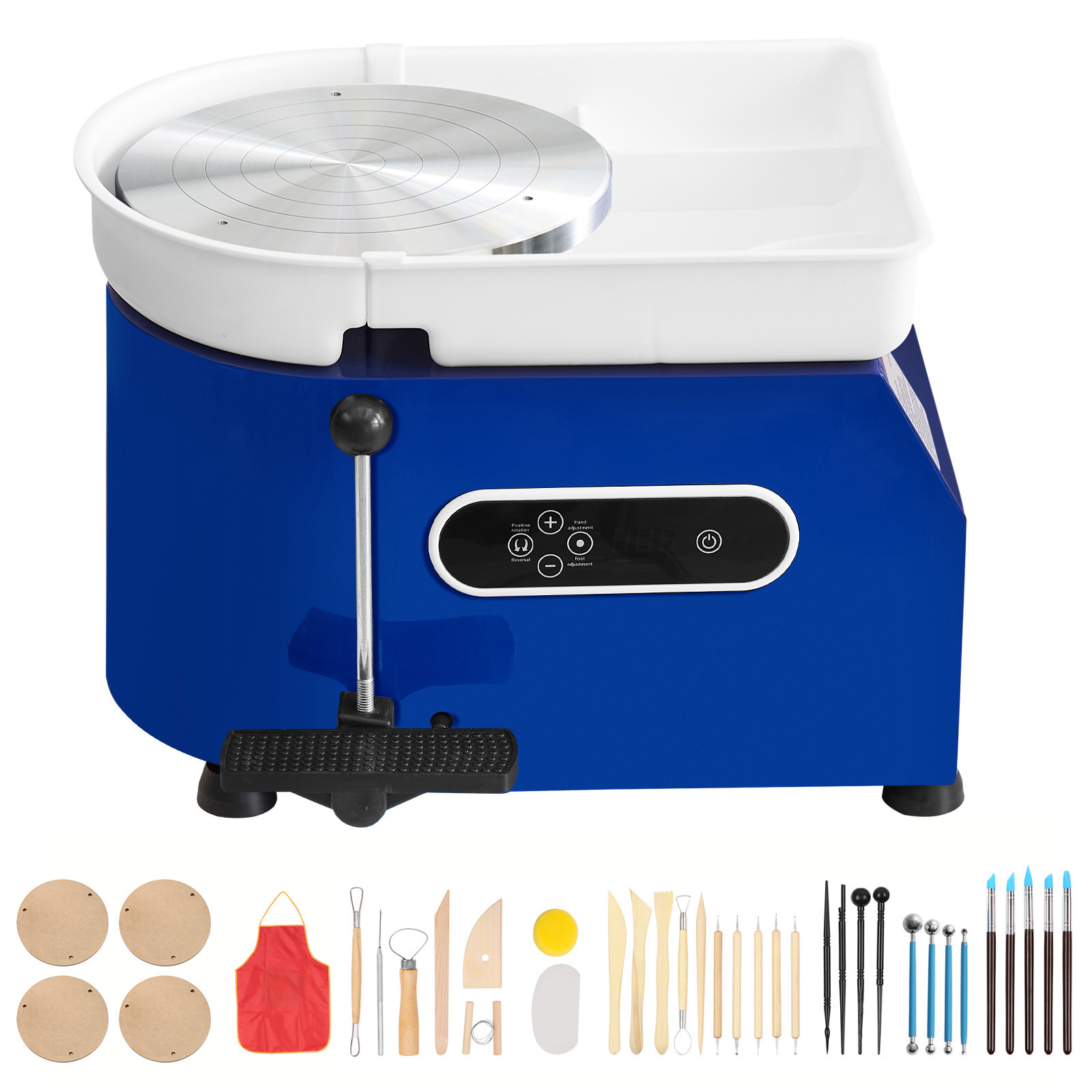 Pottery Wheel, 450W, 11 In Clay Forming Machine, 60-300 RPM Adjustable Speed With Handle And Pedal Control, ABS Detachable Basin, Accessory Kit For Adults And Beginners Craft DIY, Blue$118.99View on Mallflare
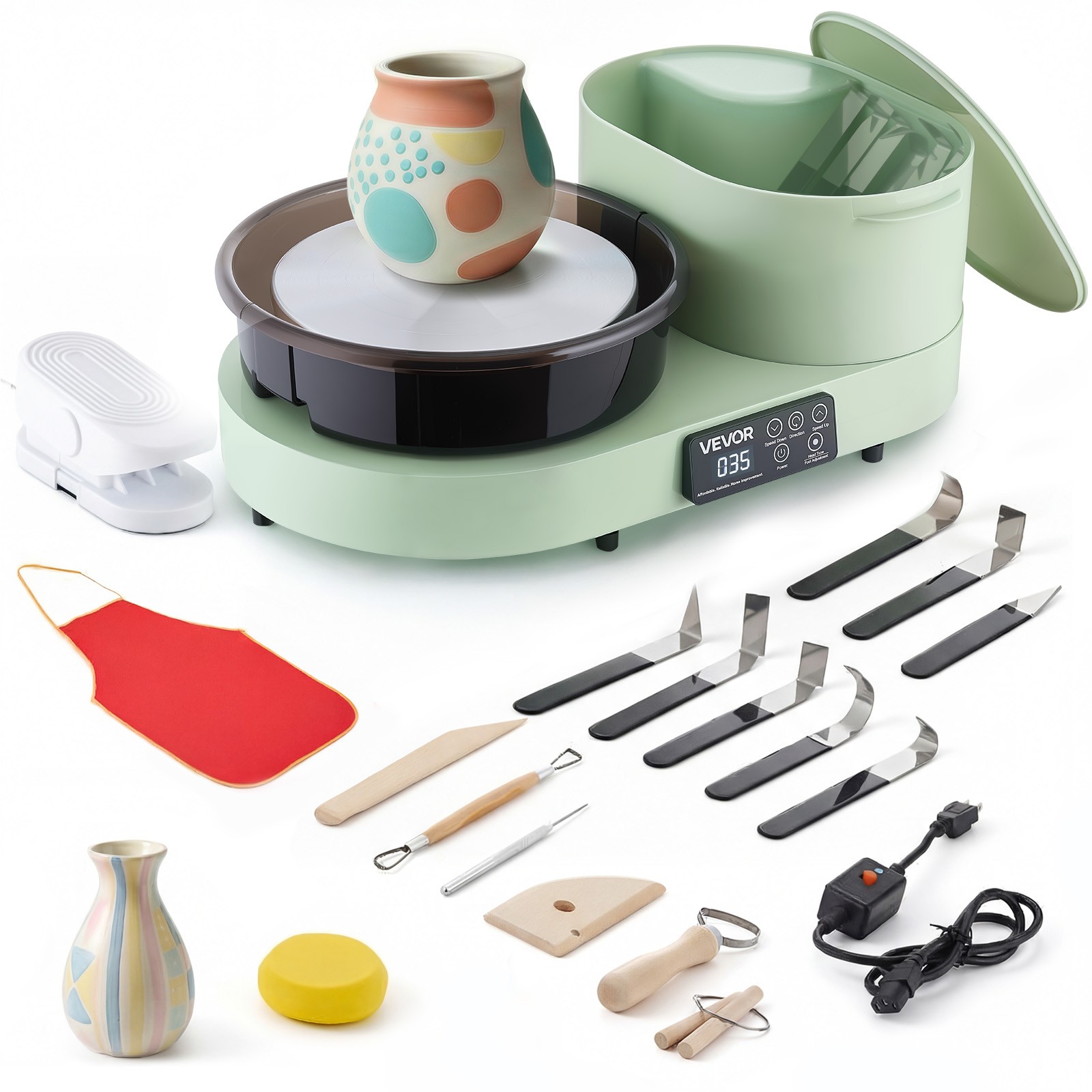 VEVOR Pottery Wheel for Adults Ceramic Wheel 11" Aluminum Turntable 450W Green$143.90View on eBay
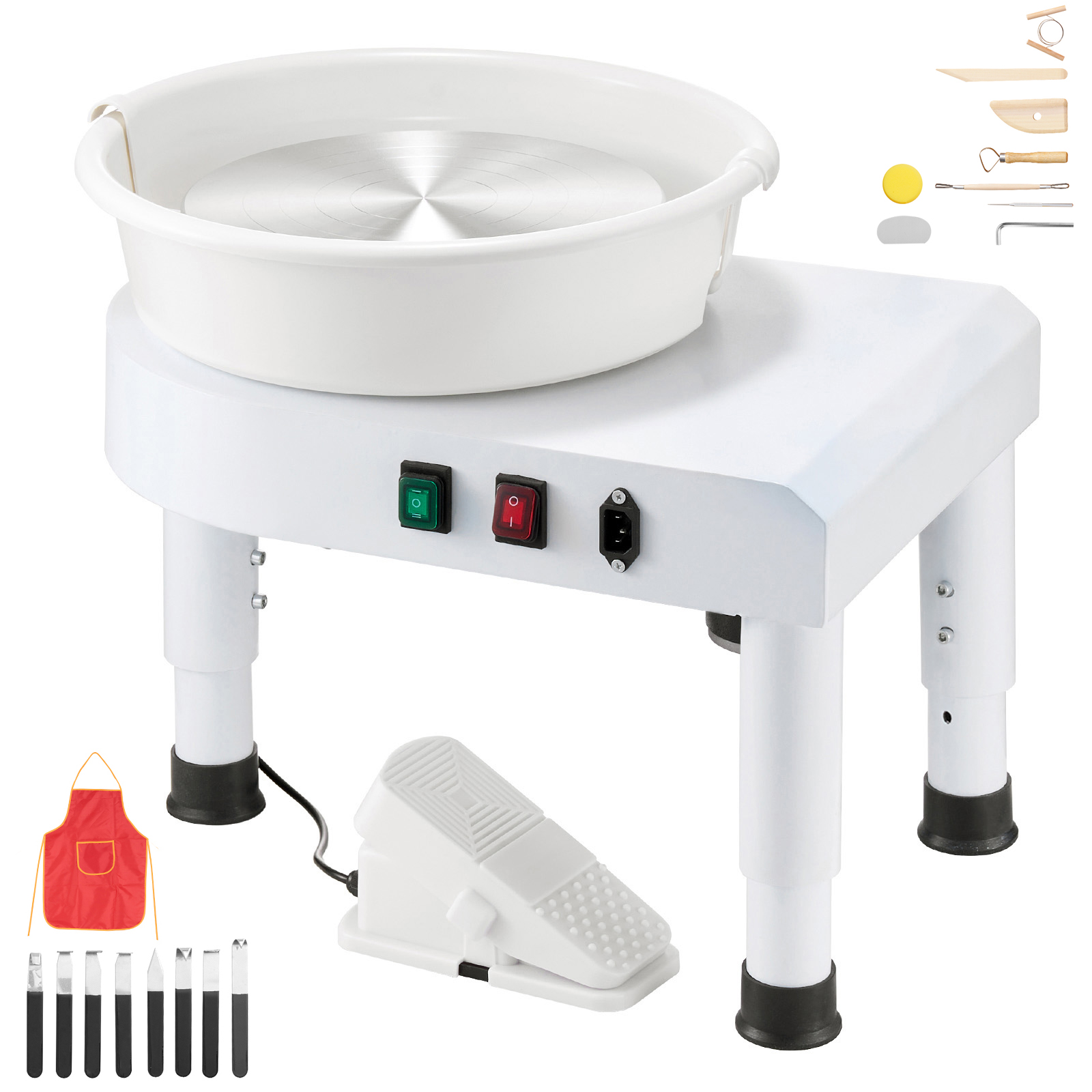 Pottery Wheel, 11 In Ceramic Forming Machine, 60-300 RPM Adjustable Speed With Foot Pedal Control, Detachable Basin, Lift Leg, Complete Accessories For Home DIY, White$124.99View on Mallflare
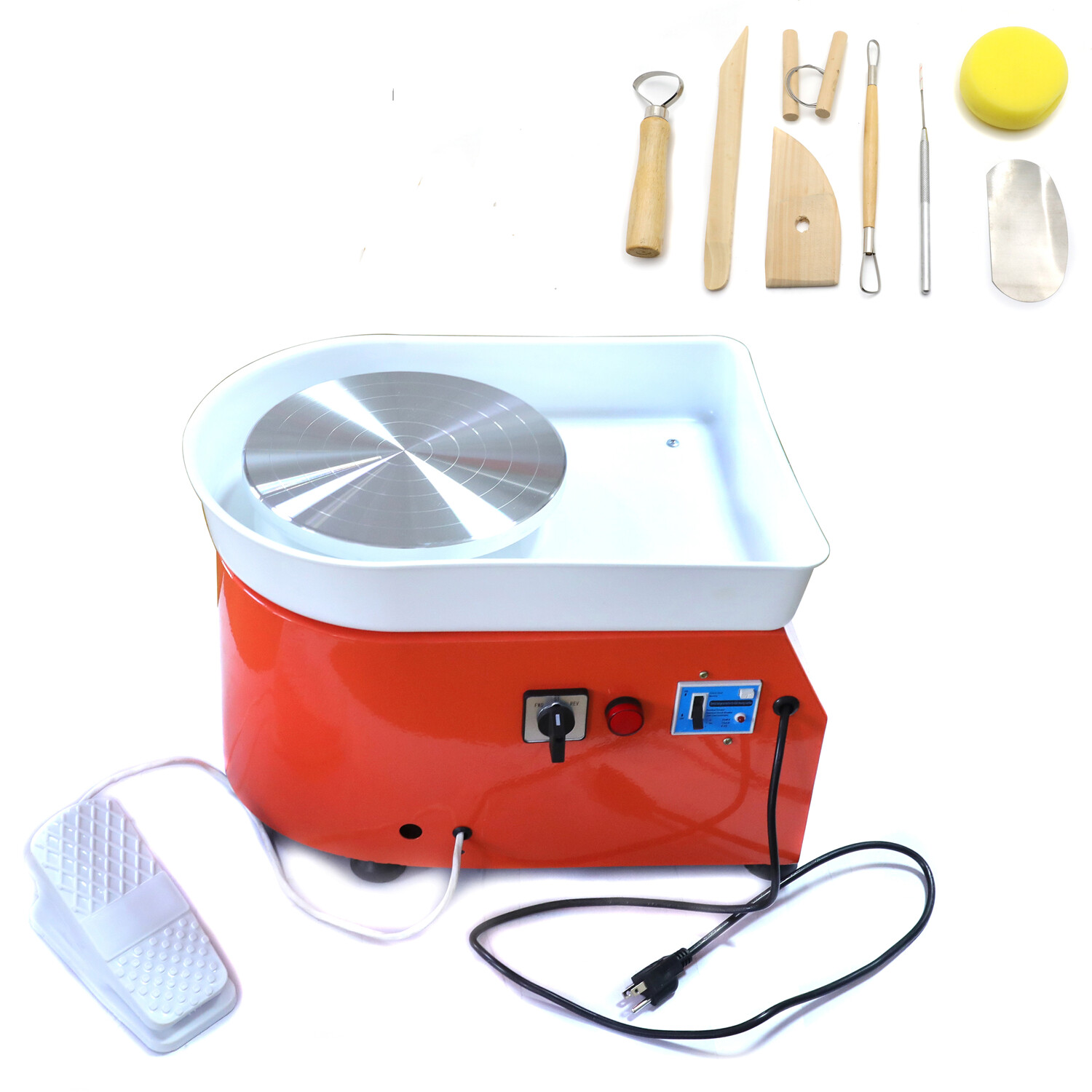 350w Pottery Wheel Table Top Forming Machine W/ Removable Foot Pedal Clay Craft$151.59View on eBay
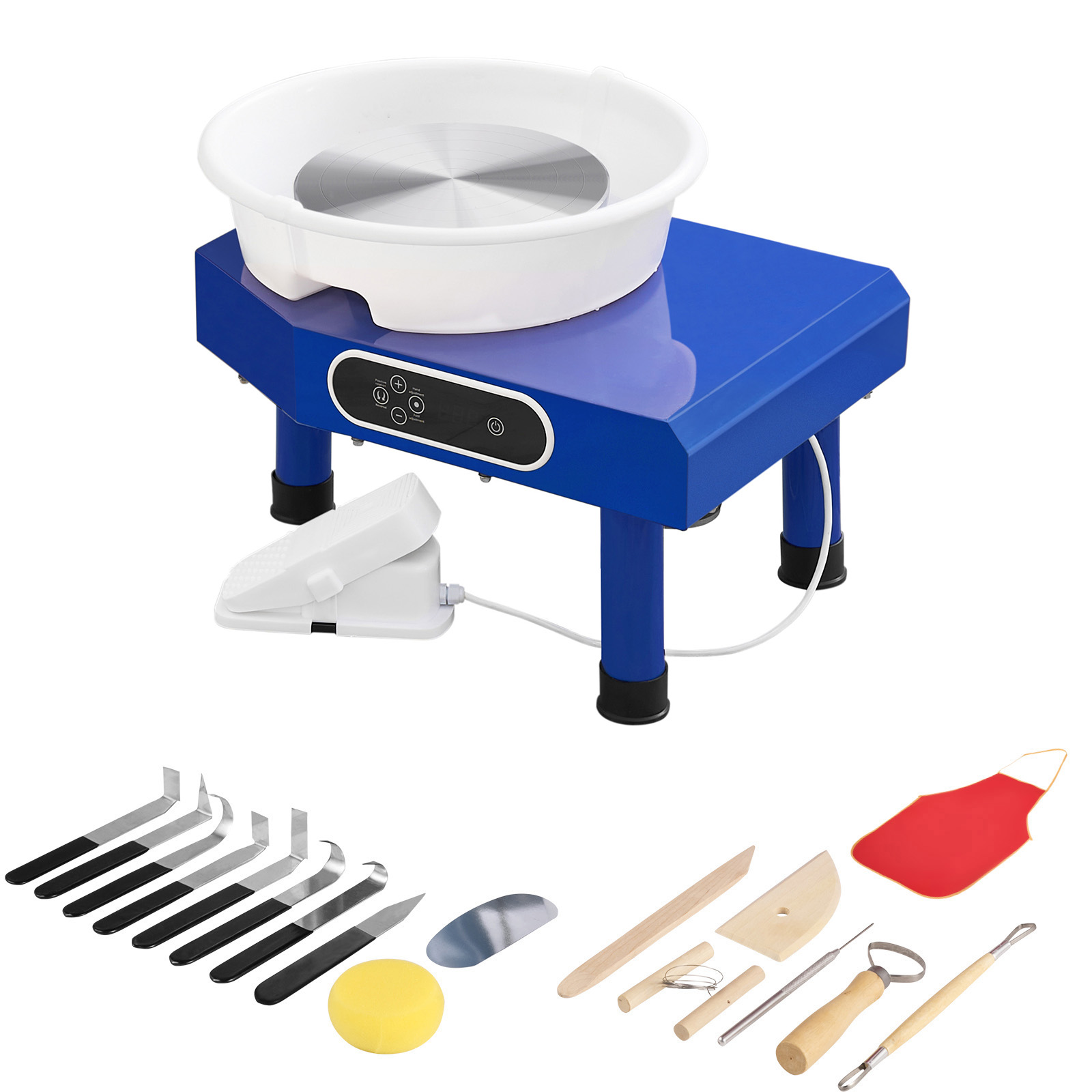 Pottery Wheel, 10 In Ceramic Forming Machine, 60-300 RPM Adjustable Speed With Foot Pedal, ABS Detachable Basin, Manual LCD Panel, Sculpting Tool And Apron, For Home Craft DIY$128.99View on Mallflare
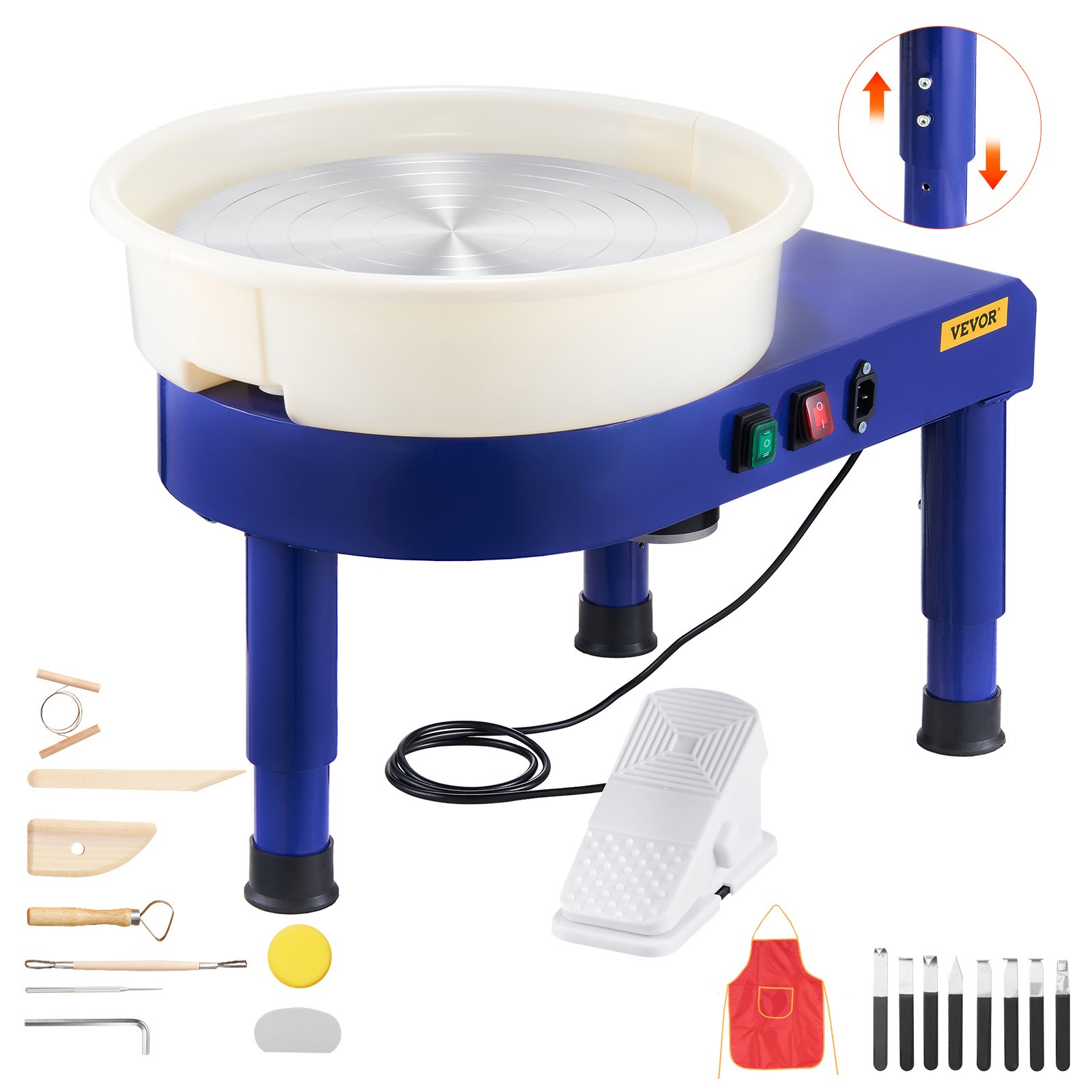 VEVOR Pottery Wheel 14 in Ceramic Wheel Forming Machine 60-300 RPM for DIY Blue$159.90View on eBay
 Pottery Wheel For Adults, 11" Aluminum Turntable, 450W Electric Table Top With Foot Pedal, 30-300 RPM Adjustable Speed, Body, For Beginners, DIY Clay Art Craft, Green$141.99View on Mallflare
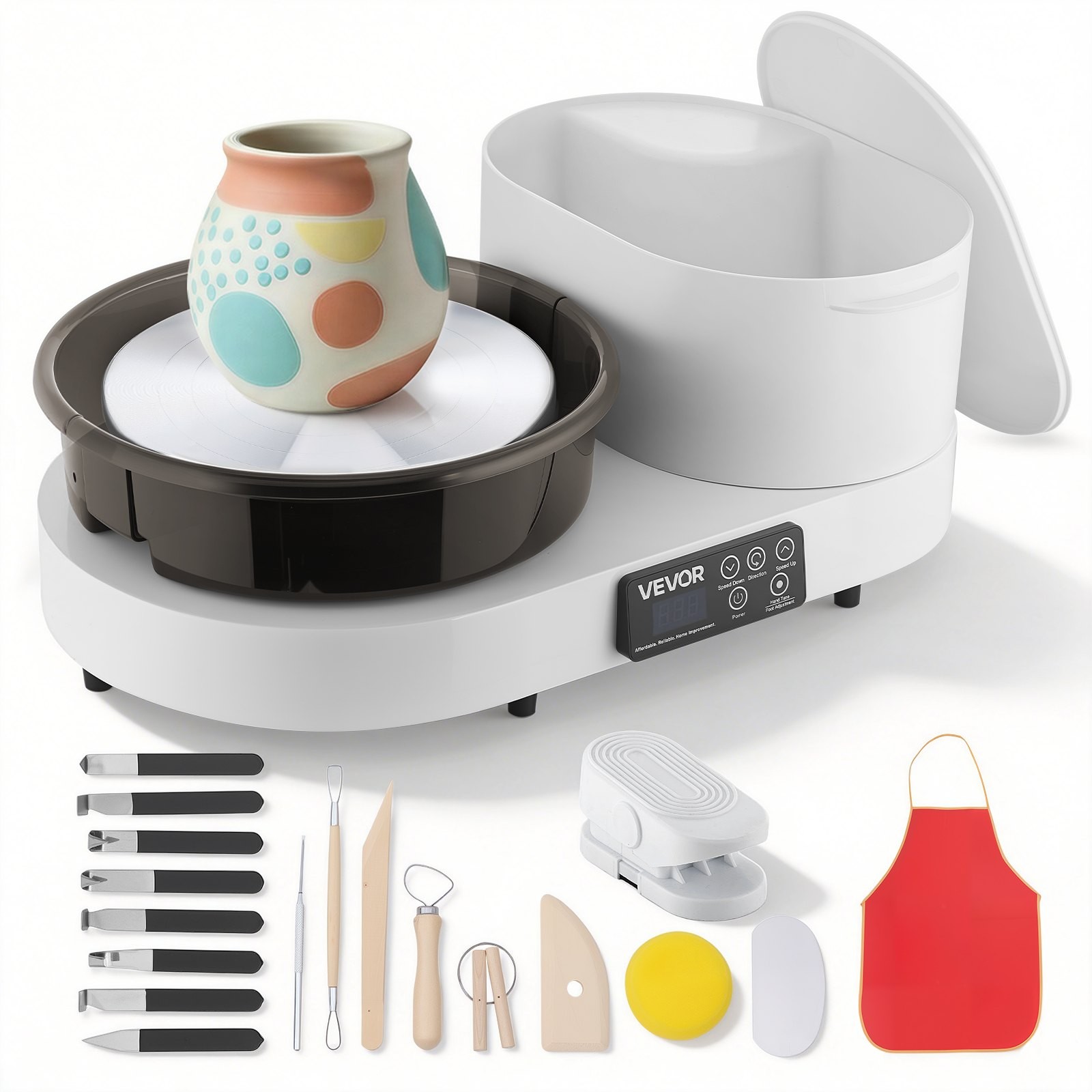 Pottery Wheel for Adults, 11" Aluminum Turntable, 450W Electric Table Top Potter$196.99View on eBay
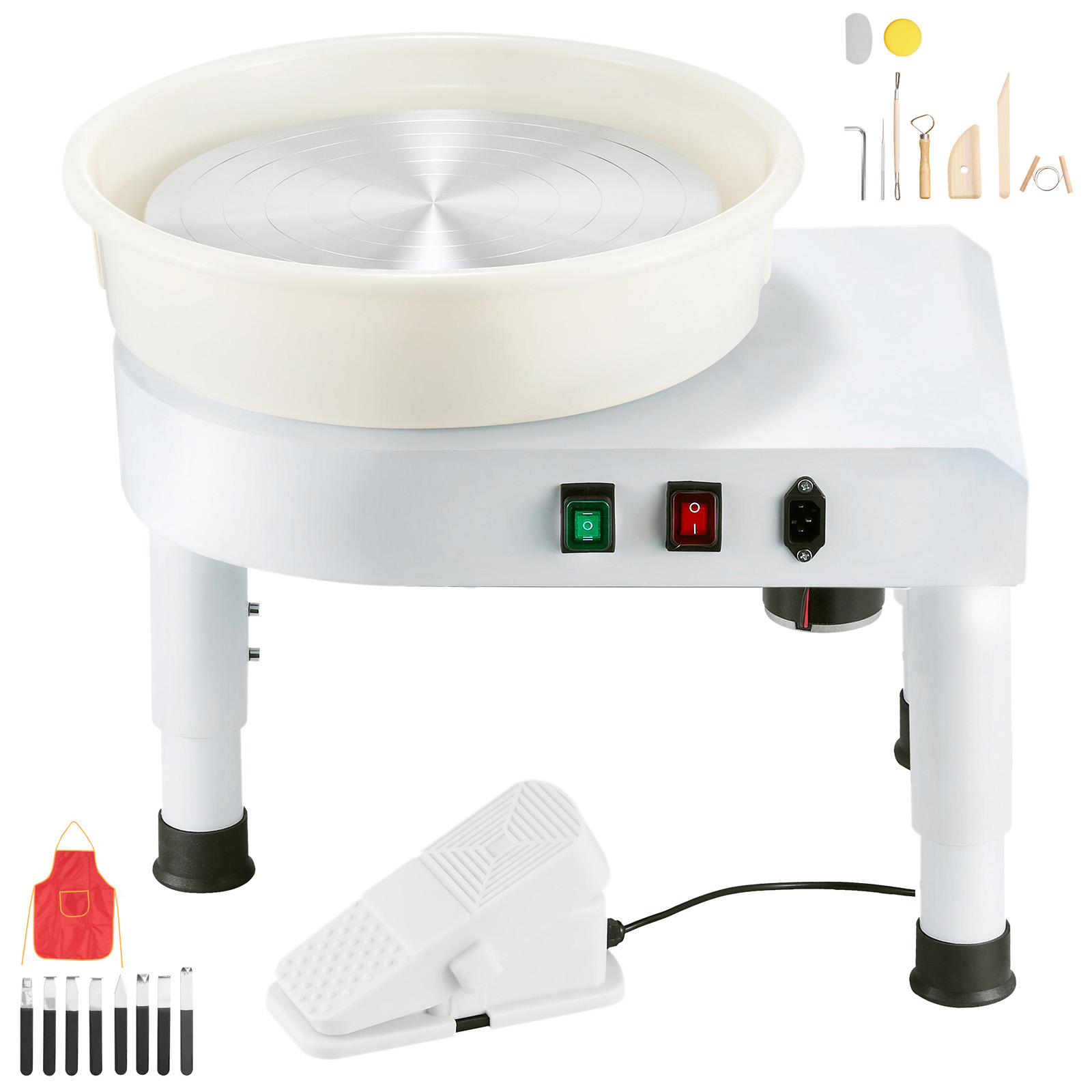 Pottery Wheel, 14 In Ceramic Forming Machine, 60-300 RPM Adjustable Speed With Foot Pedal Control, Detachable Basin, Lift Leg, Complete Accessories For Home DIY, White$160.99View on Mallflare
Highlights
- Motor architecture splits the segment: brushed DC motors dominate sub-15 lb wheels and lose torque under firm centering; brushless DC (BLDC) motors in 20–30 lb units sustain torque and last 3–5x longer.
- Wheel-head diameter and runout determine throwing capacity: 9–10 in heads suit 1–3 lb pieces; 12 in heads with under 0.5 mm runout handle 5–10 lb centered forms without wobble.
- Basin and splash-pan materials separate classroom-grade from hobby-grade: ABS plastic basins crack under repeated clay scraping; stainless steel or high-density polyethylene pans survive daily studio use.
- Speed control and pedal type matter for technique: analog foot pedals with 0–240 RPM range suit beginners; separate 12–24V DC power bricks with reversing switches are standard on serious portable models for S-throwing and trimming.
Best use cases
- Best fit: apartment or home potter throwing 1–3 lb cups and bowls on a kitchen table — pick a 9–10 in wheel head, sub-15 lb body, and plastic basin, accepting shorter motor life for portability.
- Best fit: traveling instructor or classroom needing daily setup/teardown — choose a 20–25 lb metal-frame wheel with brushless motor, 12 in head, and stainless basin; skip budget plastic wheels that flex under student centering force.
- Wrong fit: production potter centering 10+ lb clay regularly — no portable wheel under 30 lb holds torque reliably; step up to a full-size studio wheel with a 1/3 HP+ motor and 14 in head instead.
- Wrong fit: buyer expecting to throw without a stable surface — portable wheels need a heavy table or bolted board; a 10 lb wheel on a lightweight folding table will walk and vibrate, so budget for a sturdy base or clamp system.
Buying tips
- Match clay weight to wheel-head size: 9 in head = 1–3 lb, 10 in = 3–5 lb, 12 in = 5–10 lb; exceeding this ratio causes runout and motor stall on portable units.
- Confirm the power standard: most portables use 12–24V DC external bricks with 100–240V input; ensure the included adapter matches your country's plug and that the DC jack is a standard barrel size for replacement.
- Check wheel-head attachment: removable heads with a standard 3/8 in or 10 mm shaft allow splash-pan cleaning and head upgrades; permanently fixed heads limit maintenance and bat compatibility.
Specs
| Motor Type | Brushed DC vs Brushless DC |
|---|---|
| Wheel Head Size | 9–12 in (23–30 cm) |
| Clay Capacity | 1–10 lb (0.5–4.5 kg) |
| Unit Weight | 10–30 lb portable range |
Related searches
What to check before buying
- Measure your throwing surface: portable wheels need a stable, non-slip table at least 24 in deep and 30 in wide; clamp or bolt the wheel base if the table is under 30 lb.
- Verify wheel weight vs. your transport needs: sub-15 lb units are one-hand carry; 20–30 lb units need two hands and a case — confirm you can lift the listed weight repeatedly.
- Check voltage and plug standard for your region: confirm the included AC adapter is 100–240V input with the correct plug type, or that the DC input matches a locally available replacement brick.
- Confirm bat-pin spacing and head diameter before buying accessories: many portable wheels use proprietary pin spacing, so standard bats may not fit — measure the pin circle or choose a wheel with standard 10 in bat pins.
FAQ
Data sources: eBay / Amazon listings and product attribute feeds. Updated Nov 27, 2026.
Some links on this page are affiliate links. If you buy after clicking one, we may earn a commission at no extra cost to you. This does not change which products appear here or their order. Affiliate disclosure.