
Photos from current listings. Actual item, color, and included accessories may vary.
Pottery Wheel Machine Buying Guide
A pottery wheel machine is a motorized turntable that spins clay for throwing, trimming, and hand-building, and the core trade-off is between lightweight 30–350W tabletop units with ABS basins and heavier 350–450W+ aluminum-head machines with pedal control and real torque at low RPM. The decision rule: buy a wheel rated for continuous duty with a brushless or geared motor and an aluminum wheel head if you plan to throw more than 1–2 lb of clay regularly; choose a compact 30–350W plastic-basin unit only for occasional small-scale craft use.
Median $139.10
Key takeaways
- Motor power tiers: 30W mini wheels stall under hand pressure and suit only sculpting or tiny pinch pots; 350W handles 1–2 lb throws; 450W+ geared motors maintain torque down to 60 RPM for centering 3–5 lb.
- Wheel head size and material: 10–11 in ABS or plastic heads flex and wear; 11–14 in aluminum heads stay flat under load and are the minimum for repeatable centering.
- Speed range: 0–300 RPM with a foot pedal is the practical standard; continuous-duty rated motors with forced cooling are required for sessions over 30 minutes.
At a glance
- Category
- Pottery Wheels & Kilns
- Last updated
- Nov 27, 2026
Current offers
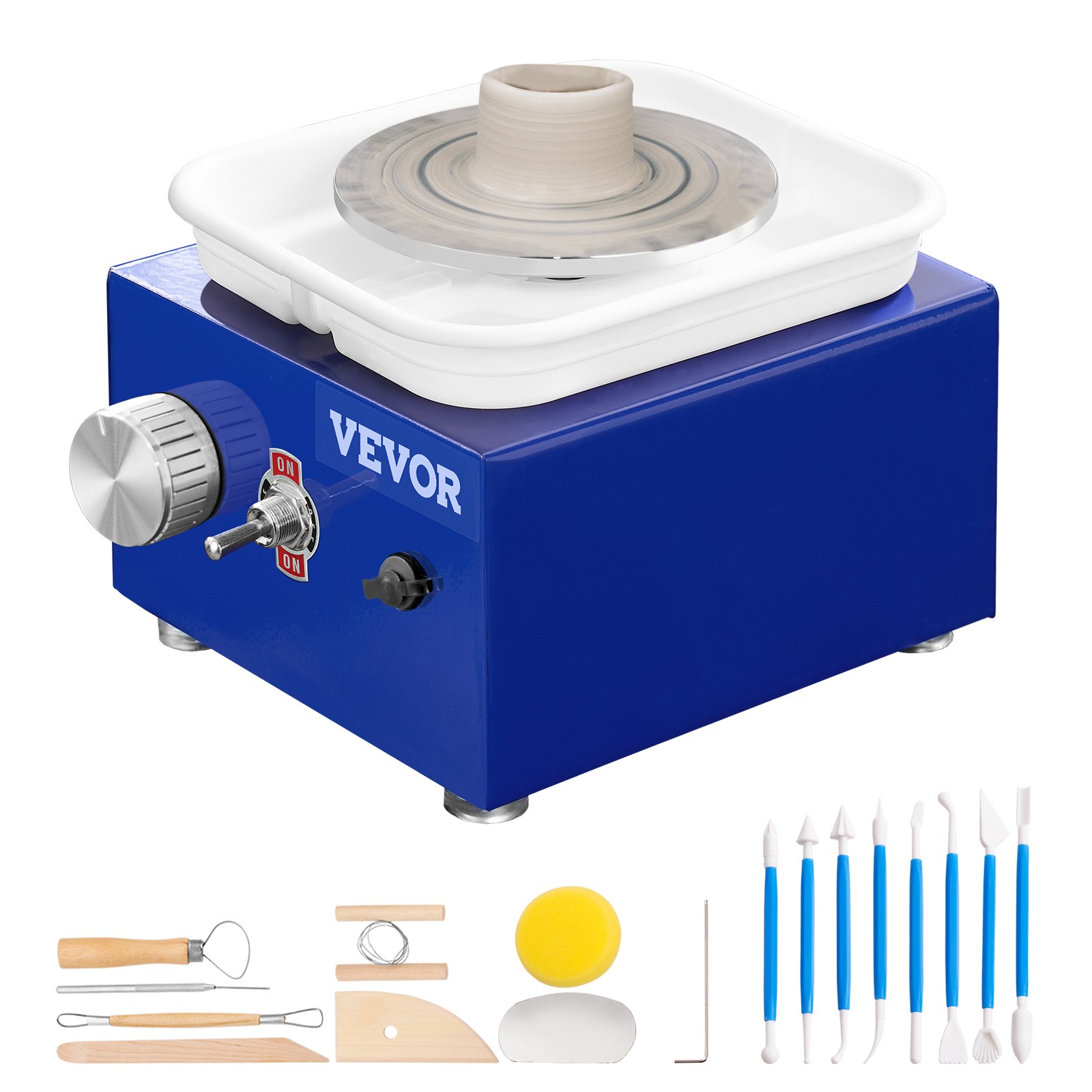 VEVOR Pottery Wheel Mini Ceramic Wheel Sculpting Tools Apron Two Turntables 30W$36.99View on eBay
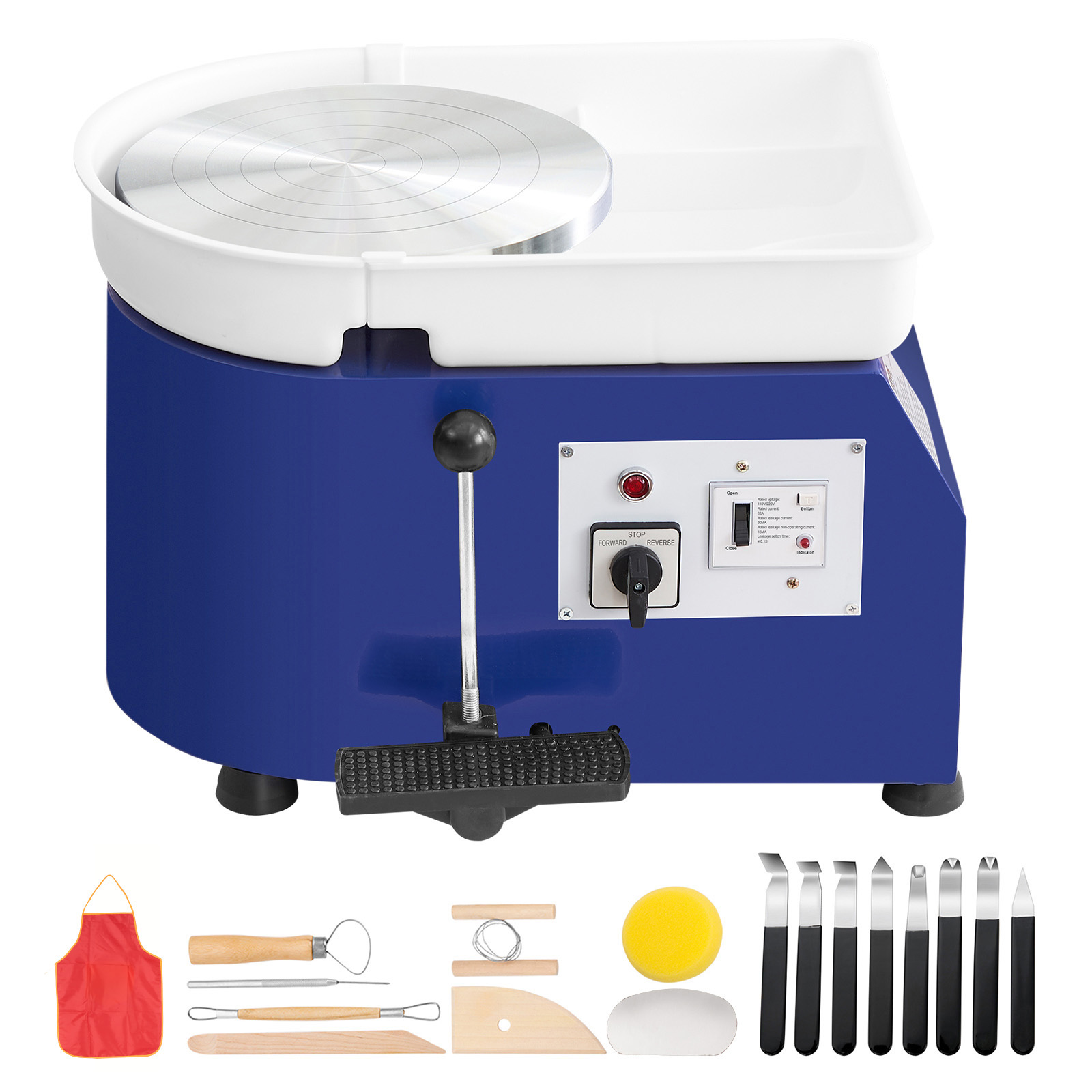 Pottery Wheel, 350W, 11 In Clay Forming Machine, 60-300 RPM Adjustable Speed With Handle And Pedal Control, ABS Detachable Basin, Accessory Kit For Adults And Beginners Craft DIY, Blue$117.99View on Mallflare
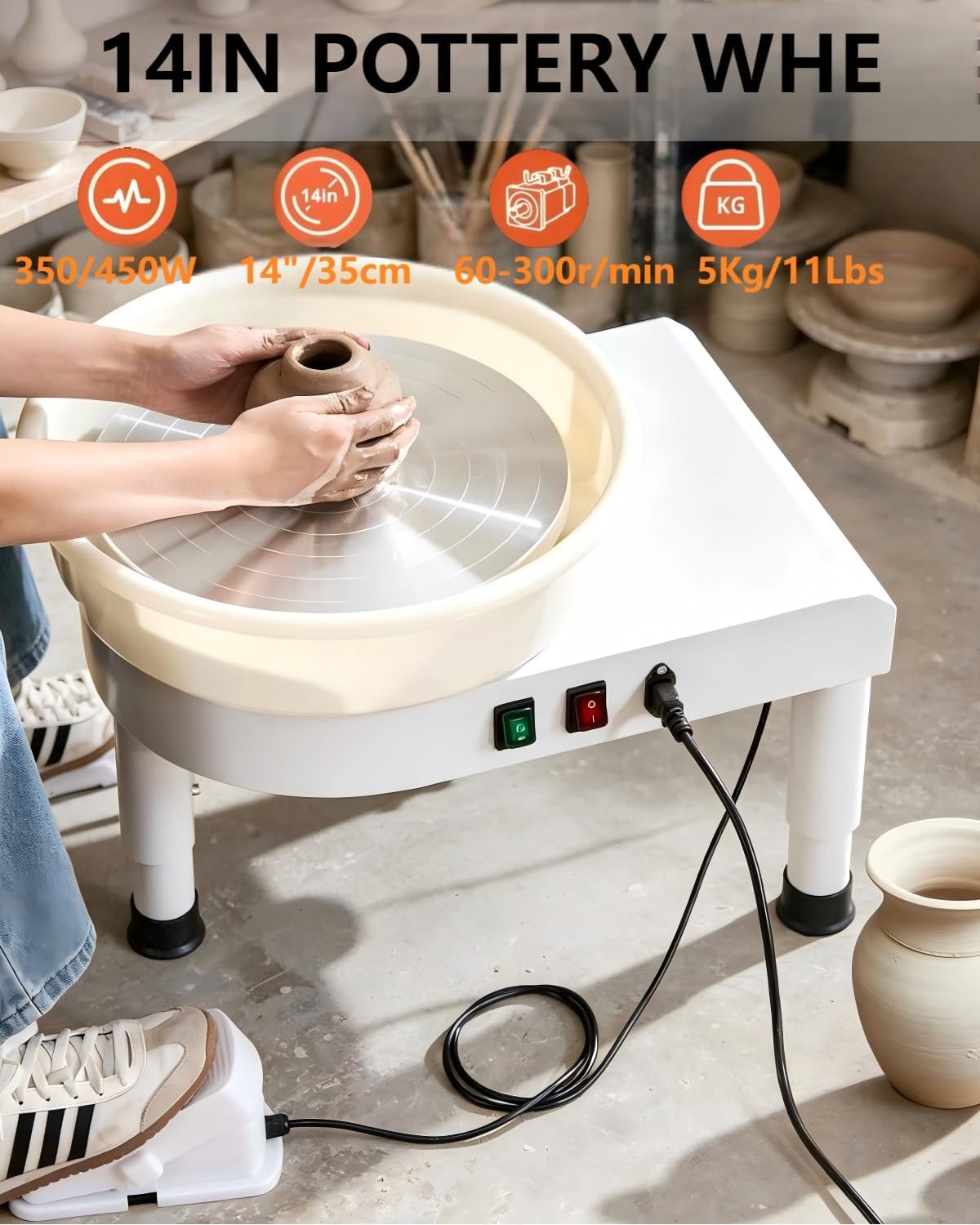 Pottery Wheel 14" Ceramic Wheel Machine 60-300 RPM Speed Adjustable DIY Clay Art$136.20View on eBay
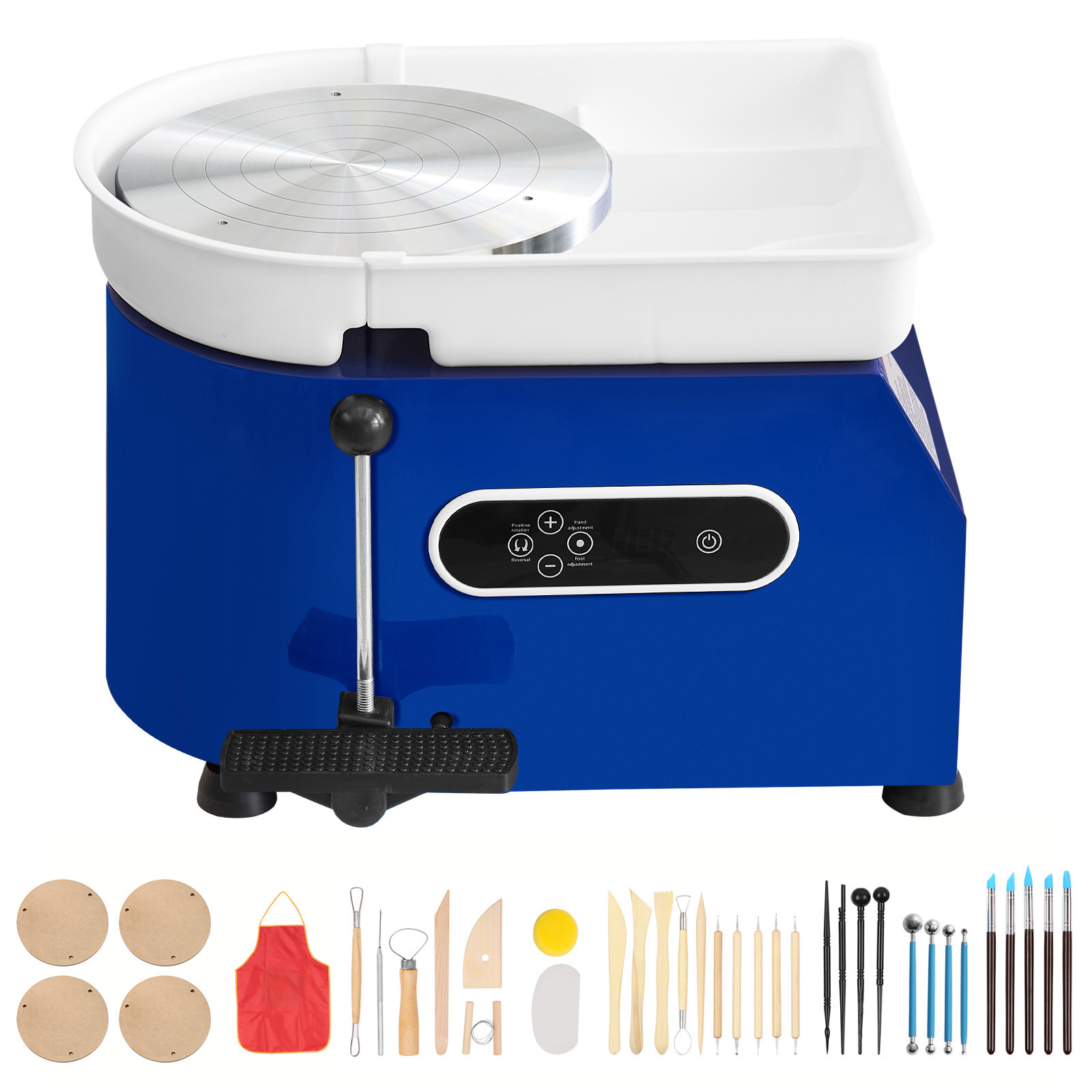 Pottery Wheel, 450W, 11 In Clay Forming Machine, 60-300 RPM Adjustable Speed With Handle And Pedal Control, ABS Detachable Basin, Accessory Kit For Adults And Beginners Craft DIY, Blue$118.99View on Mallflare
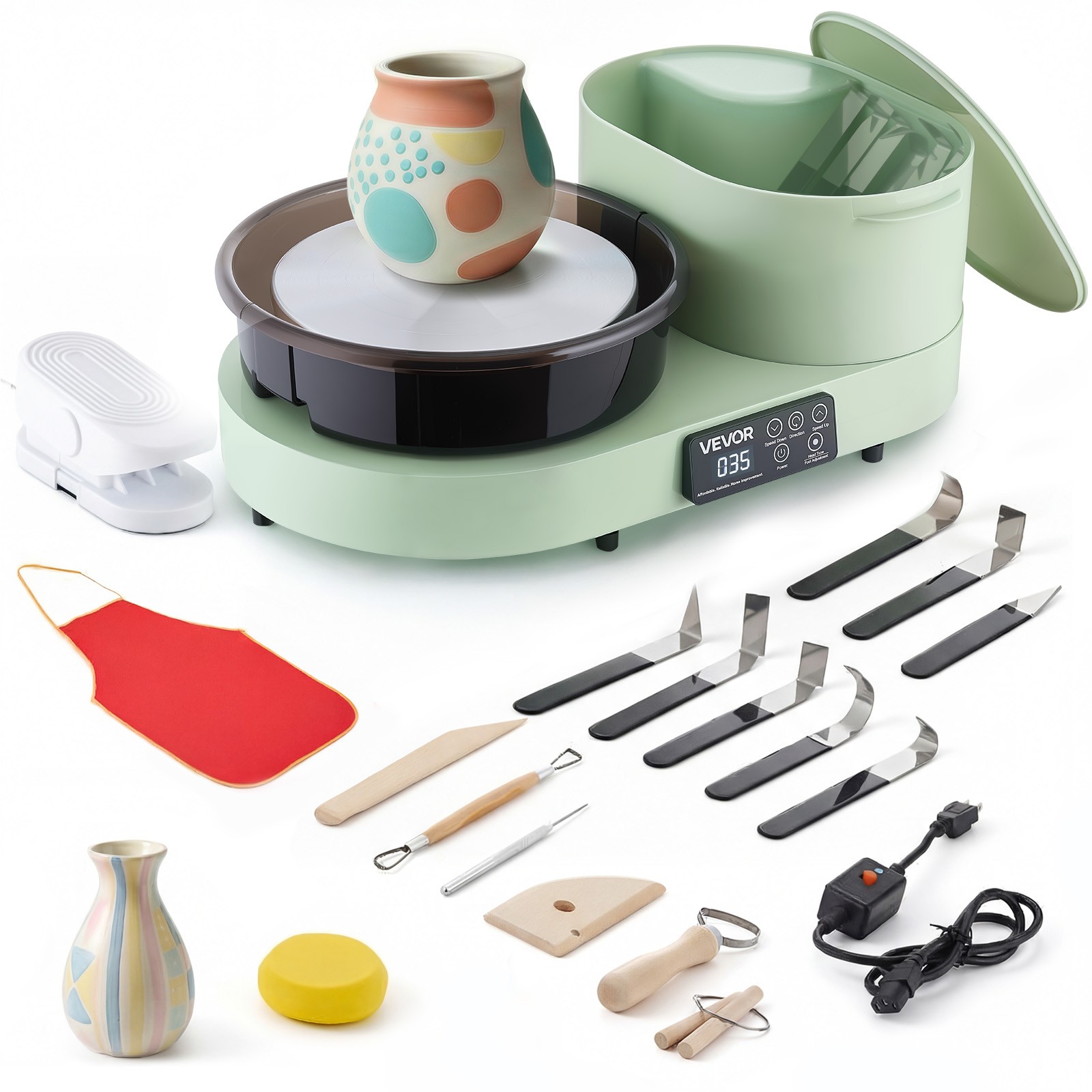 VEVOR Pottery Wheel for Adults Ceramic Wheel 11" Aluminum Turntable 450W Green$143.90View on eBay
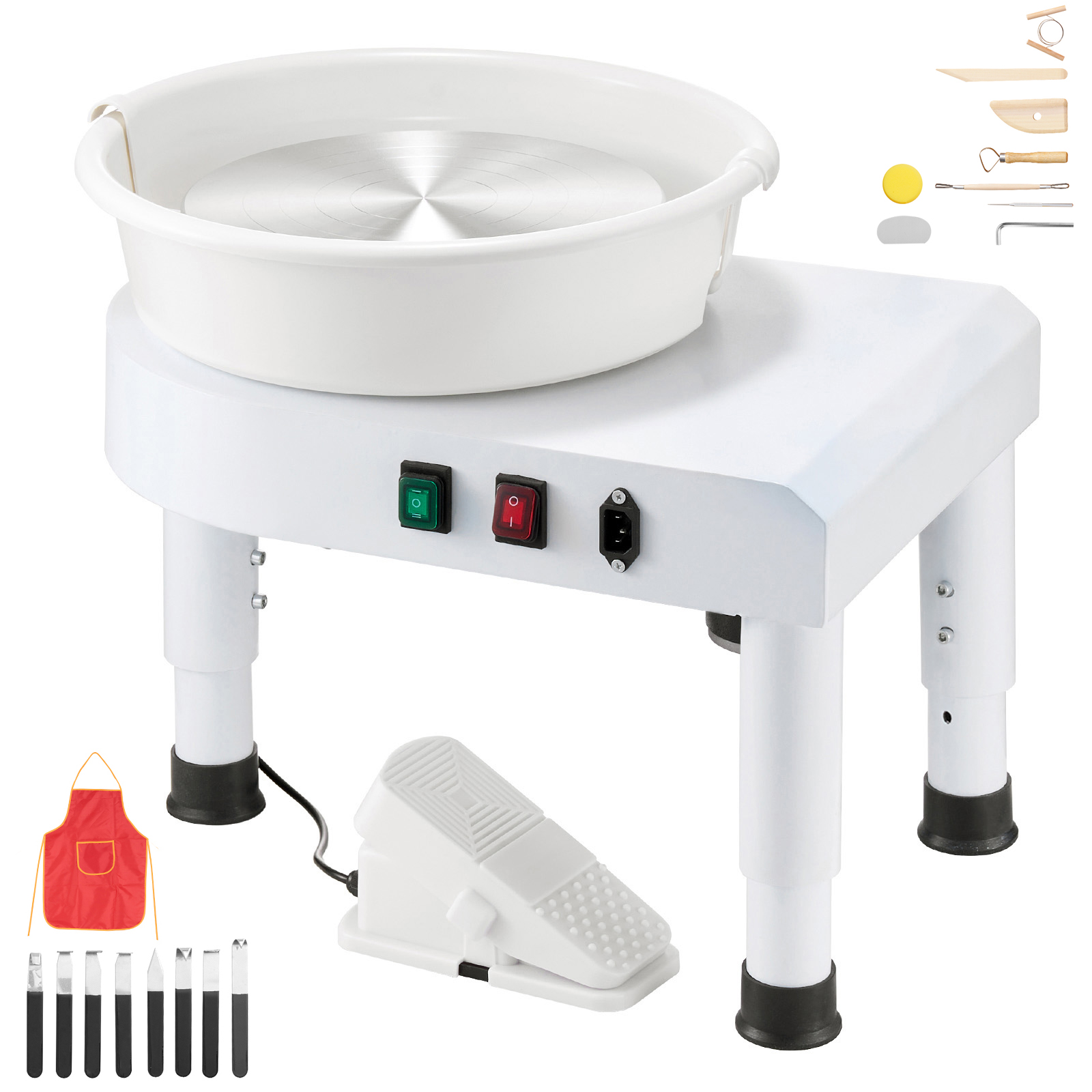 Pottery Wheel, 11 In Ceramic Forming Machine, 60-300 RPM Adjustable Speed With Foot Pedal Control, Detachable Basin, Lift Leg, Complete Accessories For Home DIY, White$124.99View on Mallflare
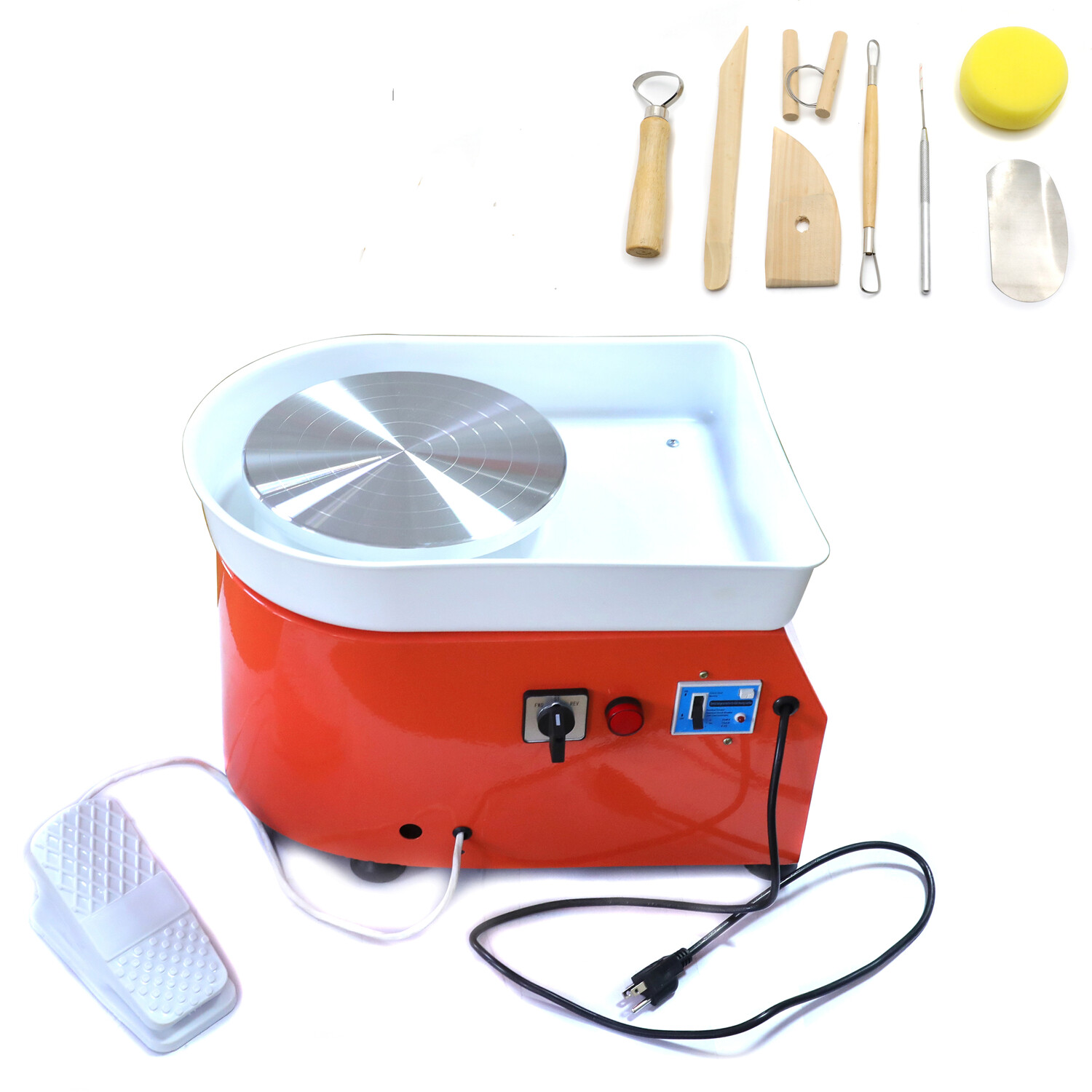 350w Pottery Wheel Table Top Forming Machine W/ Removable Foot Pedal Clay Craft$151.59View on eBay
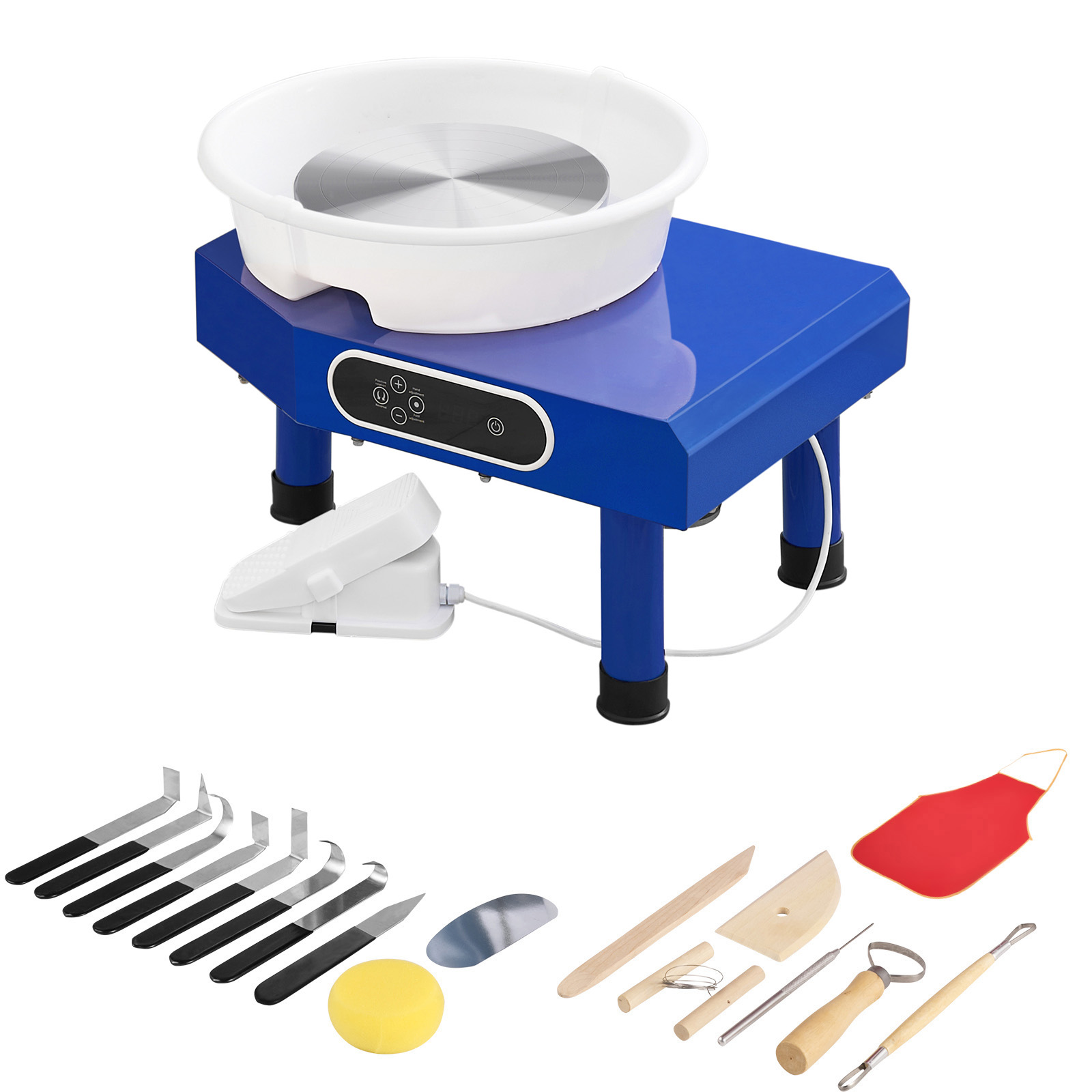 Pottery Wheel, 10 In Ceramic Forming Machine, 60-300 RPM Adjustable Speed With Foot Pedal, ABS Detachable Basin, Manual LCD Panel, Sculpting Tool And Apron, For Home Craft DIY$128.99View on Mallflare
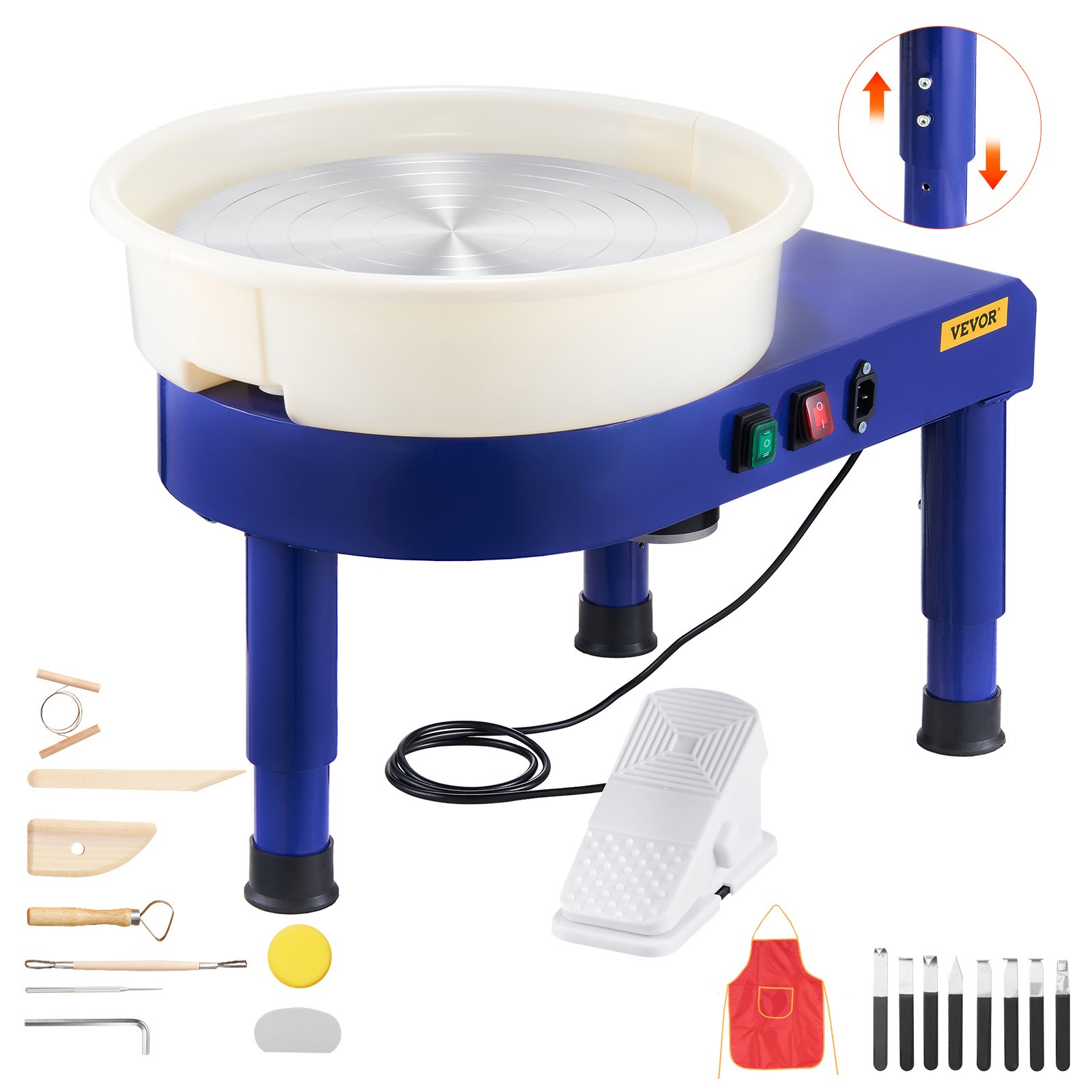 VEVOR Pottery Wheel 14 in Ceramic Wheel Forming Machine 60-300 RPM for DIY Blue$159.90View on eBay
 Pottery Wheel For Adults, 11" Aluminum Turntable, 450W Electric Table Top With Foot Pedal, 30-300 RPM Adjustable Speed, Body, For Beginners, DIY Clay Art Craft, Green$141.99View on Mallflare
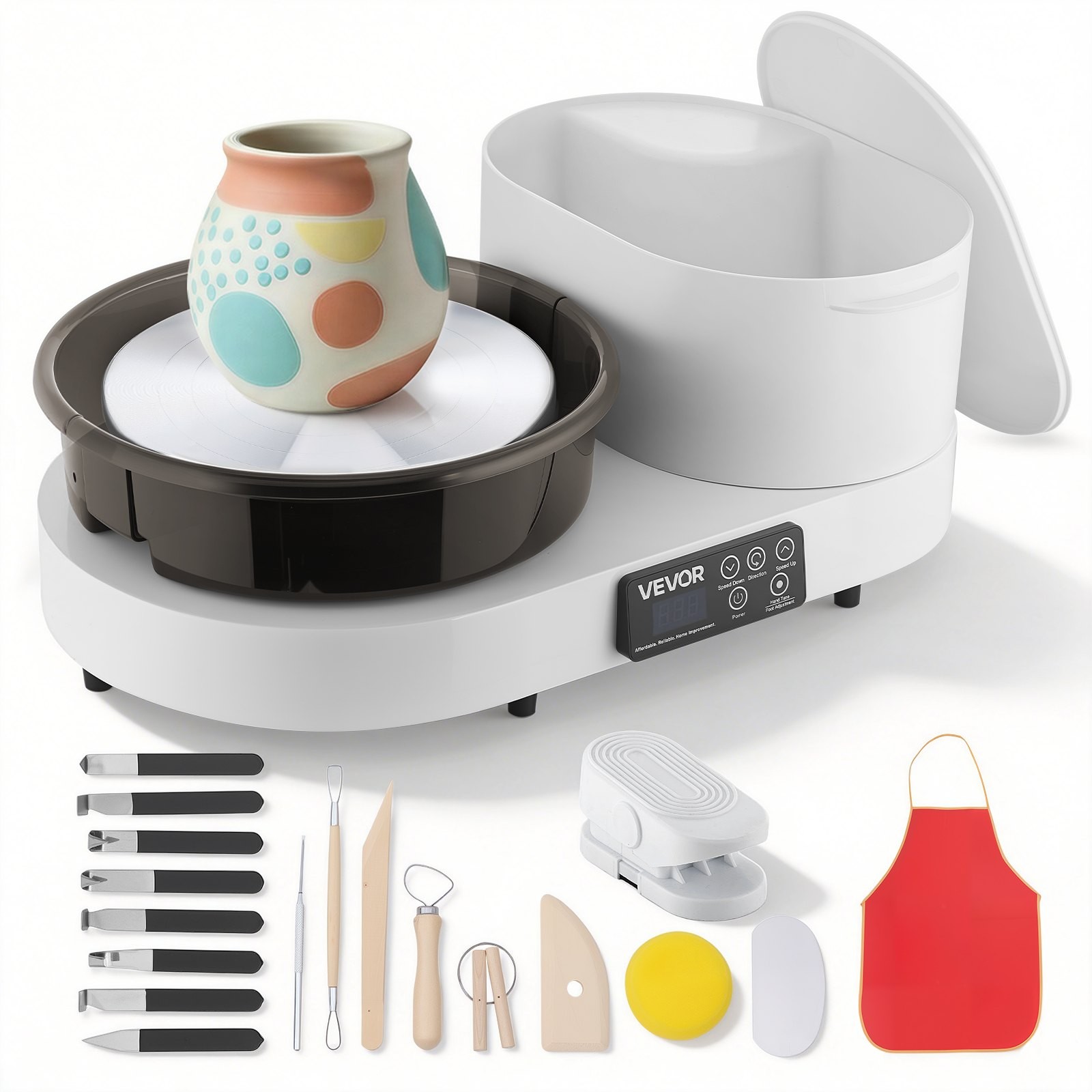 Pottery Wheel for Adults, 11" Aluminum Turntable, 450W Electric Table Top Potter$196.99View on eBay
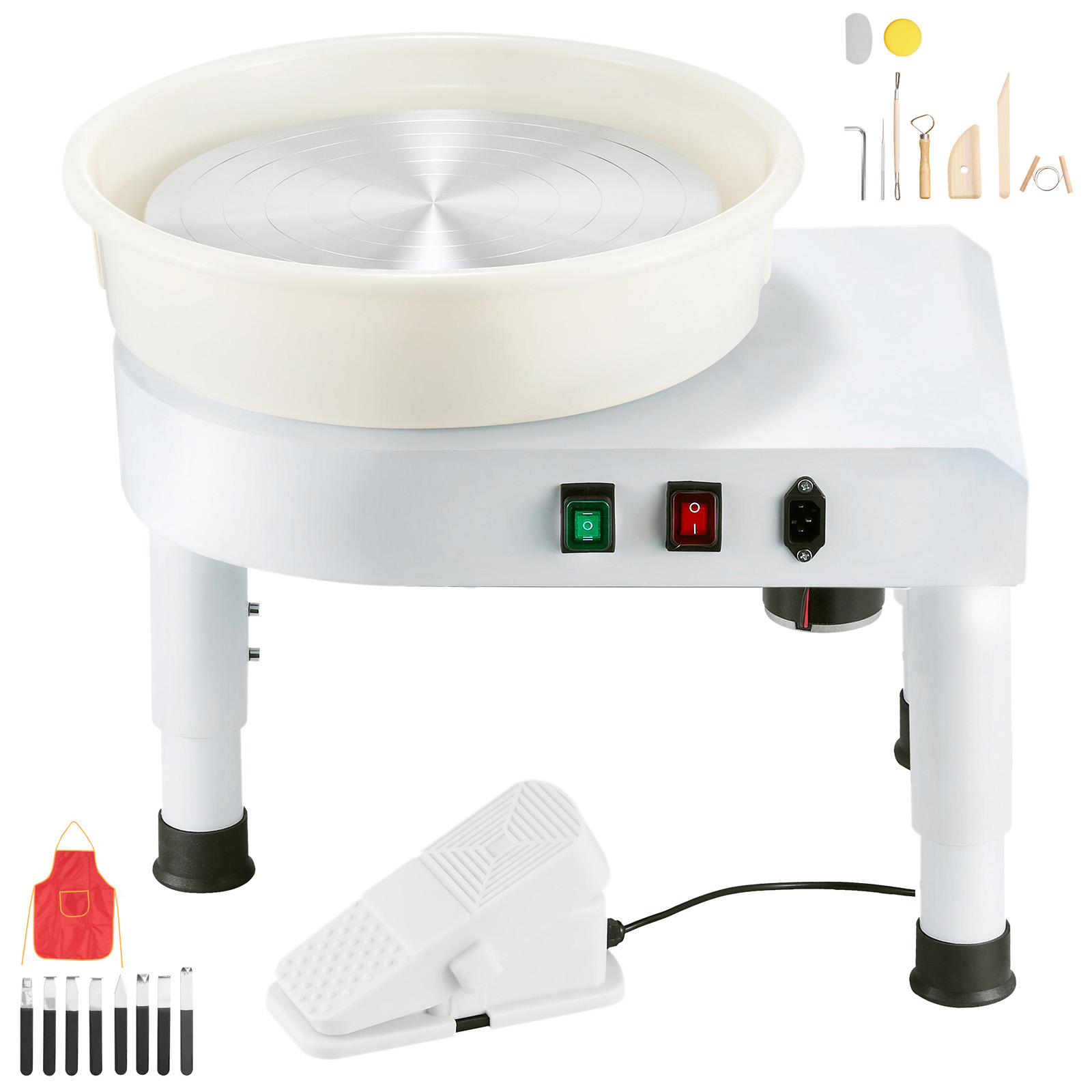 Pottery Wheel, 14 In Ceramic Forming Machine, 60-300 RPM Adjustable Speed With Foot Pedal Control, Detachable Basin, Lift Leg, Complete Accessories For Home DIY, White$160.99View on Mallflare
Highlights
- Motor power tiers: 30W mini wheels stall under hand pressure and suit only sculpting or tiny pinch pots; 350W handles 1–2 lb throws; 450W+ geared motors maintain torque down to 60 RPM for centering 3–5 lb.
- Wheel head size and material: 10–11 in ABS or plastic heads flex and wear; 11–14 in aluminum heads stay flat under load and are the minimum for repeatable centering.
- Speed range: 0–300 RPM with a foot pedal is the practical standard; continuous-duty rated motors with forced cooling are required for sessions over 30 minutes.
- Basin and splash design: detachable ABS basins simplify cleanup, but sealed splash pans with a drain and removable wheel head are the difference between a hobby toy and a serviceable studio wheel.
Best use cases
- Best fit: a 350–450W wheel with 11 in aluminum head and foot pedal for adults throwing 1–3 lb mugs and bowls at home — skip 30W mini units, which bog down immediately.
- Best fit: a 30W mini wheel with two turntables for kids, sculpting, and paint-your-own crafts — do not expect it to center real clay.
- Best fit: a 14 in wheel head with 60–300 RPM and pedal for small-group teaching or trimming larger platters — 10 in plastic heads are too small and flex.
- Wrong fit: buying a tabletop wheel without a detachable basin or splash guard for a carpeted room; clay slip spray will damage floors and furniture.
Buying tips
- Size the wheel head to your clay weight: 10–11 in for 1–2 lb throws, 12–14 in for 3–5 lb and platters; plastic heads under 11 in flex visibly under hand pressure.
- Check motor type: brushless or geared DC motors hold torque at 60–120 RPM; cheap brushed motors overheat and lose power when centering, forcing higher speeds.
- Confirm pedal control is analog (variable resistor or Hall effect), not a simple on/off switch; proportional pedals are essential for centering and opening.
- Verify the wheel includes a detachable basin, splash pan, and at least two bats or a bat-pin system; aluminum heads with standard bat pins accept third-party bats.
Specs
| Motor Power | 30W mini to 450W+ throwing |
|---|---|
| Wheel Head | 10-14 in; aluminum vs ABS |
| Speed Range | 0-300 RPM, pedal-variable |
| Basin Type | Detachable ABS vs sealed splash pan |
Related searches
What to check before buying
- Measure your work surface: most tabletop wheels need roughly 20 x 20 in of stable, level space plus room for a stool and splash clearance.
- Check the outlet and cord length: 350–450W wheels draw 3–4 A at 120V; confirm a grounded outlet within reach and avoid extension cords on wet floors.
- Confirm basin drainage and cleanup access: a removable basin and wheel head must fit your sink or bucket for reclaiming clay.
- Plan for noise and vibration: heavier 450W units with rubber feet run quieter; lightweight plastic-body wheels need a non-slip mat and sturdy table.
FAQ
Data sources: eBay / Amazon listings and product attribute feeds. Updated Nov 27, 2026.
Some links on this page are affiliate links. If you buy after clicking one, we may earn a commission at no extra cost to you. This does not change which products appear here or their order. Affiliate disclosure.