
Photos from current listings. Actual item, color, and included accessories may vary.
1 4 Presser Foot Buying Guide
A 1/4-inch presser foot is a quilting and precision-seam guide that uses a metal or clear acrylic edge to keep fabric exactly 1/4 inch from the needle, eliminating pencil marks and uneven seam allowances. The core trade-off is between generic snap-on feet with imprecise stamped edges and low-shank vs high-shank compatibility, where the wrong shank type will not seat or will sit crooked. Buy a foot whose shank matches your machine's actual presser-bar diameter and whose guide edge is a machined or molded hard stop—skip any foot that relies on a painted line or flexible plastic flange.
Median $14.17
Key takeaways
- Shank type is the primary fit variable: low-shank machines use a presser bar roughly 7/16 inch (11 mm) above the needle plate, while high-shank machines measure about 1 inch (25 mm).
- A true 1/4-inch foot has a physical guide flange or screw-adjustable edge at 6.35 mm from the needle drop, not a printed measurement line that shifts with fabric thickness.
- Clear acrylic or polycarbonate feet improve visibility at the needle but scratch and cloud; metal feet resist wear but hide the needle zone on dark fabrics.
At a glance
- Category
- Presser Feet, Notions & Threading
- Last updated
- Nov 29, 2026
Current offers
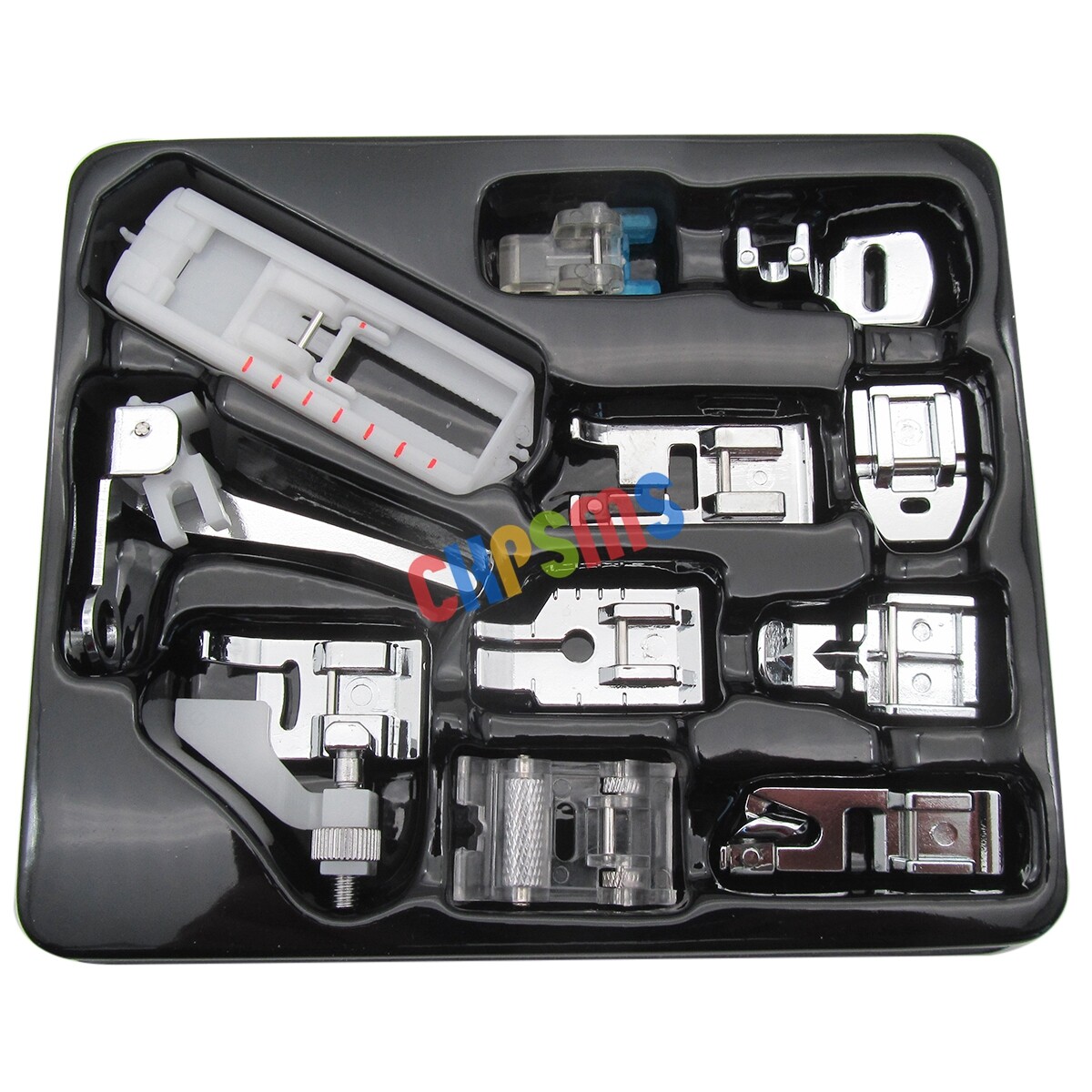 11PCS Presser Feet Set FOR Singer, Brother,Janome,Elna,Kenmore low Shank Sewing$11.69View on eBay
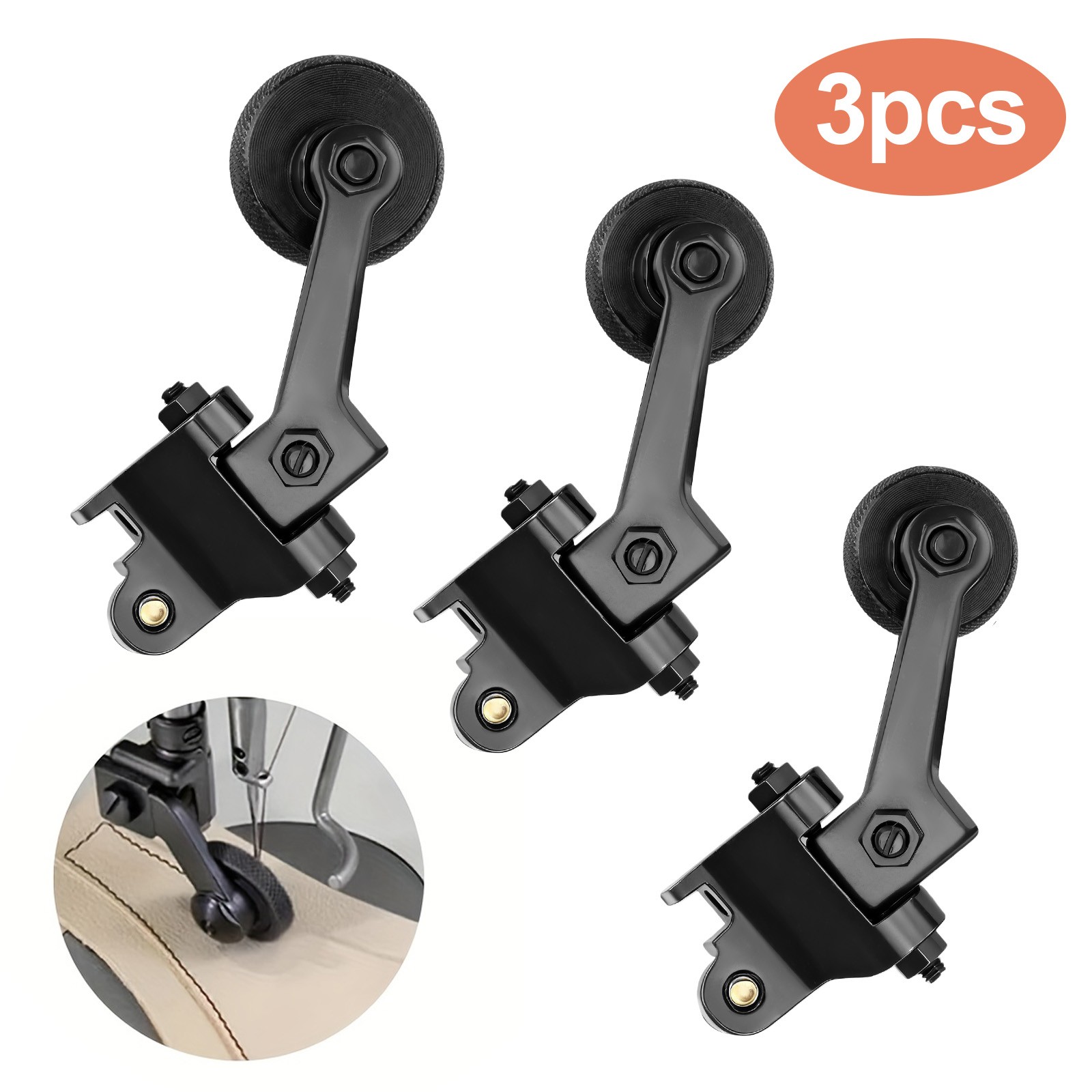 3 PCS Faux Leather Sewing Roller Presser Foot Set for Industrial Sewing Machines$13.94Last checked Nov 29, 2026View on eBay
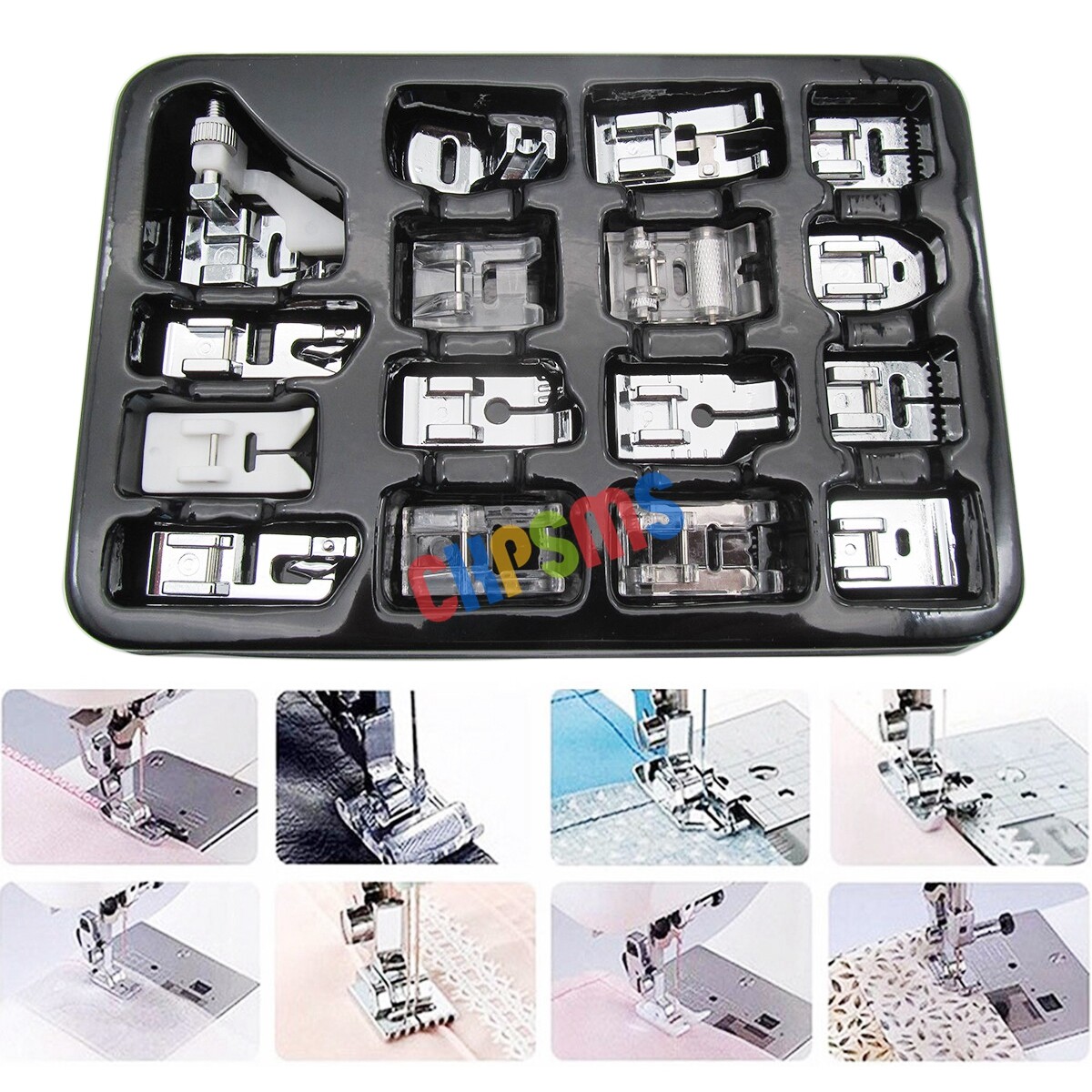 16PCS Presser Feet Set FOR Singer,Brother,Janome,Elna,Kenmore Low Shank Sewing$14.39View on eBay
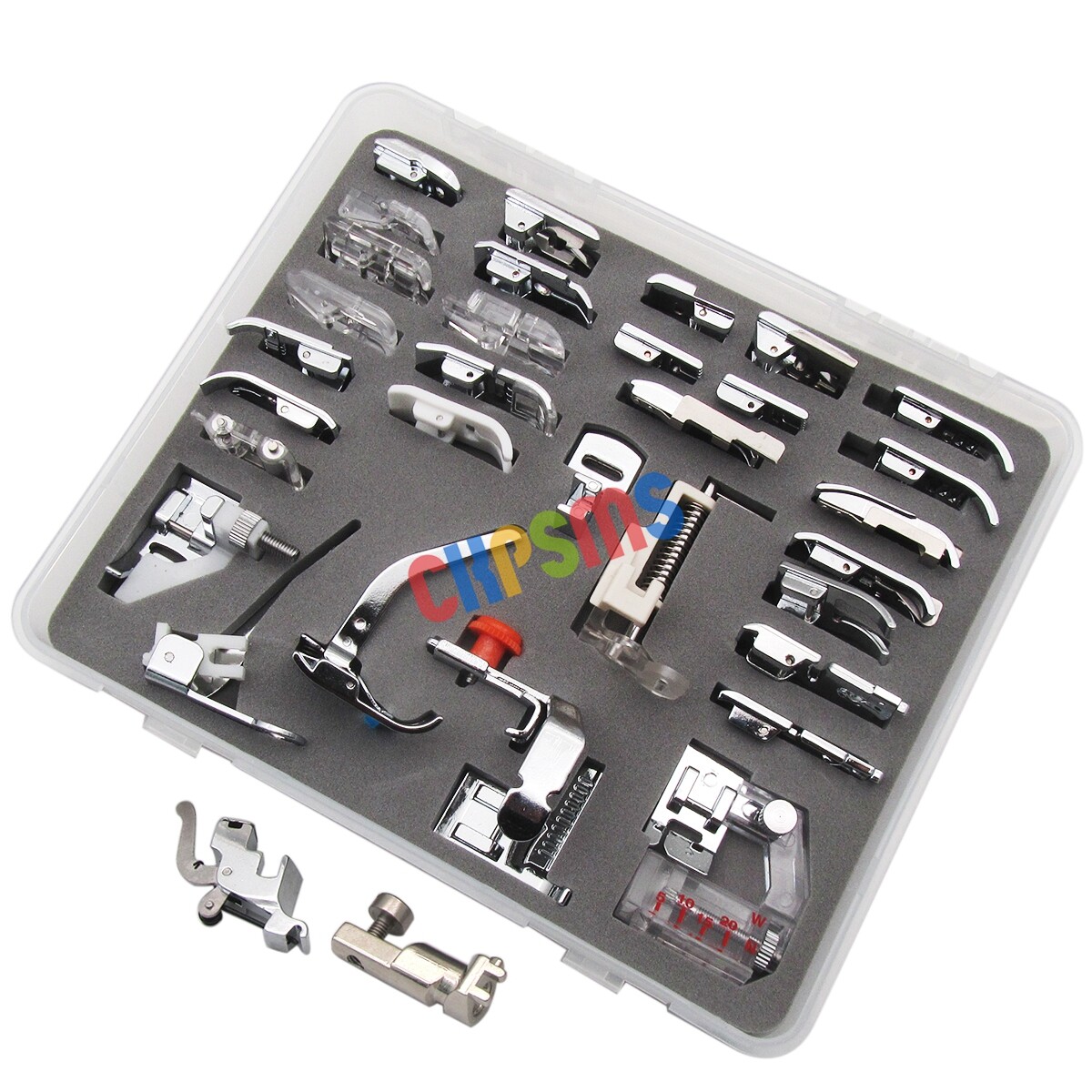 34PCS Presser Foot Set for Bernina Old Style 801 • 830 • 1030 • 1130 • 1230 •530$30.39View on eBay
Highlights
- Shank type is the primary fit variable: low-shank machines use a presser bar roughly 7/16 inch (11 mm) above the needle plate, while high-shank machines measure about 1 inch (25 mm).
- A true 1/4-inch foot has a physical guide flange or screw-adjustable edge at 6.35 mm from the needle drop, not a printed measurement line that shifts with fabric thickness.
- Clear acrylic or polycarbonate feet improve visibility at the needle but scratch and cloud; metal feet resist wear but hide the needle zone on dark fabrics.
- Snap-on vs screw-on mounting is a separate compatibility layer: many low-shank machines accept snap-on feet, while high-shank and industrial setups typically require a screw-on ankle.
Best use cases
- Best fit: patchwork and quilting on a low-shank domestic machine—choose a snap-on 1/4-inch foot with a raised guide flange; skip generic screw-on feet unless your machine lacks a snap-on ankle.
- Best fit: garment seam allowances and topstitching where repeatable 6.35 mm seams matter—pick a metal foot with a machined edge; skip clear plastic feet if you sew heavy denim or canvas daily.
- Wrong fit: high-shank or industrial machines—standard low-shank 1/4-inch feet will not seat correctly; select a high-shank-specific or screw-on industrial foot instead.
- Wrong fit: machines with a built-in needle plate seam guide—adding a bulky 1/4-inch foot can crowd the needle zone; use the plate guide or a slim edge-stitch foot instead.
Buying tips
- Measure your presser bar before buying: if the distance from the needle plate to the bottom of the presser foot ankle is about 7/16 inch (11 mm), you need a low-shank foot; about 1 inch (25 mm) means high-shank.
- Confirm mounting style: snap-on feet click onto an ankle adapter, while screw-on feet bolt directly to the presser bar—buy the style your machine's ankle accepts, not the one that looks similar.
- Check the guide geometry: a 1/4-inch seam guide should present a vertical wall or adjustable screw fence at 6.35 mm from the needle, letting fabric ride against it without curling.
- For quilting, prioritize a foot with a visible needle hole and a guide that extends behind the needle; for garment sewing, prioritize rigid metal construction over acrylic visibility.
Specs
| Shank Type | Low-shank (11 mm) vs High-shank (25 mm) |
|---|---|
| Mounting Style | Snap-on ankle vs Screw-on direct |
| Guide Edge | Fixed 6.35 mm flange vs Adjustable fence |
| Foot Material | Machined metal vs Clear acrylic |
Related searches
What to check before buying
- Measure presser-bar height above the needle plate to classify your machine as low-shank (about 11 mm) or high-shank (about 25 mm).
- Identify whether your machine uses a snap-on ankle adapter or a direct screw-on foot before ordering.
- Test needle clearance: with the foot attached and lowered, the needle must pass through the foot's needle hole without contact through the full stitch cycle.
- Confirm your needle plate is flat and undamaged at the 1/4-inch zone; a burr or deep scratch will deflect fabric even with a perfect guide foot.
FAQ
Data sources: eBay / Amazon listings and product attribute feeds. Updated Nov 29, 2026.
Some links on this page are affiliate links. If you buy after clicking one, we may earn a commission at no extra cost to you. This does not change which products appear here or their order. Affiliate disclosure.