
Photos from current listings. Actual item, color, and included accessories may vary.
1 Presser Foot Buying Guide
A presser foot is the machine component that holds fabric against the feed dogs while the needle forms a stitch; the segment splits by shank mount (screw-on low shank vs. snap-on vs. high-shank), foot sole geometry, and material grade. The core trade-off is universal-fit convenience versus exact geometry: a generic snap-on foot works across many low-shank machines but can snag, flex, or misalign on thick seams, while a machine-specific metal foot holds tolerance on curves and bulk. Buy the mount system your machine actually uses, then pick a hardened-steel or polished metal foot for the tasks you repeat most.
Median $14.17
Key takeaways
- Mount system determines compatibility: low-shank screw-on feet are the most common home format; high-shank feet fit Juki/Singer industrial-style machines; snap-on adapters convert screw-on mounts to quick-change.
- Sole geometry defines function: standard zigzag feet have a wide needle slot and flat sole; straight-stitch feet have a narrow round hole for tighter fabric control; zipper/edge feet use a stepped or grooved sole.
- Material grade drives longevity: cast/machined metal feet resist flex and heat on thick seams; press-formed or coated feet are lighter but can deform under heavy needle pressure; nylon/plastic feet suit light fabrics.
At a glance
- Category
- Presser Feet, Notions & Threading
- Last updated
- Nov 29, 2026
Current offers
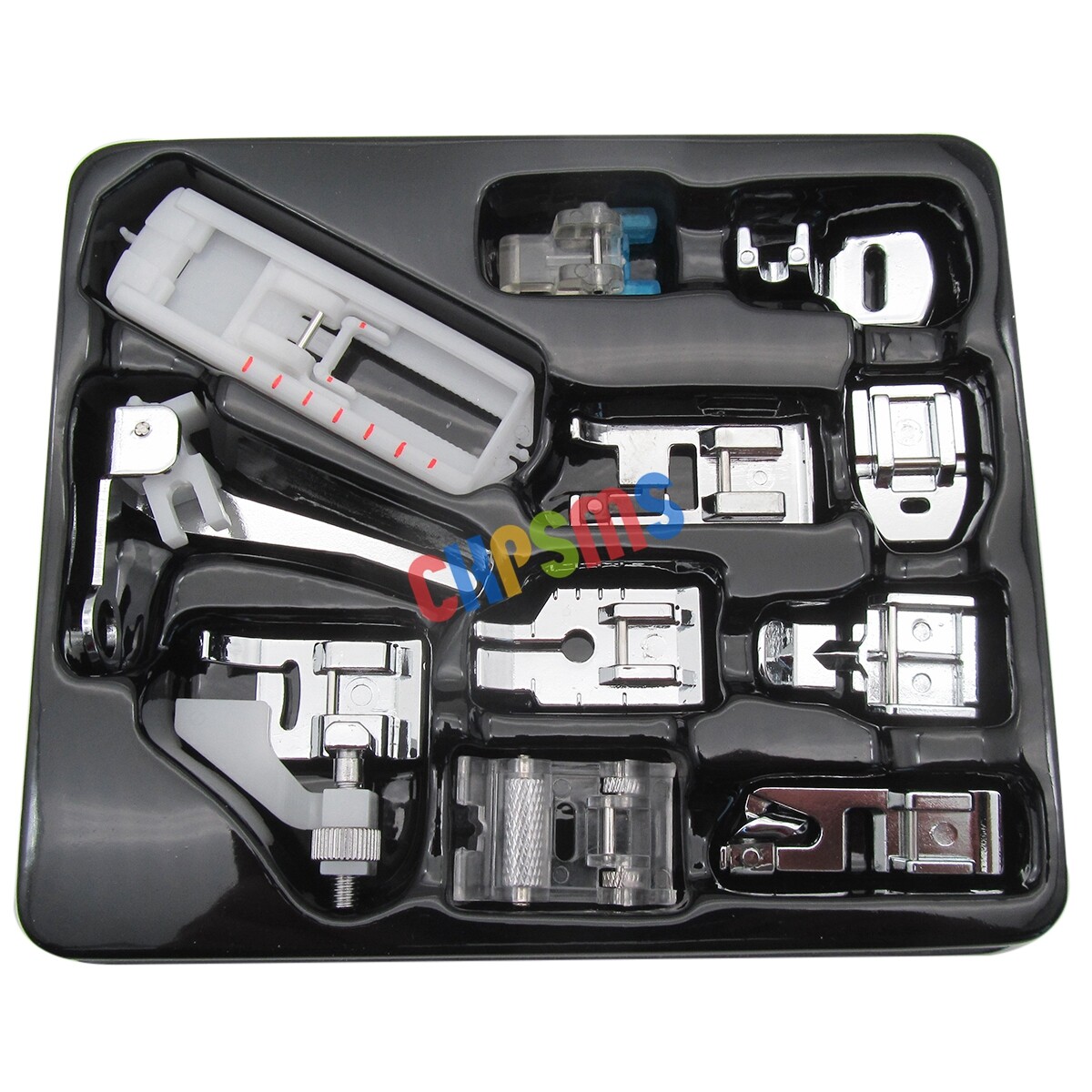 11PCS Presser Feet Set FOR Singer, Brother,Janome,Elna,Kenmore low Shank Sewing$11.69View on eBay
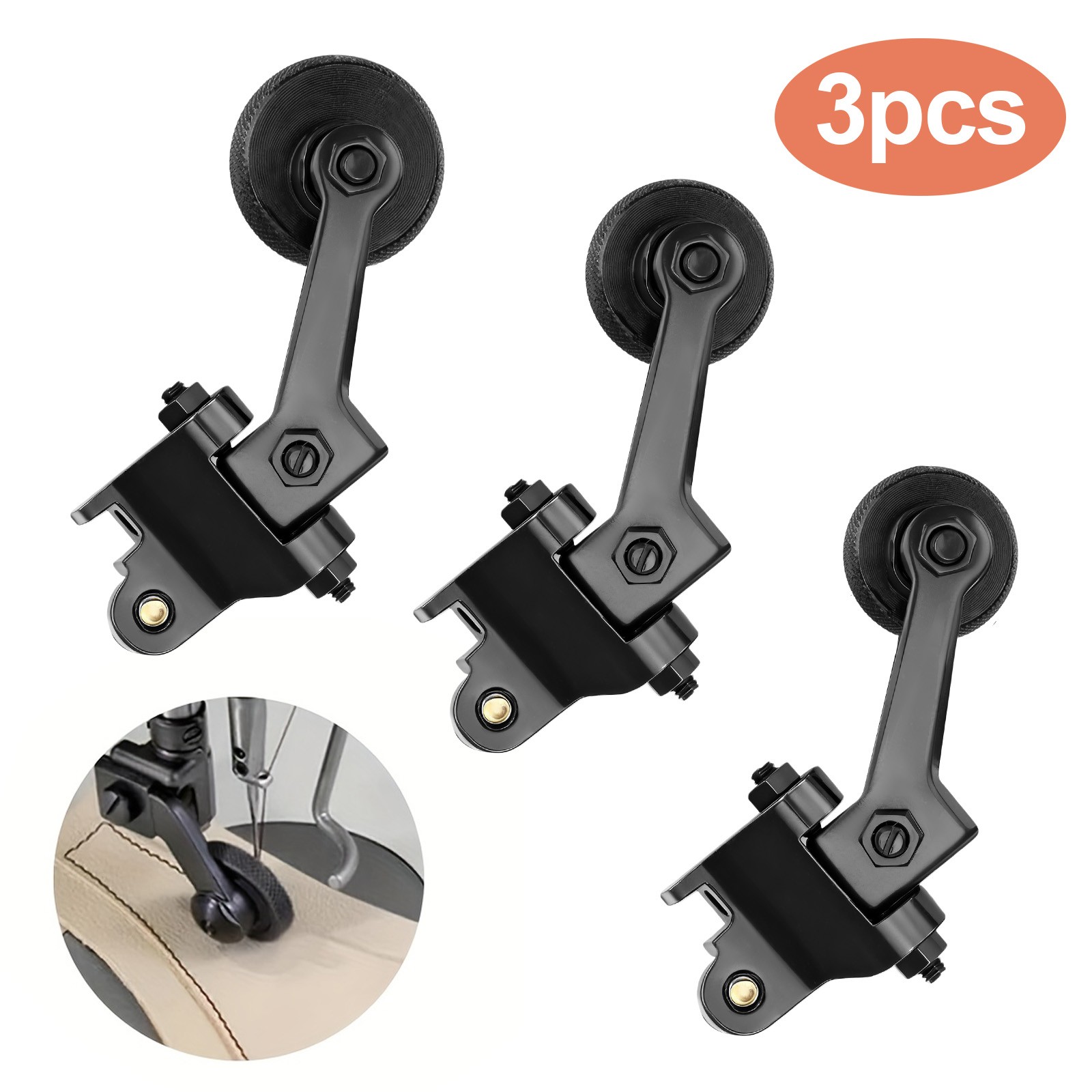 3 PCS Faux Leather Sewing Roller Presser Foot Set for Industrial Sewing Machines$13.94Last checked Nov 29, 2026View on eBay
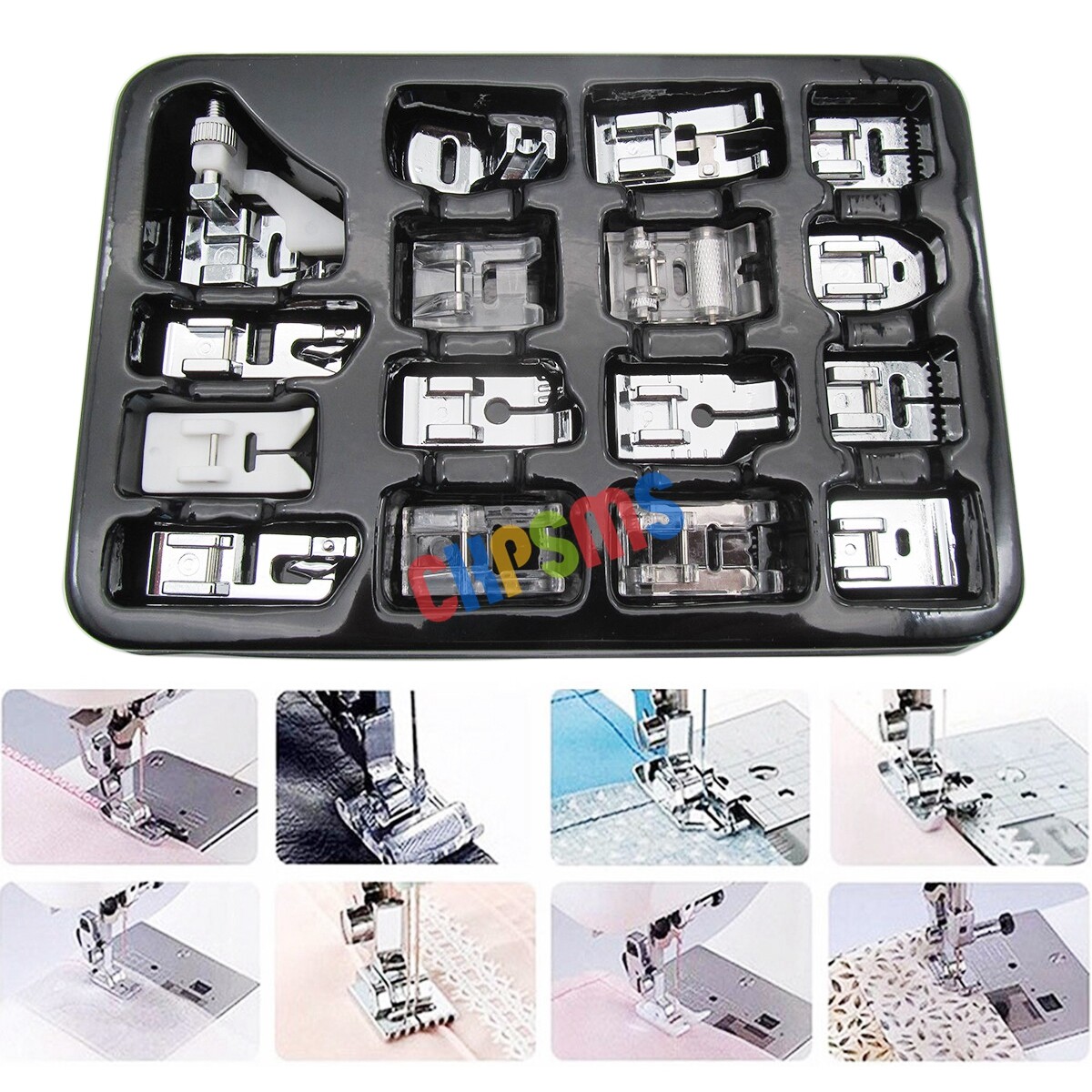 16PCS Presser Feet Set FOR Singer,Brother,Janome,Elna,Kenmore Low Shank Sewing$14.39View on eBay
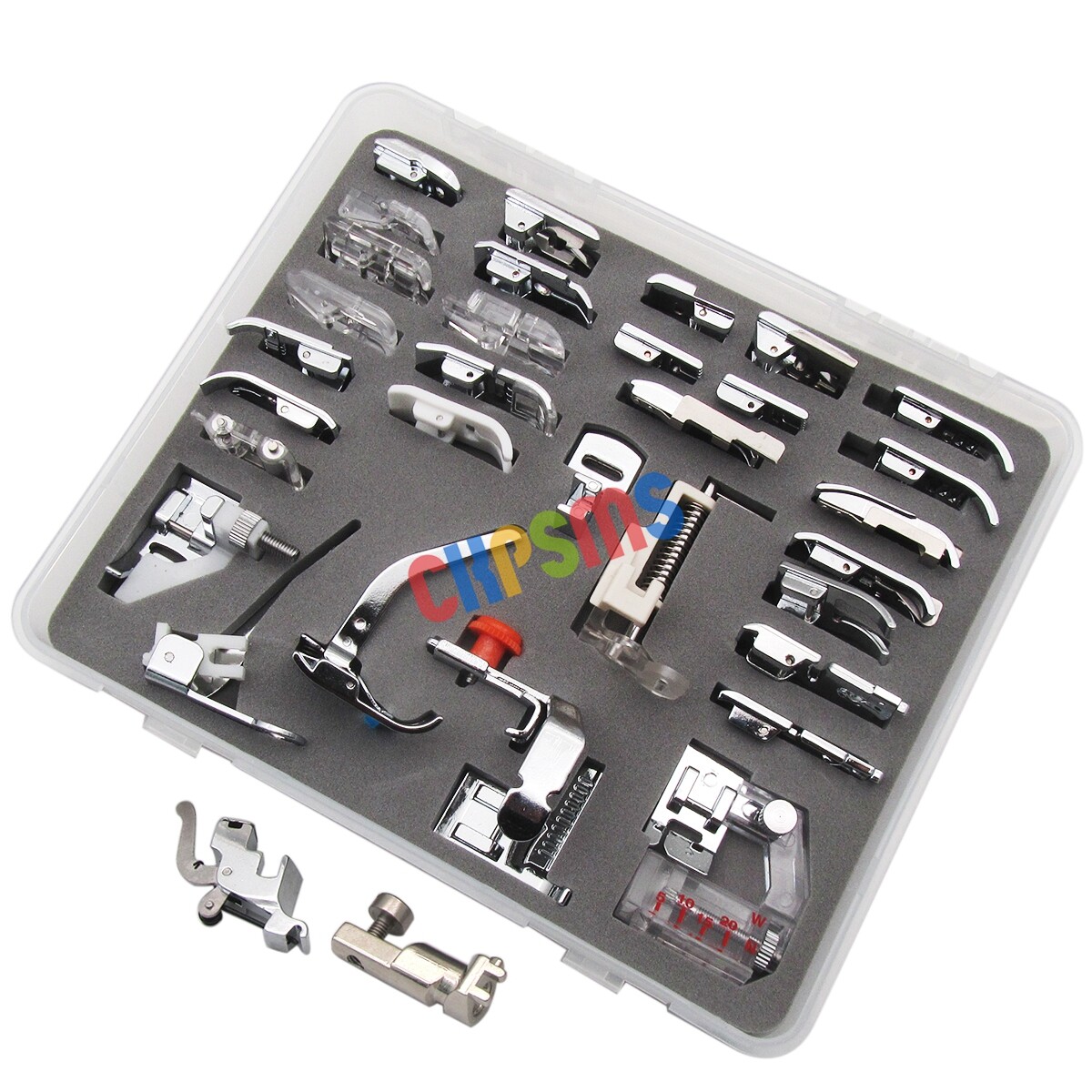 34PCS Presser Foot Set for Bernina Old Style 801 • 830 • 1030 • 1130 • 1230 •530$30.39View on eBay
Highlights
- Mount system determines compatibility: low-shank screw-on feet are the most common home format; high-shank feet fit Juki/Singer industrial-style machines; snap-on adapters convert screw-on mounts to quick-change.
- Sole geometry defines function: standard zigzag feet have a wide needle slot and flat sole; straight-stitch feet have a narrow round hole for tighter fabric control; zipper/edge feet use a stepped or grooved sole.
- Material grade drives longevity: cast/machined metal feet resist flex and heat on thick seams; press-formed or coated feet are lighter but can deform under heavy needle pressure; nylon/plastic feet suit light fabrics.
- Working tolerances matter on curves: a foot with a narrower sole and polished underside lets fabric pivot and feed evenly, while an over-wide universal foot can cause tunneling or skipped stitches at seam boundaries.
Best use cases
- Best fit for everyday garment sewing on a low-shank home machine: choose a snap-on metal foot set with a narrow straight-stitch foot and a standard zigzag foot; skip high-shank or industrial feet that will not mount.
- Best fit for quilters and bag makers running thick seams: choose a metal walking/even-feed or compensating foot designed for the machine shank; skip thin plastic feet that flex and cause uneven feed.
- Best fit for invisible zippers and piping: buy the dedicated zipper/piping foot with the correct groove width and shank; skip generic all-in-one kits where the groove geometry is approximate.
- Wrong fit to avoid: buying a 'universal' foot for a high-shank or industrial machine; also skip a straight-stitch-only foot if you sew zigzag or decorative stitches, since the narrow hole blocks the wider stitch plate.
Buying tips
- Measure your shank first: with the foot raised and the screw removed, the distance from the presser-bar bottom to the needle plate is roughly 1/4 in for low shank and 3/4 in or more for high shank; buy to that measurement.
- Prefer hardened steel or machined metal for feet used on heavy seams; for light garments a smooth plastic or coated foot is sufficient but will wear at the needle slot over time.
- Check sole width against stitch width: a foot sole narrower than your intended zigzag stitch width forces skipped stitches; match the needle slot and sole opening to the widest stitch you plan to sew.
- For snap-on systems confirm the adapter type (screw-on adapter vs. shank-integrated snap) and that the foot's snap bar matches your machine's ankle; adapters are the only safe crossover between mount formats.
Specs
| Mount System | Low shank / high shank / snap-on |
|---|---|
| Foot Material | Machined steel vs plastic / coated |
| Sole Geometry | Straight-stitch / zigzag / zipper groove |
| Needle Slot Width | Narrow round vs wide zigzag slot |
Related searches
What to check before buying
- Confirm your machine's presser-bar mount style (low-shank screw-on, snap-on, high-shank) and measure the shank distance before choosing a foot.
- Verify the needle plate and feed-dog area clearance so the foot sole does not catch on the plate edge or cover the feed dogs.
- Check the widest stitch your machine can sew and ensure the foot's needle slot and sole opening accommodate that width.
- For quilting or thick seams, verify the foot's lift clearance and that your machine's presser-foot pressure can be adjusted for the added bulk.
FAQ
Data sources: eBay / Amazon listings and product attribute feeds. Updated Nov 29, 2026.
Some links on this page are affiliate links. If you buy after clicking one, we may earn a commission at no extra cost to you. This does not change which products appear here or their order. Affiliate disclosure.