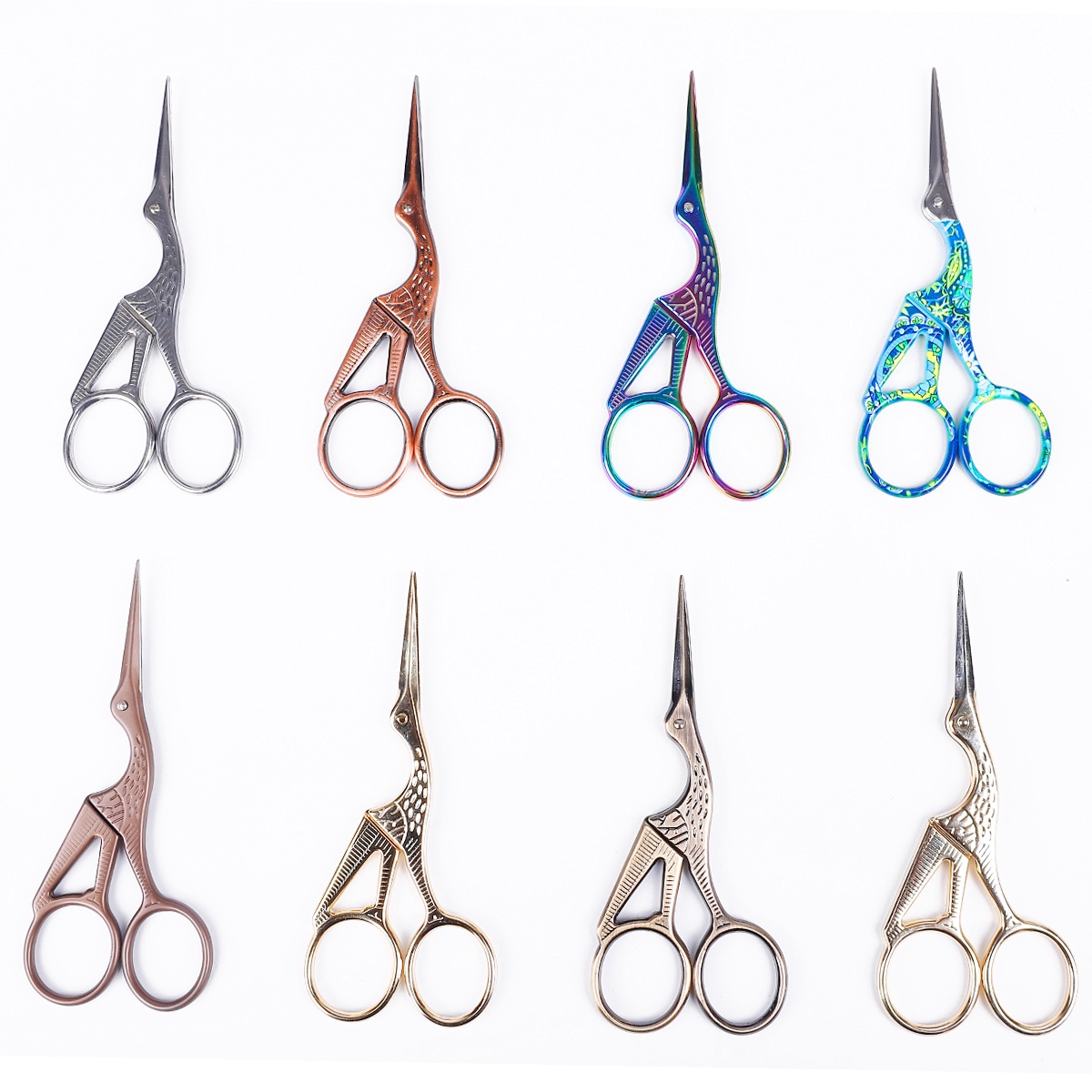

Photos from current listings. Actual item, color, and included accessories may vary.
Embroidery Scissors Buying Guide
Embroidery scissors are precision cutting tools judged by blade geometry, pivot quality, and tip sharpness—not by decorative handles. Buyers commonly mistake oversized craft shears for true embroidery snips, then struggle with thread fraying and fabric snags. The right pair depends on whether you cut threads at the machine, trim stabilizer, or snip appliqué curves.
Blade Length:3.5–4 in (fine embroidery)Blade Material:Forged stainless / high-carbon steelPivot Type:Screw-adjustable vs rivetedTip Style:Fine straight / curved appliqué
Typical price range$11.99
Key takeaways
- Blade length of 3.5–4 inches with a fine 1–1.5 mm tip is the embroidery standard; longer blades reduce control and block visibility at the needle.
- Forged high-carbon or stainless steel blades hold an edge 3–5× longer than stamped mild-steel blades, which dull after light stabilizer use.
- A tight screw pivot with no side play is the single biggest durability indicator; riveted pivots cannot be re-tensioned and loosen over time.
At a glance
- Category
- Presser Feet, Notions & Threading
- Last updated
- Nov 28, 2026
Current offers
Highlights
- Blade length of 3.5–4 inches with a fine 1–1.5 mm tip is the embroidery standard; longer blades reduce control and block visibility at the needle.
- Forged high-carbon or stainless steel blades hold an edge 3–5× longer than stamped mild-steel blades, which dull after light stabilizer use.
- A tight screw pivot with no side play is the single biggest durability indicator; riveted pivots cannot be re-tensioned and loosen over time.
- Straight or slightly curved blades suit thread clipping and appliqué; curved-tip or angled models are for rug work and are wrong for fine embroidery.
Best use cases
- Choose 3.5-inch straight fine-tip shears if you clip threads at the embroidery machine—compact enough to reach under the hoop without snagging stitches.
- Choose 4-inch slightly curved blades for appliqué and stabilizer trimming where you need a rocking cut along curves; skip straight shears here.
- Skip decorative-handle, stamped-steel craft scissors for daily embroidery—they loosen at the pivot and tear fine threads instead of slicing cleanly.
Buying tips
- Prioritize forged stainless or high-carbon steel over stamped metal; forged blades sharpen cleanly and resist nicking on stabilizer adhesive.
- Check the pivot: a screw-and-nut joint can be re-tensioned, while a rivet cannot—riveted scissors become sloppy after moderate use.
- Choose a blade tip under 1.5 mm for thread snipping; blunt or rounded tips push threads instead of catching them at the needle.
- Avoid blades longer than 4 inches for machine embroidery—reach and control matter more than cutting capacity at the hoop.
Specs
| Blade Length | 3.5–4 in (fine embroidery) |
|---|---|
| Blade Material | Forged stainless / high-carbon steel |
| Pivot Type | Screw-adjustable vs riveted |
| Tip Style | Fine straight / curved appliqué |
Related searches
What to check before buying
- Measure your hoop clearance: the scissors must reach under the embroidery arm without the handle hitting the hoop or machine bed.
- Confirm you have a screw-adjustable pivot if you plan to sharpen or re-tension; riveted models are disposable.
- Check blade material grade—stainless for rust resistance in humid sewing rooms, high-carbon for edge retention with regular honing.
- Decide straight vs curved blade based on task: straight for thread clipping, curved for appliqué and stabilizer trimming.
FAQ
Data sources: eBay / Amazon listings and product attribute feeds. Updated Nov 28, 2026.
Some links on this page are affiliate links. If you buy after clicking one, we may earn a commission at no extra cost to you. This does not change which products appear here or their order. Affiliate disclosure.