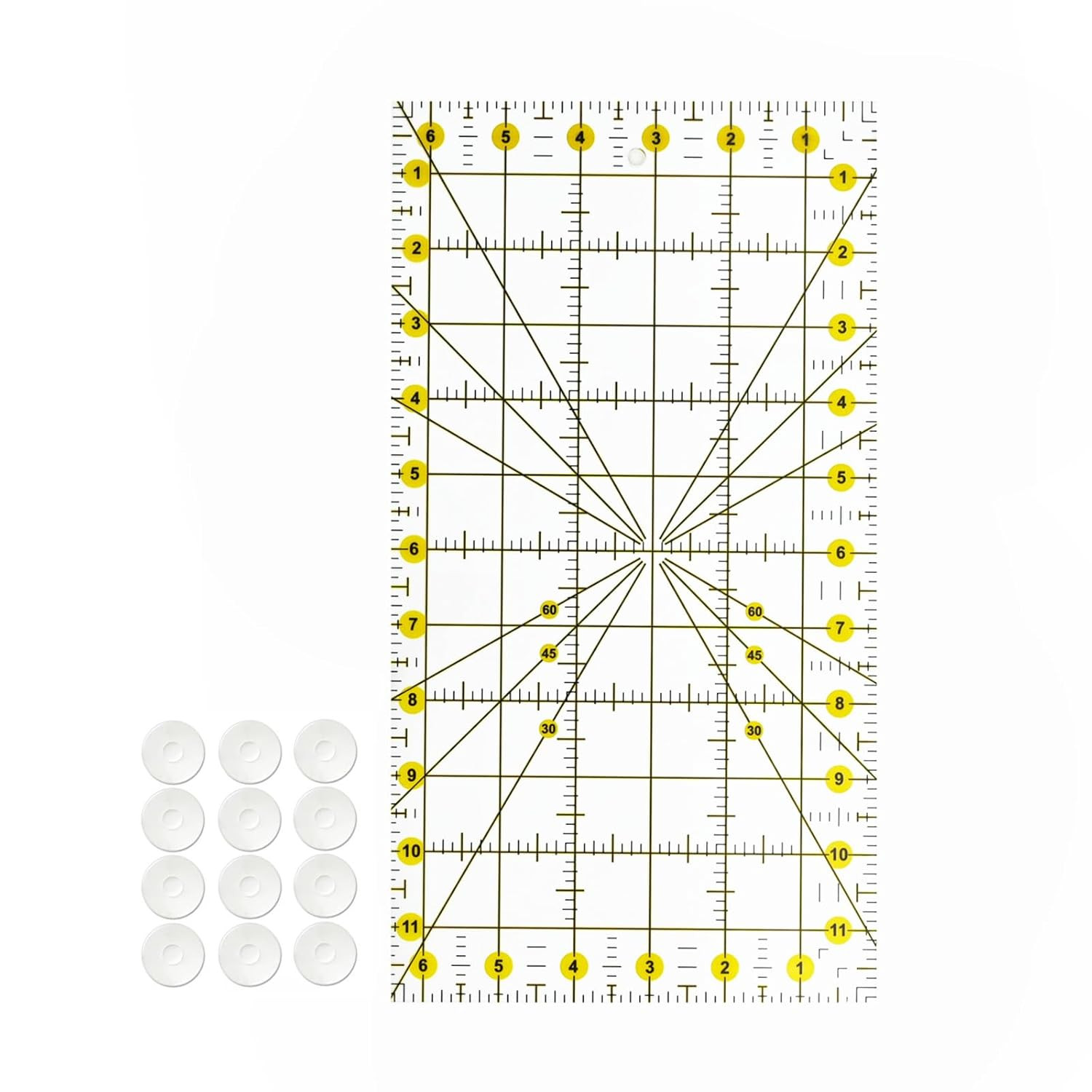

Photos from current listings. Actual item, color, and included accessories may vary.
Quilting Ruler Set Buying Guide
A quilting ruler set is a bundle of clear acrylic templates used with a rotary cutter to measure, align, and cut fabric at exact angles and strip widths. The key trade-off is between thin, flexible rulers that slip and chip versus thick, laser-etched rulers with non-slip backing that hold a true 90-degree edge over thousands of cuts. Buy a set with at least 3 mm (1/8 in) acrylic thickness, etched (not printed) grid lines, and a non-slip surface; skip any ruler under 2 mm thick or with painted markings.
Median $7.99
Key takeaways
- Acrylic thickness of 3 mm (1/8 in) or more prevents flexing and edge chipping; 2 mm rulers bow under rotary cutter pressure and lose accuracy.
- Laser-etched markings are cut into the acrylic and never wear off; printed or painted lines rub away after repeated use and misalign cuts.
- Non-slip backing (sandpaper dots, textured grip strips, or frosted coating) keeps the ruler locked to fabric; bare acrylic slides and causes crooked cuts.
At a glance
- Category
- Presser Feet, Notions & Threading
- Last updated
- Nov 28, 2026
Current offers
Highlights
- Acrylic thickness of 3 mm (1/8 in) or more prevents flexing and edge chipping; 2 mm rulers bow under rotary cutter pressure and lose accuracy.
- Laser-etched markings are cut into the acrylic and never wear off; printed or painted lines rub away after repeated use and misalign cuts.
- Non-slip backing (sandpaper dots, textured grip strips, or frosted coating) keeps the ruler locked to fabric; bare acrylic slides and causes crooked cuts.
- Standard square sizes are 4.5, 6.5, 9.5, and 12.5 in; strip rulers are 6 x 24 in or 6.5 x 24 in; angle rulers cover 45 and 60 degrees for binding and triangles.
Best use cases
- Best fit for precise patchwork and strip cutting: a 6.5 x 24 in strip ruler plus a 9.5 in square with etched grid and non-slip backing covers 90% of quilt block cuts.
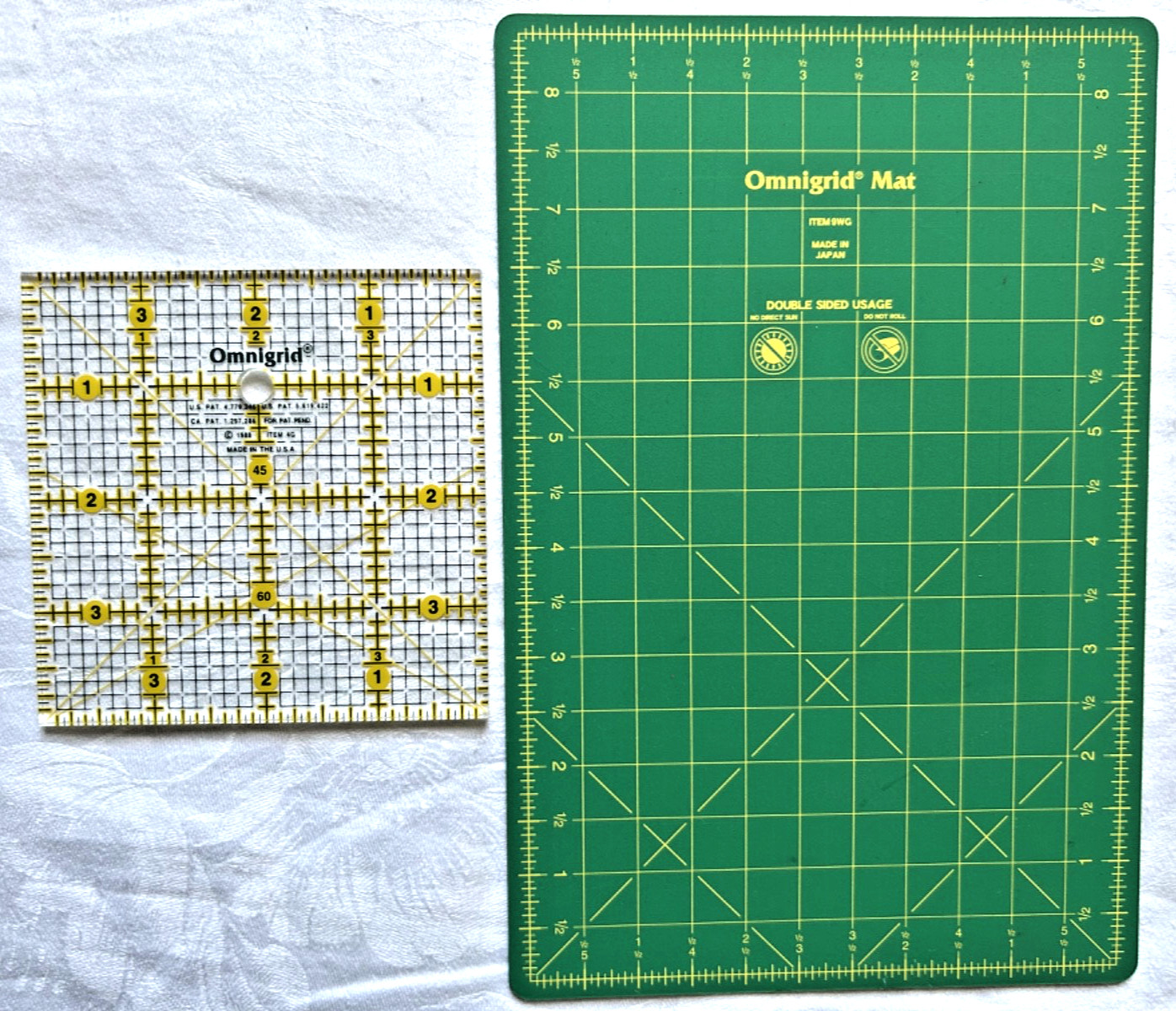
- Best fit for paper crafts and mini quilts: a 4 in square ruler paired with a small cutting mat (as in the Omnigrid Mini Kit) protects the table and handles tiny pieces.
- Best fit for binding and mitered corners: add a 45-degree triangle or binding ruler rather than forcing a square ruler into angle cuts, which produces inaccurate seams.
- Wrong fit: buying only a single 6.5 x 12 in ruler (common budget listing) leaves you unable to cut full-width strips or large squares; a two-ruler set is the minimum practical kit.
Buying tips
- Check acrylic thickness before buying: 3 mm (1/8 in) is the durability floor; 2 mm rulers flex and chip, while 4.5 mm (3/16 in) heavy-duty rulers resist rotary cutter nicks best.
- Demand etched grid lines every 0.5 in with 0.25 in and 0.125 in subdivisions; printed markings fade and offset, causing cumulative seam error across a quilt.
- Build a set around a 6.5 x 24 in strip ruler plus a 9.5 x 9.5 in square; these two sizes handle strip piecing, half-square triangles, and 9 in blocks without gaps.
- Match ruler size to mat size: a 24 in ruler needs a mat at least 18 x 24 in; a 12 in ruler works on a 12 x 18 in mat; undersized mats force repositioning and misalignment.
Specs
| Acrylic Thickness | 3 mm (1/8 in) min; 4.5 mm heavy-duty |
|---|---|
| Marking Type | Laser-etched vs printed (etched required) |
| Core Sizes | 6.5x24 in strip + 9.5 in square |
| Grip Feature | Non-slip backing vs bare acrylic |
Related searches
What to check before buying
- Measure your cutting mat: a 6.5 x 24 in ruler overhangs a 12 x 18 in mat; confirm mat dimensions before buying a long strip ruler.
- Confirm acrylic thickness in millimeters or inches: reject listings that do not state at least 3 mm (1/8 in) or show flex in product photos.
- Check that the ruler has a non-slip backing or grip strips; bare smooth acrylic will slide on cotton fabric and cause rotary cutter slips.
- Verify grid markings are etched into the acrylic (visible as slight grooves) rather than printed on the surface; etched lines survive years of use.
FAQ
Data sources: eBay / Amazon listings and product attribute feeds. Updated Nov 28, 2026.
Some links on this page are affiliate links. If you buy after clicking one, we may earn a commission at no extra cost to you. This does not change which products appear here or their order. Affiliate disclosure.