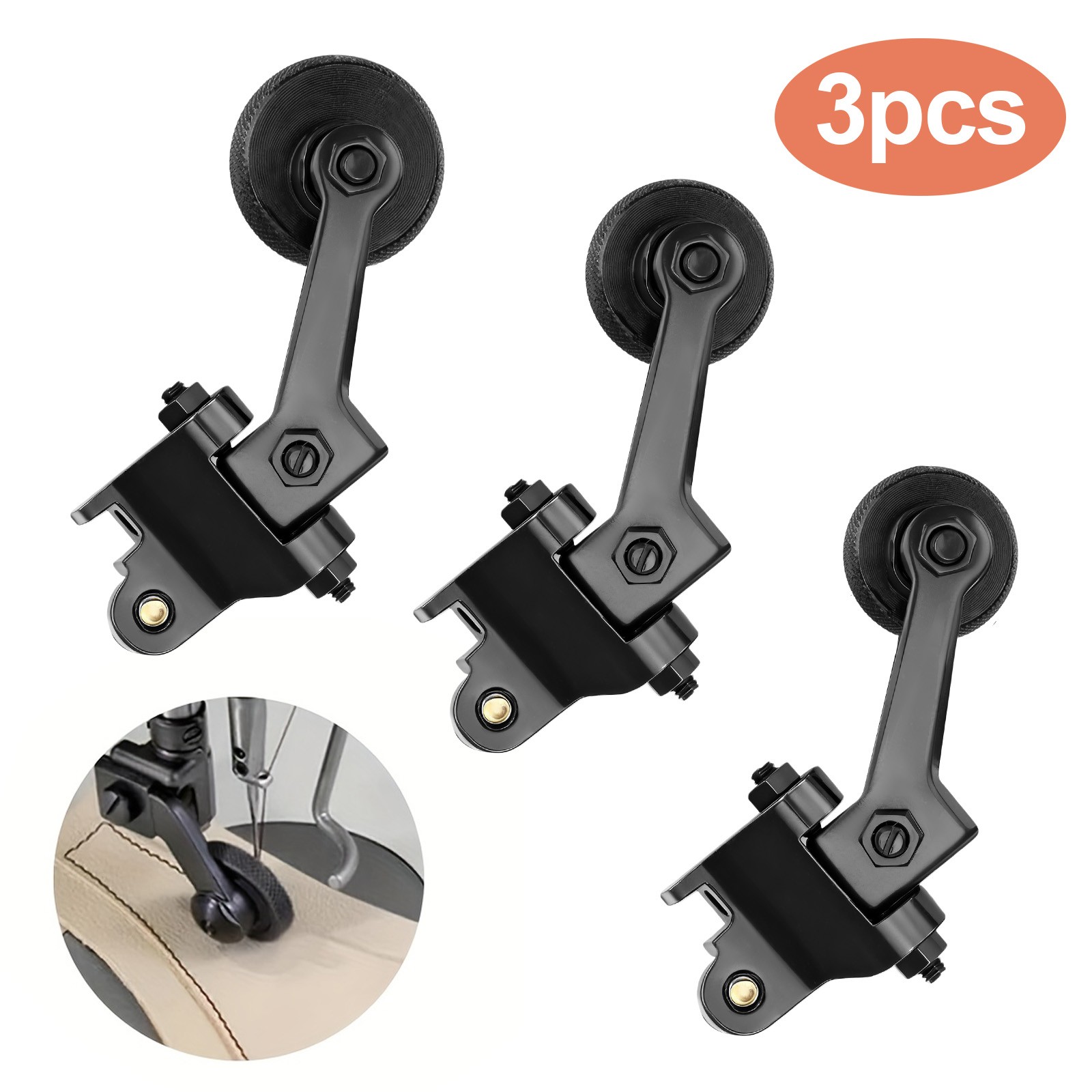

Photos from current listings. Actual item, color, and included accessories may vary.
Sewing Foot Buying Guide
Sewing feet are the interchangeable interface between your fabric and the machine's feed dogs, and the primary trade-off is shank compatibility versus specialty capability. Snap-on low-shank feet dominate home machines, while screw-on industrial feet prioritize durability and precision. The decision rule: match the shank type and machine class first, then add only the specialty feet your actual projects demand.
Key takeaways
- Low-shank snap-on feet fit Brother, Singer, Janome, Elna, and Kenmore home machines; high-shank and industrial feet are not interchangeable.
- Rolled hem feet are sized by finished hem width (3/4/6 mm); the foot's curl channel determines whether lightweight or heavy fabric feeds cleanly.
- Walking/even-feed feet use a built-in upper feed dog to move quilting layers and slick fabrics without shifting; they replace the standard foot entirely.
At a glance
- Category
- Presser Feet, Notions & Threading
- Last updated
- Nov 29, 2026
Current offers
Highlights
- Low-shank snap-on feet fit Brother, Singer, Janome, Elna, and Kenmore home machines; high-shank and industrial feet are not interchangeable.
- Rolled hem feet are sized by finished hem width (3/4/6 mm); the foot's curl channel determines whether lightweight or heavy fabric feeds cleanly.
- Walking/even-feed feet use a built-in upper feed dog to move quilting layers and slick fabrics without shifting; they replace the standard foot entirely.
- Roller feet for faux leather and vinyl reduce friction with a rolling wheel instead of a static sole, preventing drag marks on coated fabrics.
Best use cases
- Buy a low-shank snap-on multi-pack if you own a Brother, Singer, or Janome home machine and want rolled hems, zippers, and blind hems without screwdrivers.
- Choose a walking/even-feed foot for quilting, plaids, or velvet—skip it for flat cotton seams where a standard foot already feeds evenly.
- Pick roller feet for faux leather, vinyl, or coated canvas on industrial machines; standard feet will stick and stretch these materials.
- Skip bead/sequin feet unless you actually sew embellished trims; they are single-purpose and cannot substitute for general hemming feet.
Buying tips
- Measure your shank: low shank sits about 1/2 inch from the needle plate to the presser foot screw; high shank is about 1 inch.
- Confirm snap-on vs screw-on attachment—snap-on feet require a compatible ankle adapter, while screw-on feet clamp directly to the presser bar.
- Match hem foot size to the finished hem you want: 3 mm for lightweight scarves, 6 mm for curtains and heavier cottons.
- For industrial machines, verify the foot's shank diameter and screw position; home low-shank feet will not lock onto industrial presser bars.
Specs
| Shank Type | Low shank / High shank / Industrial |
|---|---|
| Attachment | Snap-on vs Screw-on |
| Hem Width | 3 mm / 4 mm / 6 mm rolled |
| Specialty Type | Walking / Roller / Hem / Bead |
Related searches
What to check before buying
- Identify your machine's shank type (low, high, or industrial) before ordering any set—measure from the needle plate to the presser foot screw.
- Check that your machine uses snap-on ankle adapters; if it uses a screw-on foot only, buy screw-on feet or an adapter.
- Measure the throat space and needle plate clearance for bulky feet like walking feet, which add height under the presser bar.
- Verify your machine's feed dog width and position for roller feet, since misaligned rollers can bind on narrow feed systems.
FAQ
Data sources: eBay / Amazon listings and product attribute feeds. Updated Nov 29, 2026.
Some links on this page are affiliate links. If you buy after clicking one, we may earn a commission at no extra cost to you. This does not change which products appear here or their order. Affiliate disclosure.