
Photos from current listings. Actual item, color, and included accessories may vary.
Sewing Machine Presser Foot Type Buying Guide
Presser feet are the interchangeable interface between your sewing machine's feed dogs and the fabric, controlling presser pressure, needle clearance, and stitch geometry. The core trade-off is shank compatibility and build tolerance: snap-on feet fit most modern low-shank machines, while screw-on and high-shank systems demand exact matching and offer greater rigidity. Buy a foot only when its shank type, needle position, and material grade match your machine and fabric; skip universal-fit kits that claim to cover all shanks.
Median $13.94
Key takeaways
- Low-shank machines dominate the consumer market: the presser foot shank is roughly 1/2 inch from the needle plate to the foot attachment screw, while high-shank machines use about 1 inch.
- Snap-on feet rely on a removable ankle adapter; screw-on feet bolt directly to the presser bar and resist deflection better under heavy fabric loads.
- Metal feet (stainless or zinc alloy) hold tolerances and resist needle strikes; clear plastic feet aid visibility but wear at the needle slot and crack under thick seams.
At a glance
- Category
- Presser Feet, Notions & Threading
- Last updated
- Nov 29, 2026
Current offers
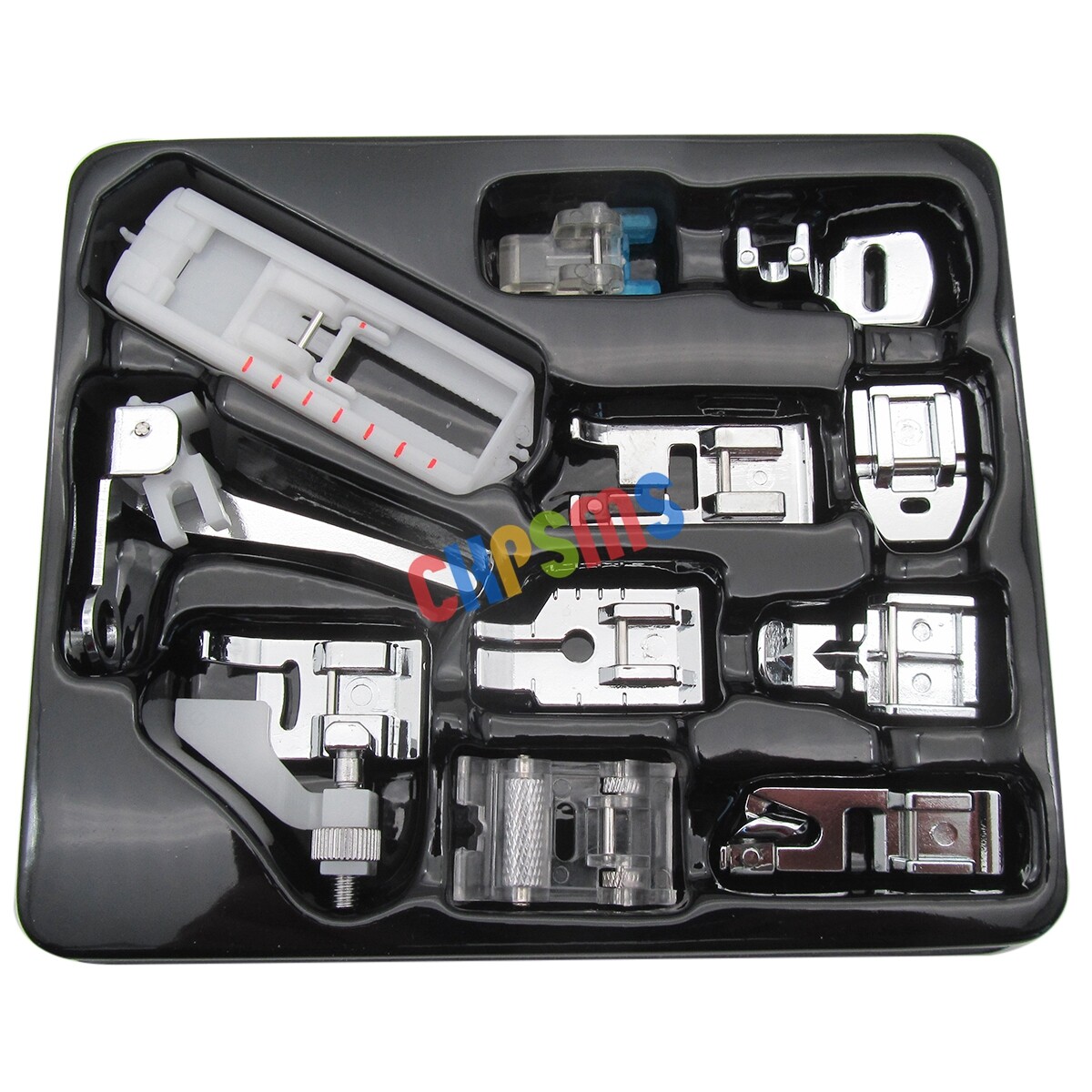 11PCS Presser Feet Set FOR Singer, Brother,Janome,Elna,Kenmore low Shank Sewing$11.69View on eBay
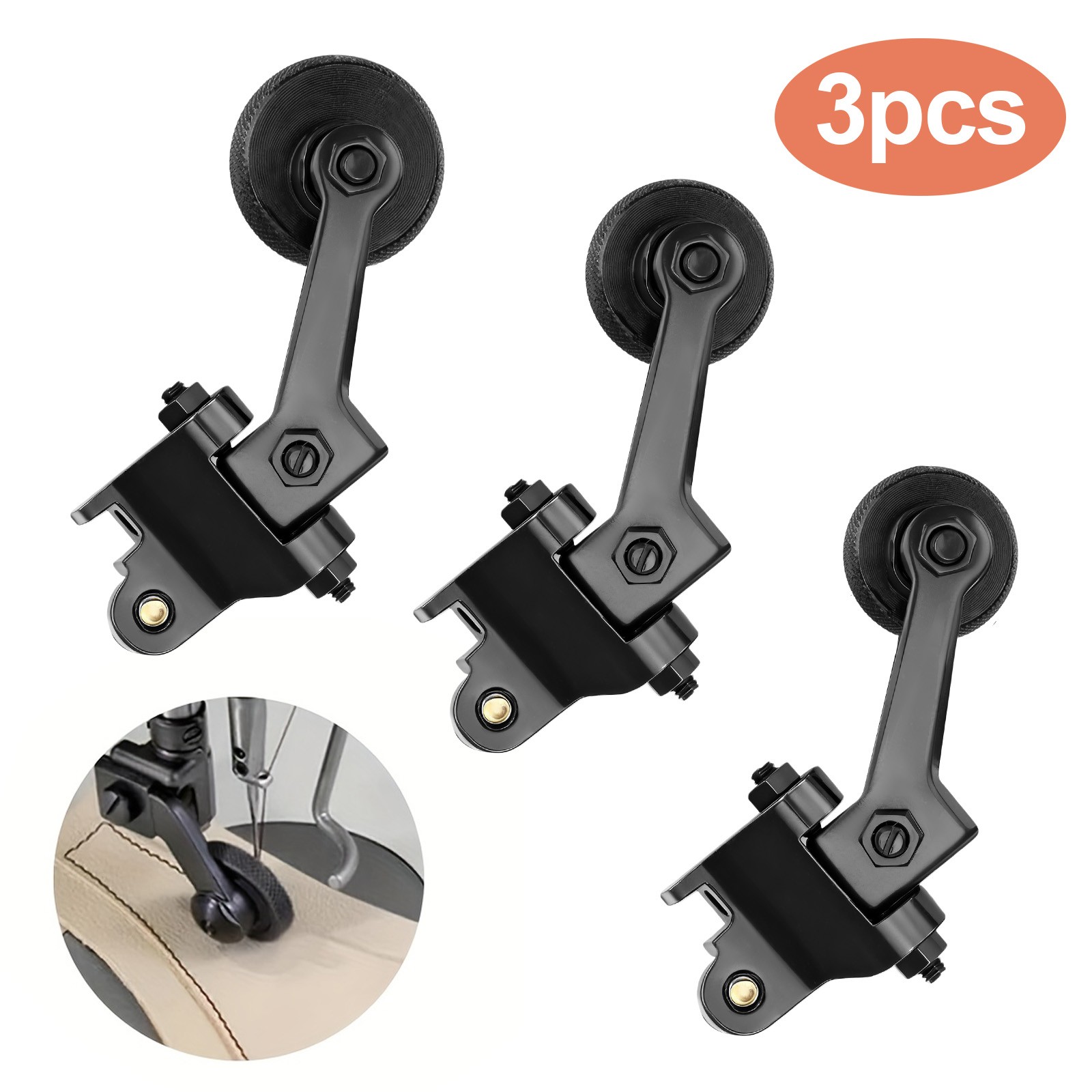 3 PCS Faux Leather Sewing Roller Presser Foot Set for Industrial Sewing Machines$13.94Last checked Nov 29, 2026View on eBay
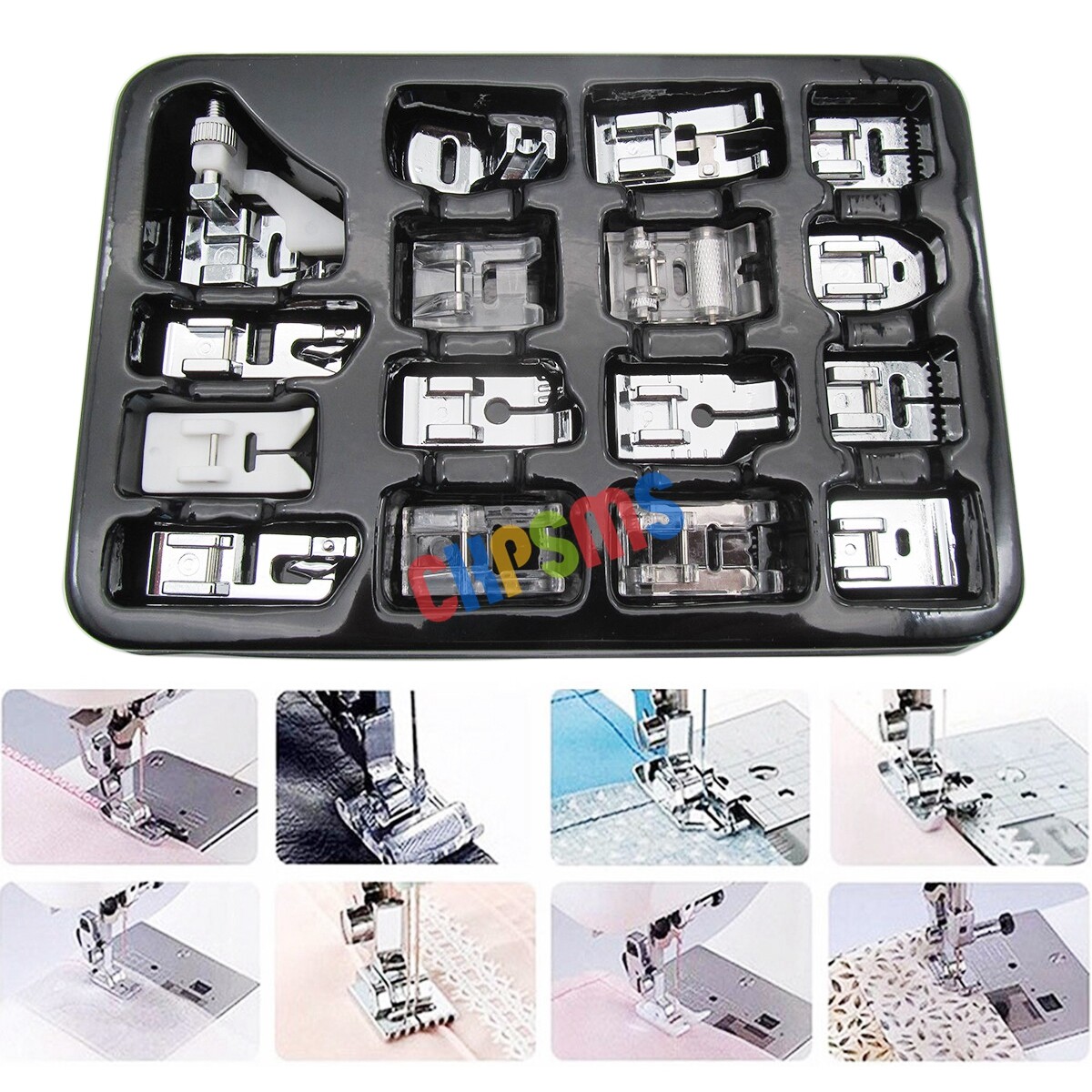 16PCS Presser Feet Set FOR Singer,Brother,Janome,Elna,Kenmore Low Shank Sewing$14.39View on eBay
Highlights
- Low-shank machines dominate the consumer market: the presser foot shank is roughly 1/2 inch from the needle plate to the foot attachment screw, while high-shank machines use about 1 inch.
- Snap-on feet rely on a removable ankle adapter; screw-on feet bolt directly to the presser bar and resist deflection better under heavy fabric loads.
- Metal feet (stainless or zinc alloy) hold tolerances and resist needle strikes; clear plastic feet aid visibility but wear at the needle slot and crack under thick seams.
- Specialty geometry is functional, not cosmetic: walking feet add a top feed dog, zipper feet offset the needle slot, and hem feet fold a fixed depth of fabric.
Best use cases
- Choose a snap-on adapter plus metal all-purpose foot for a modern low-shank machine doing mixed garment and craft sewing; skip high-shank screw-on feet.
- Choose a screw-on walking foot or dual-feed system for quilting and thick layered fabrics; skip plastic snap-on feet that flex under multi-layer loads.
- Choose a dedicated zipper or piping foot with a narrow offset slot for precise seam placement; skip adjustable universal feet that drift under lateral load.
- Choose a rolled-hem or blind-hem foot only if your machine allows needle-position adjustment; skip it on fixed-needle-position mechanical machines.
Buying tips
- Measure shank height from the needle plate to the bottom of the presser foot screw: about 1/2 inch means low-shank (snap-on or screw-on), about 1 inch means high-shank.
- Match presser foot style to needle system: most consumer machines use 15x1 needles and low-shank feet, while industrial and high-shank machines need screw-on feet with longer shanks.
- Prefer metal feet for heavy fabrics and plastic feet for visibility on delicate work; replace any foot with a scored or widened needle slot immediately.
- For walking feet, confirm the arm connects to the needle clamp screw and clears the machine's housing; generic arms often foul on curved-top machines.
Specs
| Shank Type | Low-shank (1/2 in) vs High-shank (1 in) |
|---|---|
| Attachment | Snap-on ankle vs Screw-on direct |
| Foot Material | Metal alloy vs Clear plastic |
| Specialty Geometry | Walking / Zipper / Hem / Edge-stitch |
Related searches
What to check before buying
- Measure your machine's shank height and note whether it uses a snap-on ankle or a direct screw-on foot before ordering any specialty foot.
- Confirm your machine's needle plate opening and feed dog width match the foot's slot; oversized slots reduce fabric support on fine fabrics.
- Check that your machine allows needle position adjustment (left/center/right) if you plan to use zipper, blind-hem, or edge-stitch feet.
- Verify the foot's arm or guide clears the presser bar and needle clamp through the full presser-lift range on your specific machine.
FAQ
Data sources: eBay / Amazon listings and product attribute feeds. Updated Nov 29, 2026.
Some links on this page are affiliate links. If you buy after clicking one, we may earn a commission at no extra cost to you. This does not change which products appear here or their order. Affiliate disclosure.