
Photos from current listings. Actual item, color, and included accessories may vary.
Sewing Needle Buying Guide
Sewing needles are precision consumables whose performance is defined by tip geometry, eye design, and alloy hardness, not by colorful packaging or piece counts. The core trade-off is between sharpness for clean penetration and strength to resist bending or snapping under load. Buy by material and task-specific needle system—leather needles have a wedge point and larger eye, while universal needles suit woven fabrics—and treat any needle that bends during normal use as a defect, not a spare.
Median $6.99
Key takeaways
- Needle point geometry determines fabric damage: sharp/universal for wovens, ballpoint for knits, wedge/triangular for leather and vinyl.
- Leather needles use a cutting wedge point and oversized eye to pass heavy thread without shredding, and are sized by needle system (e.g., 100/16, 110/18).
- Hand-sewing needles are graded by length and thickness (sharps, betweens, tapestry, chenille); large-eye versions ease threading but bend more easily in thick material.
At a glance
- Category
- Presser Feet, Notions & Threading
- Last updated
- Nov 28, 2026
Current offers
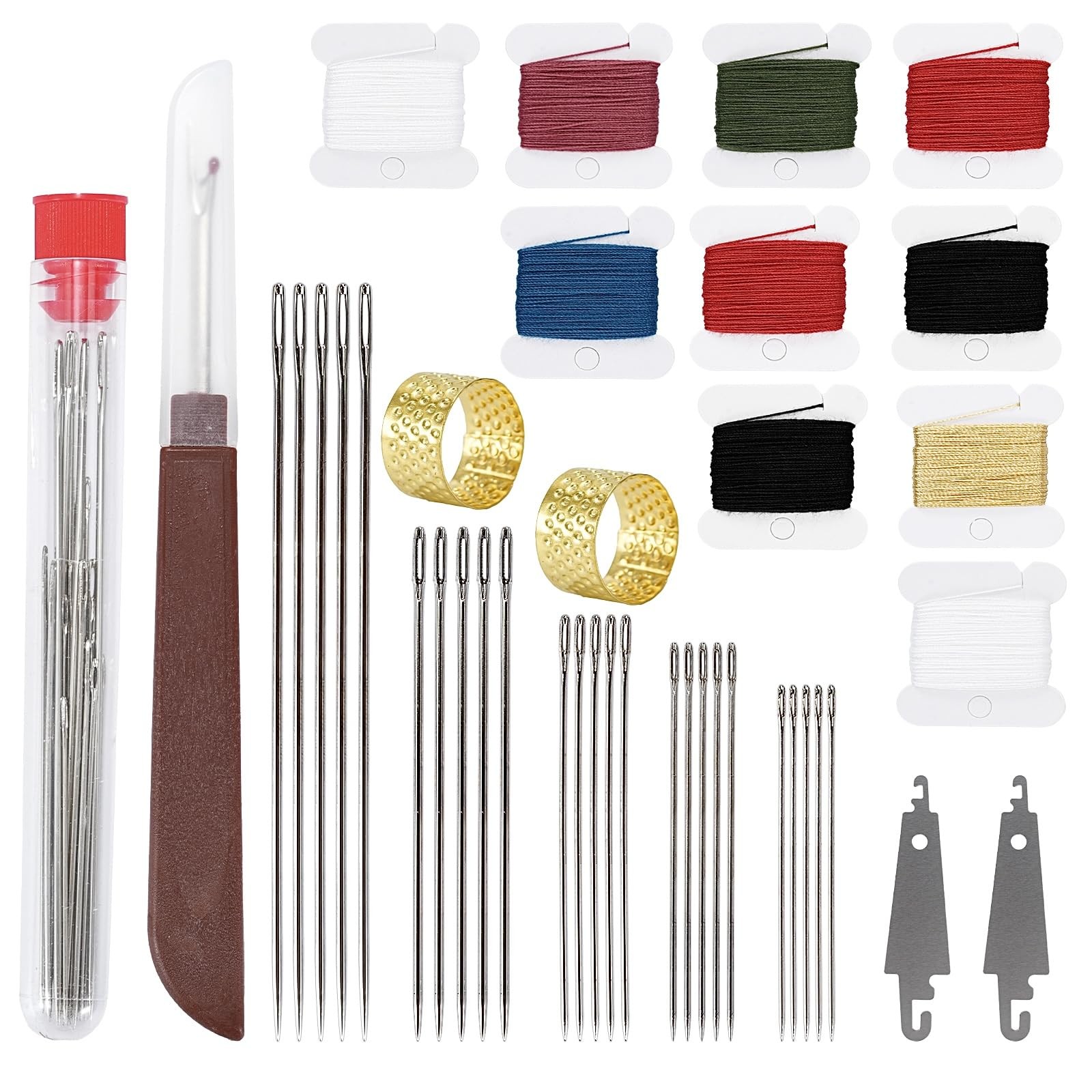 41 Pcs Large Eye Hand Sewing Needles Stainless Steel Quilting Denim Mending Set$7.99View on eBay
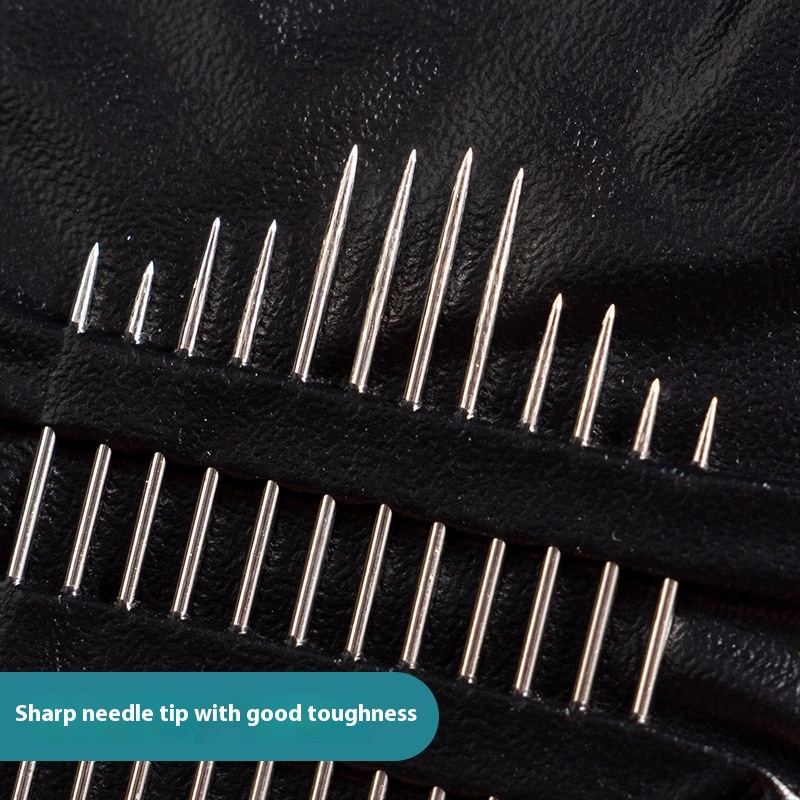 Side Back Open Blind Wear-free Sewing Needle$4.99View on Mallflare
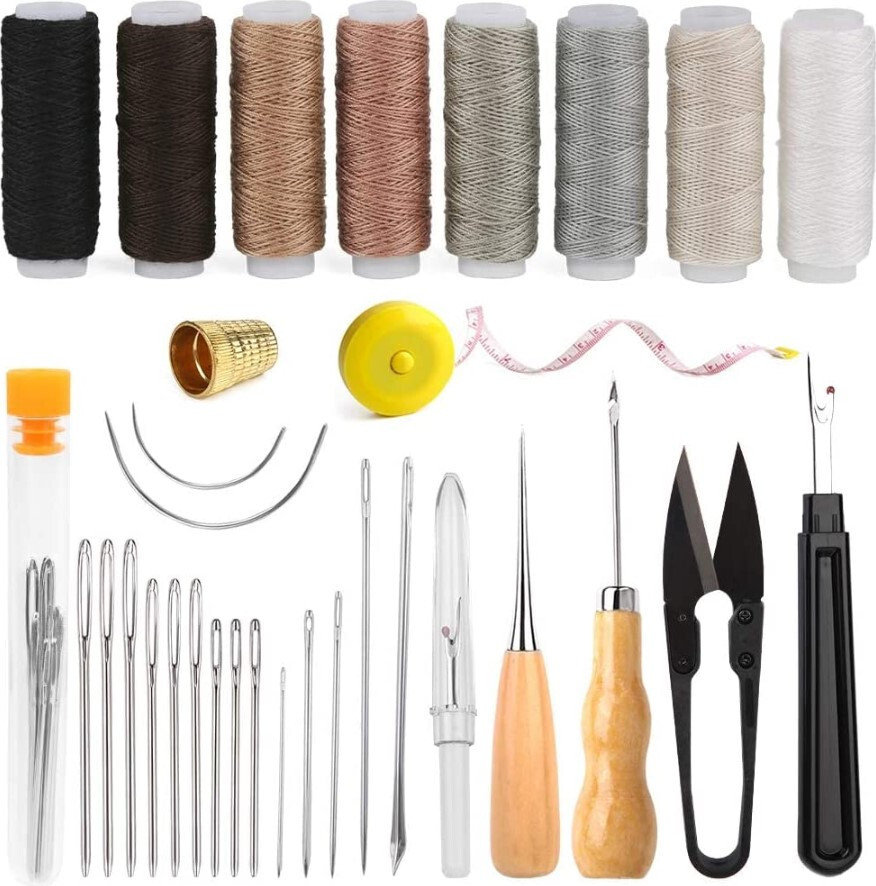 Sewing Kit Set Awl Leather Hand Stitcher Repair Set Heavy Duty Thread Needles$14.99View on eBay
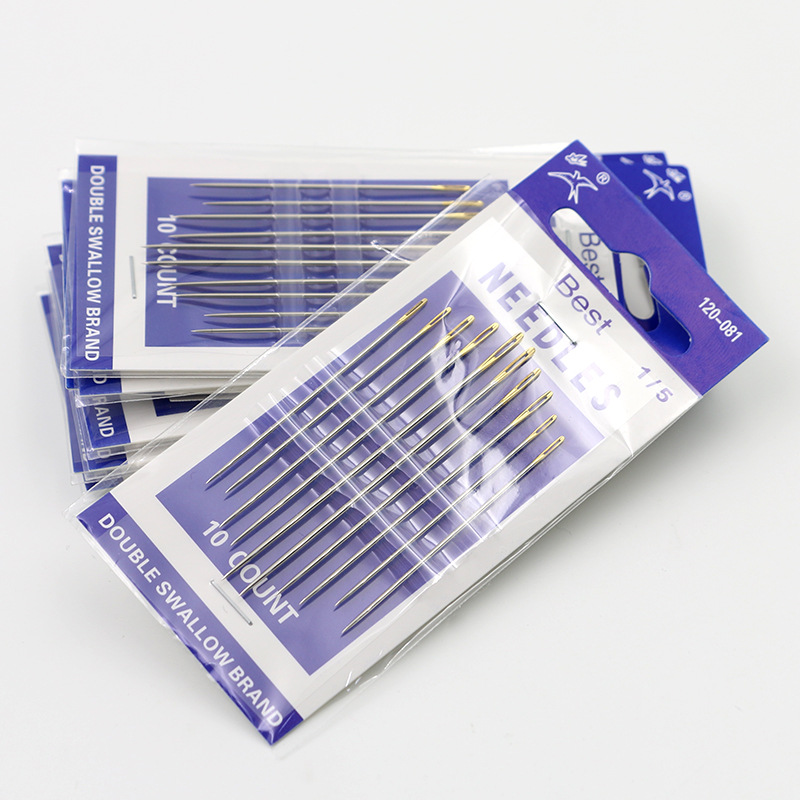 Large Hole Sewing Gold Tail Needle$5.99View on Mallflare
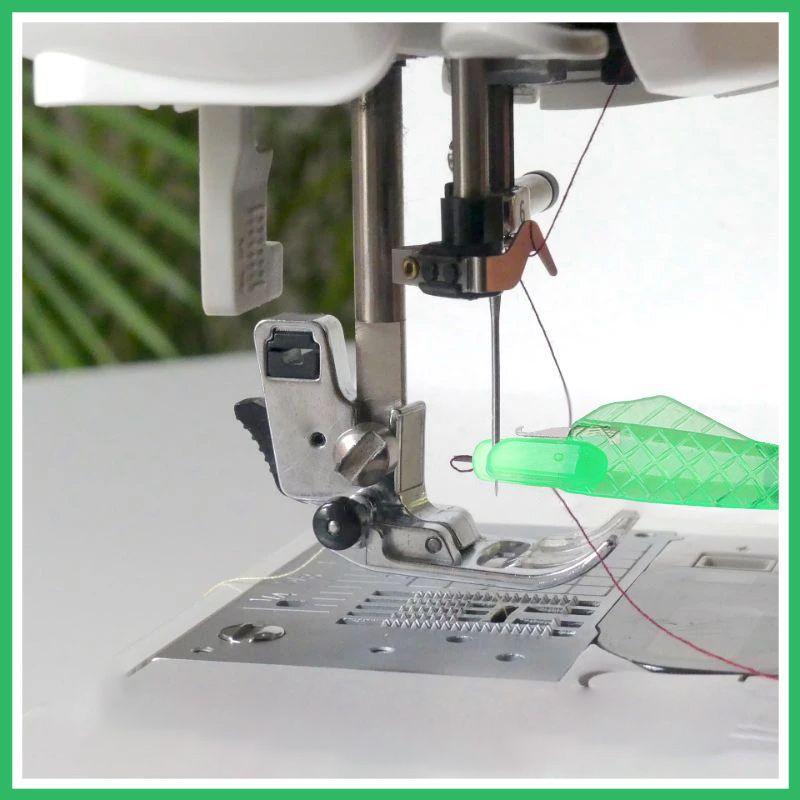 Sewing Machine Quick Threader Small Fish Needle$5.99View on Mallflare
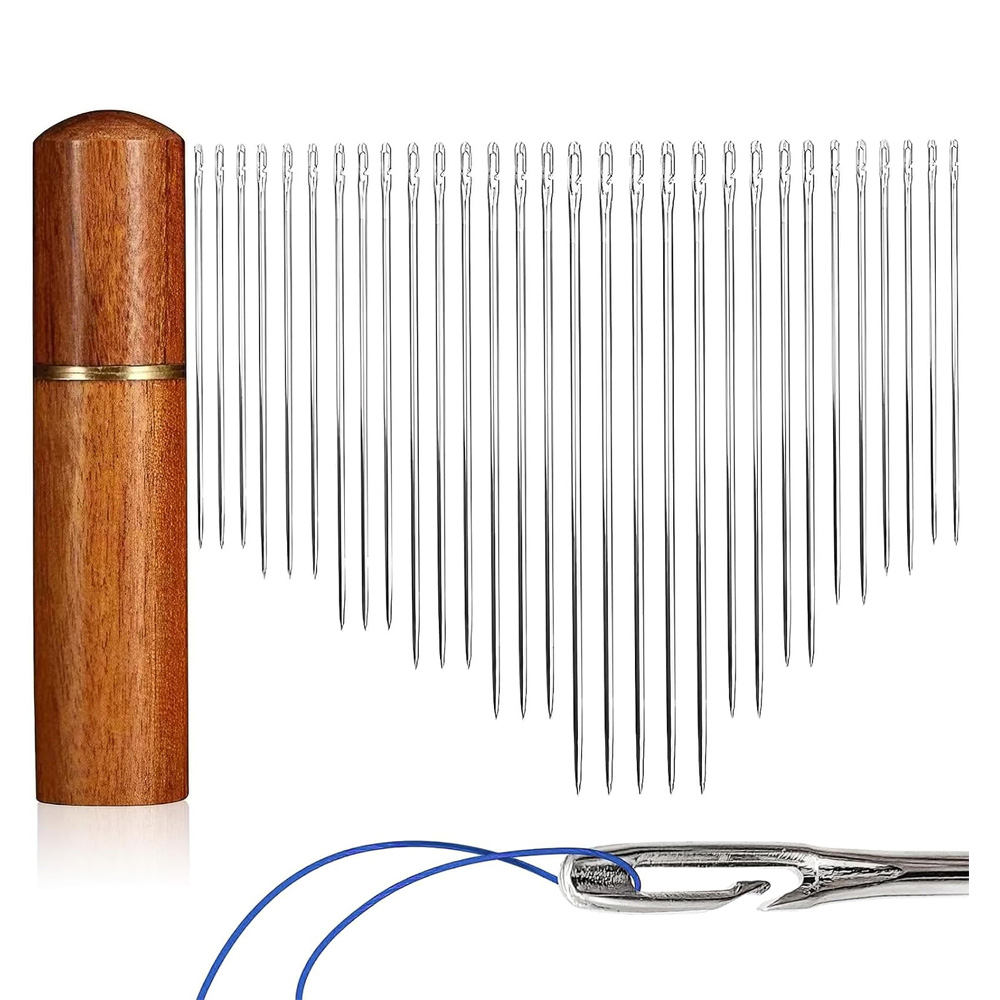 30Pcs Self Threading Sewing Needles, Stainless Steel Side Blind With Wooden Storage Tube$18.99View on Mallflare
Highlights
- Needle point geometry determines fabric damage: sharp/universal for wovens, ballpoint for knits, wedge/triangular for leather and vinyl.
- Leather needles use a cutting wedge point and oversized eye to pass heavy thread without shredding, and are sized by needle system (e.g., 100/16, 110/18).
- Hand-sewing needles are graded by length and thickness (sharps, betweens, tapestry, chenille); large-eye versions ease threading but bend more easily in thick material.
- Surface coatings matter: nickel-plated needles glide and resist corrosion, while unplated or gold-tail needles reduce friction in tight-weave fabric.
Best use cases
- Leather, denim, and canvas: choose wedge-point or heavy-duty needles in the 100/16–110/18 range with a reinforced shank; skip thin universal needles that bend and skip the fabric.
- Knits and stretch fabrics: use ballpoint needles to slip between loops; wrong-fit is a sharp needle that cuts yarns and causes runs.
- Quilting and general hand mending: pick stainless steel sharps or betweens in a sized assortment; skip oversized large-eye needles for fine cotton where they leave visible holes.
- Machine threading and quick repairs: a quick threader and fish needle set suits low-tension threading; wrong-fit is using a fish needle as a primary sewing needle in dense seams.
Buying tips
- Match needle size to fabric weight: 70/10–80/12 for lightweight, 90/14 for medium, 100/16–110/18 for heavy—larger numbers mean thicker needles and bigger holes.
- For leather, select a dedicated leather needle with a wedge point; a universal needle pierces but tears the grain and dulls within a few inches.
- Hand needles: choose stainless steel for corrosion resistance; carbon steel is harder but rusts, so store dry with a silica pack.
- Replace machine needles every 6–8 hours of sewing or at the first stitch skip; a bent or burred needle causes thread shredding and fabric pulls.
Specs
| Needle System | 130/705 H flat-shank vs round-shank |
|---|---|
| Point Type | Sharp / Ballpoint / Wedge leather |
| Needle Size | 60/8 to 120/19 metric |
| Material Grade | Stainless vs nickel-plated carbon steel |
Related searches
What to check before buying
- Confirm your machine's needle system (most home machines use 130/705 H flat-shank; industrial and serger machines use different shanks) before buying a pack.
- For hand sewing, measure your project thickness: needles shorter than the fabric stack cannot be pushed through without a thimble.
- Check thread weight compatibility: heavy topstitching thread needs a needle eye large enough to pass it without stripping the twist.
- Store needles in a dry, closed case; humidity dulls and rusts carbon steel, and loose needles in a pin cushion can snag thread.
FAQ
Data sources: eBay / Amazon listings and product attribute feeds. Updated Nov 28, 2026.
Some links on this page are affiliate links. If you buy after clicking one, we may earn a commission at no extra cost to you. This does not change which products appear here or their order. Affiliate disclosure.