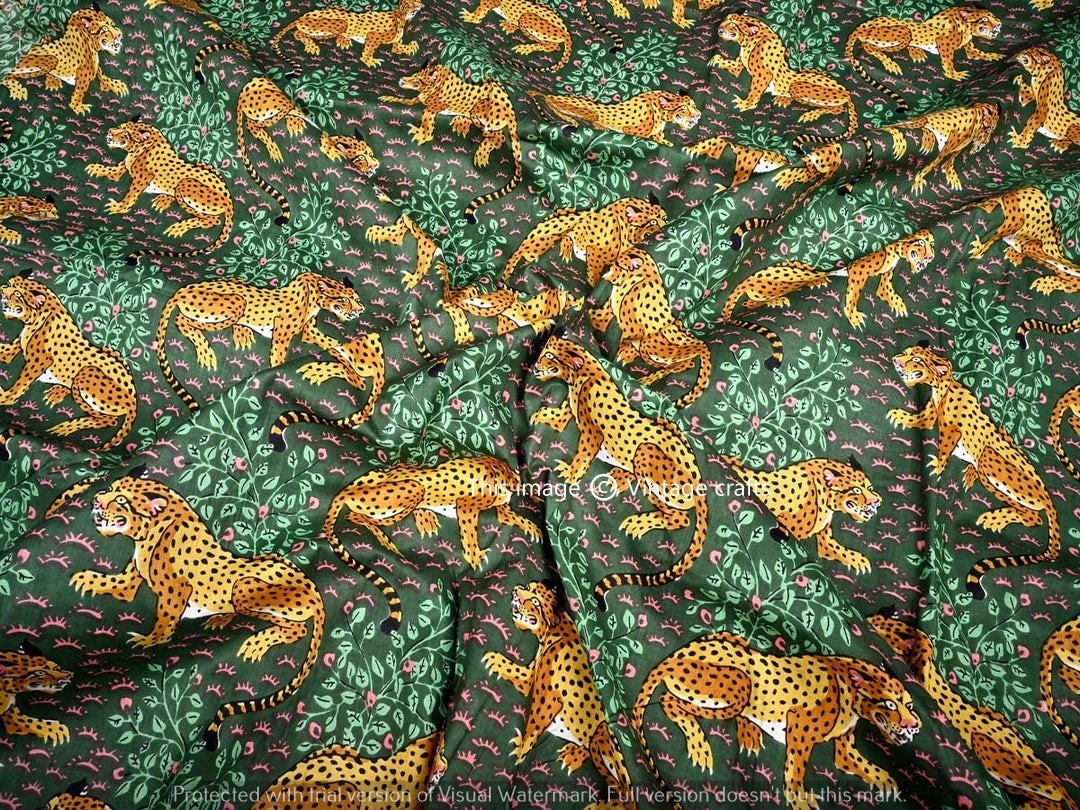

Photos from current listings. Actual item, color, and included accessories may vary.
Animal Print Fabric Buying Guide
Animal print fabric covers cotton, polyester, and blend textiles printed or woven with leopard, tiger, zebra, cheetah, or similar motifs for quilting, apparel, and home decor. The core trade-off is fiber content and print method: cotton offers breathability and quilting-friendly hand, while polyester gives fade resistance and drape but can pill or feel slick. The decision rule is simple—choose natural-fiber, reactive- or block-printed goods for quilting and garment work, and choose solution-dyed or pigment-printed synthetics only for high-abrasion decor where wash fastness matters more than hand.
Key takeaways
- Quilting cotton is a plain-weave 100% cotton, typically 42–44 in wide and 4.0–4.5 oz/sq yd; animal prints on this base hold stitches without puckering.
- Hand block printing uses carved wooden blocks and reactive or pigment dyes; expect 18–24 in repeat variation and minor registration shifts that are normal, not defects.
- Polyester and cotton-poly blends resist crocking and fading better under UV but have lower breathability and can pill at quilting stitch lines.
At a glance
- Category
- Fabrics & Thread
- Last updated
- Nov 28, 2026
Current offers
Highlights
- Quilting cotton is a plain-weave 100% cotton, typically 42–44 in wide and 4.0–4.5 oz/sq yd; animal prints on this base hold stitches without puckering.
- Hand block printing uses carved wooden blocks and reactive or pigment dyes; expect 18–24 in repeat variation and minor registration shifts that are normal, not defects.
- Polyester and cotton-poly blends resist crocking and fading better under UV but have lower breathability and can pill at quilting stitch lines.
- Print scale drives cutting math: large-scale animal motifs need 2–3 yd for a crib quilt, while small-scale repeats can work from 1–1.5 yd with careful fussy-cutting.
Best use cases
- Best fit: patchwork and pieced quilts—pick 100% quilting cotton in 44 in width with a small-to-medium repeat; skip stretchy knits and loose-weave decor fabrics.
- Best fit: garment accents and children's apparel—choose OEKO-TEX certified cotton or cotton-linen blend; skip pigment-printed polyester that stiffens after repeated washing.
- Best fit: upholstery and throw pillows—select solution-dyed polyester or cotton canvas at 8 oz/sq yd or heavier; skip standard 4 oz quilting cotton, which will seam-slip under abrasion.
- Wrong fit: outdoor or marine use—standard reactive-printed cotton fades and mildews; specify solution-dyed acrylic or polyester with a minimum 500-hour lightfastness rating instead.
Buying tips
- For a queen quilt (60 x 80 in) with 44 in fabric, buy 5–6 yd of a single animal print or 2 yd each of three coordinates to allow for repeat matching and 1/4 in seam allowances.
- Check the fiber label: 100% cotton for quilting and apparel, cotton-poly blend for lower-shrink decor, and 100% polyester only where wrinkle resistance outweighs breathability.
- Match print method to wash life: reactive-printed cotton tolerates 60+ domestic washes; pigment prints soften and fade faster, so reserve them for low-laundry decor items.
- Verify width before cutting: 42–44 in quilting cotton vs 54–60 in decor fabric changes yardage by roughly 25%; always recalculate for directional animal motifs that cannot be rotated.
Specs
| Fiber Content | 100% cotton / poly blend / polyester |
|---|---|
| Fabric Width | 42–44 in quilting / 54–60 in decor |
| Weight Range | 4.0–4.5 oz quilting / 8+ oz canvas |
| Print Method | Reactive block / digital pigment / screen |
Related searches
What to check before buying
- Measure your quilt frame or project width: standard 44 in quilting cotton fits lap quilts in one width but queen tops need pieced backing or 108 in wide goods.
- Confirm your machine and needle: animal-print cottons quilt cleanly with a 80/12 universal needle; heavier canvas prints need 90/14 or 100/16 denim needles.
- Check dye compatibility with your planned washing: pre-wash reactive-printed cotton in cold water to set color; do not pre-wash pigment prints if you want maximum initial saturation.
- Verify your cutting tools and mat: large-repeat animal prints benefit from a 24 x 36 in rotary mat and 45 mm cutter to fussy-cut motifs without distorting the print.
FAQ
Data sources: eBay / Amazon listings and product attribute feeds. Updated Nov 28, 2026.
Some links on this page are affiliate links. If you buy after clicking one, we may earn a commission at no extra cost to you. This does not change which products appear here or their order. Affiliate disclosure.