
Photos from current listings. Actual item, color, and included accessories may vary.
Cotton Muslin Fabric Buying Guide
Cotton muslin is a loosely woven, plain-weave cotton fabric defined by its breathable openness and natural unbleached state, available in grades from fragile theatrical drape to durable quilting backing. The core trade-off is weight and thread count versus cost: lightweight 3-4 oz/yd² muslin drapes beautifully but tears easily, while 5-7 oz/yd² quilting-grade cloth survives washing and stitching without distortion. Buy by weight and weave density, not by yardage alone—if a listing cannot state ounces per square yard or threads per inch, treat it as decorative drape, not a structural quilting fabric.
Median $33.43
Key takeaways
- Unbleached natural muslin retains cotton's pectin and waxes, giving it a warm ivory tone and slight stiffness that washes out after the first hot-water cycle.
- Quilting-grade muslin typically runs 4.5-6 oz/yd² with 60-80 threads per inch; theatrical drape muslin runs 3-4 oz/yd² and 40-50 TPI, tearing under tension.
- Standard wide muslin is 63 inches (160 cm) wide, letting quilters back a full-size quilt without a center seam; 90-inch and 108-inch widths exist for king and longarm backing.
At a glance
- Category
- Fabrics & Thread
- Last updated
- Nov 28, 2026
Current offers
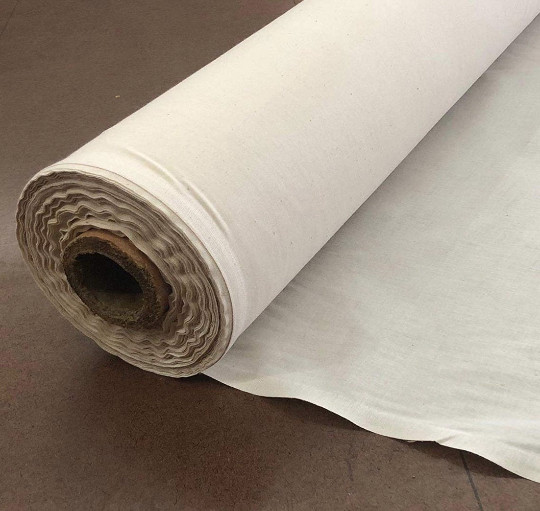 5 Yards Natural 100% Cotton Muslin Fabric/Textile Unbleached Draping Fabric$24.26Last checked Nov 19, 2026View on eBay
 100% Cotton Muslin Fabric – 63" Wide Natural Cloth for Quilting & Sewing$29.99Last checked Nov 22, 2026View on eBay
- 10 Yards Natural 100% Cotton Muslin Fabric/Textile Unbleached Draping Fabric$36.86Last checked Nov 19, 2026View on eBay
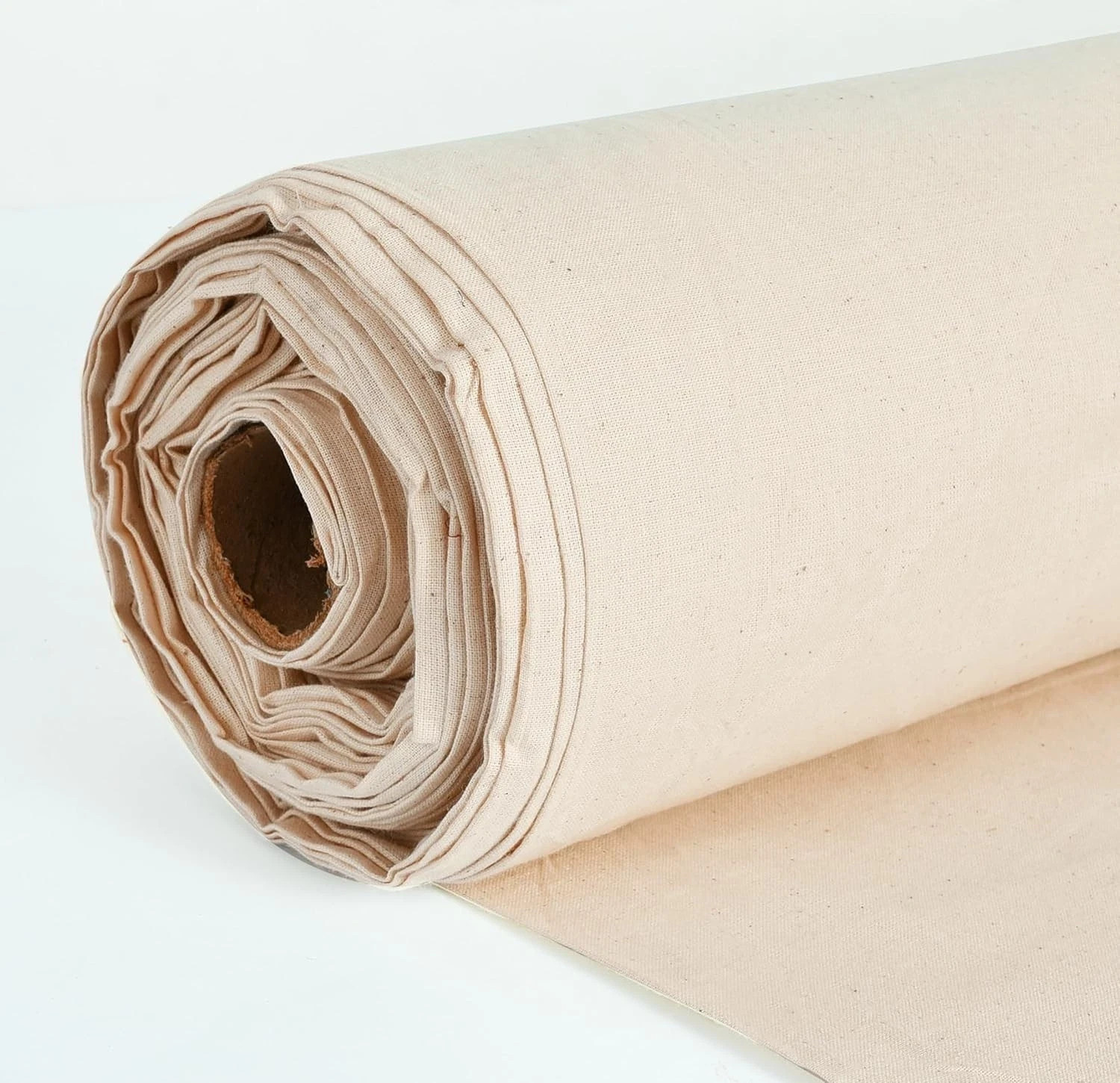 Natural 100% Cotton Muslin Fabric/Textile Unbleached Draping Fabric by the yard$49.98View on eBay
Highlights
- Unbleached natural muslin retains cotton's pectin and waxes, giving it a warm ivory tone and slight stiffness that washes out after the first hot-water cycle.
- Quilting-grade muslin typically runs 4.5-6 oz/yd² with 60-80 threads per inch; theatrical drape muslin runs 3-4 oz/yd² and 40-50 TPI, tearing under tension.
- Standard wide muslin is 63 inches (160 cm) wide, letting quilters back a full-size quilt without a center seam; 90-inch and 108-inch widths exist for king and longarm backing.
- Plain weave means no right or wrong side—muslin is reversible, takes dye and starch evenly, and shrinks 3-5% on first wash unless pre-shrunk or sanforized.
Best use cases
- Best fit: quilt backing and foundation piecing—choose 4.5-6 oz/yd², 63-inch-wide unbleached muslin; skip 3-4 oz theatrical cloth that puckers and tears at stitch lines.
- Best fit: draping, pattern mock-ups, and children's craft—lightweight 3-4 oz muslin in 45- or 63-inch width gives cheap, forgiving yardage; do not use it for wearable garments meant to last.
- Best fit: embroidery and appliqué foundation—pick 5 oz+ muslin with tight 70+ TPI so needle holes close; wrong fit is loose 40-TPI weave that ravels and distorts under hoop tension.
Buying tips
- Compare by weight: 3-4 oz/yd² is drape/mock-up grade, 4.5-5.5 oz/yd² is quilting grade, 6-7 oz/yd² is upholstery and heavy utility grade.
- For a queen quilt (84x90 in) at 63-inch width, buy two lengths plus 8 inches for shrinkage and squaring—about 5 yards total; a king needs 108-inch width or a pieced back.
- Pre-wash unbleached muslin in hot water and machine-dry before cutting; expect 3-5% shrinkage in length and 2-4% in width on the first cycle.
- Check thread count: below 50 TPI ravels and beards batting fibers; 60-80 TPI balances breathability with seam strength for quilting and garment mock-ups.
Specs
| Fabric Weight | 3-4 oz drape / 4.5-6 oz quilting |
|---|---|
| Thread Count | 40-50 TPI drape / 60-80 TPI quilt |
| Standard Width | 45 in / 63 in / 90-108 in |
| Fiber & Finish | 100% cotton / unbleached or sanforized |
Related searches
What to check before buying
- Measure your quilt top or project width: 63-inch muslin covers up to 60-inch-wide tops without a seam; anything wider needs 90/108-inch goods or a pieced backing.
- Confirm your machine and needle: lightweight muslin sews with a 70/10 universal needle, 5 oz+ backing with an 80/12; heavy 6-7 oz may need a 90/14 and longer stitch length.
- Plan for washing: unbleached muslin must be pre-shrunk before quilting; if you cannot pre-wash, buy 5-8% extra yardage per length.
- Check fiber content: 100% cotton muslin takes dye, starch, and iron heat up to 400°F; cotton-poly blends resist dye and scorch at lower temperatures.
FAQ
Data sources: eBay / Amazon listings and product attribute feeds. Updated Nov 28, 2026.
Some links on this page are affiliate links. If you buy after clicking one, we may earn a commission at no extra cost to you. This does not change which products appear here or their order. Affiliate disclosure.