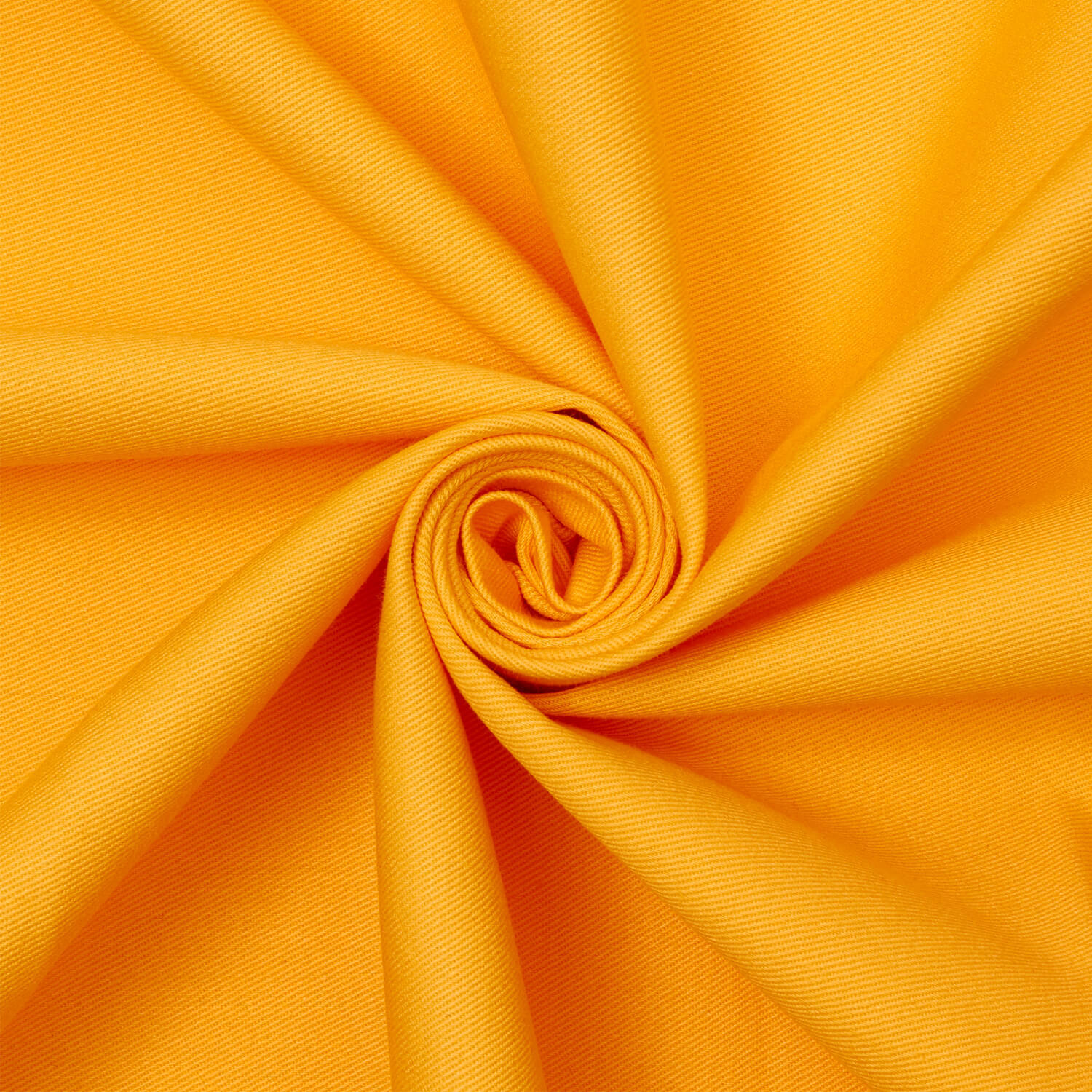

Photos from current listings. Actual item, color, and included accessories may vary.
Cotton Twill Fabric Buying Guide
Cotton twill fabric is a durable, diagonal-weave textile defined by its warp-faced construction, where two or more weft yarns pass under one warp yarn to create a pronounced diagonal rib. The primary trade-off buyers face is between fabric weight and hand-feel: lighter twills (under 6 oz/yd²) drape softly but wear faster, while heavier twills (8 oz/yd² and up) resist abrasion but feel stiff and require break-in. The clear decision rule is to match the twill's weight, yarn type, and finish to its end use—garment-weight for apparel, mid-weight for upholstery and bags, and heavy-weight for workwear and structured accessories—and to reject any twill that is not clearly labeled with a weight or fiber content.
Key takeaways
- Twill weave is defined by its float pattern: a 3/1 twill (warp-faced) produces a steep, durable diagonal ideal for chinos and workwear, while a 2/2 twill yields a balanced, softer hand for shirting and dresses.
- Fabric weight determines durability: 4–6 oz/yd² twills suit lightweight apparel, 7–9 oz/yd² serves mid-weight pants and jackets, and 10–14 oz/yd² handles upholstery and heavy bags.
- Prepared-for-dyeing (PFD) cotton twill is scoured and bleached but not optically brightened, allowing consistent dye uptake; garment-dyed or yarn-dyed twills offer better colorfastness for repeated washing.
At a glance
- Category
- Fabrics & Thread
- Last updated
- Nov 28, 2026
Current offers
Highlights
- Twill weave is defined by its float pattern: a 3/1 twill (warp-faced) produces a steep, durable diagonal ideal for chinos and workwear, while a 2/2 twill yields a balanced, softer hand for shirting and dresses.
- Fabric weight determines durability: 4–6 oz/yd² twills suit lightweight apparel, 7–9 oz/yd² serves mid-weight pants and jackets, and 10–14 oz/yd² handles upholstery and heavy bags.
- Prepared-for-dyeing (PFD) cotton twill is scoured and bleached but not optically brightened, allowing consistent dye uptake; garment-dyed or yarn-dyed twills offer better colorfastness for repeated washing.
- Cotton twill shrinkage varies by finish: sanforized twill limits residual shrinkage to under 1–2%, while unsanforized loomstate twill can shrink 5–10% after the first wash and must be pre-washed before cutting.
Best use cases
- Best fit: mid-weight (7–9 oz/yd²) 3/1 cotton twill for chino-style trousers, chore coats, and structured tote bags—choose sanforized, PFD if you plan to dye or overdye.
- Best fit: lightweight (4–6 oz/yd²) 2/2 cotton twill for shirts, dresses, and lightweight quilt backings—skip heavy 10+ oz twill here, as it will not drape and will strain seams.
- Wrong fit: using upholstery-weight (12+ oz/yd²) twill for apparel—it is too stiff for garment seams and will abrade skin; reserve it for slipcovers, cushion backs, and heavy-duty bags.
- Wrong fit: buying unsanforized loomstate twill without pre-washing for a fitted garment—expect 5–10% shrinkage that will alter pattern dimensions after the first wash.
Buying tips
- Confirm the twill direction and float ratio (3/1 vs 2/2): 3/1 warp-faced twill is stronger and more abrasion-resistant for pants and workwear, while 2/2 gives a softer, more balanced drape for shirts and dresses.
- Select weight by end use: 4–6 oz/yd² for shirting and dresses, 7–9 oz/yd² for chinos and light jackets, 10–12 oz/yd² for workwear, and 12+ oz/yd² for upholstery and heavy bags—never substitute apparel weight for upholstery.
- Choose PFD (prepared-for-dyeing) twill only if you will dye it yourself; for ready-to-use color, select yarn-dyed or garment-dyed twill, which holds color better through repeated laundering than piece-dyed PFD.
- Check for sanforization or pre-shrinking: sanforized twill shrinks under 1–2%, while unsanforized twill can shrink 5–10%—buy 10% extra yardage for unsanforized and pre-wash before cutting.
Specs
| Weave | 3/1 warp-faced or 2/2 balanced twill |
|---|---|
| Weight Range | 4–14 oz/yd² (135–475 GSM) |
| Shrinkage | Sanforized <2% / Unsanforized 5–10% |
| Dye State | PFD, yarn-dyed, garment-dyed |
Related searches
What to check before buying
- Verify the fabric weight in oz/yd² or GSM: 4–6 oz/yd² (135–200 GSM) for lightweight apparel, 7–9 oz/yd² (235–305 GSM) for mid-weight garments, 10+ oz/yd² (340+ GSM) for heavy-duty and upholstery use.
- Confirm fiber content and finish: 100% cotton vs cotton-poly blends affect breathability and wrinkle resistance; PFD vs yarn-dyed vs garment-dyed determines dyeing and colorfastness behavior.
- Measure shrinkage allowance: for unsanforized twill, buy at least 10% extra yardage and pre-wash in hot water before cutting; for sanforized, add 2–3% for safety.
- Check the diagonal direction and float ratio: 3/1 twill has a steeper, more durable diagonal for workwear; 2/2 twill is softer and more balanced for shirting—match to your pattern's grainline and seam strength needs.
FAQ
Data sources: eBay / Amazon listings and product attribute feeds. Updated Nov 28, 2026.
Some links on this page are affiliate links. If you buy after clicking one, we may earn a commission at no extra cost to you. This does not change which products appear here or their order. Affiliate disclosure.