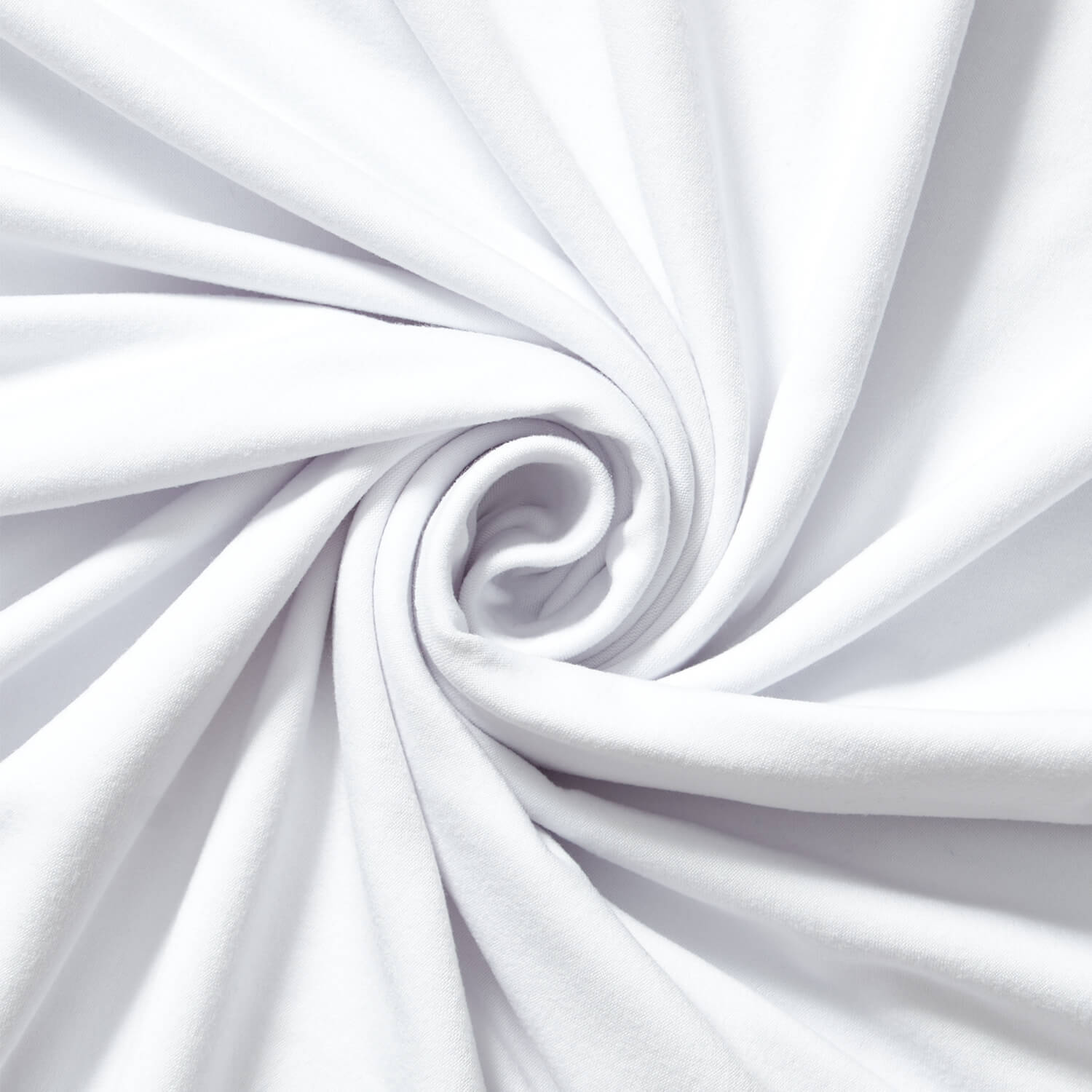

Photos from current listings. Actual item, color, and included accessories may vary.
Jersey Knit Fabric Buying Guide
Jersey knit fabric is a single-knit stretch material defined by its face-side loops and natural curl, used for apparel, bedding, and upholstery. The primary trade-off is fiber content and weight: cotton or rayon blends drape softly but shrink and pill, while polyester/spandex blends hold shape and resist wrinkles but can feel slick and trap heat. Choose by end use — cotton-rich for breathable garments, polyester-spandex for durable, forgiving fit — and always match weight (GSM) and stretch percentage to the project.
Key takeaways
- Single-knit jersey has distinct face and back; it curls at edges, so hemming or binding is required unless using a serger.
- Fiber content dictates performance: 100% cotton shrinks 5–8% after washing; polyester/spandex blends shrink under 2% and retain color.
- Weight tiers: lightweight 120–150 GSM for tees and linings; midweight 160–200 GSM for dresses and leggings; heavy 220+ GSM for upholstery and outerwear.
At a glance
- Category
- Fabrics & Thread
- Last updated
- Nov 28, 2026
Current offers
Highlights
- Single-knit jersey has distinct face and back; it curls at edges, so hemming or binding is required unless using a serger.
- Fiber content dictates performance: 100% cotton shrinks 5–8% after washing; polyester/spandex blends shrink under 2% and retain color.
- Weight tiers: lightweight 120–150 GSM for tees and linings; midweight 160–200 GSM for dresses and leggings; heavy 220+ GSM for upholstery and outerwear.
- Stretch recovery depends on spandex percentage: 3–5% spandex gives modest stretch; 8–12% gives high stretch for activewear and fitted garments.
Best use cases
- Best for t-shirts, casual dresses, and baby clothes: pick 100% cotton or cotton-modal jersey at 140–180 GSM — soft, breathable, and easy to sew with a ballpoint needle.
- Best for leggings, swimwear, and athletic tops: choose polyester-spandex jersey with 10–15% spandex and 180–220 GSM for opacity and four-way stretch.
- Skip for structured upholstery or bags: jersey lacks rigidity and will sag; use woven canvas or denim instead.
- Wrong fit for formal shirting or tailored jackets: jersey’s drape and stretch cannot hold crisp creases or structured shoulders.
Buying tips
- Calculate stretch: cut a 4-inch swatch, stretch to comfortable max, and measure — 25% stretch for t-shirts, 50%+ for leggings; spandex content above 8% supports this.
- Match needle and stitch: use a ballpoint or stretch needle (size 75/11) and a narrow zigzag or serger to prevent skipped stitches and popped seams.
- Check shrinkage: cotton jersey can shrink up to 8%, so buy 10% extra yardage; pre-wash and dry before cutting.
- For white or light colors, verify opacity: hold fabric up to light — lightweight jersey under 150 GSM often requires lining for dresses and skirts.
Specs
| Fiber Content | Cotton / Polyester-Spandex / Rayon blends |
|---|---|
| Weight Range | 120–220 GSM (light to heavy) |
| Stretch Type | Two-way or four-way (5–20% spandex) |
| Fabric Width | 58–60 inches tubular or open |
Related searches
What to check before buying
- Confirm your machine has a stretch stitch or serger; a standard straight stitch will crack on jersey.
- Measure your project’s stretch requirement — if pattern specifies 50% stretch, buy fabric with at least that and corresponding spandex.
- Pre-wash a swatch to check shrinkage and color bleed before cutting into your main yardage.
- For larger projects, verify the fabric width (usually 58–60 inches) and buy continuous yardage to avoid piecing seams.
FAQ
Data sources: eBay / Amazon listings and product attribute feeds. Updated Nov 28, 2026.
Some links on this page are affiliate links. If you buy after clicking one, we may earn a commission at no extra cost to you. This does not change which products appear here or their order. Affiliate disclosure.