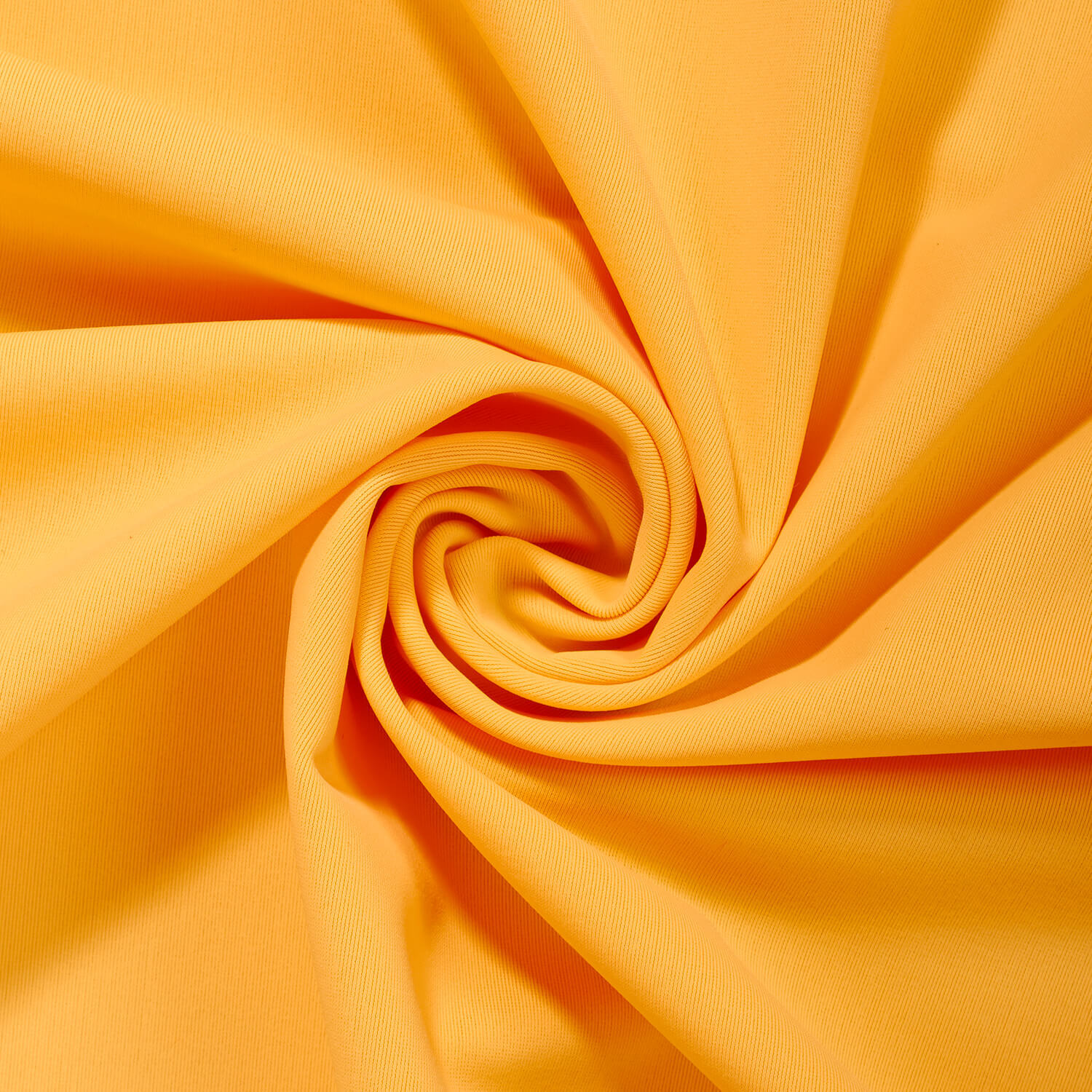

Photos from current listings. Actual item, color, and included accessories may vary.
Nylon Spandex Fabric Buying Guide
Nylon spandex fabric is a stretch knit (usually tricot or jersey) that blends nylon's abrasion resistance with elastane's four-way recovery, used for swimwear, activewear, and shaping garments. The core trade-off is denier and elastane percentage versus hand-feel and opacity: higher denier and 20%+ spandex give durable, compressive, squat-proof fabric, while low-denier, 5-10% spandex knits are soft but prone to grin-through and recovery loss. The decision rule: buy by weight (GSM) and spandex percentage, not by the word 'stretch' — if the listing doesn't state GSM and elastane content, treat it as a compromise.
Key takeaways
- Nylon spandex is almost always a warp-knit tricot or circular-knit jersey; tricot gives flatter, denser hand and better shape retention for swimwear and compression wear.
- Elastane content drives recovery: 15-20% is standard activewear, 20-25% is high-compression/swim, and below 10% is light stretch that sags after repeated wear.
- Fabric weight in GSM determines opacity and durability: 180-220 GSM is light activewear, 220-280 GSM is squat-proof leggings, and 280+ GSM is heavy compression or shaping fabric.
At a glance
- Category
- Fabrics & Thread
- Last updated
- Nov 28, 2026
Current offers
Highlights
- Nylon spandex is almost always a warp-knit tricot or circular-knit jersey; tricot gives flatter, denser hand and better shape retention for swimwear and compression wear.
- Elastane content drives recovery: 15-20% is standard activewear, 20-25% is high-compression/swim, and below 10% is light stretch that sags after repeated wear.
- Fabric weight in GSM determines opacity and durability: 180-220 GSM is light activewear, 220-280 GSM is squat-proof leggings, and 280+ GSM is heavy compression or shaping fabric.
- Denier (nylon yarn size) controls abrasion resistance and hand: 40D is silky and light, 70D is the activewear standard, and 100D+ is rugged and less drapey.
Best use cases
- Best fit: swimwear and bikinis — pick 20%+ spandex, 200-260 GSM tricot with chlorine-resistant nylon; skip low-spandex jersey knits that bag in water.
- Best fit: leggings and yoga pants — choose 220-280 GSM, 18-22% spandex, 70D nylon for opacity and recovery; skip 180 GSM 'buttery' knits if you need squat-proof coverage.
- Best fit: shapingwear and dance costumes — use 280+ GSM, 20-25% spandex for firm hold; skip light tricot that rolls at seams under tension.
- Wrong fit: structured outerwear or upholstery — nylon spandex lacks rigidity and UV stability; choose woven nylon or polyester canvas instead.
Buying tips
- Buy by GSM first: 180-220 for tops and light dresses, 220-280 for leggings and swim, 280+ for compression and shaping.
- Check elastane percentage: 15-20% for general activewear, 20-25% for swim and high-compression, under 10% only for linings or loose tops.
- Match denier to abrasion needs: 40D for soft next-to-skin, 70D for leggings and sports bras, 100D+ for bags, knee pads, and abrasion zones.
- For cut-and-sew, add 10-15% to your body measurements for negative ease in activewear; order at least 10% extra yardage for matching stripes or directional nap.
Specs
| Fabric Weight | 180-300 GSM (leggings 220-280) |
|---|---|
| Elastane Content | 10-25% (swim/compression 20%+) |
| Knit Structure | Tricot warp knit vs circular jersey |
| Nylon Denier | 40D light / 70D standard / 100D+ rugged |
Related searches
What to check before buying
- Confirm the fabric is four-way stretch (stretch and recovery in both length and width); two-way stretch tricot limits garment patterns.
- Verify width: most nylon spandex tricot sells at 58-60 in / 147-152 cm usable width; narrower goods change your yield per yard.
- Check care and heat tolerance: nylon spandex softens around 300°F / 150°C, so use low-iron settings and avoid high-heat transfers.
- For swimwear, confirm chlorine-resistant or PBT-blend nylon; standard nylon degrades faster in pools and hot tubs.
FAQ
Data sources: eBay / Amazon listings and product attribute feeds. Updated Nov 28, 2026.
Some links on this page are affiliate links. If you buy after clicking one, we may earn a commission at no extra cost to you. This does not change which products appear here or their order. Affiliate disclosure.