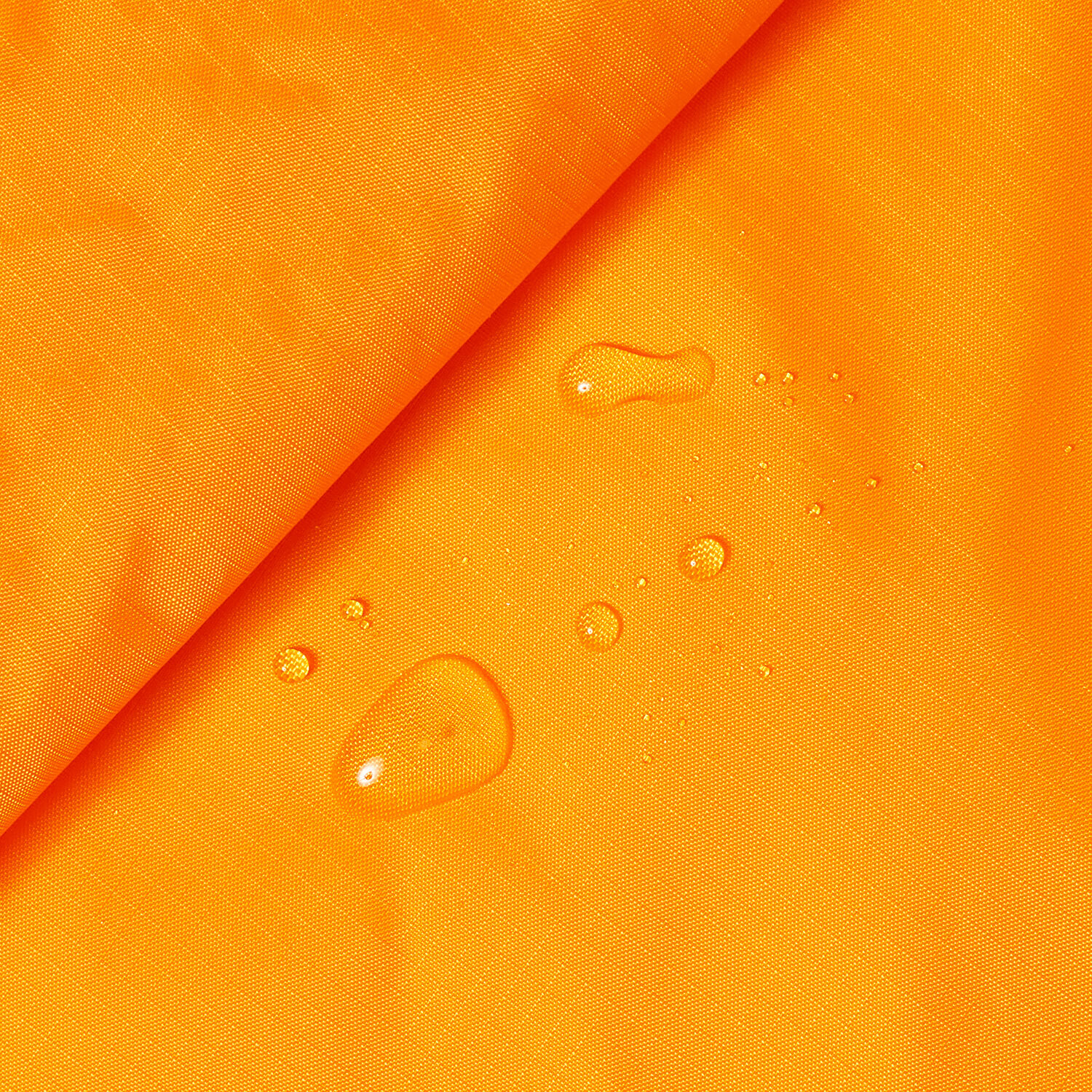

Photos from current listings. Actual item, color, and included accessories may vary.
Ripstop Nylon Fabric Buying Guide
Ripstop nylon is a woven synthetic fabric reinforced with a grid of thicker threads to stop tears from spreading, used for outdoor gear, kites, flags, and lightweight covers. The core trade-off is between fabric weight/denier (durability and abrasion resistance) and packability/breathability, with waterproof coatings and seam sealing determining real weather protection. The decision rule: buy solution-dyed or calendared ripstop in 40D–210D for load-bearing or high-abrasion uses, and 20D–30D uncoated or silicone-treated for ultralight packables.
Key takeaways
- Ripstop reinforcement is a grid of heavier warp/weft threads (often 2x the base yarn denier) woven at intervals of 5–15 mm, which arrests tear propagation but does not add abrasion resistance.
- Denier (D) is the linear mass of the yarn: 20D–30D is ultralight (stuff sacks, kite sails), 40D–70D is midweight (rain flies, pack covers), 210D–420D is heavy-duty (luggage, chair pockets, equipment covers).
- Waterproofing comes from a polyurethane (PU) or silicone (silnylon) coating; PU coatings are measured in mm hydrostatic head (e.g., 1500–3000 mm for light rain), while silicone-impregnated fabrics are lighter but require seam sealing with silicone caulk.
At a glance
- Category
- Fabrics & Thread
- Last updated
- Nov 28, 2026
Current offers
Highlights
- Ripstop reinforcement is a grid of heavier warp/weft threads (often 2x the base yarn denier) woven at intervals of 5–15 mm, which arrests tear propagation but does not add abrasion resistance.
- Denier (D) is the linear mass of the yarn: 20D–30D is ultralight (stuff sacks, kite sails), 40D–70D is midweight (rain flies, pack covers), 210D–420D is heavy-duty (luggage, chair pockets, equipment covers).
- Waterproofing comes from a polyurethane (PU) or silicone (silnylon) coating; PU coatings are measured in mm hydrostatic head (e.g., 1500–3000 mm for light rain), while silicone-impregnated fabrics are lighter but require seam sealing with silicone caulk.
- Solution-dyed (dope-dyed) ripstop holds color and UV resistance far longer than piece-dyed fabric; for outdoor sun exposure, specify solution-dyed or UV-stabilized yarns.
Best use cases
- Best fit: ultralight backpacking and kite building — choose 20D–30D silicone-impregnated ripstop (silnylon) for low weight and packability; skip PU-coated 210D, which is too heavy and stiff.
- Best fit: heavy-duty equipment covers, luggage repair, and outdoor furniture — choose 210D–420D PU-coated ripstop with a 1500 mm+ hydrostatic head; skip 20D fabric, which abrades through on concrete or sharp corners.
- Best fit: flags, banners, and lightweight windbreaks — choose 70D–210D solution-dyed ripstop for UV fade resistance and tear strength; skip uncoated 20D, which whips and frays at the hem.
- Wrong fit: structural or load-bearing applications (hammock bodies, towing) — ripstop nylon stretches and is not rated for static loads; use polyester webbing or 1000D Cordura instead.
Buying tips
- Match denier to abrasion risk: 20D–30D for packed-once gear, 40D–70D for ground-contact or frequent handling, 210D+ for sharp-edge or vehicle use.
- For waterproofness, require a stated hydrostatic head (mm) and a PU or silicone coating; uncoated ripstop is water-resistant at best and will wet out.
- Silicone-coated ripstop cannot be sewn with standard seam tape — use silicone sealant (e.g., SilNet) on stitched seams; PU-coated fabric accepts standard seam tape.
- Width matters: ripstop typically ships 58–60 inches wide; calculate yardage from pattern pieces plus 10–15% for seam allowances and directional layout.
Specs
| Fabric Weight (Denier) | 20D ultralight to 420D heavy-duty |
|---|---|
| Coating Type | PU (tape-sealable) or silicone (sealant) |
| Water Resistance | 1500–3000 mm hydrostatic head (coated) |
| Usable Width | 58–60 in (typical by-the-yard) |
Related searches
What to check before buying
- Confirm your project's seam-sealing method: silicone-coated fabric requires silicone sealant, PU-coated requires seam tape — buy the matching sealant before cutting.
- Measure the widest pattern piece against the fabric's usable width (typically 58–60 in); ripstop does not stretch, so add 1/2 in seam allowance per side.
- Check UV exposure: for permanent outdoor use, specify solution-dyed or UV-stabilized ripstop, not piece-dyed.
- Verify needle and thread compatibility: use a 70/10 or 80/12 sharp needle and bonded polyester thread; nylon thread can cut ripstop under load.
FAQ
Data sources: eBay / Amazon listings and product attribute feeds. Updated Nov 28, 2026.
Some links on this page are affiliate links. If you buy after clicking one, we may earn a commission at no extra cost to you. This does not change which products appear here or their order. Affiliate disclosure.