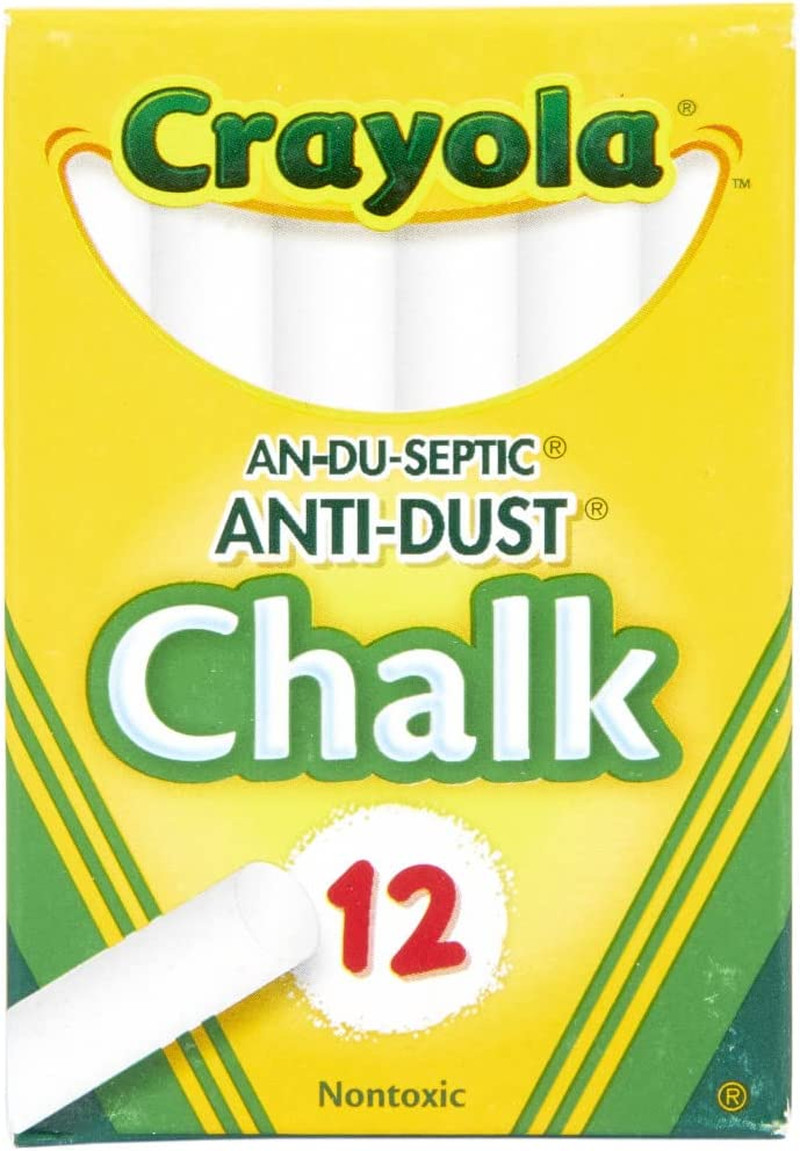

Photos from current listings. Actual item, color, and included accessories may vary.
Crayola Chalkboard Chalk Buying Guide
Crayola Chalkboard Chalk is a dust-light white stick chalk engineered for clean, consistent writing on traditional slate and chalkboard surfaces. The key trade-off is between soft, high-deposit chalk that writes vividly but wears fast, and harder, lower-dust sticks that last longer but feel scratchy. Buy Crayola when you want a low-dust, break-resistant stick with predictable linewidth; skip generic soft chalk if longevity or reduced mess matters.
Key takeaways
- Extruded calcium carbonate core (not natural mined chalk) gives uniform density and fewer gritty inclusions, so lines stay smooth and consistent.
- Cylindrical stick geometry with rounded ends resists snap under normal writing pressure, unlike thin square school chalk that crumbles at the tip.
- Low-dust formulation releases less airborne powder, making it appropriate for classrooms and homes with respiratory sensitivities.
At a glance
- Category
- Stamping, Embossing & Kids' Crafts
- Status
- Listings available
- Last updated
- Nov 28, 2026
Current offers
Highlights
- Extruded calcium carbonate core (not natural mined chalk) gives uniform density and fewer gritty inclusions, so lines stay smooth and consistent.
- Cylindrical stick geometry with rounded ends resists snap under normal writing pressure, unlike thin square school chalk that crumbles at the tip.
- Low-dust formulation releases less airborne powder, making it appropriate for classrooms and homes with respiratory sensitivities.
- Standard stick diameter fits all common chalkboard trays, holders, and chalk liners; no proprietary accessory required.
Best use cases
- Best fit: classroom or home chalkboard where low dust and break resistance matter — choose the 12-stick white pack as a reliable daily driver.
- Best fit: kids' drawing and handwriting practice on slate or chalkboard — the soft deposit is easy to see and erases cleanly with a felt eraser.
- Wrong fit: outdoor sidewalk or pavement art — this is a chalkboard-specific stick; use dedicated jumbo sidewalk chalk for abrasion and size.
- Wrong fit: fine detailed lettering or calligraphy on textured boards — switch to square chalk or chalk markers for crisp edges and controlled line width.
Buying tips
- Match stick diameter to your chalk holder or tray: standard cylindrical sticks fit common trays; oversized sidewalk chalk will not seat in standard holders.
- For dust-sensitive rooms, choose extruded low-dust chalk over natural soft chalk; expect noticeably less airborne powder and easier cleanup.
- White chalk gives the highest contrast on dark green and black boards; reserve colored chalk for accent work since pigments can stain porous slate.
- Buy sealed multi-packs rather than loose sticks: sealed packs preserve low moisture content and reduce breakage from handling and shipping.
Specs
| Chalk Material | Extruded calcium carbonate vs natural mined |
|---|---|
| Dust Level | Low-dust formulation vs standard soft chalk |
| Stick Shape | Cylindrical rounded-end vs square school chalk |
| Board Type | Chalkboard / slate only (not dry-erase) |
Related searches
What to check before buying
- Confirm your board is genuine chalkboard or slate, not a dry-erase whiteboard — chalk will not erase cleanly from melamine dry-erase surfaces.
- Measure your chalk tray or holder opening; standard cylindrical chalk requires roughly 9–11 mm clearance to seat and release properly.
- Check that a felt or foam chalk eraser is on hand; dry cloth or paper towel smears calcium carbonate and leaves haze.
- Verify storage is dry and room-temperature — humid storage softens extruded chalk and increases tip crumbling.
FAQ
Data sources: eBay / Amazon listings and product attribute feeds. Updated Nov 28, 2026.
Some links on this page are affiliate links. If you buy after clicking one, we may earn a commission at no extra cost to you. This does not change which products appear here or their order. Affiliate disclosure.