When shopping for pottery wheels & kilns, the immediate decision is whether to prioritize a larger listed working specification and more detailed controls or a smaller tabletop format with a lower listed price. These two pottery wheels take different approaches, so the right choice depends on the projects you expect to make and the features you will actually use.
Quick verdict
These are not interchangeable choices in emphasis. The 12.6-inch/32cm Ceramic Wheel Machine fits shoppers drawn to its larger listed wheel and load-bearing figure. The VEVOR 11-Inch Aluminum Turntable fits shoppers who prefer a more compact format with touch-screen and foot-pedal controls. Use the comparison below to weigh working figures, control method, and price without treating a raw speed number as a performance verdict.
At a glance
| Decision point | 12.6-Inch Ceramic Wheel Machine | VEVOR 11-Inch Aluminum Turntable |
|---|---|---|
| Listed price | USD 305.42 | USD 196.99 |
| Working size and capacity | 12.6 in / 32 cm; about 15 kg load-bearing capacity | 11 in / 280 mm; 5 kg maximum clay capacity |
| Speed controls | Foot-adjustable 60-300 RPM; hand-adjustable 60-320 RPM | Touch screen and foot pedal; 30-300 RPM |
Where each wheel wins
12.6-Inch Ceramic Wheel Machine: Its stated three-year manufacturer warranty and identified ABS, aluminum alloy, and metal construction give shoppers concrete ownership and material details to weigh. Those details make it a strong fit when the specification sheet matters as much as the basic wheel format.
VEVOR 11-Inch Aluminum Turntable: The stated noise level of ≤55dB and 450W rating provide useful operating figures, while the aluminum turntable and named touch-screen and foot-pedal methods make the setup easy to compare. These are specification matches, not proof that one wheel will produce better results.
Product notes
Pottery Wheel 12.6in/32cm Ceramic Wheel Machine
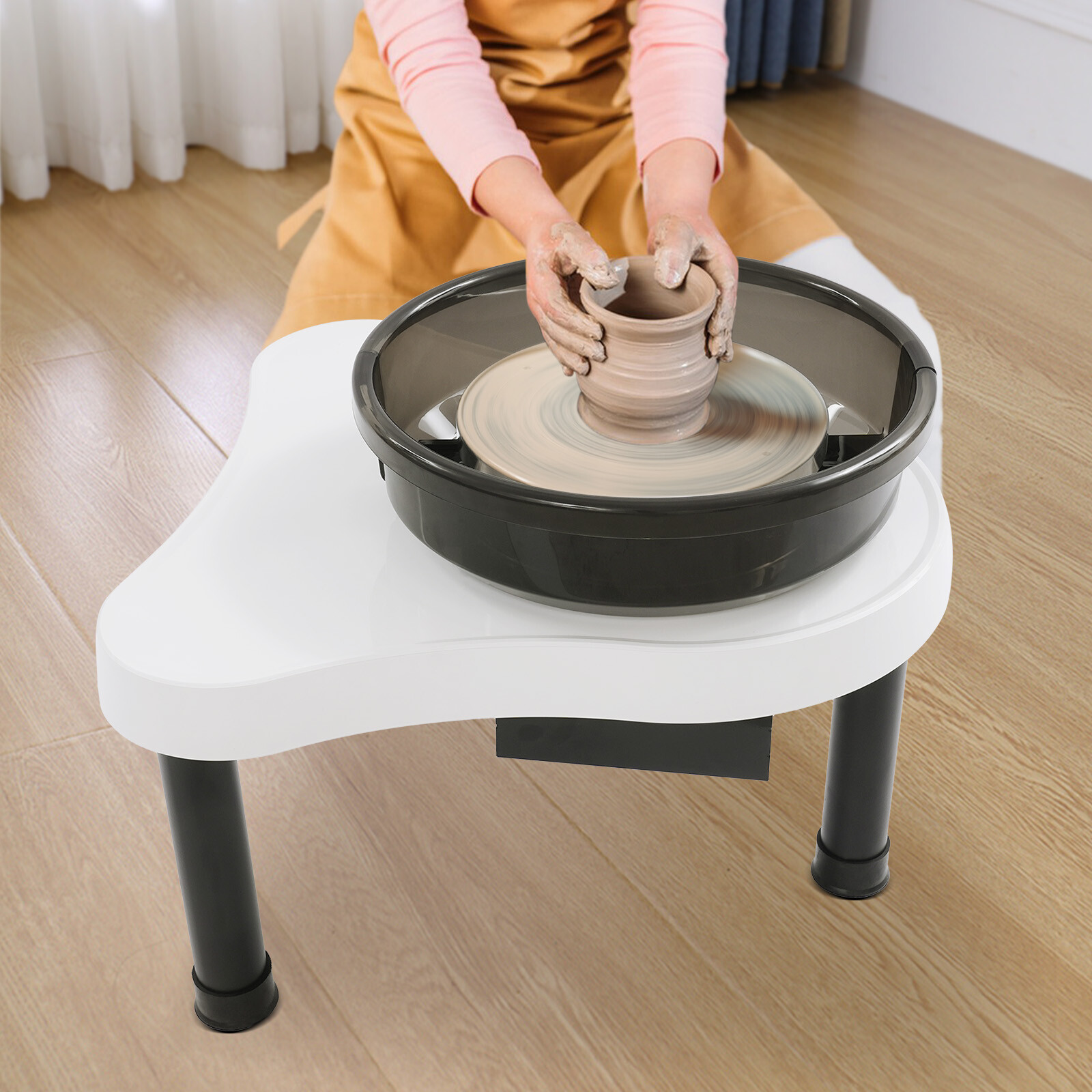
The 12.6-inch Ceramic Wheel Machine suits a home potter who wants a clearly described machine for DIY art and craft work, along with a stated three-year manufacturer warranty. Its ABS, aluminum alloy, and metal construction is also identified, giving shoppers a concrete material description to compare. The limitation is that its speed information is divided into separate foot-adjustable and hand-adjustable ranges rather than presented as one control range; that may take more interpretation when planning how you want to operate it. The product is described for both beginners and experienced potters, which keeps its intended home setting broad. For shoppers who prioritize a stated warranty and detailed construction description over a simpler comparison, this is the more fitting pick.
VEVOR Pottery Wheel for Adults, 11-Inch Aluminum Turntable
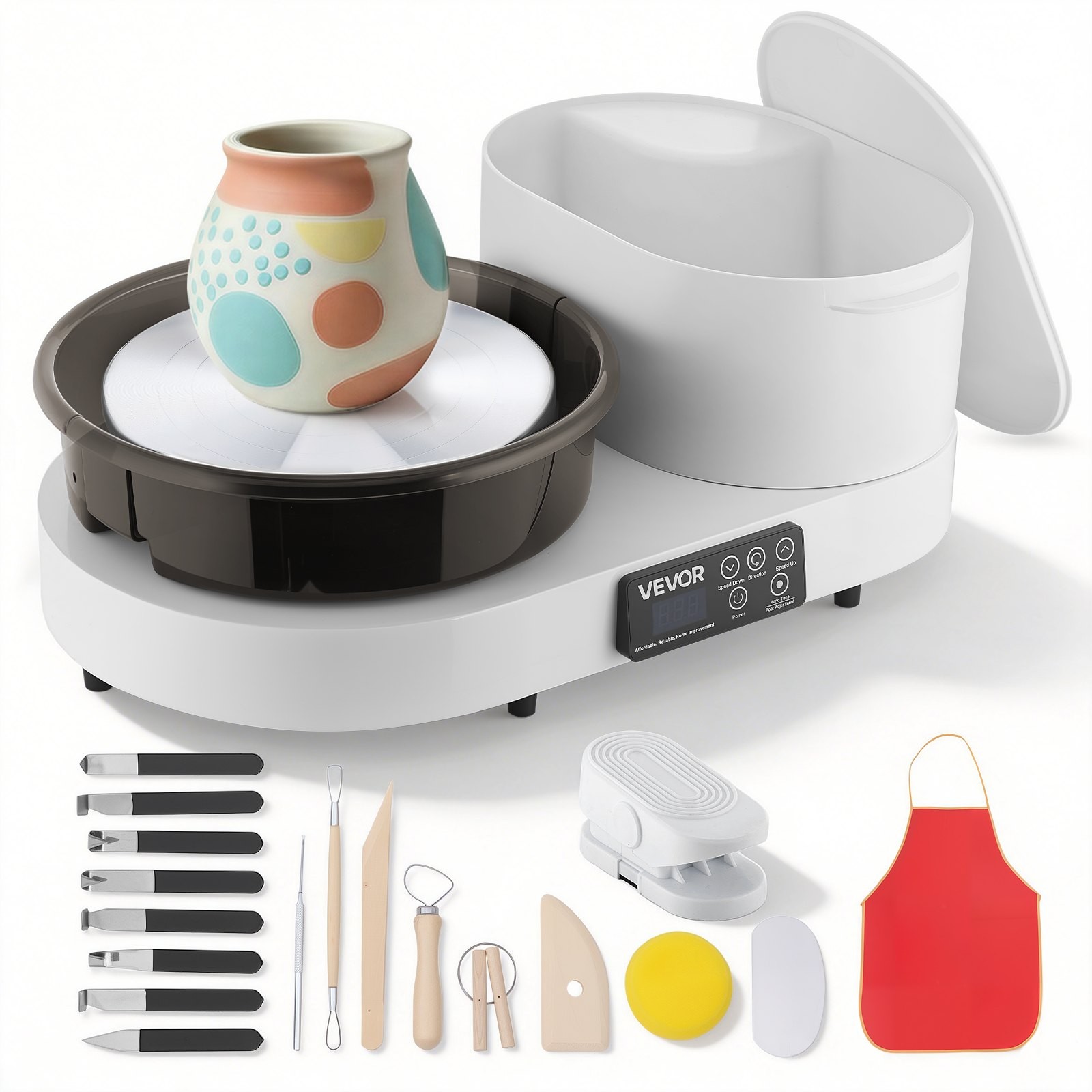
The VEVOR Pottery Wheel for Adults is a clear fit when an aluminum turntable, 450W rating, and a stated noise level of ≤55dB are useful tie-breakers. Its touch-screen and foot-pedal controls give the setup two named input methods, while the tabletop format keeps the product's intended arrangement easy to understand. The concrete limitation is the 5kg maximum clay capacity alongside the 11-inch turntable: shoppers planning work around the larger figures in the comparison may find those listed limits decisive. The 30-300 RPM range is clearly stated, but the number alone does not establish which wheel is better for a particular technique. Choose VEVOR when its compact format and control method match your planned projects.
Final choice by use case
- Choose the 12.6-inch Ceramic Wheel Machine for a home-based DIY art and craft setup where the stated 15kg load-bearing figure, separate hand and foot adjustment, or three-year manufacturer warranty matters.
- Choose the VEVOR 11-Inch Aluminum Turntable when touch-screen and foot-pedal control, the aluminum turntable, and the 5kg maximum clay capacity fit the work you plan to do.
If both profiles suit your projects, the listed price is the cleanest tie-breaker: the VEVOR is USD 108.43 lower than the other wheel. That is a price difference, not a performance claim; let your working requirements decide whether the additional specification detail is worth it.