When shopping for pottery wheels & kilns, the hard choice is often practical: do you want a machine whose controls and physical format suit your setup, or one whose listed specifications justify a higher price? These two ceramic wheel machines take different routes to that decision. The right pick depends on the particular control arrangement, workspace requirements, and design details you will actually use-not on a broad claim that one is universally better.
Quick verdict
Choose the 14-inch Ceramic Wheel Machine if reversible rotation, height adjustment, and the lower listed price are your priorities. Choose the 12.6-inch Ceramic Wheel Machine if hand-adjustable speed control, a stated load-bearing capacity, or the warranty term matters more. The absolute price spread is $169.22, so this is not a close price comparison. Both products list a foot-adjustable range of 60-300 RPM, making that shared figure a neutral starting point rather than a deciding advantage.
Compact comparison
| Comparison point | 14-inch Ceramic Wheel Machine | 12.6-inch Ceramic Wheel Machine |
|---|---|---|
| Listed price | USD 136.20 | USD 305.42 |
| Turntable specification | 14 inches / 35 cm, aluminum alloy | 12.6 inches / 32 cm |
| Speed controls | 60-300 RPM; LCD and foot pedal | Foot: 60-300 RPM; hand: 60-320 RPM |
Where each product wins
- The reversible-rotation wheel: It wins on control over direction and working height. Its clockwise/counterclockwise setting and 0-6-inch lift-table adjustment are concrete reasons for shoppers whose setup changes between users or tasks. The listed 450W motor belongs in the specification column, not in an unsupported performance ranking.
- The hand-adjustable wheel: It wins for shoppers who specifically want the 3-year manufacturer warranty. That detail gives this choice a clearer fit when warranty length is part of the buying brief. The hand-control specification also separates its setup from the shared foot-adjustable range shown above.
Product notes
Pottery Wheel for DIY Clay Art
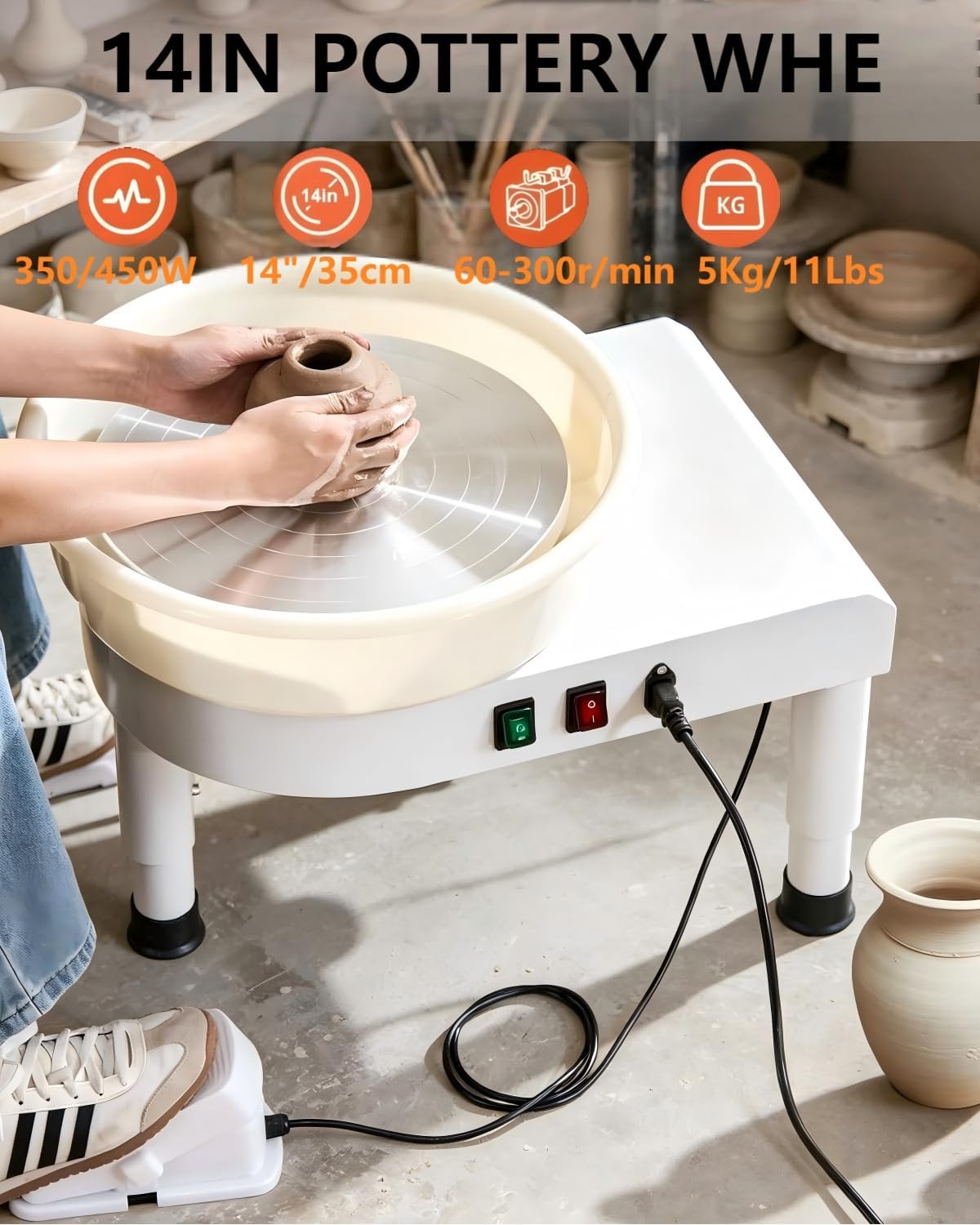
The Pottery Wheel Ceramic Wheel Machine with Reversible Rotation is a practical match for a buyer who wants motor detail and a defined machine footprint. Its 450W brushless motor is listed at about 60dB, giving you a concrete specification to weigh if sound level matters in your workspace. The removable ABS basin is another reason to choose it: it prevents splashing and cleans easily after a pottery session. The limitation is physical; the machine is listed at 41.4 pounds and 24.02 x 18.9 x 17.13 inches, so those dimensions need to work with the table or area you plan to use. This wheel makes the most sense when motor, cleanup, and placement details matter.
Pottery Wheel for Clay Forming DIY Art Craft
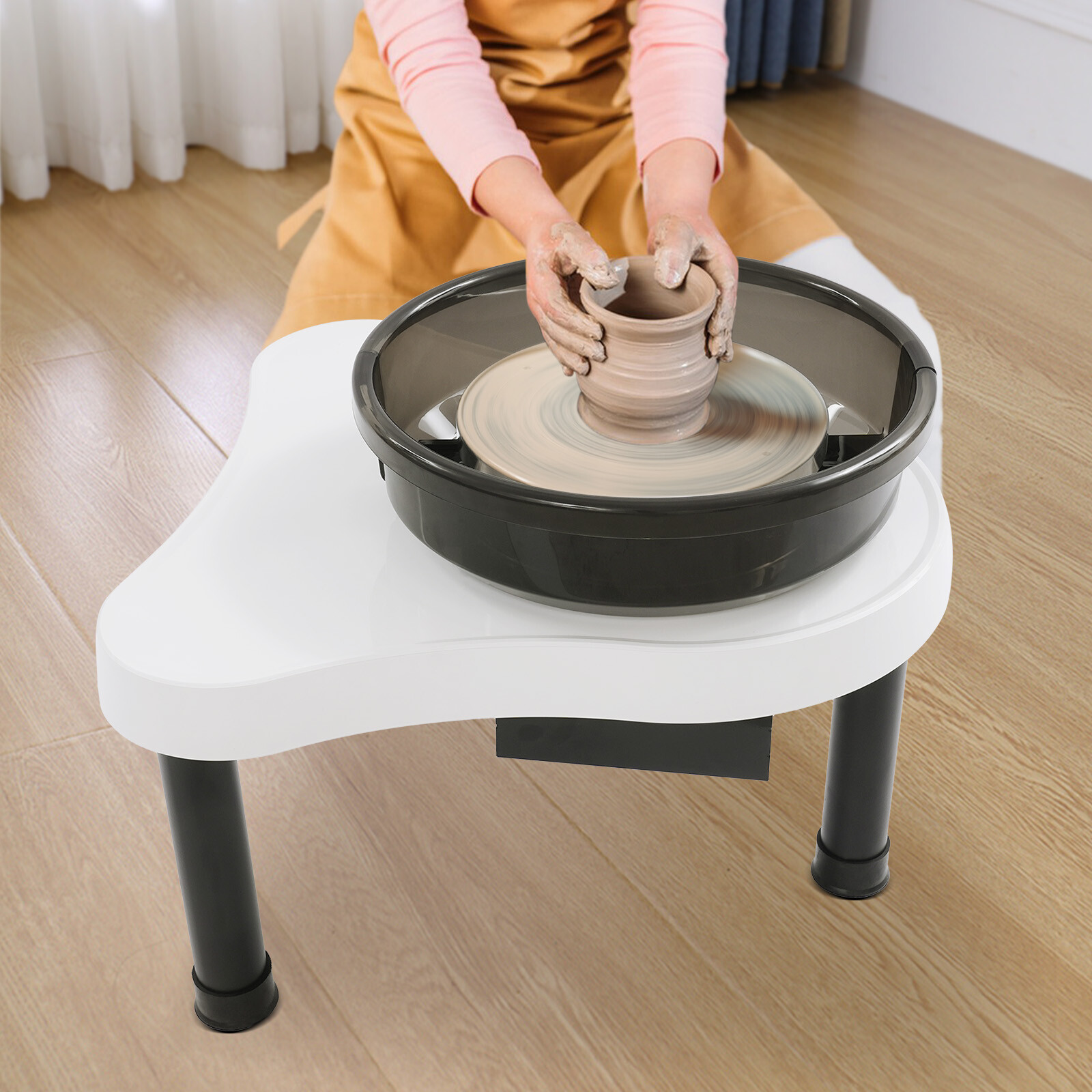
The Ceramic Wheel Machine with Hand Speed Adjustment makes its clearest case through its specified materials and warranty term. ABS, aluminum alloy, and metal are the listed materials, and the details include a 3-year manufacturer warranty. Those points give you concrete reasons to choose it when construction specification or warranty length belongs high on your shortlist. The limitation is price: at USD 305.42, it is $169.22 above the reversible-rotation wheel. It also lists a load-bearing capacity of about 15kg/33.07lb, but that figure should be treated as a planning specification, not a performance guarantee. The higher price makes sense only if the materials and warranty details are part of your brief.
Final choice by use case
- For reversible direction and adjustable working height: choose the Pottery Wheel Ceramic Wheel Machine with Reversible Rotation. The clockwise/counterclockwise setting and 0-6-inch lift-table adjustment directly match that use case, while its USD 136.20 price is the lower listed price.
- For construction and capacity specifications: choose the Ceramic Wheel Machine with Hand Speed Adjustment. Its ABS, aluminum alloy, and metal materials, plus about 15kg/33.07lb load-bearing capacity, are the concrete reasons to accept the higher price.
- For a simple tie-breaker: let the control or design detail you will use most decide. That keeps the choice anchored to your pottery setup instead of treating the shared speed range as an advantage for either machine.