The key decision in pottery wheels & kilns is whether you need to shape wet clay or heat a project for firing, casting, or melting. A wheel and an electric kiln handle different stages of craft work, so the right choice depends more on your project than on the wattage alone.
Quick verdict
Choose the 350W Pottery Wheel Table Top Forming Machine for clay shaping, hands-free operation, and switchable wheel direction. Choose the Tabletop Electric Kiln 1500W when your work calls for ceramic firing, metal clay, jewelry crafting, or high-temperature melting. They are complementary tools rather than direct substitutes.
At a glance
| Product | Listed price | Main use | Notable attribute |
|---|---|---|---|
| 350W tabletop pottery wheel | USD 151.59 | Shaping clay | Removable foot pedal; clockwise or counterclockwise rotation |
| Tabletop Electric Kiln 1500W | USD 229.49 | Ceramic firing, metal clay, jewelry crafting | PID digital control; maximum 2192°F/1200°C |
Where each product wins
The pottery wheel wins for clay forming
The 350W wheel is the clear fit for turning clay into shaped pieces. Its removable foot pedal allows hands-free operation, while the washable design and reversible rotation add practical control during forming. The product is also described for school and clay-craft use, making its role easy to understand: it is a tabletop machine for working clay before any firing stage.
The electric kiln wins for heat-based projects
The 1500W tabletop kiln serves a different purpose. Its PID digital control system, 2192°F/1200°C maximum temperature, and stated uses for ceramic firing, metal clay work, and jewelry crafting make it the heat-focused choice. It is also presented for wax casting and metal melting, giving it a broader high-temperature project range than a forming wheel.
Product notes
350W Pottery Wheel Table Top Forming Machine
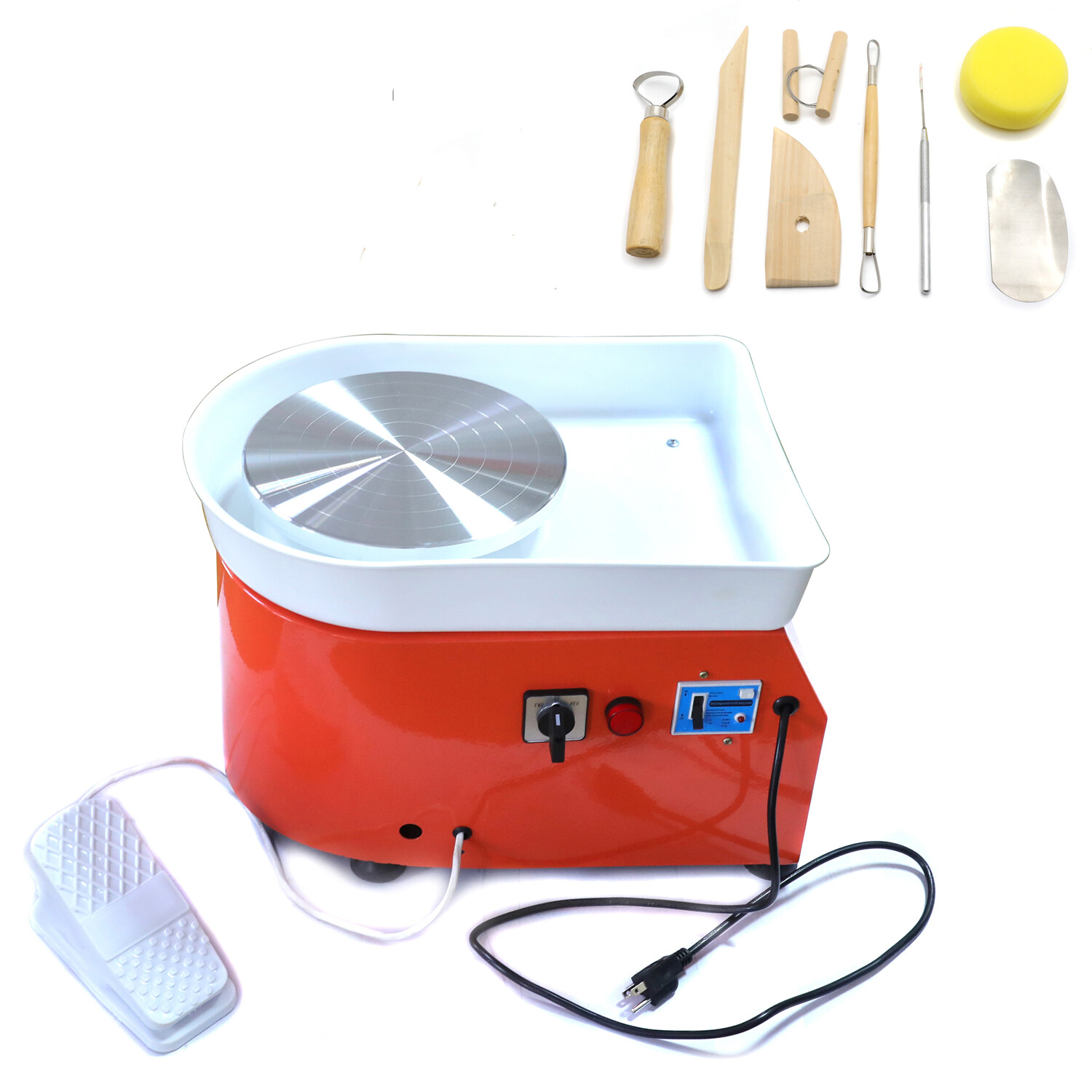
The 350W Pottery Wheel Table Top Forming Machine is the practical pick when your priority is shaping clay. A removable foot pedal supports hands-free work, and the wheel can rotate clockwise or counterclockwise. Its washable construction, smooth rotation, and low-noise operation are useful touches for a tabletop clay station. The concrete limitation is its scope: it is designed for clay forming rather than ceramic firing, metal melting, or jewelry casting. The 350W rating identifies the machine's listed power, but it does not by itself establish a particular shaping advantage. Choose it for the forming stage, especially when a foot-pedal workflow matters; do not expect it to replace a kiln in a ceramics setup.
Tabletop Electric Kiln 1500W
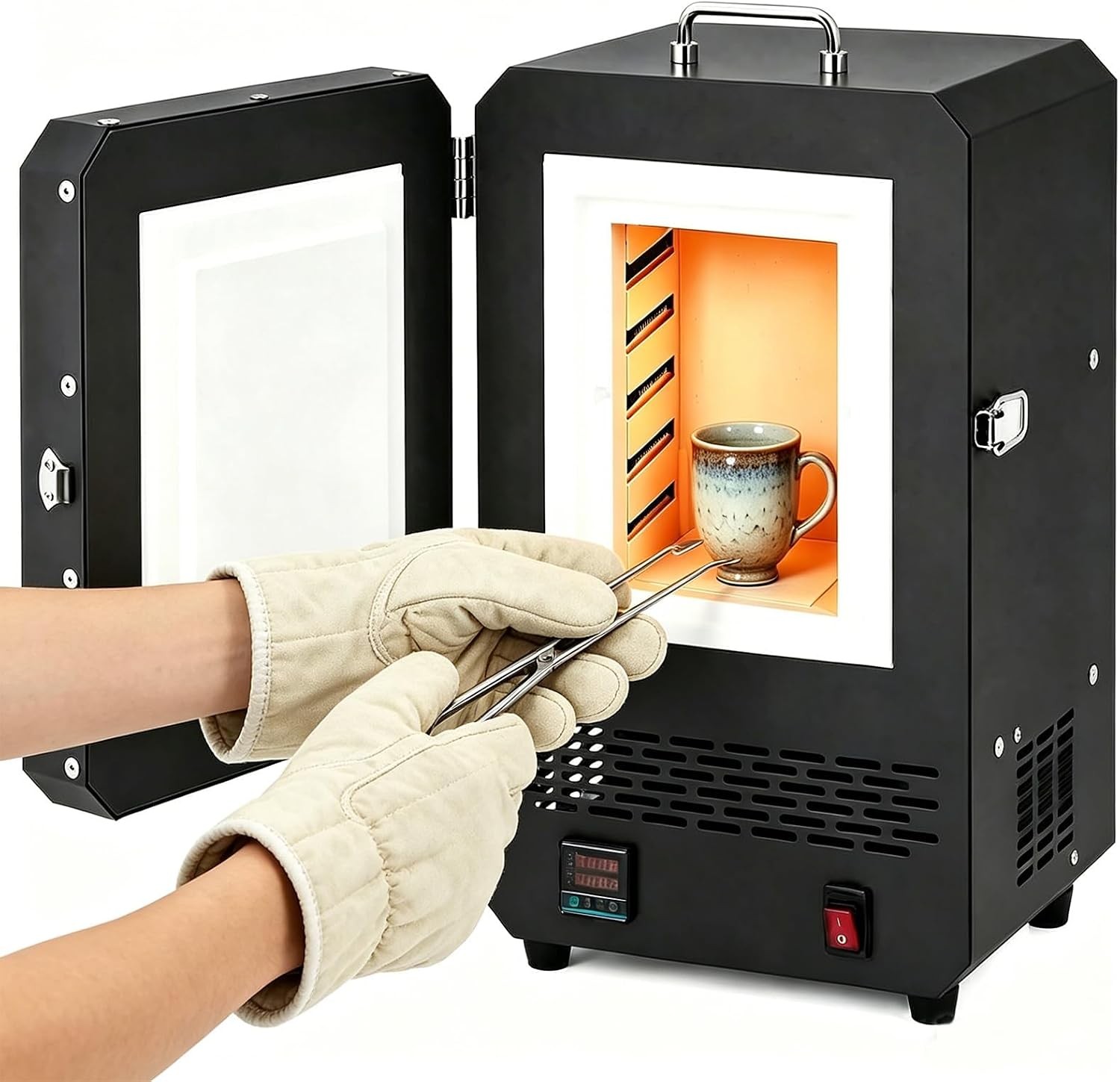
The Tabletop Electric Kiln 1500W makes sense when the project needs controlled heat instead of clay shaping. Its PID digital control system and stated maximum of 2192°F/1200°C suit ceramic firing, metal clay work, and jewelry crafting. The product also gives a 34-38-minute time to reach maximum temperature from room temperature, plus a 48.5-pound weight and dimensions of 17.91 x 16.54 x 24.8 inches. Those specifications describe a substantial piece of tabletop equipment. Its limitation is function: it is a kiln and furnace, not a pottery wheel, so it does not provide the foot-pedal forming process needed to shape wet clay. Select it for firing, casting, or melting tasks.
Final choice by use case
- Shaping clay: Choose the 350W Pottery Wheel Table Top Forming Machine for its removable foot pedal, reversible rotation, and clay-focused role.
- Ceramic firing: Choose the Tabletop Electric Kiln 1500W for its PID control and stated 2192°F/1200°C maximum.
- Jewelry or metal clay work: The Tabletop Electric Kiln 1500W is the relevant choice because those uses are specifically included alongside ceramic firing.
- Building a complete ceramics workflow: The two tools address separate stages: the wheel forms clay, while the kiln handles firing and other heat-based work.