Choosing between leather hides & panels starts with a practical decision: do you need a whole hide for upholstery, or a defined sheet for tooling and smaller craft work? The black cowhide and Full Grain Buff Leather Sheet are only $2 apart, but their formats, finishes, and stated uses point in different directions. The black hide is the clearer upholstery choice; the buff sheet is easier to plan around for compact craft projects.
Quick verdict
Choose SALE! WHOLE BLACK LEATHER HIDE AUTOMOTIVE NAPPA PEBBLE UPHOLSTERY SEAT COW FULL when a black, pebble-embossed surface and extra-soft cowhide suit the job. Choose Full Grain Buff Leather Sheet-Premium Craft Leather for Tooling, Upholstery when you want a brown full-grain sheet with a defined 12 x 8-inch format and 2 mm thickness. The black hide is USD 14.99; the buff sheet is USD 16.99.
At a glance
| Product | Listed price | Format | Stated project focus |
|---|---|---|---|
| Black Cowhide Automotive Nappa Pebble Hide | USD 14.99 | Whole hide | Automotive and furniture upholstery |
| Full Grain Buff Leather Sheet | USD 16.99 | Leather sheet | Tooling and upholstery |
Where each product wins
- Black cowhide: Best aligned with automotive or furniture upholstery where a black pebble surface is part of the look. Its extra-soft cowhide description also makes it the more direct match for upholstery-focused buyers.
- Full Grain Buff Leather Sheet: Better suited to tooling, wallets, belts, and leather panels craft where a measured sheet is easier to plan around. The brown buffalo leather and pull-up oil-tanned finish give it a clearly different starting point.
Product notes
Black Cowhide Automotive Nappa Pebble Leather Hide
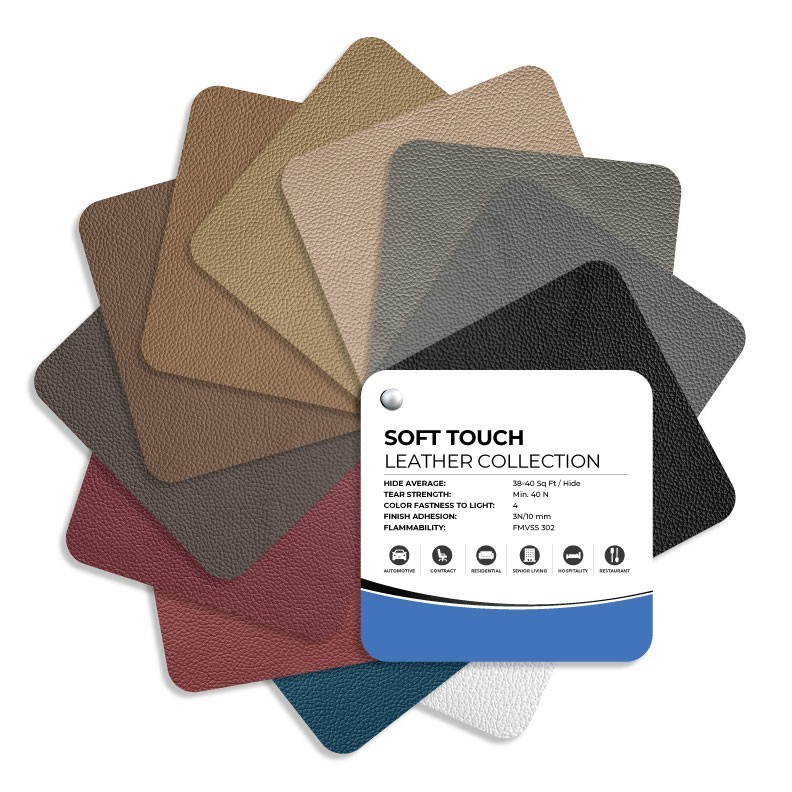
The black hide's clearest reason to choose it is the combination of a coal-black finish, pebble embossing, and extra-soft cowhide. Those details point toward upholstery projects where surface appearance and a softer hand matter, especially with the automotive and furniture focus. The top-grain leather construction keeps the material description specific without changing the main use case. Its 0.9/1.1 mm thickness is another useful planning point for patterns built around a thinner panel. The limitation is fit: that thickness may not suit a design calling for 2 mm leather, and the whole-hide format is less directly suited to someone who wants a measured craft sheet for wallets, belts, or tooling. Choose it when the black embossed surface is central; pass when the project is organized around a small, fixed-size panel.
Full Grain Buff Leather Sheet
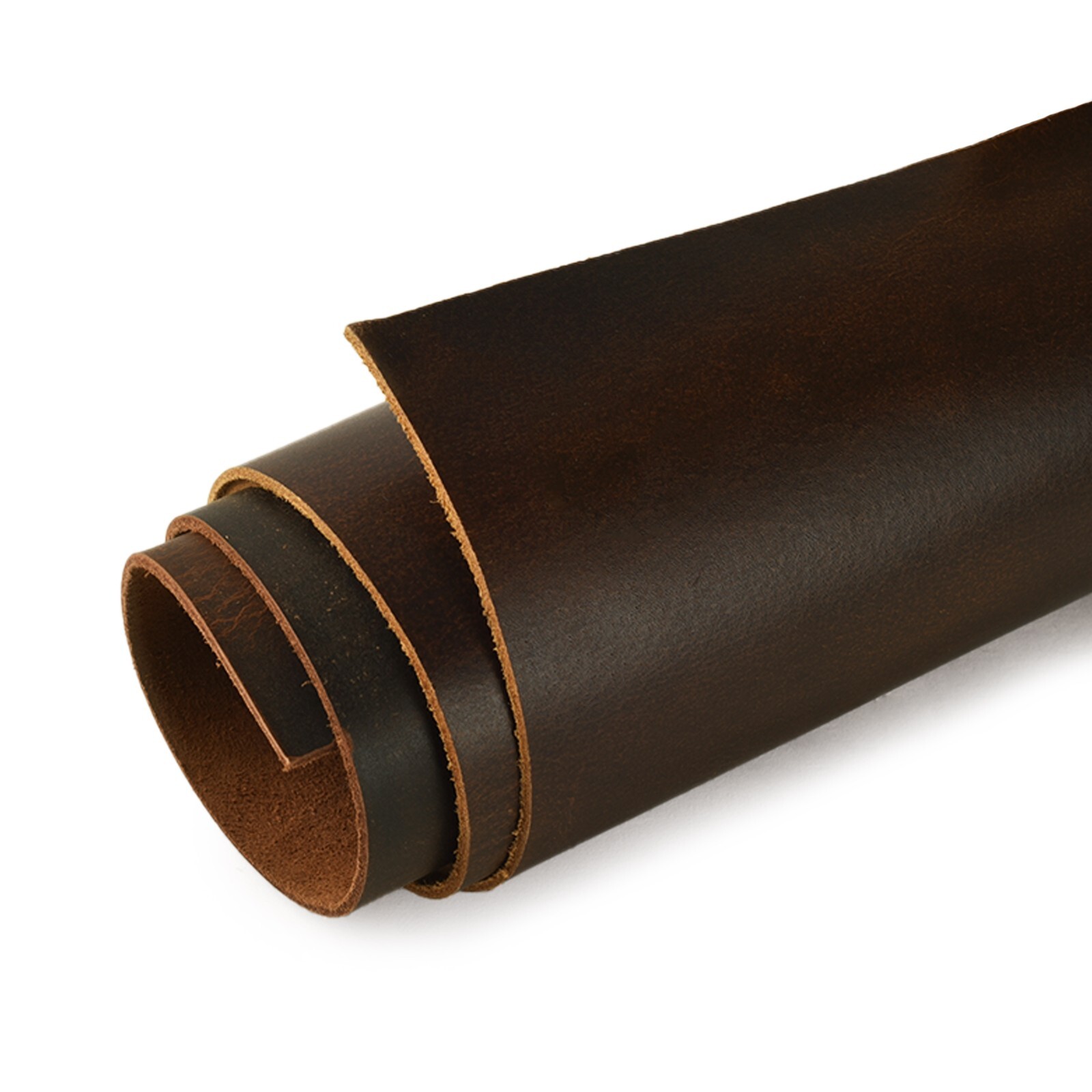
Full Grain Buff Leather Sheet makes the clearest case for measured craft work. Its 12 x 8-inch sheet gives wallets, belts, and other leather panels a defined starting size, while the 2 mm thickness and firm-yet-flexible texture establish useful planning parameters. The brown buffalo leather has a pull-up oil-tanned finish, and tooling and upholstery are named uses, so the sheet can serve more than one project type. The trade-off is format and color: a 12 x 8-inch sheet is less aligned with a project planned around a whole hide, while brown will not deliver the black surface chosen in the other hide. Pick it for compact patterns and tooling; choose the black hide when the project depends on black pebble embossing.
Final choice by use case
- Automotive or furniture upholstery: Choose the black cowhide, particularly when its black pebble finish and softer cowhide feel match the design.
- Tooling, wallets, belts, or measured panels: Choose Full Grain Buff Leather Sheet for its 12 x 8-inch size, 2 mm thickness, and stated tooling focus.
- If both formats could work: The black hide is the lower-priced choice, with a USD 2 difference between the two options.