Building Blocks Knitting Book vs 1940s Sweater Pattern: Which Fits Your Project?
Building Blocks offers technique practice that ends in a throw, while the Vtg 1940s Men's & Boy's Textured Seed Stitch Sweater Knitting Pattern targets one textured pullover. Compare project fit, format, and price.
Last updated Oct 7, 2026
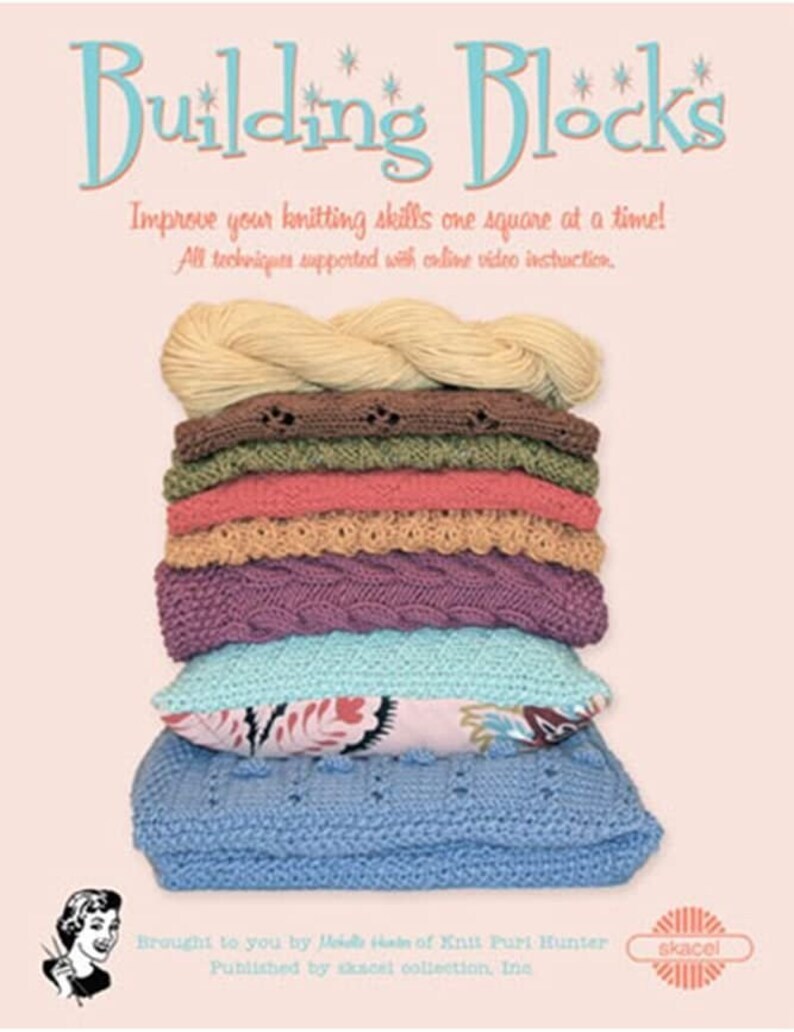
Building Blocks Knitting Book by Michelle Hunter- Knitting Pattern Book
$19.99Listed at review time
Affiliate disclosure: We may earn a commission if you buy through links on this page, at no extra cost to you. Confirm live price, stock, and return terms on the seller page. Affiliate disclosure.
Choosing among knitting & crochet patterns often comes down to a fork: do you want a book that builds several techniques into a finished throw, or a focused vintage sweater pattern that heads toward one garment? These two choices answer those needs differently. The useful decision is project direction, not a blanket judgment: Building Blocks is a learning-led book, while the 1940s seed-stitch design is a defined pullover.
Quick verdict
Choose Building Blocks Knitting Book by Michelle Hunter if you want to practice cables, lace, and seaming while working toward a throw. Choose Vtg 1940s Men's & Boy's Textured Seed Stitch Sweater Knitting Pattern if your priority is a men's or boys' textured pullover with a late-1940s character. The listed prices are $19.99 and $6.00, a $13.99 spread, so the project fit matters more than treating them as interchangeable patterns.
At a glance
| Building Blocks Knitting Book | Vtg 1940s Sweater Pattern | |
|---|---|---|
| Listed price | USD 19.99 | USD 6.00 |
| Listed format | Knitting pattern book | Sweater knitting pattern |
| Notable listed detail | Size 8 1/2 x 11 | Type: Sweater |
Where each wins
- Building Blocks wins for skill-building variety. It brings cables, lace, and block seaming into one learning path, making it the more natural fit for someone who wants technique practice alongside a home project.
- The Vtg 1940s pattern wins for a defined garment goal. Its title and project details point directly to a textured seed-stitch sweater, so the destination is clear from the start.
Product notes
Building Blocks Knitting Book by Michelle Hunter
The appeal is a guided route through cables, lace, and other knitting techniques, ending with seaming squares into a throw. That gives beginning knitters or portable-project fans a concrete reason to choose it: the learning is built into a project rather than presented as isolated exercises. The listed 8 1/2 x 11 book format is also a useful fit for shoppers specifically seeking a physical pattern book, and the wool weight is worsted. The trade-off is focus. The finished direction centers on a throw assembled from blocks, so someone searching for one defined sweater pattern will find a less direct match. At $19.99, it is the higher-priced choice here, with a $13.99 gap over the vintage pattern.
Vtg 1940s Men's & Boy's Textured Seed Stitch Sweater Knitting Pattern
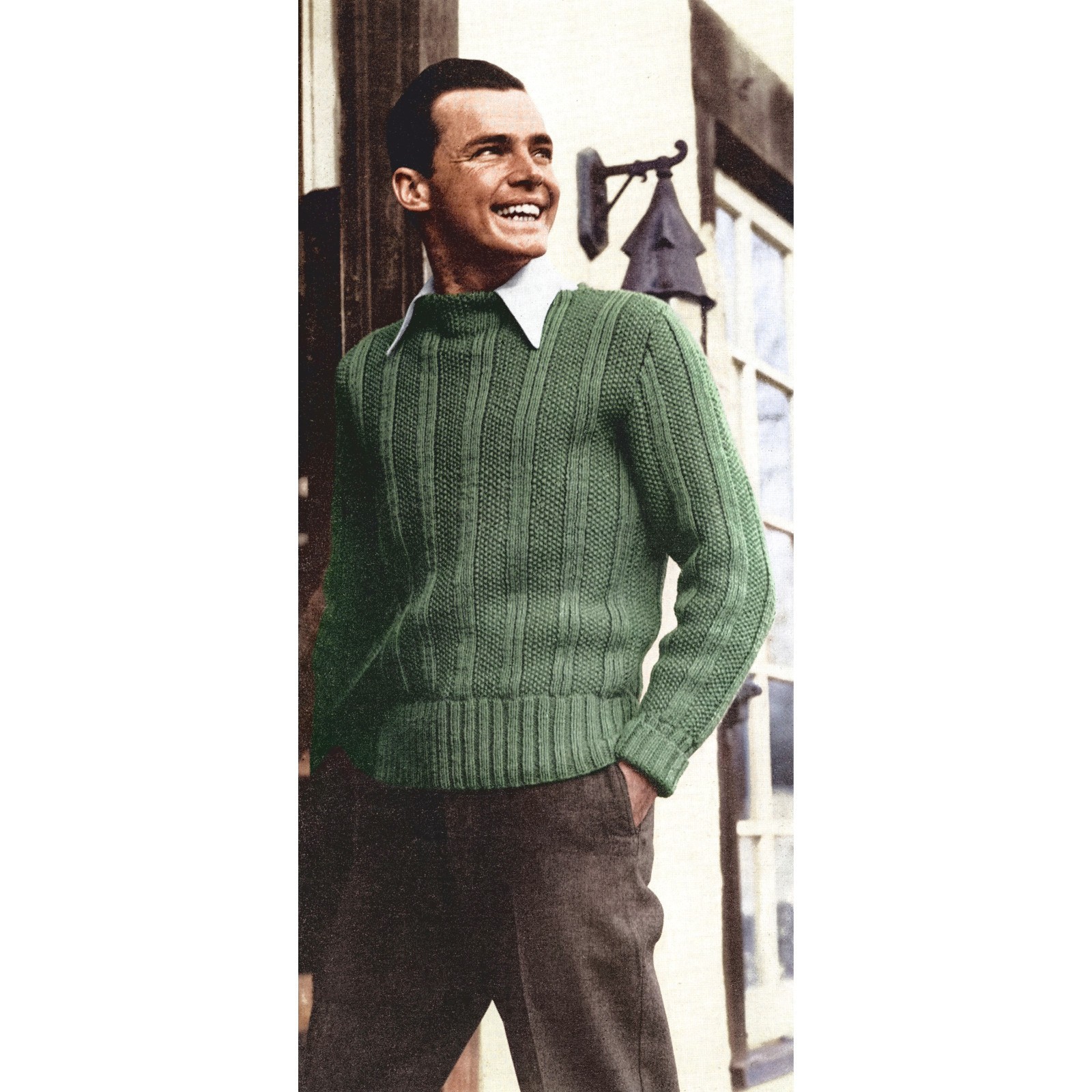
This pattern makes sense when the desired outcome is a textured pullover rather than a sampler-style book. It centers on a 1949 design with seed-stitch panels, ribbed trim, long sleeves, and a repeating knit-purl texture, giving the project a clearly defined garment identity. Directions for working flat in pieces with straight needles, along with an included knitting guide, add to that focused route. Its limitation is scope: the pattern is centered on one men's and boys' sweater design, not a collection of techniques or a throw-building format. The vintage 1940s framing will appeal to shoppers seeking that particular look, but it is less aligned with someone who wants broad skill exploration. At $6.00, it has the lower listed price, while its narrower garment focus remains the key distinction.
Final choice by use case
- Choose Building Blocks Knitting Book by Michelle Hunter for learning cables and lace, working on a portable project, or making a throw from joined squares.
- Choose Vtg 1940s Men's & Boy's Textured Seed Stitch Sweater Knitting Pattern for a focused men's or boys' pullover, seed-stitch texture, ribbed trim, and a 1940s-inspired project.
The simplest decision is breadth versus specificity. Building Blocks combines several techniques with a finished home project; the vintage pattern gives you a more direct route to one textured sweater. Match the pattern to the project you actually want to complete.