Choosing ceramic glazes & colors is a workflow decision: do you want pigment to mix into ceramic materials, or a defined underglaze paint set for decorating clay and bisque? The first approach suits color formulation, while the second is aimed at more direct application. A $13.99 listed-price spread separates the two, but the format and intended use matter more than the gap.
Quick verdict
Choose Ceramic Stains when you want color pigments for making or mixing ceramic glaze, underglaze, clay, or slip. Choose Set of 10 Ceramic Underglaze Paint Colors when you want a paint-focused collection for decorating different clay stages, with printed instructions and a bisque-painting book included. In short, the first is mixing-led; the second is painting-led.
Compact comparison
| Comparison point | Ceramic Stains | 10-Color Underglaze Set |
|---|---|---|
| Listed price | USD 65.99 | USD 79.98 |
| Color and pack presentation | 12 colors; 60g each | 10 colors; 2-ounce jars |
| Format | Powder pigments | Underglaze paint |
| Condition | New | New |
Where each product wins
Ceramic Stains
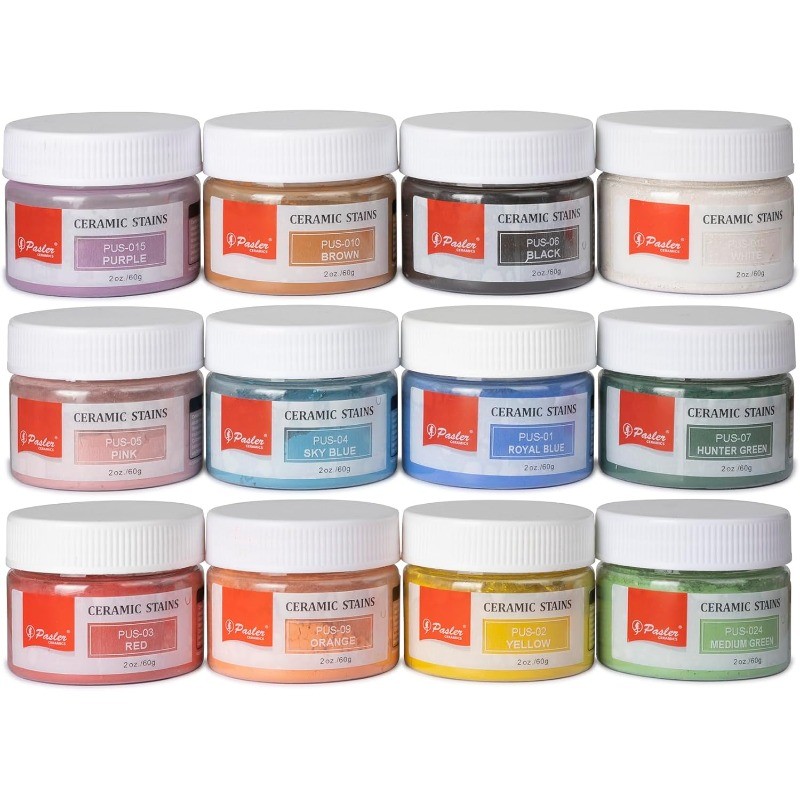
Ceramic Stains wins for a mixing-focused workflow. Its stated role covers making underglaze and pottery glaze, while the color can also be added to clay, clay slip, glazes, and underglazes. That range makes it the more natural direction when the goal is to formulate or adjust ceramic color instead of concentrating only on surface painting.
Set of 10 Ceramic Underglaze Paint Colors

The 10-color set wins for direct decorating and a more guided presentation. Its uses include wet clay, greenware, and cone 04 bisque, with complete coverage or design both identified as possible approaches. Instructions printed on the labels and the included How to Paint Bisque book add practical direction for someone who wants a defined painting setup.
Product notes
Ceramic Stains
The strongest reason to choose Ceramic Stains is its water-based color-pigment approach. It is aimed at making underglaze and pottery glaze, with color also intended for clay and slip. That gives a mixing-led project a clear direction without restricting the material to surface decoration. The limitation is preparation: pigments need to be incorporated into a medium, so the workflow is less direct than opening a jar of paint. Choose Ceramic Stains when building or adjusting ceramic color is central; the underglaze paint set is a closer fit for guided surface application.
Ceramic Underglaze Paint Colors
The strongest case for the underglaze paint set is its ready-defined painting format, supported by instructions printed on the labels and a How to Paint Bisque book. The description also identifies complete coverage and design work, giving the set two clearly stated decorating approaches. AP Certified Non-Toxic is another listed attribute. Its concrete limitation concerns the upper end of its firing range: it fires from cone 04 to cone 6, but results vary at cone 6. Choose it when direct painting and guidance matter; choose Ceramic Stains when mixing pigments into ceramic materials is the priority.
Final choice by use case
- For mixing-led color work: choose Ceramic Stains, whose powder-pigment format is positioned for making underglaze and pottery glaze.
- For direct decoration: choose Set of 10 Ceramic Underglaze Paint Colors, which is presented as an underglaze paint collection for multiple clay stages.
- For a guided painting setup: choose Set of 10 Ceramic Underglaze Paint Colors because the labels include instructions and the set includes a How to Paint Bisque book.
- For the lower listed price: choose Ceramic Stains at USD 65.99 rather than the underglaze set at USD 79.98.
The clearest decision is therefore format-first: Ceramic Stains for mixing and color formulation, or the 10-color underglaze set for direct painting with added guidance.