Choosing between pottery wheels & kilns starts with one important question: are you shaping clay, or firing pieces that are already made? The Paragon Electric Kiln A88B and VEVOR Pottery Wheel serve different stages of pottery, so the right choice depends less on a head-to-head feature score and more on what you want to do first.
Quick verdict
- Choose the Paragon A88B when electric kiln firing and studio use are the priority. Its electric toploader format and Kiln Sitter Temp 2300 wording point to a firing-focused setup.
- Choose the VEVOR wheel when you want hands-on throwing in a rental, small studio, or other limited space. Its tabletop format, detachable storage box, and water basin suit a compact pottery workspace.
- For a complete workflow, these are complementary tools rather than substitutes: one shapes clay and the other fires ceramics.
At a glance
| Product | Listed price | Main role | Notable details |
|---|---|---|---|
| Paragon A88B electric kiln | USD 720.00 | Electric pottery and ceramics firing | Toploader, Kiln Sitter Temp 2300, suitable for studio use, used condition |
| VEVOR 11-inch pottery wheel | USD 143.90 | Tabletop clay shaping | Aluminum turntable, 450W, max clay capacity of 11 lb, noise level ≤55dB |
Where each product wins
Paragon A88B: the firing-focused choice
The Paragon is the clearer fit for someone whose immediate project is turning formed clay into finished ceramics. It is identified as an electric toploader suitable for studio use, and its title includes "Kiln Sitter Temp 2300." That makes its purpose distinct from a wheel: it belongs in the firing stage, not the throwing stage. The trade-off is substantial commitment at USD 720.00, along with a used condition. Choose it when kiln capability is the missing part of your pottery setup, not when you need a surface for shaping clay.
VEVOR: the compact shaping choice
The VEVOR is the more direct match for beginners or hobbyists who want to work clay at a table. The description emphasizes a small desktop design for rental homes, studios, and limited rooms, with easy storage when not in use. Its 11-inch aluminum turntable, 450W power rating, and stated maximum clay capacity of 11 lb give you concrete dimensions and operating figures to consider. The limitation is equally clear: it is a pottery wheel, so it does not replace a kiln for firing finished pieces.
Product notes
Paragon Electric Kiln A88B
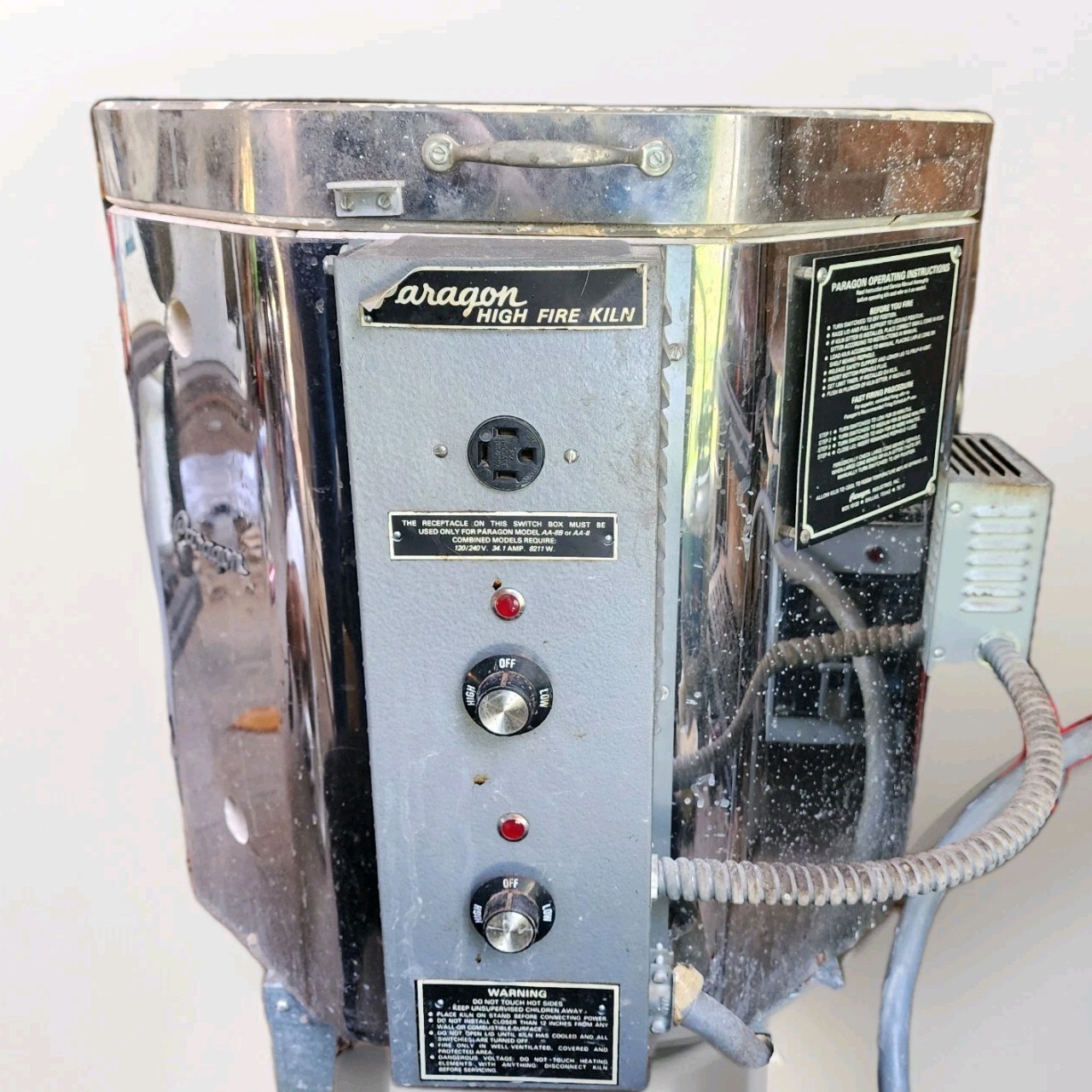
The Paragon Electric Kiln A88B makes sense when electric firing is the specific job you need to accomplish. Its top-loading kiln type and studio suitability distinguish it from a tabletop wheel, while the title's "Kiln Sitter Temp 2300" phrase identifies the product as a ceramics-firing appliance rather than a forming tool. It is also identified as made in the United States. The main limitation is the used condition, which matters when comparing it with a new piece of equipment. At USD 720.00, it also requires a larger purchase commitment than the VEVOR. Pick this kiln for a pottery workflow centered on firing; do not choose it if your immediate need is shaping clay on a tabletop.
VEVOR Pottery Wheel for Adults
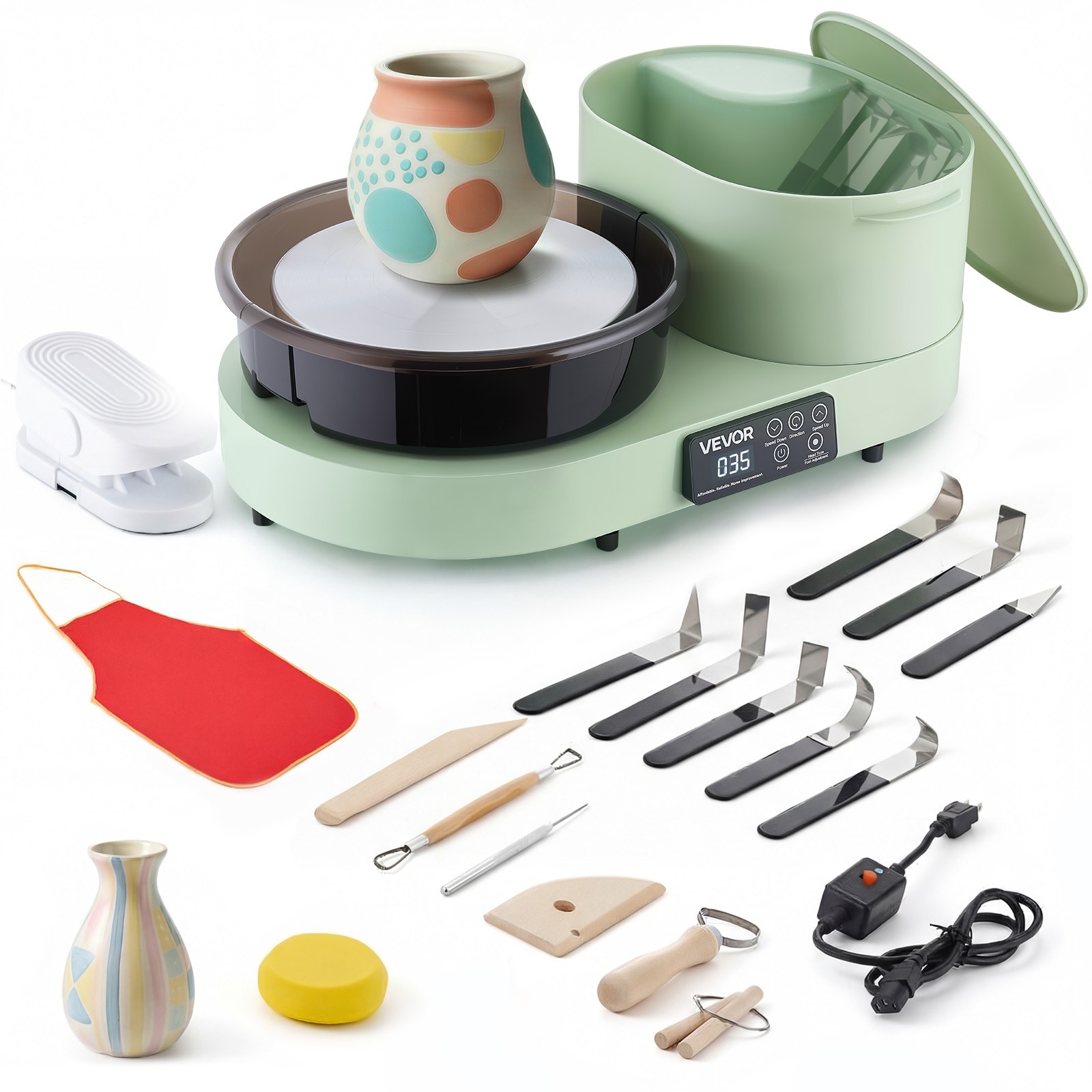
The VEVOR Pottery Wheel for Adults is the practical direction for hands-on clay shaping in a constrained room. Its tabletop design is described as compact and easy to store, and the included detachable storage box and water basin address the cleanup and workspace needs highlighted for this format. The 11-inch aluminum turntable is a clear product-specific detail, while the stated 11 lb maximum clay capacity and ≤55dB noise level help define what the wheel offers. Its limitation is its role: the wheel cannot perform the electric kiln's firing job. At USD 143.90, it is the better fit when throwing clay is the immediate activity.
Final choice by use case
- Choose the Paragon A88B for studio pottery firing, electric toploader operation, and the kiln-focused workflow signaled by "Kiln Sitter Temp 2300."
- Choose the VEVOR wheel for tabletop throwing, compact storage, and a workspace built around its aluminum turntable and water basin.
- Choose both only for different stages of one process: use the VEVOR to shape clay and the Paragon to fire ceramics. If you are deciding what to buy first, start with the stage you currently cannot perform.