Choosing between pottery wheels & kilns comes down to the stage of making you need to handle: shaping wet clay or firing finished work. The Pottery Wheel Machine and Paragon A88B Electric Kiln are not substitutes in the usual sense. One supports throwing; the other is built around kiln work. That makes the decision straightforward once you identify the next task, workspace, and price level that matter most.
Quick verdict
Choose the Pottery Wheel Machine for hands-on throwing and shaping. Its listed price is USD 136.20, and its controls are designed around wheel work. Choose the Paragon A88B Electric Kiln when studio firing is the goal. It is listed at USD 720.00, carries a used condition, and serves a different stage of ceramics.
The key point is that this is a workflow choice, not a conventional substitute comparison. If you need to form clay, the wheel is the direct match. If you need to fire pottery and ceramics, the kiln is the direct match.
At a glance
| Product | Listed price | Best-matched task | Distinguishing detail |
|---|---|---|---|
| Pottery Wheel Machine | USD 136.20 | Shaping clay on a wheel | 14-inch aluminum-alloy turntable; 60-300 rpm |
| Paragon A88B Electric Kiln | USD 720.00 | Firing pottery and ceramics | Electric toploader; kiln sitter; studio suitability |
Where each wins
Where the Pottery Wheel Machine wins
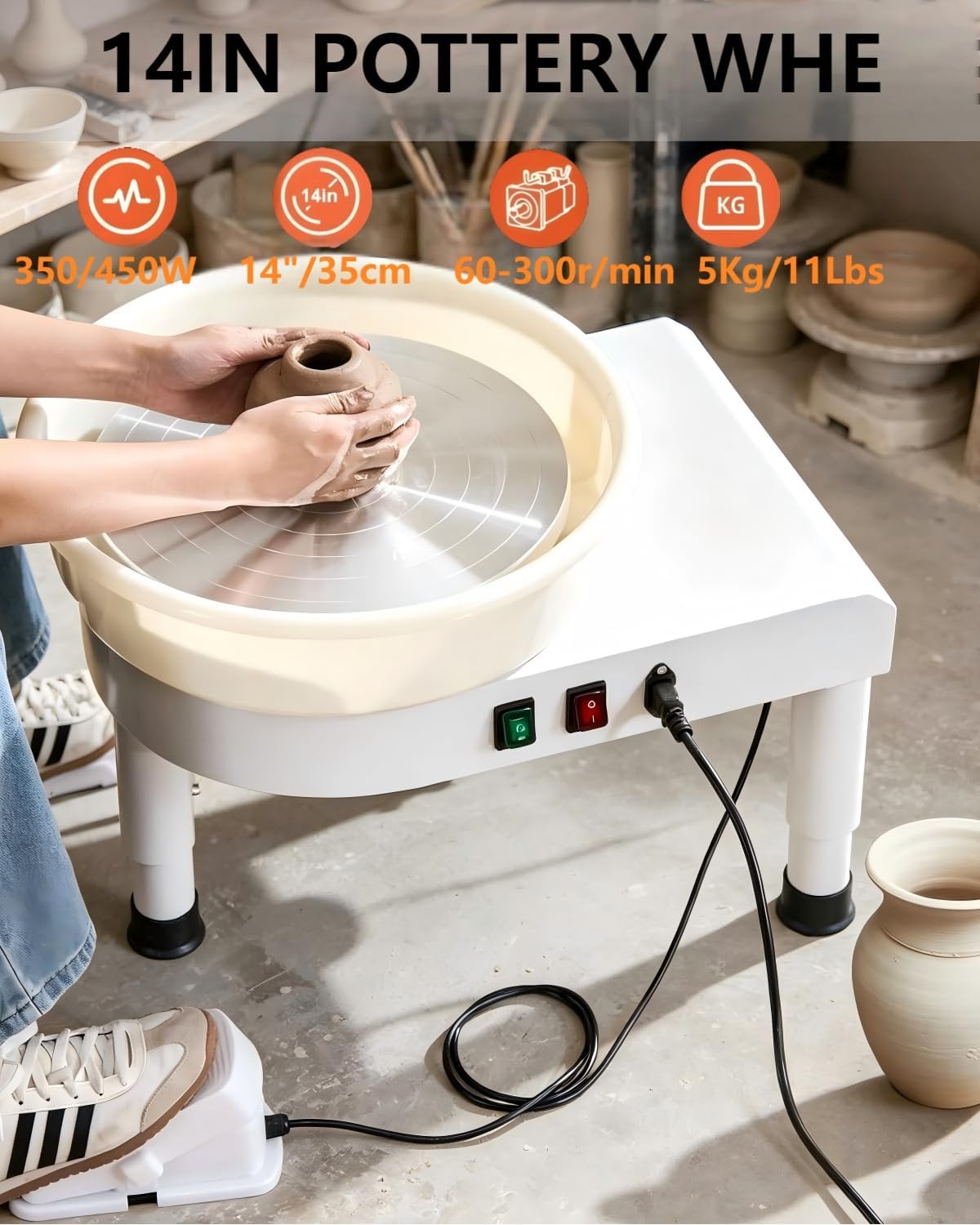
It wins for throwing and shaping because the foot pedal, LCD panel, clockwise/counterclockwise direction, and splash basin all serve that hands-on task. The product name also positions it for DIY clay art, making its intended use easy to understand.
Where the Paragon A88B wins
It wins when firing is the missing stage. The kiln sitter, electric toploader format, and studio suitability give it a clearly kiln-focused role. The 2300 temperature reference is a raw listed specification, not a reason to declare the kiln superior to the wheel.
Product notes
Pottery Wheel Machine
The Pottery Wheel Machine is the clearer choice for hands-on throwing and shaping. Its 14-inch aluminum-alloy turntable gives the wheel a specific format for clay work, and the detachable basin addresses splashes and cleanup. The LCD panel, foot pedal, and clockwise/counterclockwise rotation keep the control story centered on the person shaping the piece. Its listed 60-300 rpm range, 450W brushless motor, and 0-to-6-inch lift-table range add concrete adjustment points without changing that core role. The limitation is decisive: a pottery wheel does not handle kiln firing. The listed 24.02 x 18.9 x 17.13-inch dimensions also matter when allocating workspace around the machine.
Paragon A88B Electric Kiln
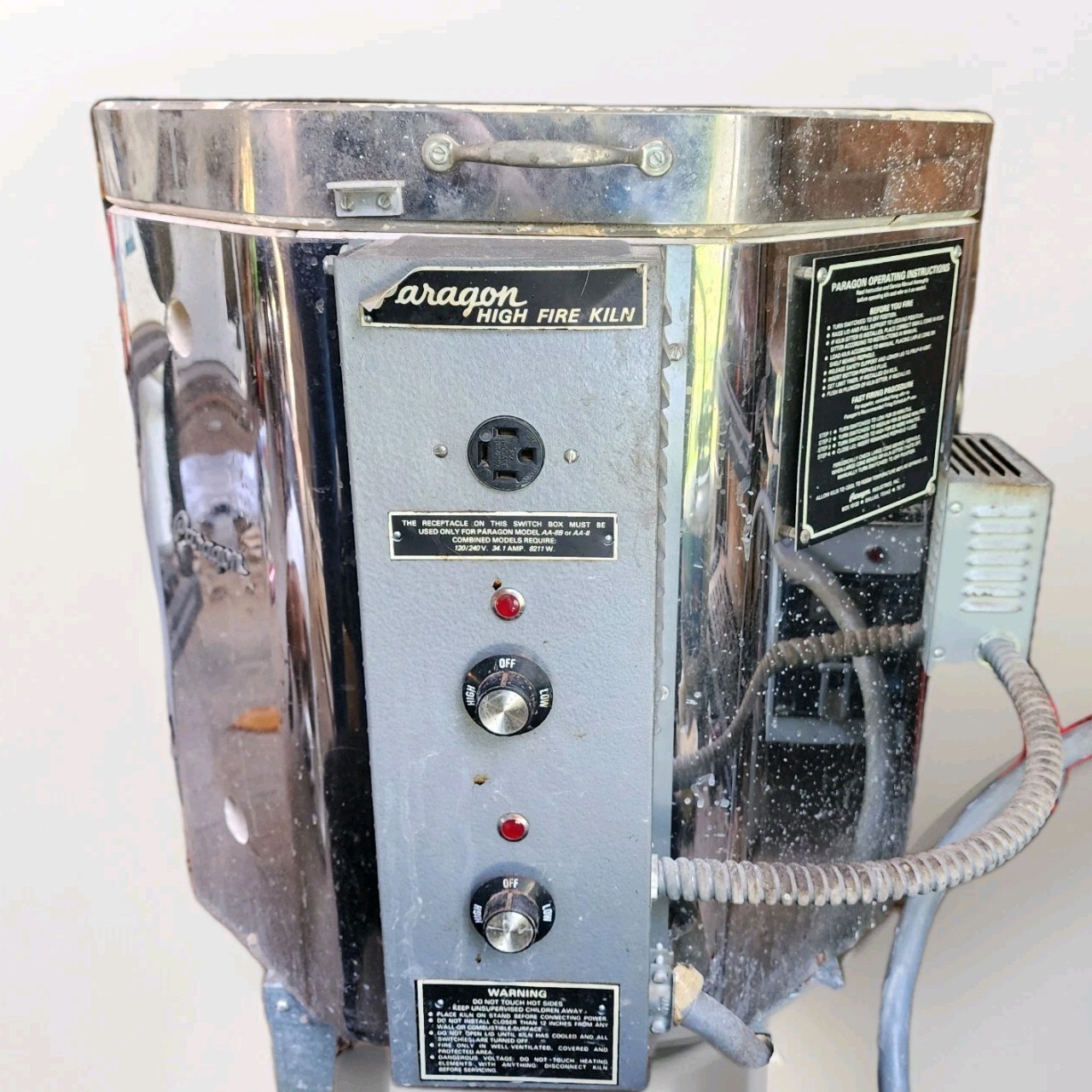
Paragon A88B Electric Kiln is the clearer fit when firing pottery and ceramics is the next task. It is an electric toploader suitable for studio use, and the product name includes a kiln sitter plus a 2300 temperature reference. Those details give it a distinct kiln-focused role in this comparison. Its used condition is an important practical limitation alongside that role, particularly for shoppers choosing between a forming tool and a firing appliance. The temperature number should remain a specification rather than a quality ranking. Functionally, this kiln does not cover the wheel-based throwing work handled by the other choice. Select it for firing, not for shaping.
Final choice by use case
- Choose the Pottery Wheel Machine if your next session is throwing or shaping clay.
- Choose Paragon A88B Electric Kiln if the missing step is firing pottery or ceramics in a studio setting.
- Choose the stage you need first if you eventually plan to do both. These are complementary purchases, not direct alternatives: a wheel forms the piece, while a kiln fires it.