Choosing between pottery wheels & kilns comes down to one practical question: do you need to shape clay on a rotating surface, or heat materials at high temperatures? The Pottery Wheel 14-inch Ceramic Wheel Machine and the VEVOR Tabletop Kiln Melter serve different stages of hands-on craft work, so the right choice depends more on your project than on treating them as interchangeable alternatives.
Quick verdict
Choose the Pottery Wheel 14-inch Ceramic Wheel Machine for forming clay with a turntable, foot pedal, adjustable rotation, and two rotation directions. Choose the VEVOR Tabletop Kiln Melter Electric Kiln for heat-focused work named in its description, including wax casting, clay DIY, and melting metals with points below 2192°F. The listed-price gap is $142.79, but the larger distinction is function: one is a wheel and the other is a kiln melter.
At a glance
| Factor | Pottery Wheel 14-inch Ceramic Wheel Machine | VEVOR Tabletop Kiln Melter Electric Kiln |
|---|---|---|
| Listed price | USD 136.20 | USD 278.99 |
| Primary form | Pottery wheel with 14-inch / 35 cm aluminum alloy turntable | Tabletop electric kiln melter |
| Main control or heat detail | LCD panel, foot pedal, 60-300 rpm, clockwise and counterclockwise rotation | PID digital control system; maximum furnace temperature of 2192°F / 1200°C |
| Listed power | 450W | 1500W |
Where each product wins
Pottery Wheel 14-inch Ceramic Wheel Machine
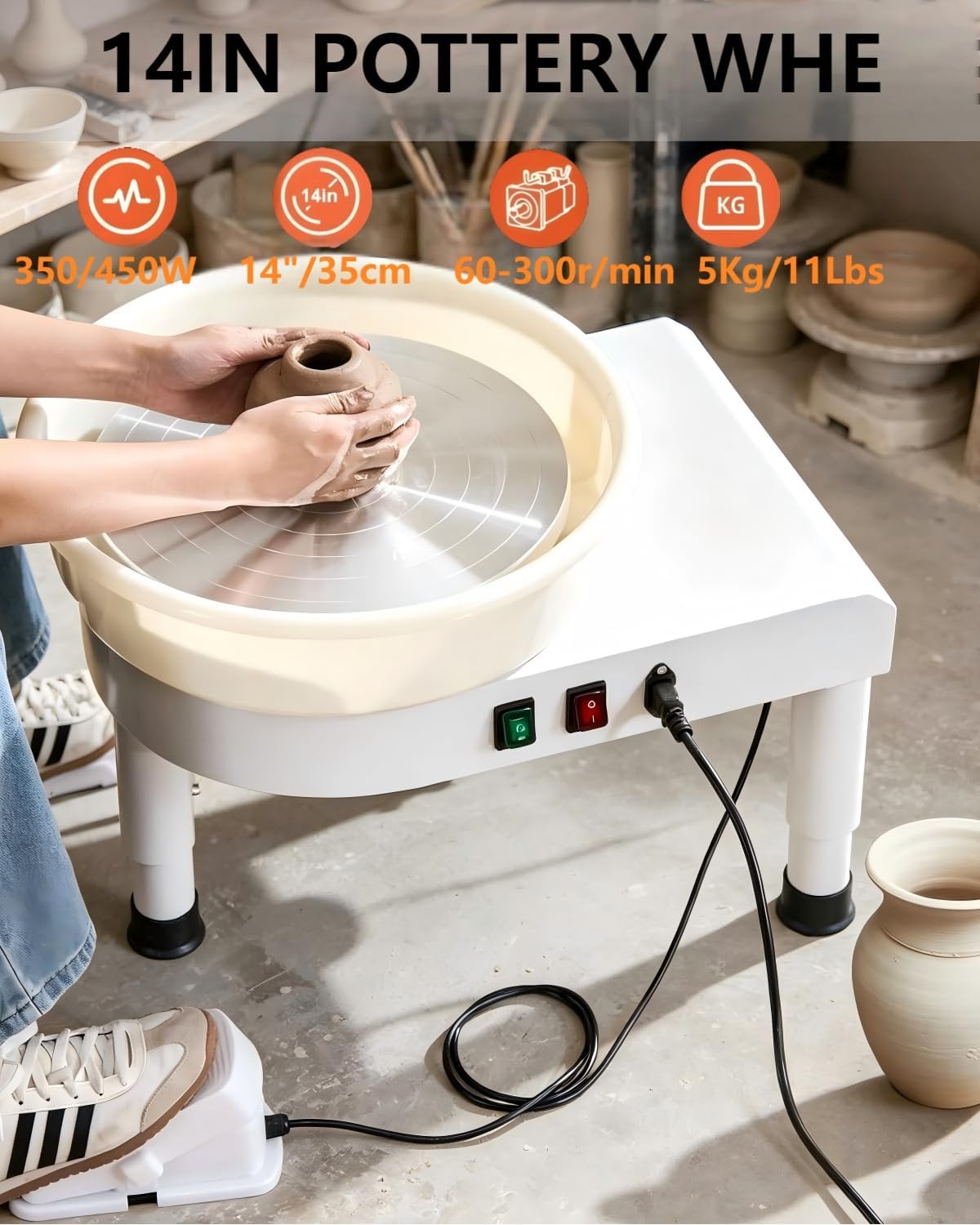
This wheel wins for the hands-on forming stage. The turntable, foot pedal, LCD panel, adjustable 60-300 rpm range, and clockwise/counterclockwise rotation all point to a setup built around shaping clay directly. Its detachable basin also addresses splash management during pottery sessions.
VEVOR Tabletop Kiln Melter Electric Kiln
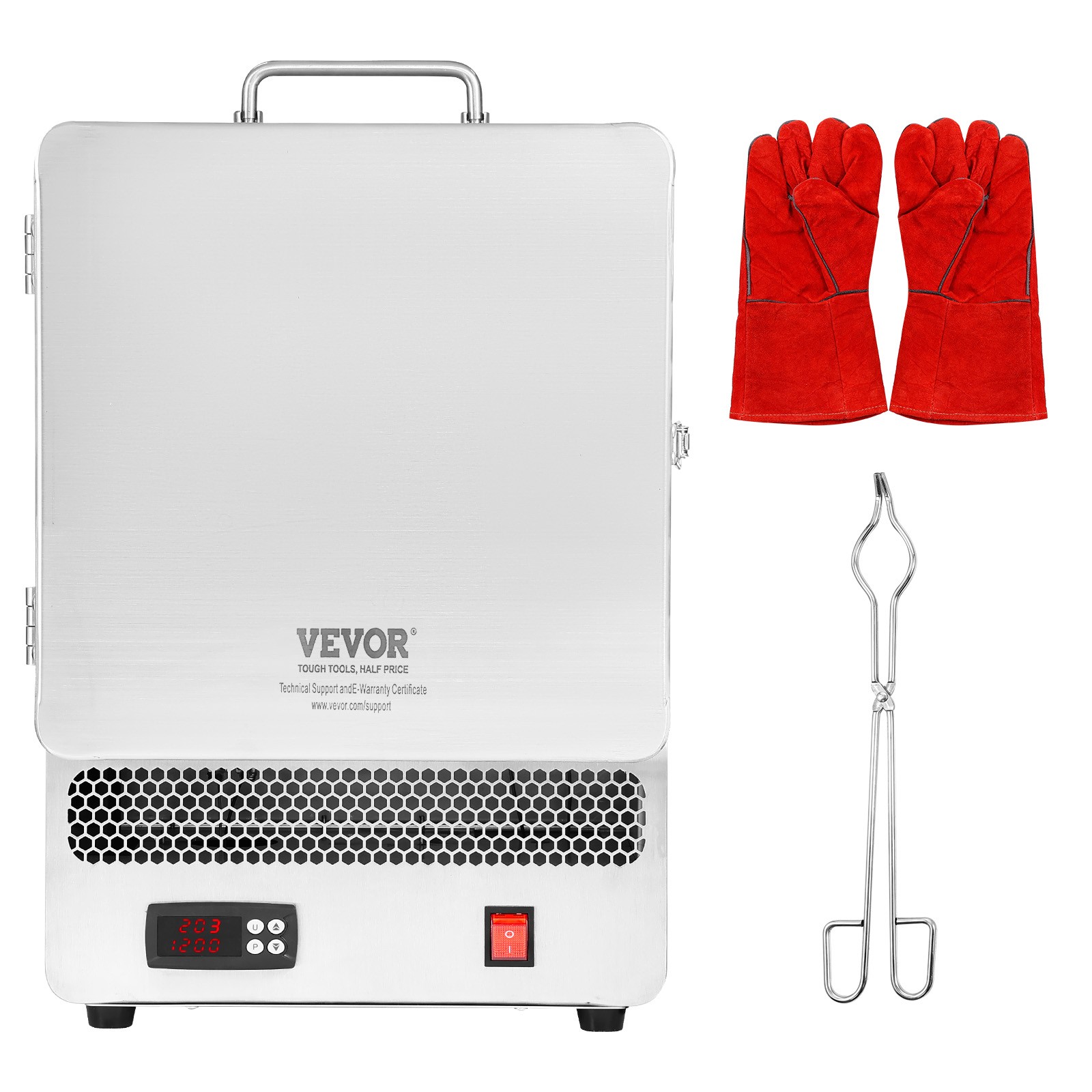
The VEVOR wins for projects centered on heat rather than rotation. Its stated 2192°F / 1200°C maximum furnace temperature, PID digital control system, and description of wax casting, clay DIY, and metal melting give it a defined heating role. It is the more relevant pick when a turntable would not solve the main task.
Product notes
Pottery Wheel 14-inch Ceramic Wheel Machine
The Pottery Wheel 14-inch Ceramic Wheel Machine is the clearer choice when the work begins with clay and the goal is to shape it on a rotating surface. Its 14-inch / 35 cm aluminum alloy turntable, detachable ABS basin, LCD panel, and foot pedal create a specific hands-on setup; the listed rotation range is 60-300 rpm, with clockwise and counterclockwise directions. The 450W brushless motor is described as operating quietly at about 60dB. The trade-off is physical: the listed dimensions are 24.02 x 18.9 x 17.13 inches and the listed weight is 41.4 pounds, so workspace planning matters. Choose it for clay-forming control and the included turntable-based workflow, but not as a source of kiln heat.
VEVOR Tabletop Kiln Melter Electric Kiln
The VEVOR Tabletop Kiln Melter Electric Kiln fits a different stage of craft work: it is the heat-focused choice, with a stated maximum furnace temperature of 2192°F / 1200°C. Its description names wax casting, clay DIY, and melting metals with points below 2192°F, while the attributes list 1500W power, a PID digital control system, and 201 stainless steel plus quartz. Those details give it a clear role when controlled heating is the priority. Its limitation is equally clear: a kiln melter does not replace the rotating turntable, foot pedal, or clay-shaping setup of the pottery wheel. The listed 13.0 x 10.04 x 18.90-inch dimensions and 38.58-pound weight also make tabletop placement an important consideration.
Final choice by use case
- For shaping clay on a rotating surface: Choose the Pottery Wheel 14-inch Ceramic Wheel Machine for its aluminum alloy turntable, foot pedal, adjustable rotation, and two direction settings.
- For wax casting or other listed heat-focused tasks: Choose the VEVOR Tabletop Kiln Melter Electric Kiln, whose product description names wax casting, clay DIY, and metal melting below its stated maximum temperature.
- For a decision based on project sequence: These are complementary tools rather than direct substitutes. Start with the pottery wheel when forming is the immediate task; choose the VEVOR when controlled heat is the central requirement.