Choosing among pottery tools & molds is really a choice between two workflows: shaping clay on a rotating machine or casting a defined form. The VEVOR mini wheel and Vintage Kimple Fish mold sit on opposite sides of that decision. Decide whether your project needs active wheel work or a fish-shaped slip-casting subject before comparing the price.
Quick verdict
Pick VEVOR if you want a mini ceramic wheel for hands-on sculpting. Pick the Vintage Kimple Fish mold if the project is specifically about creating a fish form through slip casting. At the listed prices, VEVOR is USD 36.99 and Kimple is USD 29.99, a USD 7.00 spread. That difference matters less than choosing the right working method.
At-a-glance comparison
| Product | Listed price | Primary work type |
|---|---|---|
| VEVOR Mini Pottery Wheel | USD 36.99 | Mini ceramic wheel sculpting |
| Vintage Kimple Fish Mold | USD 29.99 | Fish ceramic slip casting |
Where each product wins
VEVOR fits wheel-led projects. Clockwise and counterclockwise rotation, an apron, and two turntables make its setup more specific for active sculpting than a mold centered on one subject. The detachable basin is another practical part of the machine format.
Kimple fits a defined fish casting. Its Fish model, smooth casting surfaces, clean pour holes, and handmade designation all point toward a focused ceramic form. It is a mold-centered choice, while VEVOR is built around working clay on a powered wheel.
Product notes
VEVOR Mini Pottery Wheel
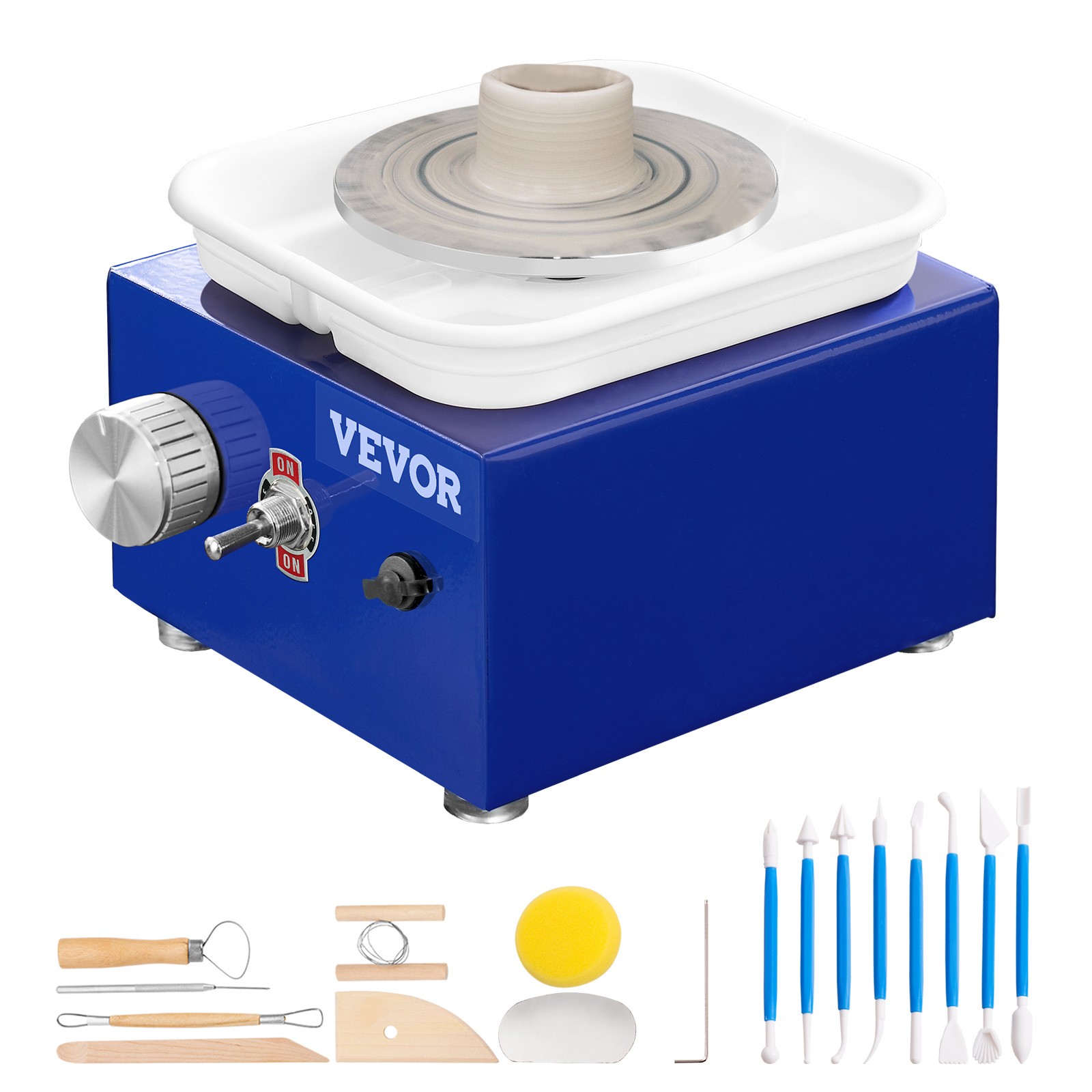
Choose VEVOR when a compact powered station is the point of the purchase. It combines a mini ceramic wheel with sculpting tools, an apron, and two turntables, and it includes bat-pin holes alongside a detachable basin. Those details make it a direct match for someone who wants shaping to happen on a rotating platform rather than around one predetermined subject. The limitation is physical scale: its ABS basin measures 5.9 × 5.1 × 0.8 inches, while the full unit measures 6.9 × 5.1 × 4.4 inches. The 2.2-lb maximum clay load is another concrete boundary, so work above that stated limit falls outside the machine's listed operating range.
Vintage Kimple Fish Mold
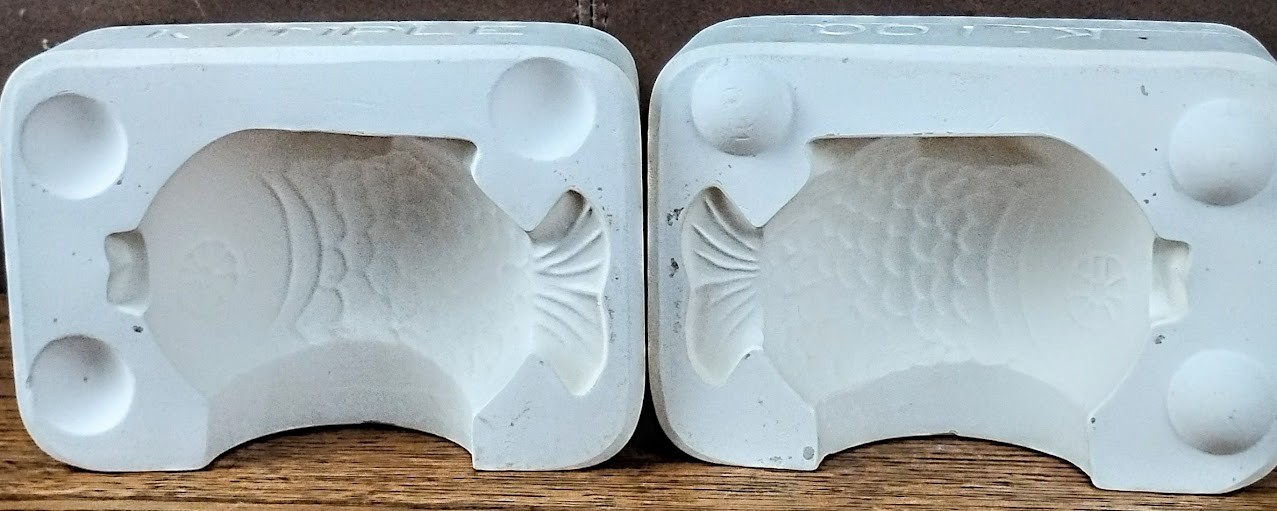
Kimple is the focused pick for a fish-themed slip-casting project. The K-100 and Fish model wording identify a specific subject, while smooth casting surfaces and clean pour holes support that casting-focused use. Its handmade designation and United States origin add useful context for shoppers seeking a vintage craft object with a defined subject. The limitation is the purchase scope: the condition is used and the unit quantity is 1, so the choice centers on one mold and one subject. Choose Kimple when the fish form is the reason you are shopping; the VEVOR is the alternative when the process calls for a rotating machine.
Final choice by use case
- Choose VEVOR for wheel-led clay shaping. The mini ceramic wheel is the deciding phrase: it points to a process where clay is worked on a rotating machine. The USD 7.00 higher listed price makes sense only if that machine-led workflow is the one you want.
- Choose Kimple for a fish slip-casting project. The K-100 Fish mold is the deciding phrase: it points to a defined subject and casting format rather than open-ended wheel work. Its used condition and single-unit scope are part of that choice.
Bottom line: VEVOR is the clearer fit for active clay shaping, while Kimple is the clearer fit for a fish-form casting project. Choose by the way you want to make, then use the price difference as the tie-breaker.