Shopping for pottery wheels & kilns can send you in two very different directions: shaping clay on a rotating wheel or heating ceramics and metal in a kiln. The VEVOR Pottery Wheel and Tabletop Electric Kiln are therefore not interchangeable tools. The right pick depends first on whether your next project needs forming or firing.
Quick verdict
Choose the VEVOR Pottery Wheel for hands-on clay shaping, adjustable rotation, and a foot-pedal workflow. Choose the Tabletop Electric Kiln for ceramic firing, jewelry crafting, or metal clay work with controlled high heat. The listed price gap is $83.09, but the bigger difference is each tool's role in the studio.
At a glance
| Tool | Listed price | Best-fit task | Key listed attribute |
|---|---|---|---|
| VEVOR Pottery Wheel | $159.90 | Forming pottery | 60-300 RPM; clockwise and counterclockwise rotation |
| Tabletop Electric Kiln | $242.99 | Ceramic firing and metal work | 1500W; 2,192°F / 1,200°C maximum temperature |
Where each product wins
- VEVOR Pottery Wheel wins for shaping: Its 14-inch turntable, adjustable 60-300 RPM range, reversible rotation, and hands-free foot-pedal control directly support wheel-based pottery work.
- Tabletop Electric Kiln wins for firing: Its PID digital temperature control, 2,192°F / 1,200°C maximum, and listed suitability for ceramic firing, jewelry crafting, and metal clay work make it the more relevant tool after clay has been formed.
- For budget-conscious tool selection: The VEVOR is listed at $159.90, while the kiln is $242.99. That $83.09 spread matters only after matching the tool to the task.
Product notes
VEVOR Pottery Wheel
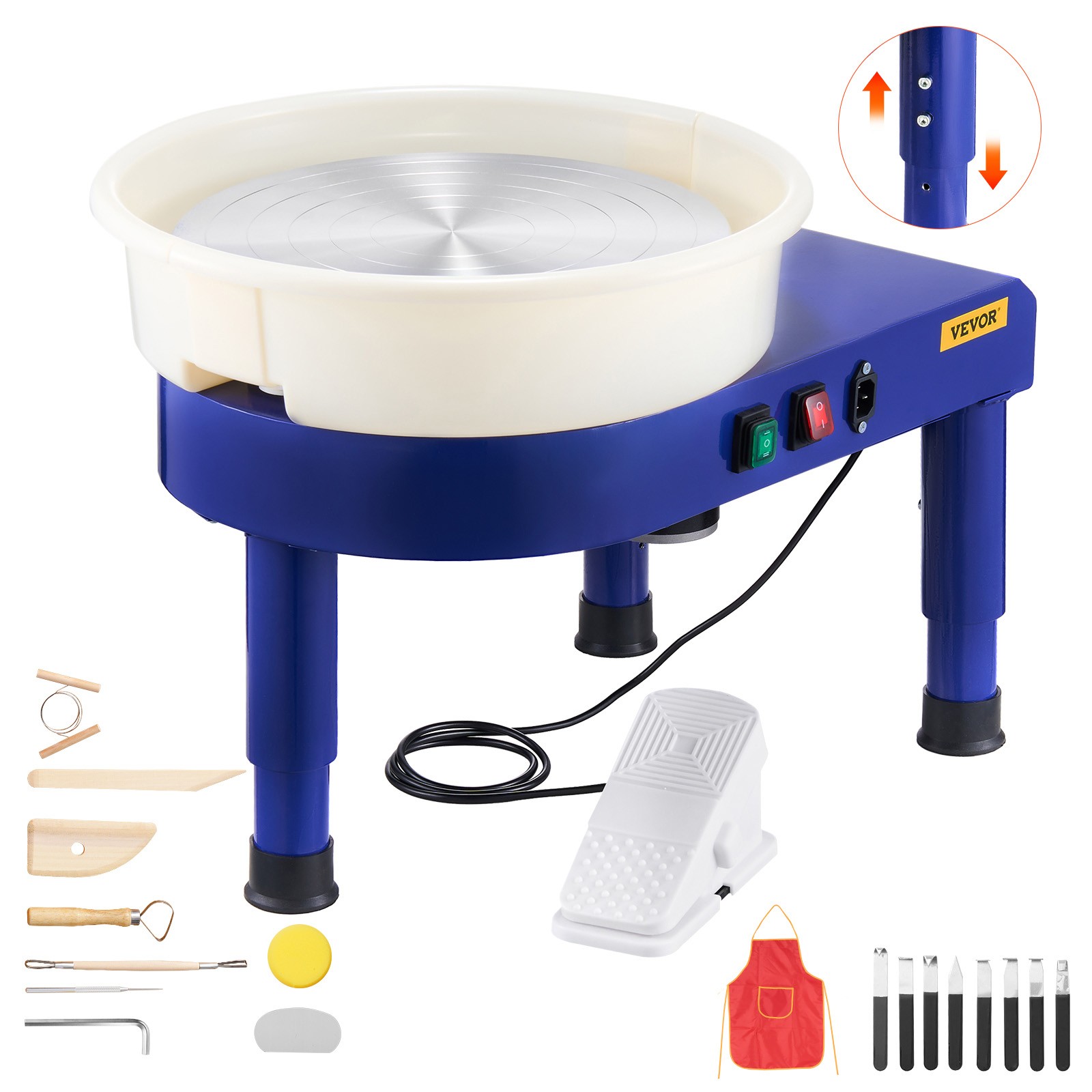
The VEVOR Pottery Wheel is the practical choice when the project begins with shaping clay. Its 14-inch / 35 cm aluminum alloy turntable provides the central forming surface, while the adjustable 60-300 RPM range supports changes in working speed. Clockwise and counterclockwise rotation is listed, and the foot pedal provides hands-free adjustment of rotation direction and speed while crafting. The forming machine also has a 0-6-inch lifting range, which adds an adjustable element to its working position. Its limitation is functional rather than cosmetic: a pottery forming machine handles the throwing stage, not the firing stage, so it cannot replace a kiln in a complete wheel-to-glaze workflow. At $159.90, it is the lower-priced route into the shaping side of pottery.
Tabletop Electric Kiln
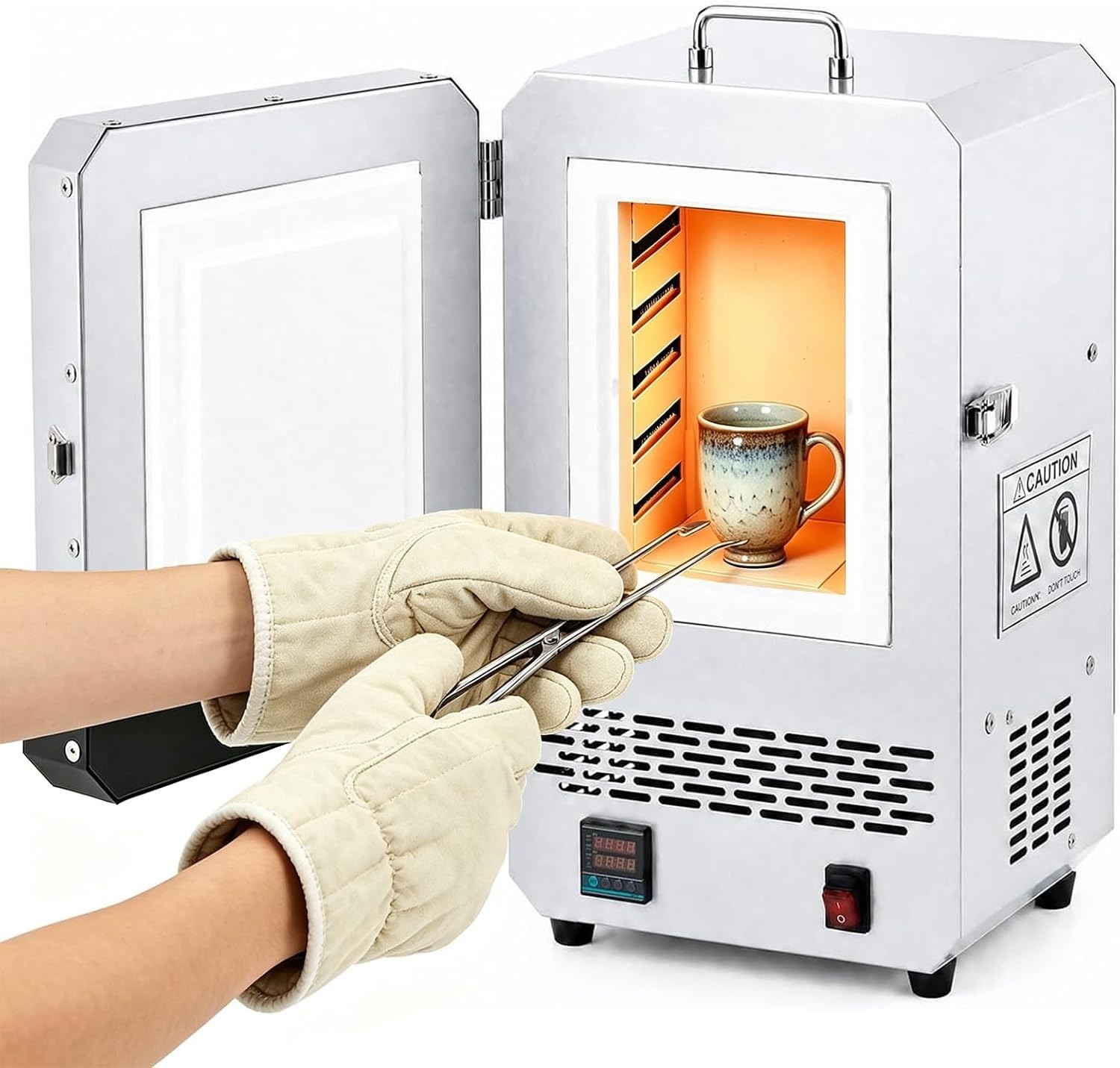
The Tabletop Electric Kiln is the better match for projects that require controlled heat rather than a rotating work surface. Its 1500W maximum power, PID digital control system, and listed 2,192°F / 1,200°C maximum temperature align with ceramic firing, jewelry crafting, and metal clay work. The stainless steel material and tabletop format also fit the compact kiln role described by its title. A listed 34-38-minute time to reach maximum temperature from room temperature gives a concrete heating-time reference. The limitation is that it does not perform the throwing step: anyone starting with wet clay still needs a separate forming method. At $242.99, it also sits $83.09 above the VEVOR, so its extra cost is relevant only when high-temperature work is the priority.
Final choice by use case
- Choose the VEVOR Pottery Wheel if you want to center your projects on shaping clay, need reversible rotation, or prefer foot-pedal control.
- Choose the Tabletop Electric Kiln if you need ceramic firing, jewelry crafting, or metal clay work at temperatures up to 2,192°F / 1,200°C.
- Need a complete pottery workflow? These tools serve different stages: the VEVOR forms pottery, while the kiln handles firing. If only one tool is being selected now, match the purchase to the stage you will use first.